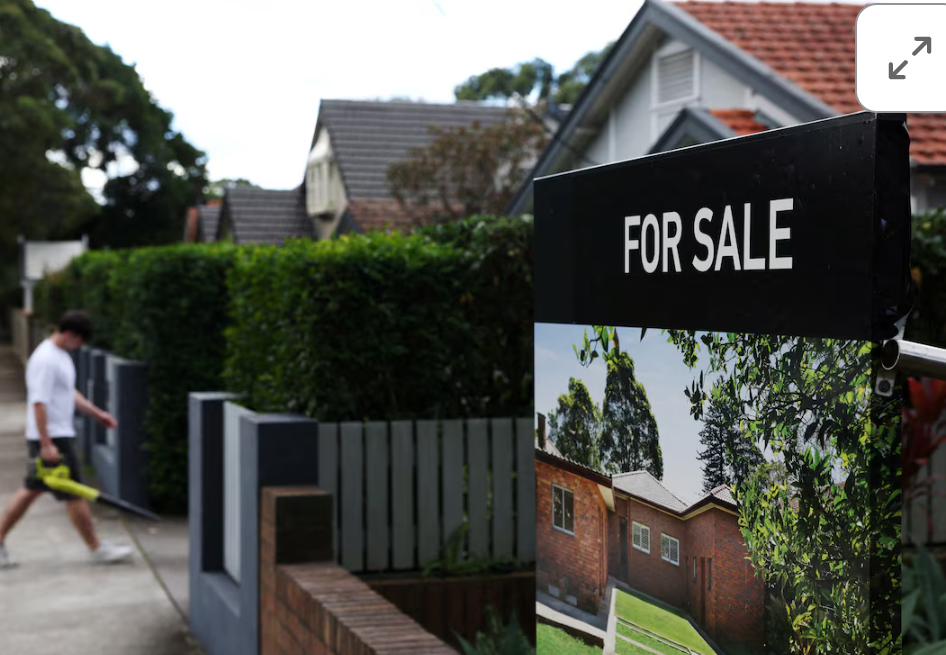
Australia’s housing slowdown is hurting far more than property prices, with a sharp decline in home transactions squeezing an entire ecosystem of businesses that depend on Australians buying, selling and moving into homes. Reuters estimates that if the downturn persists, businesses connected to housing turnover could lose between A$2.8 billion and A$5.6 billion in annual spending.
The impact is already being felt by property agents, conveyancers, removalists, furniture suppliers, home stylists, painters and other businesses whose revenues depend on homes changing hands.
Unlike previous housing downturns where falling property values were the main concern, the current problem is increasingly about transaction volumes. Australian home prices remain above year-ago levels, but significantly fewer properties are being bought and sold.
Fewer Home Sales Are Hitting the Wider Economy
Australia’s housing market has a large economic footprint. Every property transaction can trigger spending on professional services, moving, furniture, renovations, landscaping, utilities and other household needs.
When sales decline, that spending disappears even if property prices remain relatively high.
Reuters estimates that housing turnover has fallen about 15% since June compared with a year earlier. Based on spending typically associated with buying, selling and moving into an average three-bedroom detached house, the decline could be removing approximately A$355 million to A$710 million from the property-adjacent Economy every month.
On an annualised basis, that translates into an estimated A$2.8 billion to A$5.6 billion in reduced spending if the weaker turnover persists.
The estimate is small compared with Australia’s more than A$600 billion annual residential property sales market, but it is substantial for smaller businesses that depend directly on transaction activity.
Home Prices Have Not Fallen as Much as Sales
The slowdown is notable because the Australian housing market has not experienced a comparable collapse in prices.
Home prices are down less than 4% from their March peak and remain above levels recorded a year earlier, according to the Reuters report.
Instead, the more immediate problem is that fewer properties are being listed, sold and settled.
Data from property consultant Cotality showed housing turnover remained 10.5% below its five-year average. Home sales volumes were down 11% in May and 20% in July.
That reduction in activity has a multiplier effect. A home sale normally creates several additional transactions, including legal work, inspections, mortgage services, transportation, furniture purchases and household improvements.
Why Housing Turnover Matters So Much
Buying a home is rarely a single transaction. The process can generate spending across dozens of businesses.
A seller may hire a real estate agent, property stylist, photographer, cleaner and tradespeople before putting a home on the market. Once a buyer completes the purchase, the buyer may hire a conveyancer, removalist and utility providers while also purchasing furniture, appliances, curtains, landscaping services or renovation materials.
When transactions decline, each of these businesses loses potential customers.
James Graham, a senior lecturer at the University of Sydney who studies housing economics, told Reuters that the methodology behind the estimate was reasonable. He also noted that the calculation does not include the broader “wealth effect” that can occur when falling property values reduce household confidence and spending.
That means the estimated A$2.8 billion to A$5.6 billion impact does not represent every possible economic consequence of a housing slowdown.
Property Stylists Feel the Slowdown
The experience of Sydney property stylist Joanne Cauchi illustrates the change in market conditions.
A year earlier, Cauchi was reportedly turning away work during the busy spring period, purchasing new furniture and overseeing home installations almost every day.
Now, her team of three stylists and two removalists handles as few as three jobs per week and has stopped buying inventory.
The change demonstrates how quickly lower housing turnover can affect businesses that do not directly sell houses.
Property styling is often used by sellers preparing homes for the market. If fewer homes are being listed or transactions take longer to complete, demand for these services can fall even while property values remain relatively resilient.
Removal and Moving Businesses Are Cutting Jobs
Moving companies are also experiencing the effects of lower transaction volumes.
At The Moving Box Company, which supplies new and used freight cartons, four factory-floor workers left after their hours were reduced. The company reduced its workforce to nine employees from 13.
General manager James Wotherspoon said sales were down 19% year over year since June.
Managers have responded by taking on packing and delivery work themselves while reducing employee hours.
The situation illustrates an important difference between falling revenue and falling prices. Even if homes retain much of their value, businesses that depend on the number of transactions can experience sharp revenue declines when fewer people move.
Conveyancers Face a Double Challenge
Conveyancers are among the businesses directly tied to property settlements. Their income depends heavily on completed transactions.
Russell Cohen, CEO of property settlement technology platform PEXA, said the decline was particularly severe. After Australian sales grew 8% in the year to June, transaction volumes fell 15% in July and remained at that level through August.
Cohen described the decline as the most severe seen since the early stages of the COVID-19 pandemic.
Conveyancers are also dealing with higher compliance costs. New anti-money-laundering rules introduced in July require greater customer due diligence.
That means some firms are facing higher administrative and compliance expenses at precisely the time when the number of transactions generating revenue is falling.
Smaller Property Firms Are Considering Exit Strategies
The combination of lower transaction volumes and higher compliance requirements is putting pressure on smaller conveyancing and real estate businesses.
David Winning, founder of Your Move Conveyancing and director of the Australian Institute of Conveyancers NSW Division, said smaller operators were increasingly discussing mergers, sales or retirement.
The pressure is not limited to conveyancers. The Real Estate Institute of Victoria said 350 of its 6,600 agent members planned to cancel their membership, with more than half intending to leave the profession altogether.
Jacob Caine, president of the Real Estate Institute of Australia, said the industry could experience a significant exodus of sales agents.
For an industry that has expanded alongside Australia’s long-running property boom, a sustained reduction in transactions can force businesses to reconsider staffing levels, office costs and operating models.
Some Agents Are Moving to Remote Work
Buyers’ agent Zoran Solano told Reuters that his revenue had fallen by half since May. He responded by ending his office lease and moving to a remote working arrangement.
Such decisions can reduce fixed costs, but they also demonstrate how falling housing activity can affect commercial real estate and other businesses indirectly.
If more property professionals close offices or reduce their physical footprint, landlords, office service providers and other businesses that serve professional firms can also experience weaker demand.
Harvey Norman Reports Weaker Home-Related Spending
The effects are also visible in corporate earnings.
Homewares retailer Harvey Norman reported that franchise profit fell 15% in its June half-year period, reversing a 14% increase in the previous six months.
The company attributed the decline partly to reduced appetite for home-related purchases and renovation activity.
This is important because housing transactions can stimulate spending beyond the property industry itself. Buyers often purchase furniture, appliances and other household products after moving, while sellers may spend on repairs and improvements before listing their properties.
A slowdown in transactions can therefore reduce demand in the broader retail and home-improvement sectors.
Higher Interest Rates Are Cooling Demand
One major factor behind Australia’s housing slowdown is the increase in borrowing costs.
Australian interest rates have risen three times since February, increasing the cost of mortgages and reducing the amount some households can comfortably borrow.
Higher rates can discourage prospective buyers, encourage existing owners to delay moving and make investors more cautious.
Even households that can still afford to buy may decide to wait for greater certainty about future borrowing costs and property prices.
Changes to Property Tax Concessions Add Further Pressure
Government policy has also contributed to the cooling of the market.
The centre-left Australian government has reduced some capital gains tax advantages available to existing-home sellers and tightened negative-gearing rules for landlords.
These measures come after decades in which Australia’s tax system helped encourage property investment.
The government’s changes are intended to alter aspects of the tax treatment of housing, but they can also affect investor behaviour and transaction activity in the short term.
A spokesperson for Treasurer Jim Chalmers did not respond to Reuters’ request for comment.
Australia’s Property Market Has an Outsized Economic Role
Housing has become deeply embedded in Australia’s economy after years of strong property investment and rising prices.
Sydney and Melbourne have become among the world’s least affordable housing markets, while property-related activity has created a large network of businesses serving homeowners, investors and buyers.
This structure means a housing slowdown can have consequences even without a dramatic collapse in home prices.
A fall in turnover reduces the frequency with which households purchase related goods and services. For businesses with high fixed costs or narrow profit margins, that can quickly become a serious problem.
The Hidden Cost Is About Transactions, Not Just Prices
Housing-market headlines often focus on whether prices are rising or falling. But the Australian experience shows why transaction volumes can be equally important.
If a property worth A$1 million changes hands, the transaction can create income for an agent, conveyancer, mortgage provider, inspector, removalist, furniture retailer and several other service providers.
If that property stays with its current owner for another year, much of that associated spending never occurs.
Consequently, a market with relatively stable prices can still produce substantial economic damage for transaction-dependent businesses if turnover falls sharply.
Could the Housing Slowdown Become More Widespread?
The duration of the slowdown will depend on several factors, including interest rates, household borrowing capacity, property prices, investor demand and government policy.
If transaction volumes recover, some of the businesses currently cutting hours or reducing costs could see demand return.
If turnover remains depressed, however, more firms may need to reduce staffing, merge with competitors, close offices or leave the industry.
The impact could also spread to businesses further removed from property transactions if weaker housing activity reduces household confidence and discretionary spending.
Why Australia’s Housing Turnover Matters for the Economy
The Reuters analysis highlights an often-overlooked part of the housing economy: the spending generated by the process of moving itself.
Every completed sale can activate a chain of professional services and household purchases. Conversely, every cancelled or delayed transaction can remove revenue from multiple businesses.
With Australian housing turnover already below its longer-term average, the economic consequences are becoming visible in businesses ranging from conveyancing firms to moving companies and homewares retailers.
The estimated A$2.8 billion to A$5.6 billion annual loss is therefore best understood as an estimate of spending that could disappear from businesses surrounding the housing market if current turnover conditions persist, rather than a forecast of Australia’s total economic loss.
For policymakers and businesses, the next major indicator will be whether home sales volumes begin recovering or remain significantly below historical levels.
Australia’s housing market does not need a dramatic price crash to create substantial economic disruption. If fewer homes continue changing hands, the businesses built around those transactions may continue to feel the consequences long after property-price headlines have moved on.
FAQs
Why is Australia’s housing slowdown hurting businesses outside real estate?
Buying and selling a home generates spending on services and products such as conveyancing, moving, furniture, appliances, property styling, painting and landscaping. Fewer transactions reduce demand for many of these businesses.
How much economic spending could Australia’s housing slowdown remove?
Reuters estimates that the decline in housing turnover could reduce spending flowing through property-adjacent businesses by approximately A$2.8 billion to A$5.6 billion annually if the weaker conditions persist.
Are Australian home prices falling sharply?
No. The Reuters report said home prices were down less than 4% from their March peak and remained above year-earlier levels. The bigger issue is the sharp decline in the number of homes changing hands.
How much has Australian housing turnover fallen?
Reuters reported that housing turnover was about 15% lower than a year earlier from June, while Cotality data showed turnover remained 10.5% below its five-year average.
Which businesses are being affected?
Property agents, conveyancers, removalists, furniture retailers, property stylists, painters, landscapers and other businesses connected to buying, selling and moving homes are among those affected.
Why are conveyancers facing additional pressure?
Transaction volumes have fallen while new anti-money-laundering requirements introduced in July have increased customer due-diligence and compliance responsibilities.
How are property businesses responding?
Businesses are reducing employee hours, cutting staff, closing or downsizing offices, considering mergers or sales and, in some cases, leaving the industry.
Could the slowdown affect Australia’s broader economy?
Yes. Housing transactions generate spending across numerous industries. A prolonged decline could reduce revenues for businesses connected to property turnover and potentially affect wider household spending through weaker confidence and the housing wealth effect.
For breaking news and live news updates, like us on Facebook or follow us on Twitter and Instagram. Read more on Latest Business on thefoxdaily.com.






COMMENTS 0