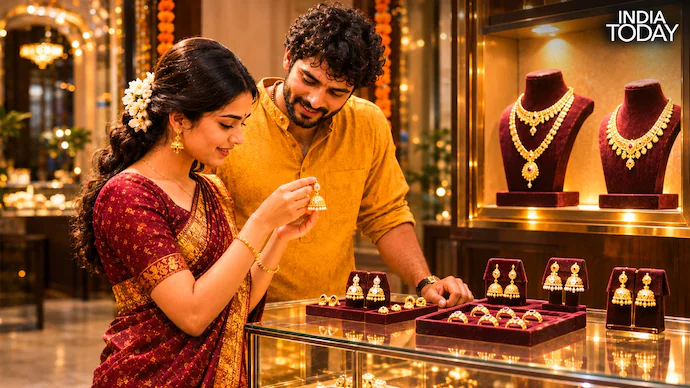
Rising Gold prices are changing how Indian consumers approach Dhanteras shopping. While the tradition of purchasing gold remains strong, buyers are becoming more selective about the type of Jewellery they choose, how much they spend and whether they want physical gold as an investment or something they can wear regularly.
Some consumers are choosing lightweight rings and necklaces to celebrate the festival without exceeding their budgets. Others prefer gold coins and bars as a way to accumulate the precious metal. Digital gold is also attracting interest, particularly among younger buyers who are exploring alternative ways to own gold.
These changing preferences reflect a broader shift in festive shopping habits. Instead of focusing primarily on the weight of gold purchased, consumers are increasingly considering affordability, design, everyday usability and long-term value.
Key Highlights
- Rising gold prices are encouraging consumers to choose lightweight jewellery instead of heavy traditional sets.
- Gold coins and bars remain popular among buyers who view the metal primarily as a long-term investment.
- Digital gold purchases in India increased 76% between January and September 2026, according to the World Gold Council report cited by IAGES.
- Consumers are increasingly considering budgets between Rs 30,000 and Rs 1.5 lakh for festive purchases.
- Old-gold exchange is gaining popularity, with consumer consideration increasing from 70% to 76%.
Gold Gets More Expensive, Buyers Become More Selective
Higher gold prices have become an important consideration for households preparing for Dhanteras. However, expensive gold has not necessarily reduced consumers’ interest in purchasing the metal. Instead, buyers are adjusting their choices to match their spending capacity.
Sudeep Nagar, Co-founder and Chief Operating Officer of BlueStone, says consumers are increasingly approaching jewellery purchases with a fixed budget rather than deciding how much gold they want to buy.
According to Nagar, shoppers may arrive with budgets of Rs 30,000, Rs 50,000 or Rs 1 lakh. When gold prices increase, the amount of jewellery they can purchase changes, but their willingness to buy does not necessarily disappear.
He says consumers are not simply looking for cheaper products. They want jewellery that offers value within their preferred spending range. This approach has helped demand remain resilient despite elevated gold prices.
Silver prices are also influencing festive buying decisions. Ankur Daga, Founder and CEO of Angara, says consumers had delayed some purchases when silver prices reached record levels earlier in the year. The subsequent price correction encouraged buyers to return to the market.
Daga reported that festive sales on Angara’s platform were approximately 35% to 40% higher in value year over year, reflecting renewed consumer interest.
Heavy Gold Sets Give Way to Everyday Jewellery
Traditional Dhanteras purchases often involved heavy necklaces, elaborate jewellery sets and bangles. However, consumer preferences are gradually shifting towards lightweight designs that can be worn regularly rather than being reserved for festivals, weddings and special occasions.
Lightweight rings, earrings, delicate necklaces, hoops and stackable bracelets are attracting attention because they offer greater flexibility. Consumers increasingly want jewellery that can be worn at work, during casual outings and at family events.
Nagar says the movement towards everyday jewellery started even before the latest rise in gold prices. According to him, consumers are increasingly thinking about how frequently they will wear a piece rather than focusing only on its value.
He identifies everyday rings and earrings, cocktail rings, bold hoops and layered chains among the categories attracting interest. The common preference is for versatile designs that can fit different occasions.
Lightweight jewellery does not necessarily mean simpler designs or lower perceived value. Buyers are looking for pieces that combine attractive designs with practical everyday use.
BlueStone’s performance also reflects interest in different jewellery categories. Studded jewellery accounted for 55.7% of the company’s revenue in the September quarter.
Daga says contemporary fine silver jewellery is also gaining traction, particularly pieces made with hallmarked 925 sterling silver and genuine coloured gemstones. Rings, delicate necklaces and stackable bracelets featuring emeralds, sapphires and rubies are attracting interest.
This preference reflects a growing demand for jewellery that combines contemporary styling with everyday wearability.
Gold Coins or Jewellery: What Are Buyers Choosing?
While jewellery remains an important part of Dhanteras shopping, gold coins and bars continue to attract consumers who primarily view gold as an investment or savings option.
One important difference between jewellery and bullion is the additional cost involved. Jewellery generally carries making charges, which increase the overall purchase price. Coins and bars offer a more direct way to accumulate gold without paying jewellery-making charges.
Nagar explains that the two categories serve different consumer needs. Someone purchasing a coin or bar is primarily responding to the price of gold, while a jewellery buyer is influenced by design, the occasion and personal preferences.
Daga also says gold coins and bars remain attractive to consumers who prioritise investment value, liquidity and relatively lower transaction costs. However, the recent correction in precious metal prices has made jewellery comparatively more accessible to some buyers.
Ultimately, the decision depends on the purpose of the purchase. Consumers looking to wear their gold may prefer jewellery, while those focused on accumulating the metal may consider coins and bars.
Digital Gold Gains Interest Among Younger Consumers
Changing buying habits are also visible across generations. Younger consumers are increasingly exploring different ways to own gold, including lightweight jewellery, small coins, bars and digital gold.
Kaushlendra Sinha, CEO of the Indian Association for Gold Excellence and Standards (IAGES), says gold continues to attract buyers across age groups, although purchasing preferences are evolving.
According to Sinha, younger consumers are generally more open to alternative ownership options, including digital gold, while older buyers are traditionally more familiar with physical jewellery and established purchasing methods.
The growing interest in digital ownership is reflected in figures cited by Sinha from the World Gold Council’s latest report. Digital gold purchases in India increased 76% between January and September 2026.
However, Sinha cautions against making a strict distinction between age groups. Physical gold continues to play an important role in festive and wedding purchases across generations.
Daga also identifies consumers in the 25-35 age group as an important segment driving festive buying volumes. Their preferences increasingly include lightweight daily-wear jewellery, lower-carat options and, in some cases, digital gold or small coins.
Older consumers continue to favour traditional heavier jewellery for weddings and festive gifting, although contemporary designs are also attracting their attention.
How Much Are Indians Spending on Dhanteras Gold?
With gold prices remaining high, personal budgets are playing a major role in determining what consumers purchase during the festive season.
Daga says a budget of Rs 30,000 to Rs 50,000 could buy approximately two to three-and-a-half grams of gold, depending on prevailing prices. This amount may be sufficient for a small gold coin or a lightweight studded jewellery piece.
The same budget could purchase a more substantial design-led silver jewellery item, making silver an alternative for consumers who want a larger piece without spending significantly more.
According to Daga, demand is concentrated in the mid-range of approximately Rs 30,000 to Rs 1.5 lakh. This segment allows consumers to consider contemporary silver designs or lighter gold and studded jewellery without stretching their budgets excessively.
BlueStone’s average order value stood at Rs 77,290 in the September quarter, marking a 29% increase year over year. However, it declined approximately 1% sequentially, reflecting the entry of more first-time buyers at lower price points.
These figures suggest that consumers are continuing to purchase jewellery while adjusting their spending according to affordability and product preferences.
Old-Gold Exchange Becomes an Important Buying Option
Another trend influencing festive purchases is the growing willingness among consumers to exchange old jewellery for new designs. Rather than funding an entire purchase from fresh savings, households can use existing gold holdings to reduce the additional amount they need to spend.
Sinha points to World Gold Council consumer sentiment findings showing that consideration of old-gold exchange increased from 70% to 76%.
This change suggests that more consumers are considering their existing jewellery as a source of value when planning new purchases. It also allows them to update their collections while managing the impact of higher gold prices.
For retailers, the trend creates an opportunity to serve customers who want new designs but are cautious about increasing their overall spending.
Why Indians Continue to Buy Gold on Dhanteras
Dhanteras has traditionally been associated with purchasing gold as a symbol of prosperity, wealth and good fortune. Despite rising prices and changing consumer preferences, the cultural attraction of buying gold remains strong.
However, the way consumers celebrate the occasion is becoming more flexible. A lightweight ring or necklace allows some households to participate in the tradition without purchasing heavy jewellery. Others prefer coins as a form of savings, while digital gold provides another route to ownership.
Sinha says gold continues to hold importance across generations, whether consumers purchase it for investment, savings or family traditions.
The changing preferences indicate that buyers are becoming more conscious of the purpose behind their purchases. They are considering how much they can afford, whether they will use the jewellery regularly and whether they want to accumulate gold as an asset.
Conclusion
India’s Dhanteras gold-buying habits are evolving as consumers respond to higher precious metal prices. Lightweight jewellery, small gold coins, silver designs and digital gold are offering buyers different ways to participate in the festive tradition.
Rather than abandoning gold purchases, many consumers are adjusting their budgets and choosing products that better match their needs. The growing interest in everyday jewellery and old-gold exchange also highlights the importance of affordability and practical value.
The central attraction of gold remains unchanged, but Indian buyers are becoming more particular about how they own it, how much they spend and what they expect from their purchases.
For breaking news and live news updates, like us on Facebook or follow us on Twitter and Instagram. Read more on Latest Business on thefoxdaily.com.





COMMENTS 0