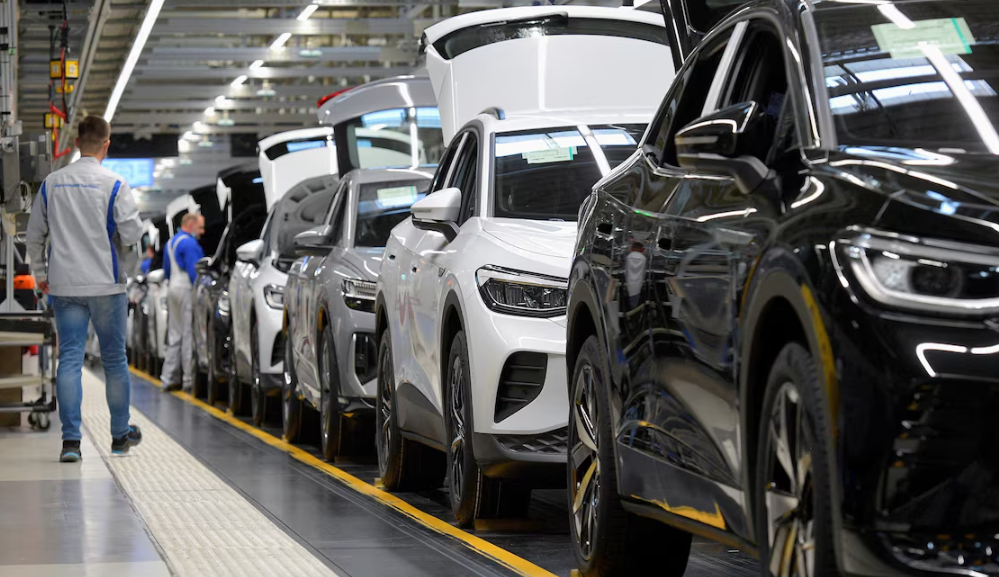
Europe’s car market recorded growth in August as strong demand for electric and electrified vehicles helped offset a sharp decline in petrol and diesel Car Sales, according to data from the European Automobile Manufacturers’ Association (ACEA).
Total new-car registrations in the European Union rose 5.3% to 832,637 vehicles during August. The increase highlights the accelerating shift in Europe’s automotive market, where battery-electric, plug-in hybrid and hybrid vehicles are taking a growing share of new registrations.
The latest figures also show that Chinese automakers are continuing to expand their presence in Europe. Companies including BYD, Chery and Leapmotor recorded substantial year-on-year increases, while the combined market share of Chinese car brands rose to 11.3% from 7.1%.
EV Demand Drives European Car Market Growth
The biggest factor behind August’s growth was demand for electrified vehicles. Battery-electric vehicle registrations increased 52.2% compared with the same month last year, while plug-in hybrid registrations rose 13.5%.
Registrations of conventional hybrid vehicles also increased, although at a slower pace of 3.4%.
Together, battery-electric, plug-in hybrid and hybrid vehicles accounted for more than 73% of all new car registrations during the month. This represents a major change in the composition of Europe’s new-car market compared with the traditional dominance of petrol and diesel vehicles.
ACEA said demand for electrified vehicles was supported by market incentives and a wider selection of models available to consumers. The data suggests that consumers are increasingly considering different forms of electrification when purchasing new vehicles.
Petrol and Diesel Sales Continue to Fall
The growth in electrified vehicles came alongside a steep decline in registrations of conventional petrol and diesel cars.
Petrol car registrations dropped 23.5% in August, while diesel registrations fell 23.1%. The declines demonstrate the continuing pressure on traditional internal-combustion powertrains in Europe’s passenger-car market.
The shift does not mean that petrol and diesel vehicles have disappeared from the market. However, their declining share indicates that a growing portion of new-car demand is moving toward electric, hybrid and plug-in hybrid technologies.
For automakers, this transition has important implications for product planning, manufacturing capacity and investment. Companies need to balance existing demand for conventional vehicles with increasing demand for electrified models.
Electrified Cars Account for More Than 73% of Registrations
The combined share of battery-electric, plug-in hybrid and hybrid vehicles reached more than 73% of new registrations in August.
Battery-Electric Vehicles were the fastest-growing category, with registrations climbing more than 50% year on year. Plug-in hybrids also recorded double-digit growth, while conventional hybrids continued to expand.
The different technologies appeal to consumers in different ways. Battery-electric vehicles offer fully electric driving, while plug-in hybrids combine an electric powertrain with a combustion engine. Conventional hybrids use electric assistance but do not generally require external charging.
The strong performance across all three categories suggests that Europe’s transition toward lower-emission vehicles is taking place through several technologies rather than through battery-electric cars alone.
Chinese Automakers Gain Ground in Europe
One of the most notable developments in the August data was the continued expansion of Chinese car manufacturers in European markets.
BYD, Chery and Leapmotor each recorded sales that were between almost two and three times higher than a year earlier, according to the ACEA data cited by Reuters.
Other Chinese manufacturers also recorded strong growth. Geely increased sales by more than 25%, while SAIC’s sales rose by more than 32%.
As a result, the combined market share of Chinese car brands increased to 11.3% in August, up from 7.1% a year earlier.
The increase marks a significant change in Europe’s competitive automotive landscape. Chinese manufacturers have been expanding their European offerings at a time when demand for electrified vehicles is growing rapidly.
BYD and Other Chinese Brands Benefit From EV Growth
The rise of Chinese manufacturers is closely connected to the changing structure of Europe’s car market. Several Chinese companies have built strong positions in electric and electrified vehicles, allowing them to participate in one of the fastest-growing parts of the market.
BYD has expanded its international operations with a broad range of electric and hybrid models. Other companies, including Chery, Leapmotor, Geely and SAIC, are also increasing their presence in European markets.
The August registration figures indicate that consumers are increasingly encountering Chinese brands as part of the available choice when purchasing electrified vehicles.
For established European automakers, the development adds another layer of competition at a time when the industry is already undergoing a major technological transition.
European Automakers Lose Some Market Share
The overall growth in registrations did not benefit all manufacturers equally. Renault and Volkswagen recorded declines of 4.4% and 3.6%, respectively, according to the data cited by Reuters.
Stellantis, by contrast, recorded a 3.5% increase in registrations.
The combined market share of the three major European automotive groups fell to 49.8%, compared with 52% a year earlier.
The decline in combined market share does not necessarily mean that these companies are experiencing an overall collapse in demand. Instead, it reflects the faster growth of competing brands, particularly manufacturers from China, as the market expands.
Why the European Car Market Is Changing
Europe’s automotive industry is undergoing a structural transformation driven by several factors.
- Growing EV availability: Automakers are offering a wider range of battery-electric and electrified models.
- Government support: Market incentives and other measures can influence consumer demand for lower-emission vehicles.
- Changing consumer preferences: More buyers are considering electric and hybrid vehicles as alternatives to conventional cars.
- Regulatory pressure: Europe’s emissions policies are encouraging manufacturers to reduce the environmental impact of their vehicle fleets.
- Increasing competition: New entrants, particularly Chinese manufacturers, are expanding consumer choice.
These forces are changing not only what consumers buy but also how automakers compete for market share.
Higher Energy Costs Add Complexity
The increase in electrified-car registrations comes despite higher energy costs and continued geopolitical uncertainty.
Energy prices can affect both consumers and manufacturers. Higher household energy costs can influence purchasing decisions, while automakers face energy and raw-material costs across their manufacturing operations.
Despite these pressures, demand for electrified vehicles remained strong in August. ACEA attributed the growth partly to market support measures and the wider availability of models.
The data therefore suggests that the transition toward electrification is continuing even in a challenging economic environment.
What the August Numbers Mean for Automakers
The latest registration data provides several signals for European car manufacturers.
First, automakers need to maintain competitive electrified portfolios as demand shifts away from traditional powertrains. A company with a limited selection of EVs or hybrids may face greater pressure as consumers gain access to more alternatives.
Second, the growth of Chinese brands means European manufacturers are facing competition not only from established domestic rivals but also from companies expanding rapidly across international markets.
Third, the decline in petrol and diesel registrations could influence future production decisions. Manufacturers may increasingly allocate investment and production capacity toward electric and hybrid technologies as market demand changes.
Chinese Market Share Reaches 11.3%
The increase in Chinese brands’ combined market share from 7.1% to 11.3% is one of the clearest indicators of their growing presence.
The gain is particularly notable because it occurred during a month when the overall European market expanded. Chinese manufacturers were therefore not simply benefiting from a shrinking market; they were increasing their share within a growing market.
The performance of BYD, Chery and Leapmotor was especially strong, with each selling between almost two and three times as many vehicles as in August of the previous year.
Whether these gains can be maintained over a longer period will depend on factors including consumer demand, pricing, model availability, brand recognition, trade policies and competition from established European manufacturers.
European Auto Competition Is Becoming More Diverse
The latest figures illustrate how Europe’s automotive market is becoming more competitive and more diverse.
Traditional European manufacturers continue to account for a substantial portion of registrations, but their combined share is declining as newer competitors gain ground. Chinese brands are becoming an increasingly visible part of the market, particularly in the electrified vehicle segment.
At the same time, Japanese, South Korean, US and other international automakers continue to compete for European consumers.
This expanding competitive landscape could give consumers a broader range of electric and hybrid vehicles, while increasing pressure on manufacturers to compete on technology, pricing, efficiency and product features.
What to Watch in Europe’s Auto Market
The August registration figures raise several issues that will be important for the European automotive industry in the coming months.
- EV growth: Whether the rapid increase in battery-electric registrations continues.
- Hybrid demand: Whether consumers continue using hybrids as a transition technology.
- Chinese brands: Whether Chinese manufacturers can sustain their market-share gains.
- European manufacturers: How established automakers respond to increasing competition.
- Petrol and diesel decline: Whether conventional powertrains continue losing market share at a similar pace.
- Government policies: How incentives and regulations affect future vehicle demand.
Europe’s Auto Market Moves Further Toward Electrification
August’s European car-registration data shows a market increasingly shaped by electrification. Total registrations increased 5.3% to 832,637 vehicles, but the headline growth figure does not tell the entire story.
The composition of sales is changing rapidly. Battery-electric registrations increased 52.2%, plug-in hybrids rose 13.5% and hybrids gained 3.4%, while petrol and diesel registrations fell by more than 23% each.
At the same time, Chinese automakers are gaining market share. Their combined share rose to 11.3% from 7.1%, with several manufacturers recording particularly strong year-on-year growth.
For Europe’s automotive industry, the figures point to two major transformations happening simultaneously: a shift from combustion engines toward electrified vehicles and an increasingly competitive market in which Chinese manufacturers are playing a larger role.
The coming months will show whether the strong August performance represents a sustained acceleration in Europe’s electric-vehicle transition and whether Chinese brands can maintain the market-share gains recorded during the month.
Frequently Asked Questions
Did European car sales rise in August 2026?
Yes. New car registrations in the European Union increased 5.3% in August to 832,637 vehicles, according to ACEA data.
Why did Europe’s car market grow in August?
Growth was supported mainly by strong demand for electrified vehicles, including battery-electric, plug-in hybrid and hybrid cars.
How much did electric car registrations increase?
Battery-electric vehicle registrations increased 52.2% year on year in August.
What happened to petrol and diesel car registrations?
Petrol registrations fell 23.5%, while diesel registrations declined 23.1% during August.
What share of new cars were electrified?
Battery-electric, plug-in hybrid and hybrid vehicles together accounted for more than 73% of new registrations.
How much did Chinese car brands’ market share increase?
The combined market share of Chinese car brands increased to 11.3% in August from 7.1% a year earlier.
Which Chinese automakers recorded strong growth?
BYD, Chery and Leapmotor sold between almost two and three times as many vehicles as they did a year earlier, while Geely and SAIC also recorded strong growth.
How did major European automakers perform?
Registrations at Renault and Volkswagen declined 4.4% and 3.6%, respectively, while Stellantis registrations increased 3.5%.
For breaking news and live news updates, like us on Facebook or follow us on Twitter and Instagram. Read more on Latest Business on thefoxdaily.com.




COMMENTS 0