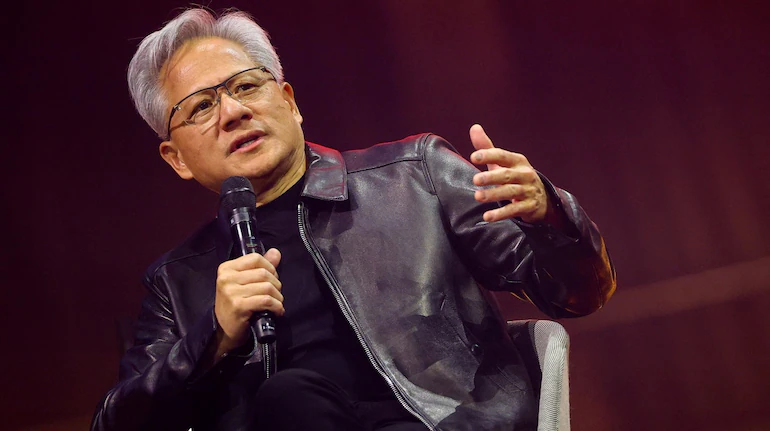
The sudden departure of Nvidia co-founder Jensen Huang as chief executive is unlikely to derail the global Artificial Intelligence (AI) investment cycle in the near term, according to IBM chairman and CEO Arvind Krishna. He believes the chipmaker’s strong order book, customer commitments and visibility over future demand should provide stability to the AI infrastructure industry for the next two to three years.
Krishna said the leadership transition could influence Nvidia’s longer-term direction, but it is unlikely to trigger an immediate reassessment of investments in data centres, advanced processors and computing infrastructure. Companies building AI systems have already made substantial commitments based on expected demand for computing capacity.
His assessment offers some reassurance to an industry where Nvidia plays a central role in supplying the graphics processing units (GPUs) required for AI training and inference. However, the transition raises important questions about succession planning, corporate governance and the company’s ability to maintain its technological and financial influence.
Nvidia’s Order Book Provides Near-Term Stability
Krishna pointed to Nvidia’s order visibility as a major reason why Huang’s departure may not immediately affect the AI investment cycle. According to the IBM chief, the company has a sold-out order book covering the next two years, giving its engineering teams a clear understanding of the products and systems they need to deliver.
He indicated that the existing pipeline of customer commitments should allow Nvidia to continue executing its plans while the company manages the leadership transition.
The distinction between short-term execution and long-term strategic direction is important. Nvidia has already established relationships with major technology companies, cloud providers and businesses investing in AI infrastructure. These customers require large quantities of computing hardware, and their immediate requirements are unlikely to disappear simply because the company changes its chief executive.
Krishna suggested that the identity and capabilities of Nvidia’s next permanent leader would matter more for its five-year outlook than for its performance over the next two to four years.
Why Jensen Huang’s Departure Matters to the AI Industry
Nvidia has become one of the most influential companies in the global AI ecosystem. Its GPUs power the training and deployment of advanced AI models, while its software, networking technologies and computing platforms have helped establish its position in the data-centre market.
Huang’s influence has extended beyond product development. As a co-founder and long-serving chief executive, he has played a central role in shaping Nvidia’s business strategy, partnerships and relationships with major customers.
His departure therefore raises questions that go beyond the appointment of a new executive. Investors and industry participants will want to understand whether the next leader can maintain Nvidia’s product roadmap, preserve customer confidence and continue investing in technologies required for increasingly demanding AI workloads.
However, Krishna cautioned against assuming that a change at the top would automatically lead to an immediate slowdown in AI infrastructure spending. Existing projects, hardware requirements and customer commitments provide the industry with considerable momentum.
IBM CEO Sees Limited Near-Term Impact on AI Investment
Krishna acknowledged that Huang’s exit could potentially moderate some investment activity, but described such an impact as secondary rather than a fundamental disruption to the sector.
His assessment separates the technological momentum behind AI from the financial relationships that support the wider ecosystem. Companies are continuing to develop AI applications, expand computing capacity and invest in infrastructure because they expect long-term demand for these services.
According to Krishna, the technological ecosystem can continue functioning even as Nvidia undergoes a leadership transition. However, the financial dynamics could depend more heavily on the decisions made by the company’s future leadership.
This distinction matters because Nvidia’s influence is not limited to selling processors. Its investments and partnerships have also helped support companies developing AI infrastructure and related technologies.
If the next leadership team changes the company’s approach to financing partnerships or strategic investments, some businesses in the ecosystem could reassess their expansion plans. Such adjustments, however, would not necessarily translate into an immediate collapse in demand for AI computing hardware.
Nvidia’s Financial Influence Extends Beyond GPU Sales
Nvidia occupies a central position in the AI industry through both its technological capabilities and its financial relationships. Its processors are essential to many AI data centres, while its partnerships and investments connect it with companies building the broader infrastructure ecosystem.
This creates a distinction between demand for Nvidia’s products and the financial support available to other businesses in the sector.
Technology companies may continue purchasing GPUs and expanding their computing capacity even if Nvidia changes its investment priorities. However, startups and infrastructure providers that depend on strategic partnerships or financial backing could face a different situation.
A more cautious approach to investments by Nvidia’s future leadership could influence funding conditions, partnership structures and expansion decisions across parts of the AI market.
For this reason, Krishna believes the financial consequences of the transition deserve attention, even though the immediate technological impact is expected to remain limited.
Apple’s Experience Offers a Lesson in Founder Succession
Krishna compared Nvidia’s leadership transition with Apple’s experience following the departure of its co-founder Steve Jobs. He noted that some companies continue performing strongly after losing a prominent founder, while others struggle to maintain their previous momentum.
Apple’s performance after Jobs left the company demonstrated that an organisation can preserve its competitive position beyond the influence of a single individual. However, Krishna also acknowledged that founder departures do not produce identical outcomes across businesses.
The comparison highlights an important challenge for Nvidia. Its future performance will depend on whether its next leadership team can maintain the company’s engineering culture, strategic focus and ability to respond to changes in the semiconductor industry.
Founder-led companies can benefit from strong leadership continuity, but they also face succession risks when important decisions and corporate identity become closely associated with one individual.
Nvidia’s ability to manage this transition will therefore be an important factor in determining whether it can sustain its position over the longer term.
Leadership Transition Raises Questions About Corporate Governance
Huang’s departure follows a period of intense attention surrounding Nvidia and reports about alleged personal relationships and possible national security concerns. Media reports linked the leadership change to allegations involving relationships with women, including one person suspected of being a Chinese spy.
These reports have raised questions about corporate governance, executive oversight and the sensitivity of Nvidia’s business relationships with China. However, the company’s official announcement did not specify a reason for Huang’s resignation, and the allegations should not be treated as established findings.
The situation places additional importance on how Nvidia communicates its succession plans and manages investor confidence. A leadership transition at a company of its size requires clarity around decision-making responsibilities, strategic priorities and oversight.
For shareholders, the central issue will be whether the transition affects business execution or introduces uncertainty into customer relationships and long-term planning.
Colette Kress Named Interim CEO as Nvidia Begins Succession Process
Nvidia’s board appointed long-time chief financial officer Colette Kress as interim chief executive while the company begins its search for a permanent successor. Harvey C. Jones, a long-serving board member, was appointed the company’s first-ever chairman.
Kress’s appointment provides interim leadership continuity during the transition. Her experience as CFO gives her familiarity with Nvidia’s financial operations, business performance and investment requirements.
However, the appointment does not by itself resolve the question of who will lead Nvidia permanently. The next chief executive will need to manage relationships with major customers, oversee product development and maintain the company’s competitive position in a rapidly changing semiconductor market.
The permanent appointment will also provide a clearer indication of whether Nvidia intends to maintain its existing strategic direction or make changes to its long-term priorities.
Why the AI Investment Cycle Has Momentum Beyond One Company
The global AI investment cycle is supported by several interconnected trends. Technology companies are expanding data-centre capacity, cloud providers are developing specialised computing services, and businesses are incorporating AI tools into their operations.
These investments require more than advanced processors. Data centres also need networking equipment, storage systems, electricity, cooling infrastructure and reliable supply chains. As a result, spending on AI infrastructure supports a wider group of technology and industrial businesses.
Nvidia remains a central supplier, but the industry’s development is not determined by a single executive or company alone. Demand from cloud providers, enterprise customers and AI developers will also influence investment decisions.
Nevertheless, Nvidia’s market position means that any significant change in its product strategy, supply commitments or financial relationships could have consequences across the ecosystem.
The near-term investment outlook is therefore more dependent on existing customer demand and infrastructure requirements, while the longer-term outlook will also reflect the decisions of Nvidia’s next permanent leadership team.
What Investors Should Watch After Huang’s Exit
Investors assessing Nvidia and the wider AI sector will need to distinguish between immediate operational continuity and longer-term strategic uncertainty.
- Permanent CEO appointment: The background and strategic priorities of Nvidia’s next leader will influence expectations about the company’s future direction.
- Order book execution: Nvidia’s ability to fulfil existing customer commitments will be an important indicator of operational stability.
- Product development: Continued progress in GPUs, networking and AI computing platforms will be essential to maintaining its competitive position.
- Financial partnerships: Changes in Nvidia’s investment strategy could affect companies that depend on its financial support or strategic relationships.
- Customer confidence: Major cloud providers and technology companies will remain important indicators of whether demand for AI infrastructure is holding up.
Near-Term AI Growth May Continue, but Nvidia’s Long-Term Direction Remains Uncertain
Arvind Krishna’s assessment suggests that Jensen Huang’s departure is unlikely to immediately interrupt the AI industry’s investment momentum. Nvidia’s existing order book, customer commitments and product pipeline provide a degree of stability while the company searches for permanent leadership.
However, the longer-term implications could be more significant. Nvidia’s influence extends beyond semiconductor sales into strategic partnerships and financial relationships that support the wider AI ecosystem. Changes in these areas could affect investment decisions over time.
The immediate question is whether Nvidia can maintain its operational momentum during the transition. The more important long-term test will be whether its next leader can preserve its technological advantage, customer relationships and influence over the AI infrastructure market.
For now, the broader AI investment cycle appears unlikely to depend solely on who occupies Nvidia’s corner office. Its future will also be shaped by enterprise demand, data-centre expansion, computing requirements and the commercial returns businesses expect from artificial intelligence.
For breaking news and live news updates, like us on Facebook or follow us on Twitter and Instagram. Read more on Latest Business on thefoxdaily.com.






COMMENTS 0