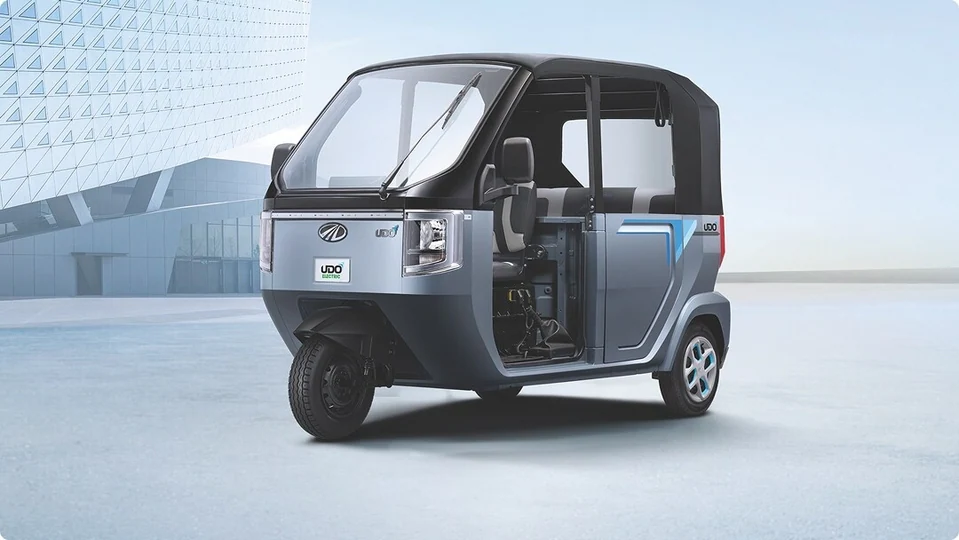
Mahindra Last Mile Mobility is considering an initial public offering (IPO) within the next 18 months as demand for electric three-wheelers increases across India’s passenger and goods transportation markets. The company is weighing a potential stock market listing against continued financial support from its parent, Mahindra & Mahindra Ltd., as it expands manufacturing capacity to meet rising demand.
The proposed listing would give investors an opportunity to participate in Mahindra’s growing electric commercial vehicle business. However, the company has not committed to a fixed IPO date. Chief Executive Officer Suman Mishra has indicated that the decision will depend on the business’s funding requirements, operational readiness and ability to demonstrate sustained growth. :chatgpt-content-reference{index=”0″}
Mahindra Last Mile Mobility Targets IPO Within 18 Months
Mahindra Last Mile Mobility is considering a public listing in approximately 18 months. Mishra said the company would proceed if it is ready by then, rather than rushing to enter the stock market to raise funds.
The business can continue relying on financial support from its parent group to fund expansion if a public offering is not the most suitable option. Mishra indicated that Mahindra & Mahindra would support the company’s investment requirements regardless of whether it chooses to list.
This flexibility gives the company time to expand production, strengthen its financial performance and demonstrate that demand for its Electric Vehicles can be sustained. A listing would therefore depend not only on investor appetite but also on whether the business can present a convincing growth and profitability outlook.
The company has already attracted external investment. In July 2026, it raised ₹322 crore from investors led by Lightrock at a reported valuation of ₹10,822 crore. The funding provides an indication of investor interest in the business, although the valuation of a future IPO would depend on market conditions and the company’s financial performance at the time of listing. :chatgpt-content-reference{index=”1″}
Fuel Costs Are Encouraging Commercial Drivers to Switch to EVs
Rising fuel prices linked to the West Asia conflict have accelerated interest in electric vehicles, particularly among commercial drivers who cover long distances every day. For operators of passenger and cargo three-wheelers, fuel expenses represent a recurring part of their business costs.
Mishra said more than 45% of India’s larger three-wheelers are electric. She highlighted the economics of daily usage, explaining that drivers travelling around 150 kilometres a day can begin to see operating-cost savings relatively quickly after switching to an electric vehicle.
Unlike private vehicle owners, commercial drivers often use their vehicles for extended working hours. This makes running costs especially important when deciding whether to purchase an electric or conventional vehicle.
Electric three-wheelers can reduce expenditure on petrol, diesel or compressed natural gas, depending on the vehicle being replaced. However, the overall financial benefit also depends on the purchase price, financing costs, electricity tariffs, charging access, battery life and maintenance requirements.
The recent fuel crisis may encourage more drivers who were previously uncertain about switching to electric vehicles. Whether this demand remains strong over the longer term will depend on the continued cost advantage and the availability of dependable charging and servicing infrastructure. :chatgpt-content-reference{index=”2″}
Mahindra Expands Manufacturing Capacity to Meet Rising Demand
Mahindra Last Mile Mobility is investing in additional manufacturing capacity as demand for electric three-wheelers increases. The company has already committed substantial resources to expansion and is evaluating locations for a larger manufacturing facility.
Capacity expansion is important because rising orders do not automatically translate into higher sales if manufacturers cannot produce and deliver vehicles quickly enough. A larger production network could help Mahindra serve passenger and goods-carrier markets while preparing for further electrification.
The company’s manufacturing plans also need to account for the wider supply chain. Increasing vehicle assembly capacity alone may not be sufficient if battery cells, semiconductors or other critical components become difficult to source.
Mahindra has localised approximately 70% to 75% of its manufacturing, according to Mishra. However, it continues to depend on imports for battery cells and semiconductors. This leaves part of its production exposed to international supply conditions, currency movements and changes in component prices.
Greater localisation could help the company reduce some of these risks over time. But battery-cell manufacturing and semiconductor supply involve specialised technology, significant investment and established supplier networks, making complete domestic sourcing a longer-term objective rather than an immediate outcome. :chatgpt-content-reference{index=”3″}
Profitability Remains an Important Milestone Before an IPO
One of the important financial challenges for Mahindra Last Mile Mobility is achieving profitability without relying on government incentives. Mishra said the business has not yet reached that stage but expects to do so within a couple of years.
Government incentives can support electric vehicle adoption by reducing purchase costs or helping manufacturers develop production capacity. However, a business that depends heavily on such support may face pressure if incentive structures change or programmes are reduced.
Achieving profitability without incentives would demonstrate that the company’s operations can generate stronger returns through vehicle sales, manufacturing efficiencies and cost management. It could also strengthen the business case for a public listing.
Investors considering an IPO would likely examine revenue growth, operating margins, cash flow, capital expenditure and the company’s ability to maintain demand. Manufacturing expansion can support future sales, but it also increases investment requirements and may affect profitability if capacity is not utilised efficiently.
The timing of the proposed listing could therefore depend on how successfully Mahindra balances expansion with financial discipline. A growing order book alone may not be enough to establish the long-term earnings visibility that public-market investors typically seek.
Bajaj and TVS Increase Competition in the Electric Three-Wheeler Market
Competition in India’s three-wheeler market is increasing as established vehicle manufacturers, including Bajaj Auto and TVS Motor, expand their presence in the segment.
Although additional competitors can put pressure on pricing and market share, Mishra said their entry has also helped improve confidence in electric three-wheelers. Wider participation by recognised manufacturers can make customers more comfortable with the technology, particularly when considering vehicle reliability, servicing and resale value.
For commercial drivers, the decision to adopt an electric vehicle involves more than comparing purchase prices. They also consider the availability of spare parts, service centres, financing options and the time required to recharge the vehicle.
Competition can encourage manufacturers to improve these areas while introducing more product options for different customer requirements. It can also push companies to improve battery performance, vehicle range and operating efficiency.
However, the growing number of players means Mahindra will need to maintain product quality and cost competitiveness. Its ability to expand capacity while preserving customer loyalty will be an important factor in determining its position in the market. :chatgpt-content-reference{index=”4″}
Why Electric Three-Wheelers Are Important for Last-Mile Mobility
Three-wheelers play a significant role in India’s local transportation and delivery networks. Passenger vehicles connect commuters to public transport, workplaces and residential areas, while goods carriers support deliveries for retailers, small businesses and e-commerce operators.
Electrification in this segment has particular significance because many vehicles operate on fixed or relatively predictable routes. This can make it easier for operators to plan charging schedules and calculate the savings from lower energy costs.
Electric cargo three-wheelers also offer opportunities in urban logistics, where businesses are looking to manage delivery costs and reduce emissions. However, their adoption depends on practical requirements such as payload capacity, vehicle range, charging time and the availability of charging facilities near operating routes.
The passenger and goods-carrier markets may not electrify at the same speed. Passenger vehicles often have established daily routes and usage patterns, while cargo operators may require different vehicle capacities and longer operating hours. Manufacturers therefore need products designed for distinct commercial applications rather than relying on a single vehicle format.
What Could Determine the Success of Mahindra’s IPO?
Mahindra Last Mile Mobility’s potential IPO will depend on several factors beyond the growth of electric vehicle demand. The company’s ability to scale production, improve profitability and manage supply-chain risks will be important to its readiness for the public markets.
- Sustained demand: The company will need to demonstrate that electric three-wheeler sales can continue growing beyond the immediate impact of higher fuel prices.
- Manufacturing expansion: New capacity must translate into higher production and deliveries without creating excessive costs or underused facilities.
- Profitability: Improving margins and reducing dependence on government incentives could strengthen the company’s financial position.
- Supply-chain localisation: Reducing reliance on imported battery cells and semiconductors could improve resilience, although achieving this may take time.
- Market competition: The company will need to defend its position as established manufacturers and newer EV players compete for commercial customers.
- IPO market conditions: Investor appetite, valuations and broader stock market conditions will influence the timing and structure of a potential listing.
These factors will help determine whether the business is ready to operate as a listed company. The proposed 18-month timeline remains conditional, rather than a confirmed IPO schedule.
What Mahindra’s Potential Listing Means for India’s EV Industry
A public listing by Mahindra Last Mile Mobility could bring greater attention to the economics of electric commercial vehicles. Passenger electric cars often dominate discussions about EV adoption, but three-wheelers are an important part of the transition because they serve high-usage transportation and delivery requirements.
A successful listing could provide the company with another route to raise capital for manufacturing, product development and supply-chain investment. It could also give public-market investors a more direct opportunity to participate in the growth of India’s electric last-mile mobility segment.
For the wider industry, the development may encourage other manufacturers and investors to examine the commercial potential of electric three-wheelers. However, the success of the business will depend on whether vehicle adoption remains economically attractive after accounting for battery costs, financing, charging infrastructure and government support.
Mahindra IPO Outlook: Listing Depends on Growth and Financial Readiness
Mahindra Last Mile Mobility’s consideration of an IPO within the next 18 months reflects the growing importance of electric three-wheelers in India’s commercial vehicle market. Rising fuel costs, stronger customer interest and increasing competition are creating opportunities for manufacturers, while the company is preparing to expand its production capacity.
However, the proposed listing is not a confirmed commitment. Mahindra can continue funding expansion through its parent group, giving the business flexibility to wait until it has demonstrated sustained growth and improved profitability.
The next major milestone will be whether the company can convert rising demand into consistent sales, expand manufacturing efficiently and reduce its dependence on incentives and imported components. If it achieves these objectives, an IPO could become a more practical funding option. Until then, the company’s priority is likely to remain building a larger and financially sustainable electric three-wheeler business.
For breaking news and live news updates, like us on Facebook or follow us on Twitter and Instagram. Read more on Latest Business on thefoxdaily.com.






COMMENTS 0