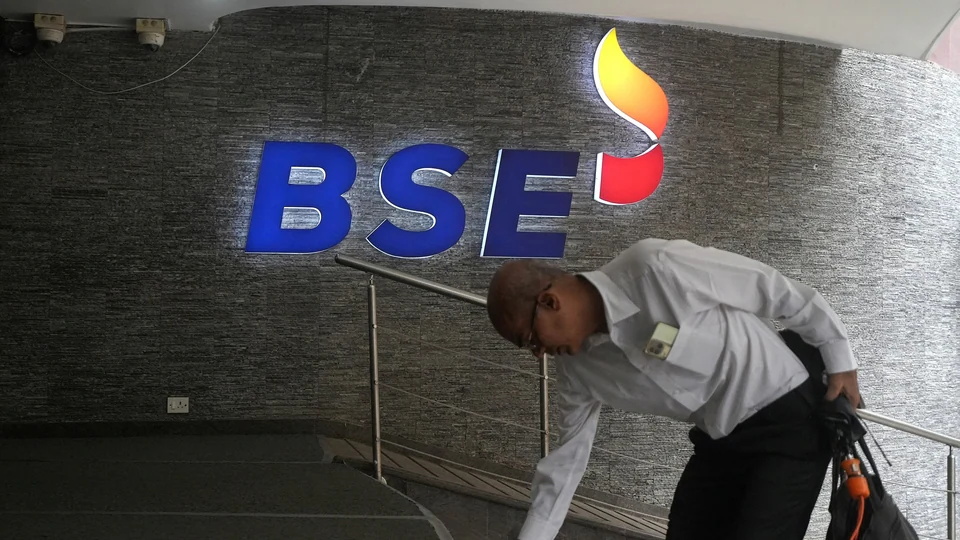
Indian stock markets opened lower on Monday as investors assessed September-quarter earnings from major private-sector lenders HDFC Bank and ICICI Bank, while elevated crude oil prices continued to weigh on market sentiment. The cautious start followed a strong rally last week, when both benchmark indices recorded their best weekly performances in around six months.
The BSE Sensex opened at 74,594.65, declining 134.62 points, or 0.18%. The NSE Nifty 50 started the session at 23,096.85, down 49.30 points, or 0.21%, as investors weighed corporate earnings, international oil prices and foreign investment trends.
Despite Monday’s weak opening, market sentiment had improved significantly over the previous week. The Sensex gained 2,256.94 points, or 3.11%, while the Nifty advanced 625.7 points, or 2.77%. A recovery in information technology stocks, supported by better-than-expected quarterly earnings, helped drive the rally.
HDFC Bank and ICICI Bank Earnings in Focus
The September-quarter earnings season remains a major driver of investor sentiment, with financial stocks attracting particular attention. HDFC Bank and ICICI Bank are among the largest constituents of the Nifty 50, meaning their earnings performance and share-price movements can significantly influence the broader market.
HDFC Bank reported second-quarter profit that narrowly missed analyst estimates. Weaker treasury income and higher provisions for bad loans offset the benefits of robust lending growth, raising questions about the bank’s profitability and asset-quality trends.
Although the lender continued to demonstrate growth in its loan book, investors are assessing whether pressure on treasury income and the need for additional provisions could affect earnings in the coming quarters. The market’s reaction to these results may influence sentiment towards other major banking stocks.
ICICI Bank delivered a stronger performance, reporting September-quarter profit above market expectations. Its results were supported by stronger loan growth and lower provisions for bad loans, providing a more positive earnings signal for the private Banking Sector.
The contrasting performances of the two lenders have made banking stocks a key focus for investors at the start of the week. Market participants will be watching how investors respond to the results and whether stronger earnings from some lenders can offset concerns about profitability and asset quality elsewhere.
Nifty 50 Faces Resistance Near 23,150
Market experts believe the performance of private-sector banks could determine whether Indian equities regain momentum after Monday’s lower opening. A positive response to banking earnings could help cushion the impact of rising oil prices and support the benchmark indices.
“A positive reaction to private-bank earnings could help the market absorb higher oil prices, with Nifty facing immediate resistance at 23,150 levels,” Hariselvan Radhakrishnan, founder and CEO of HST Wealth, said.
The 23,150 level is therefore an important near-term level for traders to monitor. A sustained move above this area could indicate improving buying interest, while continued weakness in heavyweight banking stocks could make it more difficult for the Nifty to extend last week’s gains.
Investors are also likely to monitor earnings from other major companies for clues about corporate profitability, business demand and the broader economic outlook. The balance between earnings growth and rising input costs will remain important in determining the direction of the market.
Rising Crude Oil Prices Weigh on Indian Stock Market
Elevated crude oil prices remain a major concern for Indian equities. Brent crude was trading at around $108 a barrel after easing from the $110 level reached on Friday. Although prices have moved lower from their recent peak, the decline has not been sufficient to remove concerns about the economic impact of expensive energy imports.
India imports a substantial share of its crude oil requirements, making the domestic economy sensitive to fluctuations in international energy prices. A prolonged increase in crude oil costs can raise the country’s import bill, add pressure to inflation and increase expenses for businesses that rely heavily on fuel and transportation.
Higher energy costs can also affect corporate profit margins, particularly in sectors where companies have limited scope to pass additional expenses on to customers. Aviation, transportation, manufacturing and other energy-intensive industries may face pressure if elevated oil prices persist.
Oil prices have remained supported by geopolitical uncertainty and concerns about global fuel supplies. US President Donald Trump waived sanctions and tariffs on Russia, potentially opening the way for higher Russian fuel exports and easing some supply concerns. However, continuing tensions in the Middle East have provided support to international crude prices.
For Indian investors, the key question is whether oil prices will decline enough to ease pressure on inflation, the currency and corporate earnings. If crude remains near current levels, markets may continue to factor in the possibility of higher operating costs and a less favourable economic environment.
“The pullback from $110 to $108 remains too modest to materially improve India’s macroeconomic outlook,” Radhakrishnan said.
The movement in crude oil prices will therefore remain an important factor for the Sensex and Nifty in the coming sessions. A sharper and sustained decline in oil prices could improve sentiment, while another increase may limit the scope for further gains.
Foreign Investors Return to Buying Indian Equities
Foreign portfolio investors returned as net buyers of Indian equities on Friday after 15 consecutive trading sessions of selling. According to provisional data, foreign investors purchased shares worth ₹11.66 billion, equivalent to approximately $122.79 million.
The return of foreign buying offered a positive signal after a prolonged period of selling pressure. Foreign portfolio investment flows are closely watched by market participants because sustained overseas purchases can support share prices, while heavy selling can increase volatility and weigh on benchmark indices.
However, domestic institutional investors continued to sell shares. They recorded net outflows of ₹36.61 billion on Friday, indicating that domestic selling outweighed the support provided by foreign investors.
The contrasting investment patterns highlight the uncertainty surrounding near-term market direction. While foreign investors have begun returning to the market, continued selling by domestic institutions could limit the strength of any recovery.
Investors will be watching whether foreign buying continues over the coming sessions or proves to be a temporary shift following last week’s rally. Sustained inflows could strengthen confidence in Indian equities, particularly if corporate earnings remain supportive and global risk sentiment improves.
Market Rally Lifts Valuations of India’s Biggest Companies
Last week’s broad-based market rally also boosted the combined market capitalisation of nine of India’s 10 most valued companies by ₹3.65 lakh crore. The increase reflected the recovery in benchmark indices and renewed buying interest across several major stocks.
The gains followed improved sentiment towards information technology companies after better-than-expected quarterly earnings. The recovery in IT shares helped lift the broader market, although investors remain alert to external risks, including expensive crude oil and uncertainty over global economic conditions.
Monday’s lower opening suggests that investors are reassessing their positions after the strong advance. Profit-taking, mixed banking results and concerns about energy costs could lead to further volatility as the earnings season progresses.
What Investors Should Watch Next
The near-term direction of the Indian Stock Market will depend on several factors, including reactions to HDFC Bank and ICICI Bank earnings, changes in international crude oil prices and the sustainability of foreign portfolio investment inflows.
Investors will also monitor whether domestic institutional selling eases after the recent rally. A combination of supportive earnings, stronger foreign buying and lower oil prices could help the Sensex and Nifty regain upward momentum.
On the other hand, persistent energy-price pressures, disappointing corporate results and continued domestic selling could limit further gains. The Nifty’s ability to move above the 23,150 resistance level will be an important near-term indicator, although broader market direction will also depend on global developments and investor risk appetite.
For now, the lower opening reflects a cautious approach rather than a clear reversal of last week’s rally. With banking earnings and crude oil prices at the centre of attention, investors are likely to remain selective while assessing whether the recent recovery can continue.
For breaking news and live news updates, like us on Facebook or follow us on Twitter and Instagram. Read more on Latest Business on thefoxdaily.com.






COMMENTS 0