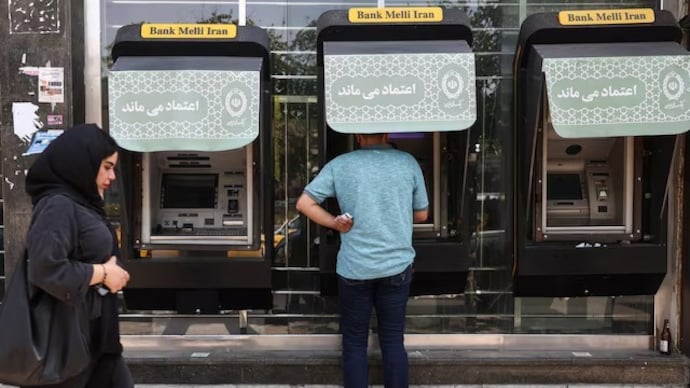
Iran‘s banking sector has once again found itself at the center of a major cybersecurity incident after cyberattacks disrupted card-based operations at some of the country’s largest financial institutions. The attack affected millions of customers WHO rely on Digital Banking services, temporarily impacting ATM withdrawals, point-of-sale (PoS) transactions, mobile banking applications and other payment systems.
The incident underscores a growing reality facing governments and financial institutions worldwide: modern conflicts are increasingly being fought not only through military and diplomatic channels but also through cyberspace. As banking networks become more interconnected and dependent on digital Infrastructure, cyberattacks have evolved into one of the most powerful tools capable of causing economic disruption without a single shot being fired.
The latest disruption comes at a time when cyber threats against financial institutions are becoming more sophisticated, frequent and strategically significant across the globe.
What Happened in Iran’s Banking System?
Iran’s state-owned banking technology provider confirmed that cyberattacks disrupted card-related services at three major banks: Bank Melli, Bank Saderat and Bank Tejarat. As a precautionary measure, authorities temporarily suspended card-based operations to prevent unauthorized access and limit potential damage.
The disruption affected multiple banking channels that millions of consumers use daily, including:
- ATM cash withdrawal services
- Point-of-sale payment terminals
- Mobile banking applications
- Card transaction processing systems
- Digital payment networks
Cybersecurity teams were immediately deployed to investigate the incident, contain potential threats and restore operations. Banking authorities indicated that recovery efforts were underway, though the full extent of the disruption was not immediately disclosed.
The attack follows earlier disruptions reported in mid-June that targeted shared banking communication infrastructure used by several Iranian financial institutions.
Why Banks Are Prime Targets for Cyberattacks
Financial institutions have become some of the most attractive targets for cybercriminals, hacktivists and state-sponsored cyber groups.
Unlike attacks against individual companies, successful strikes on banking infrastructure can create widespread economic disruption within hours. Even a temporary outage can affect businesses, consumers and government operations simultaneously.
Banking systems are targeted because they offer multiple potential objectives:
- Financial theft
- Data collection and espionage
- Economic disruption
- Political messaging
- Psychological impact on public confidence
- Strategic pressure during geopolitical disputes
In many cases, attackers are less interested in stealing money than in demonstrating vulnerability and disrupting normal economic activity.
This shift reflects a broader evolution in Cyber Warfare, where operational disruption often delivers greater strategic value than direct financial gain.
The Growing Importance of Cyber Warfare in Geopolitics
The attack on Iran’s banking infrastructure highlights how cyberspace has emerged as a critical battleground in International Relations.
Over the past decade, governments worldwide have invested heavily in offensive and defensive cyber capabilities. Cyber operations now frequently accompany diplomatic disputes, economic Sanctions, military confrontations and intelligence activities.
Unlike conventional warfare, cyber operations offer several advantages:
- Difficult attribution
- Lower operational costs
- Limited physical risk
- Rapid deployment
- Potential for significant disruption
- Plausible deniability
Because attackers can often conceal their identities, governments frequently avoid directly claiming responsibility even when suspicions point toward state-linked actors.
This ambiguity makes cyber conflicts particularly challenging to manage and respond to under existing international frameworks.
Iran’s Long History of Facing Cyber Threats
Iran has been one of the most prominent targets of cyber operations over the past two decades.
The country’s nuclear program, military infrastructure, energy sector and financial systems have all faced repeated cybersecurity challenges.
Iranian authorities have frequently alleged that foreign governments and intelligence agencies are behind major cyber incidents targeting critical infrastructure. While attribution often remains disputed, cybersecurity experts widely regard Iran as one of the world’s most active arenas for cyber conflict.
At the same time, international cybersecurity firms and governments have also accused Iranian-linked groups of conducting cyber operations abroad, making Iran both a target and a participant in the evolving cyber landscape.
This dual role reflects the increasingly interconnected nature of modern cyber competition.
How Banking Cyberattacks Affect Ordinary Citizens
While cybersecurity incidents are often discussed in technical terms, their most immediate impact is usually felt by ordinary people.
When banking services are disrupted, consumers may suddenly find themselves unable to:
- Access cash from ATMs
- Make retail purchases
- Transfer funds
- Pay bills
- Conduct online transactions
- Access account information
Businesses can also suffer significant losses when payment systems become unavailable.
Small retailers, restaurants and service providers increasingly depend on digital transactions rather than cash. Even short outages can disrupt operations, reduce sales and create customer frustration.
The broader economic impact often extends beyond the immediate technical disruption.
Repeated cyber incidents can undermine confidence in digital banking systems, prompting consumers and businesses to seek alternative payment methods or maintain larger cash reserves.
The Challenge of Protecting Modern Banking Infrastructure
Protecting financial networks has become increasingly difficult as banking systems grow more interconnected.
Modern financial institutions rely on vast ecosystems that include:
- Core banking platforms
- Payment processing networks
- Mobile applications
- Cloud infrastructure
- Third-party vendors
- Interbank communication systems
Each connection creates potential vulnerabilities that attackers may attempt to exploit.
Cybersecurity experts often describe modern Banking Security as a continuous race between defenders and attackers. Financial institutions must secure thousands of potential entry points, while attackers only need to identify a single weakness.
This asymmetry makes cybersecurity an ongoing challenge rather than a problem that can be permanently solved.
How Global Banks Are Responding to Rising Threats
Financial institutions worldwide are investing billions of dollars annually in cybersecurity defenses.
These investments typically focus on:
- Artificial intelligence-powered threat detection
- Multi-factor authentication systems
- Real-time fraud monitoring
- Network segmentation
- Cyber resilience planning
- Employee security training
Regulators have also increased scrutiny of cyber preparedness within the banking sector.
Many countries now require banks to conduct regular cybersecurity assessments, stress tests and incident response exercises designed to evaluate their readiness for major attacks.
The goal is not only preventing breaches but ensuring that essential services can continue operating even during cyber incidents.
A Comparison With Other Major Financial Cyber Incidents
| Type of Attack | Primary Target | Main Impact |
|---|---|---|
| Banking Network Attack | Payment Systems | Transaction Disruption |
| Ransomware Attack | Internal Systems | Operational Shutdown |
| Data Breach | Customer Records | Privacy and Security Risks |
| DDoS Attack | Online Services | Service Unavailability |
| Supply Chain Attack | Shared Infrastructure | Multi-Institution Impact |
The Iranian incident appears particularly significant because it reportedly affected shared banking infrastructure, increasing the potential for broader system-wide disruption.
The Bigger Question: Is Financial Stability Becoming a Cybersecurity Issue?
One of the most important lessons from incidents like this is that financial stability and cybersecurity are becoming inseparable.
Historically, financial stability was primarily associated with economic fundamentals such as Inflation, interest rates, banking regulation and fiscal policy.
Today, cyber resilience has become an equally important factor.
A highly secure banking sector can continue functioning during crises, while vulnerable systems may face disruptions regardless of underlying economic strength.
This shift is prompting central banks and financial regulators to treat cybersecurity as a core component of national economic security.
In many countries, cyber defense strategies now explicitly include protections for financial institutions alongside energy grids, telecommunications networks and transportation infrastructure.
What Happens Next?
The immediate priority for Iranian authorities is restoring full banking operations and determining the source and scope of the attack.
Investigators will likely focus on identifying how the attackers gained access, whether any sensitive information was compromised and what measures are needed to prevent similar incidents in the future.
Financial institutions affected by the disruption may also strengthen security controls, review incident response procedures and enhance monitoring systems.
More broadly, the attack is likely to renew discussions about cyber resilience across the banking sector, both within Iran and internationally.
As digital payment systems continue to expand, governments and financial institutions face growing pressure to ensure that critical services remain operational even during sophisticated cyberattacks.
Conclusion
The cyberattack that disrupted services at several major Iranian banks serves as another reminder that financial institutions sit on the front lines of modern cybersecurity challenges. While authorities work to restore operations and investigate the incident, the event highlights broader concerns about the vulnerability of critical financial infrastructure in an increasingly digital world.
Beyond the immediate disruption to ATMs, card payments and mobile banking services, the incident reflects a larger transformation in how economic and geopolitical competition is conducted. Cyberattacks are no longer isolated technical events; they have become strategic tools capable of influencing financial stability, public confidence and National Security.
As governments and banks invest more heavily in digital transformation, strengthening cyber resilience will remain one of the defining challenges of the global financial system in the years ahead.
For breaking news and live news updates, like us on Facebook or follow us on Twitter and Instagram. Read more on Latest World on thefoxdaily.com.






COMMENTS 0