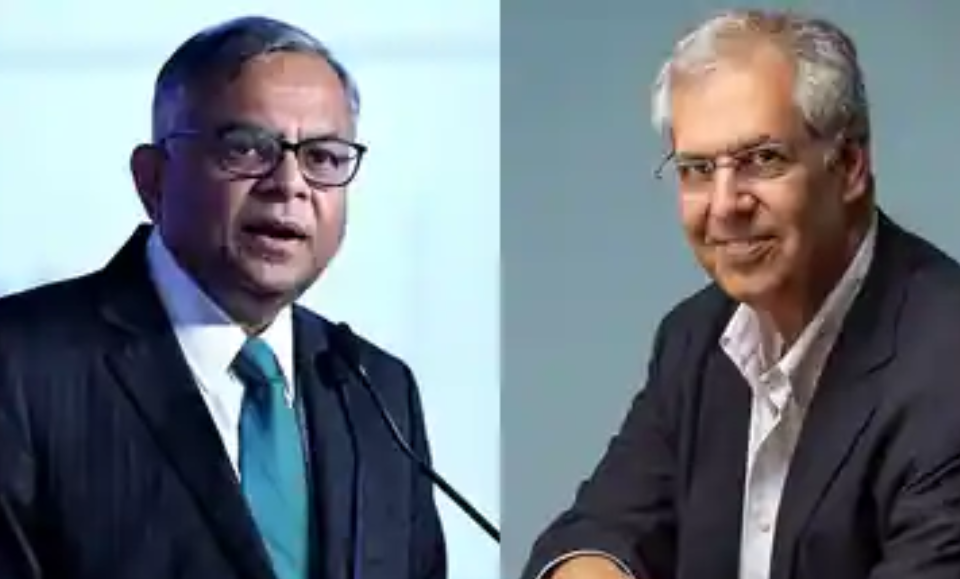
The Tata Sons leadership dispute has entered a new phase after the company’s board approved a fresh five-year term for N Chandrasekaran as executive chairman, while Tata Trusts chairman Noel Tata challenged the decision and described the resolution as illegal.
Chandrasekaran, who has led Tata Sons since 2017, had earlier indicated that he would not seek another term after his current tenure ends in February 2027. The board subsequently asked him to reconsider, and he agreed before directors voted by majority to reappoint him.
Tata Trusts, however, maintains that the process did not comply with the Articles of Association of Tata Sons. Noel Tata voted against the resolution and argued that the board could not validly approve the reappointment without the required support from the Trusts’ nominee directors.
The disagreement places Tata Sons’ corporate governance structure, the relationship between Tata Trusts and the holding company board, and the future direction of the Tata Group under renewed scrutiny.
What Happened at the Tata Sons Board Meeting?
The Tata Sons board approved Chandrasekaran’s reappointment for another five-year term at its September 17, 2026 meeting. The decision reversed his August position that he would not offer himself for another term.
According to Tata Sons’ account of the process, Tata Trusts had previously passed a resolution supporting Chandrasekaran’s reappointment. The board had also agreed in principle to the continuation of his tenure, although the formal resolution was not approved earlier because of a lack of unanimity. 0
After Chandrasekaran decided in August not to seek another term, the board’s Nomination and Remuneration Committee reconsidered the matter. The committee subsequently requested that he reconsider his decision and recommended his reappointment.
At the September 17 meeting, Chandrasekaran accepted the request. The board then approved the five-year extension by majority vote. 1
| Issue | Current position |
|---|---|
| Chairman | N Chandrasekaran |
| New term | Five years after the expiry of his current tenure |
| Current tenure ends | February 2027 |
| Board decision | Reappointment approved by majority vote |
| Noel Tata’s position | Voted against the resolution |
| Tata Trusts’ position | Maintains that the resolution is legally invalid |
| Next regulatory step | Tata Sons said it will take steps relating to applicable RBI requirements |
Why Noel Tata Is Challenging the Reappointment
Noel Tata, chairman of Tata Trusts and one of the Trusts’ nominee directors on the Tata Sons board, opposed the resolution.
Tata Trusts said its position is based on provisions contained in the Articles of Association of Tata Sons. According to the Trusts, the appointment or reappointment of a chairman requires the support of a majority of the Trusts’ nominee directors.
The Trusts also maintains that both nominee directors must be present for the board to lawfully consider such a resolution and that both must vote in favour for it to be valid.
Because Noel Tata voted against the resolution, Tata Trusts argues that the reappointment cannot legally stand.
The Trusts described the resolution as a legal nullity, making clear that its disagreement is not simply about whether Chandrasekaran should continue but about whether the board followed the governance mechanism governing the chairman’s appointment.
Tata Trusts Says Articles of Association Are Central to the Dispute
The Articles of Association of Tata Sons are particularly important because they establish governance provisions for the holding company.
Tata Sons has a distinctive ownership and governance structure. Tata Trusts is the largest shareholder, and its nominee representation gives the Trusts an important role in decisions concerning the holding company.
The current dispute therefore involves more than an ordinary boardroom disagreement. It raises questions about how shareholder rights, nominee-director provisions and board-majority decisions interact when the company’s Articles contain specific requirements for the appointment of its chairman.
The final interpretation of those provisions could have implications for future governance decisions within Tata Sons.
Noel Tata Also Pointed to Chandrasekaran’s Earlier Decision
In his separate statement, Noel Tata argued that the board’s latest resolution effectively requires it to disregard three earlier developments.
First was Chandrasekaran’s own decision not to seek reappointment. Second was the majority shareholder’s acceptance of that decision. Third was the subsequent process that Tata Sons had been asked to begin for identifying a new chairman.
From Noel Tata’s perspective, the September decision therefore represents a reversal of a process that had already begun following Chandrasekaran’s August announcement.
Tata Sons, however, has presented a different sequence of events. Its board said the Nomination and Remuneration Committee reconsidered the matter in September and, after deliberation, asked Chandrasekaran to reconsider because of his contributions and what it described as the larger interests of the Tata Group. 2
Chandrasekaran’s Earlier Exit Decision
The latest dispute follows a major reversal in Tata Sons’ leadership plans.
On August 12, Chandrasekaran communicated that he would not offer himself for reappointment when his existing term ended in February 2027. Tata Trusts publicly acknowledged that decision and said it would begin the process of setting up a selection committee to recommend a new chairman under the Articles of Association. 3
That process now faces a fundamental change because Chandrasekaran has agreed to continue and the Tata Sons board has approved his reappointment.
The result is a sharp contrast between the leadership transition that appeared to be developing in August and the continuity decision announced in September.
Chandrasekaran’s Tenure at Tata Sons
Chandrasekaran became Tata Sons chairman in 2017 after succeeding Ratan Tata. He was subsequently reappointed for another term, and his current tenure is scheduled to end in February 2027.
During his tenure, Tata Group businesses have expanded across several major sectors, including technology, automotive, steel, aviation, consumer products and financial services.
His continuation would provide leadership continuity at a time when the group is also dealing with major strategic and regulatory questions.
Those questions include Tata Sons’ regulatory status, the possibility of a future listing, investment requirements across group businesses and the performance of major operating companies.
Tata Sons and the Listing Question
The chairman dispute comes shortly after another important development involving Tata Sons and the Reserve Bank of India.
The RBI recently rejected Tata Sons’ request to deregister as a core investment company under the non-bank financial company framework. The decision increases regulatory pressure surrounding the holding company’s listing status. 4
Tata Sons has sought to avoid a public listing, while RBI rules create listing requirements for certain large upper-layer NBFCs. Tata Sons’ standalone assets were reported at ₹1.75 trillion as of March 2025, putting the company’s regulatory classification under significant scrutiny. 5
The listing issue is relevant to the leadership dispute because the chairman will be responsible for navigating the holding company’s relationship with regulators while the group considers its long-term ownership and capital structure.
Why the Tata Sons Governance Dispute Matters
Tata Sons is the principal holding company of the Tata Group. It holds significant stakes in major businesses including Tata Consultancy Services, Tata Motors, Tata Steel and Air India.
Consequently, decisions taken at Tata Sons can influence the strategic direction of a wide range of companies even when those businesses operate independently.
A disagreement over the chairman’s appointment can therefore have implications beyond the boardroom. It can affect succession planning, regulatory strategy, capital allocation and the group’s approach to major investments.
| Area | Why the current dispute matters |
|---|---|
| Corporate governance | Raises questions about the interpretation of Tata Sons’ Articles of Association |
| Leadership continuity | Chandrasekaran would continue beyond February 2027 if the reappointment stands |
| Shareholder rights | Highlights the role of Tata Trusts and its nominee directors |
| Regulatory matters | Tata Sons is facing continuing scrutiny over its NBFC and listing status |
| Group strategy | The chairman will oversee decisions affecting the wider Tata Group |
Tata Trusts Submitted a Legal Opinion
Tata Trusts said Noel Tata submitted a legal opinion from former Chief Justice of India Justice DY Chandrachud in support of the Trusts’ interpretation of the governance provisions.
According to the Trusts’ statement, the Tata Sons board did not take note of that opinion during the meeting.
This adds another layer to the disagreement because the dispute is now framed not merely as a difference between directors but as a question involving the legal interpretation of the company’s Articles of Association.
The precise legal effect of the board resolution will depend on the governing documents, applicable corporate law and any regulatory or judicial process that may follow.
What Happens Next?
The immediate issue is whether Tata Sons and Tata Trusts can resolve their disagreement over the validity of the reappointment.
Tata Sons has stated that it will initiate steps to comply with applicable RBI guidelines and seek guidance from the RBI, Tata Trusts and other stakeholders on compliance requirements. 6
If the disagreement remains unresolved, the interpretation of the Articles of Association could become increasingly important. The matter could also affect the selection process and governance arrangements that would otherwise have been used to identify a successor.
The regulatory situation surrounding Tata Sons’ potential listing adds another important issue that the company’s leadership will have to address.
Key Questions Around the Tata Sons Chairman Row
Will Chandrasekaran’s five-year reappointment take effect immediately?
The Tata Sons board has approved the five-year reappointment, but Tata Trusts disputes its legal validity. The final position will depend on the applicable governance provisions and any subsequent regulatory or legal developments.
Why did Chandrasekaran change his position?
Chandrasekaran had earlier decided not to seek another term. Tata Sons said its Nomination and Remuneration Committee later asked him to reconsider, after which he agreed to continue.
Why did Noel Tata vote against the proposal?
Noel Tata’s opposition is based on Tata Trusts’ interpretation of the Articles of Association and his view that the board should respect the earlier decision and succession process.
Does the dispute affect Tata Group companies?
The dispute concerns Tata Sons, the group’s holding company. Its significance for individual Tata companies will depend on how the governance and regulatory issues develop.
What Investors and Stakeholders Will Watch
- Whether Tata Trusts and Tata Sons reach an agreement on the chairman’s appointment.
- Any legal interpretation of the Articles of Association governing the appointment process.
- RBI’s position on the applicable compliance requirements.
- Developments related to Tata Sons’ regulatory classification and potential listing.
- How the leadership dispute affects major strategic investment decisions.
- Whether Tata Sons proceeds with or changes its earlier succession process.
Tata Sons Chairman Row: Key Takeaways
- Tata Sons’ board approved N Chandrasekaran for another five-year term as executive chairman.
- Chandrasekaran had previously decided not to seek reappointment after his current term ends in February 2027.
- Noel Tata voted against the resolution and Tata Trusts maintains that the decision is legally invalid under the company’s Articles of Association.
- Tata Trusts says its nominee-director voting requirements were not satisfied.
- The Trusts also said Noel Tata submitted a legal opinion from former Chief Justice of India DY Chandrachud supporting its position.
- The dispute comes as Tata Sons faces continuing regulatory questions over its NBFC status and potential public listing.
Conclusion
The Tata Sons chairman dispute has shifted from a planned leadership transition to a contested reappointment. The board has approved N Chandrasekaran’s continuation for another five years, while Tata Trusts chairman Noel Tata has challenged the resolution and questioned its validity under the company’s Articles of Association.
The central issue now extends beyond whether Chandrasekaran remains chairman. It concerns how Tata Sons’ governance rules should be interpreted, what role Tata Trusts’ nominee directors have in chairman appointments, and how the holding company will navigate its regulatory obligations.
With Tata Sons also facing continuing questions surrounding its regulatory classification and potential listing, the outcome of the governance dispute could become an important factor in the group’s next phase. For now, the board’s resolution and Tata Trusts’ objection represent two competing positions, with further regulatory, legal or corporate developments likely to determine how the matter proceeds.
“`7
For breaking news and live news updates, like us on Facebook or follow us on Twitter and Instagram. Read more on Latest Business on thefoxdaily.com.



COMMENTS 0