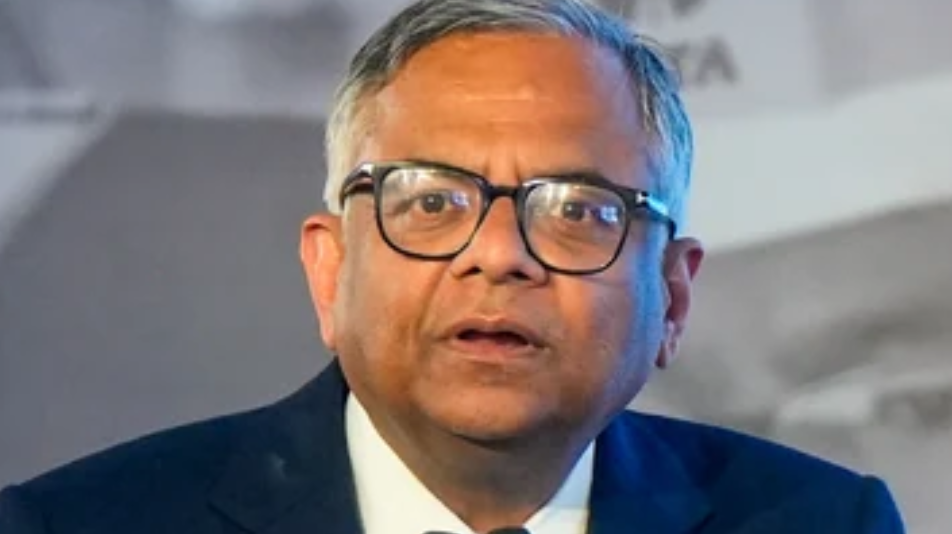
Tata Sons is facing an unusual governance dispute after its board voted to reappoint N. Chandrasekaran as executive chairman for another five-year term, despite opposition from Tata Trusts chairman Noel Tata. The disagreement has created questions over the interpretation of Tata Sons’ Articles of Association, the company’s leadership transition, its potential public listing and the relationship between its majority shareholder and board.
What Happened at Tata Sons?
Tata Sons’ board voted on September 17, 2026 to reappoint N. Chandrasekaran as executive chairman for another five years after his current term ends on February 20, 2027. Chandrasekaran had previously said in August that he would not seek another term.
According to Tata Sons, the board later asked Chandrasekaran to reconsider. He agreed, following which the board approved the fresh term by majority vote. Chandrasekaran recused himself from the proceedings because he was directly interested in the resolution.
Noel Tata, chairman of Tata Trusts, voted against the reappointment. Tata Trusts subsequently described the resolution as a “legal nullity”, arguing that the Articles of Association require the support of the relevant Tata Trusts nominee directors for a chairman’s appointment or reappointment. 0
Why the Tata Trusts Objection Matters
Tata Trusts is the majority shareholder of Tata Sons, making the disagreement more significant than an ordinary board-level difference. Reuters has reported that Tata Trusts controls about 66% of Tata Sons, while the Shapoorji Pallonji Group holds about 18.4%. 1
The Trusts’ argument is based on the governance provisions contained in Tata Sons’ Articles of Association. Its position is that a resolution concerning the appointment or reappointment of the chairman requires the required majority support from Trust nominee directors.
In its September 17 statement, Tata Trusts said Noel Tata had voted against the resolution and argued that this prevented the board from validly approving Chandrasekaran’s reappointment. The Trusts also said Noel Tata submitted a legal opinion from former Chief Justice of India Justice D.Y. Chandrachud supporting its position. 2
That position is disputed by the board’s decision. The central issue is therefore not simply whether the board voted for Chandrasekaran, but whether the board’s voting process complied with Tata Sons’ governing documents.
Chandrasekaran’s Reappointment Has a Complicated Timeline
The dispute followed months of uncertainty surrounding Tata Sons’ leadership.
In August 2026, Chandrasekaran informed the board that he would not offer himself for another term. Tata Trusts said at the time that it respected his decision and moved toward establishing a selection committee for choosing a successor. 3
That position changed in September. Tata Sons said its board asked Chandrasekaran to reconsider, and he eventually agreed to continue. The board then approved his reappointment.
The sequence has produced two competing interpretations: Tata Trusts maintains that the earlier decision to step aside had already been accepted and that the succession process should continue, while the board proceeded with a fresh resolution after Chandrasekaran reconsidered.
| Issue | Tata Trusts’ Position | Tata Sons Board Position |
|---|---|---|
| Chandrasekaran’s future | His earlier decision not to seek another term should stand. | The board requested reconsideration and approved a fresh five-year term after he agreed. |
| Board resolution | The resolution is legally invalid under the Articles of Association. | The board approved the reappointment by majority vote. |
| Trust nominee role | Required nominee support was not obtained. | The board proceeded with the resolution after the voting process. |
| Future leadership | A selection process for a successor should continue. | Chandrasekaran has been reappointed, subject to applicable regulatory requirements. |
The Potential Legal Battle
The most important unresolved question is whether Tata Sons’ board resolution will withstand legal scrutiny.
Tata Trusts has publicly challenged the validity of the decision. It has also said that its selection committee process should proceed in accordance with the Articles of Association. 4
This means the dispute could move beyond internal corporate discussions and into formal legal proceedings if the two sides cannot reach an agreement.
The precise interpretation of Tata Sons’ Articles of Association, the validity of the board’s voting procedure and the authority of the relevant directors could therefore become central issues.
RBI Listing Pressure Adds Another Layer
The leadership dispute comes at a particularly important time because Tata Sons is already dealing with regulatory pressure over its corporate structure.
The Reserve Bank of India rejected Tata Sons’ request to deregister from its core investment company framework on September 11. Reuters reported that the decision could revive the prospect of a public listing because Tata Sons has assets above the threshold relevant to RBI‘s listing framework. 5
Tata Sons has historically remained privately held. A listing would represent a major structural change for the holding company and could have implications for Tata Trusts, minority shareholders and the wider group.
Tata Trusts has separately stated that it does not agree to listing Tata Sons and wants alternatives to be examined. It said the board should explore all available options following the RBI communication. 6
Why the Tata Sons IPO Question Is So Important
A potential Tata Sons listing is not simply a conventional IPO question. Tata Sons is the holding company through which the Tata Group maintains significant ownership interests in several major businesses.
A public listing could provide a market valuation for the holding company and potentially create liquidity for shareholders. At the same time, it could alter the long-standing ownership and governance structure that places charitable Tata Trusts at the centre of the group.
The Trusts have argued that maintaining the existing structure is important to the Tata model. Their September 17 statement said the Trusts wanted alternatives to listing to be assessed. 7
As a result, the leadership dispute and listing question are now closely connected.
Shapoorji Pallonji Group Has a Separate Stake in the Outcome
The Shapoorji Pallonji Group, which owns about 18.4% of Tata Sons, is another important stakeholder in the situation.
Tata Trusts disclosed on September 17 that Noel Tata had presented a proposal from the SP Group involving monetisation of part of its Tata Sons stake. The proposal contemplated gross consideration of at least ₹25,000 crore, with the transaction structured in two tranches over 18 months. 8
The SP Group has significant debt obligations, making liquidity from its Tata Sons investment particularly important. Reuters reported that the group has been exploring ways to reduce its financial liabilities through a partial stake sale and other funding measures. 9
This adds another dimension to the Tata Sons dispute because the valuation, liquidity and eventual ownership structure of Tata Sons could affect the options available to minority shareholders.
Could the Dispute Affect Tata Group Operations?
Tata Sons sits at the centre of a large business ecosystem. A prolonged disagreement between its board and majority shareholder could create uncertainty around major decisions that require alignment between the holding company and its shareholders.
Potential areas of attention include capital allocation, leadership appointments, strategic investments, financing decisions and regulatory compliance.
The practical impact will depend on how long the disagreement lasts and whether the parties reach a negotiated settlement or seek judicial clarification.
The Tata Group has substantial operating companies with independent management teams and boards. Therefore, a governance dispute at Tata Sons does not automatically mean that every operating company will face immediate disruption. However, prolonged uncertainty at the holding-company level could complicate major group-wide decisions.
What the Tata Governance Dispute Means for Investors
Investors in listed Tata companies should distinguish between the governance dispute at Tata Sons and the operational performance of individual listed companies.
Companies such as Tata Consultancy Services, Tata Motors and Tata Steel have their own boards, management teams and financial performance drivers. However, Tata Sons’ ownership stakes and strategic influence mean that developments at the holding company can affect investor sentiment around the broader Tata Group.
Reuters reported that several Tata Group shares rose after the reappointment announcement, reflecting market attention to leadership continuity and the possibility of greater clarity around Tata Sons’ future. 10
That market reaction does not resolve the underlying governance questions. Investors will continue to watch whether the board decision faces a legal challenge and how Tata Sons responds to the RBI’s listing-related requirements.
Key Issues to Watch Next
| Development | Why It Matters |
|---|---|
| Legal challenge to the reappointment | Could determine whether the board resolution remains effective. |
| Interpretation of Tata Sons Articles | Could clarify the role and voting rights of Trust nominee directors. |
| RBI compliance | May influence Tata Sons’ future corporate structure and listing obligations. |
| IPO or alternative structure | Could determine how Tata Sons addresses regulatory and shareholder requirements. |
| SP Group stake monetisation | Could affect ownership, liquidity and valuation discussions. |
| Relationship between Tata Trusts and the board | Will be important for future strategic and capital-allocation decisions. |
What Happens From Here?
The immediate focus is likely to shift from the boardroom to the legal and regulatory framework governing Tata Sons.
Tata Trusts has made clear that it intends to maintain its objection and continue its succession-related position. Tata Sons, meanwhile, has approved Chandrasekaran’s fresh term and said it will take steps to comply with applicable RBI guidelines while seeking guidance from the RBI, Tata Trusts and other stakeholders.
The company therefore faces two parallel questions: whether Chandrasekaran’s reappointment can stand under the Articles of Association, and how Tata Sons will respond to the RBI’s position on its regulatory status and potential listing.
Conclusion
The Tata Sons dispute is significant because it brings together leadership succession, shareholder rights, corporate governance, regulatory compliance and the future ownership structure of one of India’s most prominent business groups.
Chandrasekaran’s reappointment provides a board-backed leadership decision, but Tata Trusts’ formal objection means the matter remains contested. The next stage could involve legal interpretation of the Articles of Association, discussions with regulators and negotiations among the principal shareholders.
For the Tata Group, the central challenge is to establish a governance framework that provides clarity to its board, shareholders, regulators and operating businesses. Until the dispute over the reappointment and Tata Sons’ future structure is resolved, both issues will remain closely watched by the corporate and investment community.
“`11
For breaking news and live news updates, like us on Facebook or follow us on Twitter and Instagram. Read more on Latest Business on thefoxdaily.com.






COMMENTS 0