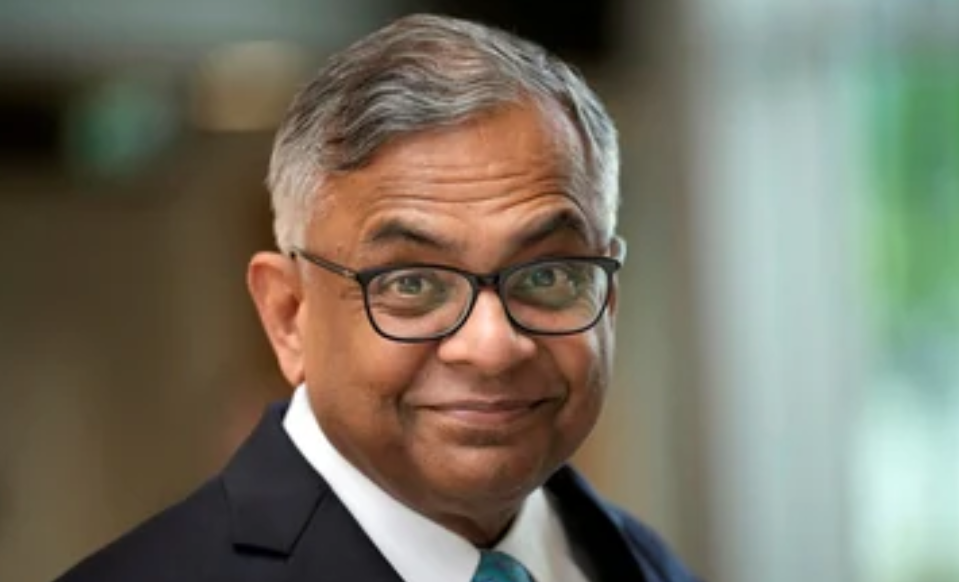
Subheading: Tata Sons’ decision to grant N Chandrasekaran another term has triggered a governance dispute with Tata Trusts. The voting calculations, regulatory restrictions on Sir Ratan Tata Trust and an unresolved AGM requirement have placed the chairman’s directorship at the centre of a complex corporate standoff.
Tata Sons is facing a shareholder and governance impasse after its board approved another term for chairman N Chandrasekaran despite opposition from Tata Trusts, the holding company’s majority shareholder. The dispute, reported on September 19, 2026, involves the voting rights of philanthropic trusts, the authority of the board and the legal arrangements required to hold the company’s annual general meeting (AGM).
The immediate question is whether Chandrasekaran’s directorship can secure shareholder approval under the current voting structure. According to calculations reported by Hindustan Times, only 72.61% of Tata Sons’ shares are presently eligible to vote because Sir Ratan Tata Trust (SRTT) and its associated trusts are restricted from voting. The Sir Dorabji Tata Trust (SDTT) bloc and Noel Tata together hold 38.91% of the company, equivalent to approximately 53.6% of that active voting pool.
But the arithmetic is only one part of the story. The AGM itself remains uncertain because Tata Sons’ Articles of Association reportedly require a joint representative nominated by SDTT and SRTT. With SRTT unable to conduct business under a regulatory order, the shareholder process faces a procedural obstacle as well as a disagreement over the chairman’s reappointment.
Why Tata Sons’ Chairman Reappointment Has Become a Governance Dispute
The dispute centres on the relationship between Tata Sons’ board and Tata Trusts, which collectively hold a majority stake in the holding company. The board’s decision to grant Chandrasekaran another term has been challenged by Tata Trusts, while Noel Tata has also opposed his continuation.
Tata Trusts described the board’s decision as “illegal,” according to the report. That is the trust’s stated position, not a final legal finding. The disagreement raises questions about how the board’s decision interacts with shareholder rights and the company’s governing documents.
The distinction matters: a board decision to approve a chairman’s term and a shareholder resolution approving a director’s continuation are separate parts of the governance process. The reported shareholder vote was expected to take place at the August 18 AGM, but that meeting was deferred.
Tata Sons Shareholding Structure: Who Owns What?
Tata Trusts comprises 14 philanthropic entities, seven of which hold shares in Tata Sons. The two largest are SDTT and SRTT, whose direct stakes together account for 51.54% of the company.
When smaller trusts associated with each are included, the blocs’ reported holdings become important to understanding the current voting dispute.
Sir Dorabji Tata Trust bloc
SDTT owns 27.98% of Tata Sons. It oversees eight smaller trusts, three of which also hold shares in the company:
- JRD Tata Trust: 4.01%
- Tata Social Welfare Trust: 3.73%
- RD Tata Trust: 2.19%
These holdings bring the SDTT bloc’s reported shareholding to 37.91%.
Sir Ratan Tata Trust bloc
SRTT owns 23.56% of Tata Sons and has four smaller philanthropic entities. Two of them hold shares in the company:
- Tata Education and Development Trust: 3.73%
- Sarvajanik Seva Trust: 0.1%
Combined, SRTT and its associated trusts hold 27.39% of Tata Sons.
Other shareholders
The remaining shareholding includes the Shapoorji Pallonji family, Tata Group companies, individuals and a separate philanthropic entity.
- Shapoorji Pallonji family: 18.38%
- Nine Tata Group companies: 12.86%
- Seven individuals: 2.87%
- MK Tata Trust, which is outside Tata Trusts: 0.6%
The report says philanthropic entities collectively own 65.9% of Tata Sons, while non-trustee shareholding accounts for 34.1%.
How the 72.61% Active Voting Pool Changes the Calculation
The current dispute is not simply about which shareholder owns the largest stake. It is also about which shares are eligible to vote at the relevant meeting.
SRTT and its five associated smaller trusts, together holding 27.39%, are unable to vote under the current regulatory restriction described in the report. Subtracting that portion from the total shareholding leaves 72.61% eligible to participate.
That change in the voting base alters the significance of the remaining shareholders. A stake that represents less than half of all Tata Sons shares can constitute a majority of the shares eligible to vote if a large bloc is excluded.
According to the reported figures, the SDTT bloc’s 37.91% combined with Noel Tata’s 1% holding equals 38.91% of total Tata Sons shares. Compared with the 72.61% active voting pool, that represents approximately 53.6%.
This is the central mathematical issue in the reappointment dispute. The calculation indicates that the opposing bloc could hold a majority of the currently eligible voting shares. However, the figures do not establish the result of a vote that has not yet taken place.
What Approval Threshold Does Chandrasekaran Need?
The report describes the resolution concerning Chandrasekaran’s directorship as a simple resolution, requiring approval from more than half of the eligible voting shares.
With 72.61% of total shares currently eligible to vote, half of that pool is approximately 36.305% of the company’s total shareholding. The report rounds the required approval figure to 36.31%.
The SDTT bloc and Noel Tata together hold 38.91% of the total shares, according to the reported figures. Their combined holding is therefore greater than the stated approval threshold when measured against the currently eligible voting pool.
There is an important distinction between a mathematical threshold and a confirmed shareholder outcome. The calculation assumes the reported eligibility position and does not replace the formal voting process, the company’s governing documents or any subsequent regulatory developments.
Why Noel Tata’s 1% Stake Has Become Significant
Noel Tata is reported to be the largest individual shareholder in Tata Sons, with a 1% stake. Ratan Tata held 0.83%, while Jimmy Tata owned 0.81%.
In a company with large institutional and trust shareholdings, a 1% individual stake may appear small. In this dispute, however, Noel Tata’s position matters because his reported opposition aligns with the SDTT bloc’s opposition to Chandrasekaran’s continuation.
His shareholding does not independently determine the outcome. Its significance comes from how it combines with the SDTT bloc within the reduced voting pool.
The AGM Problem: Why Tata Sons Cannot Easily Move Forward
The shareholder arithmetic does not resolve the procedural question of whether Tata Sons can hold its AGM under the current circumstances.
Article 86 of Tata Sons’ Articles of Association reportedly requires at least one representative jointly nominated by SDTT and SRTT to be present at an AGM or general meeting. A Tata Trusts spokesperson said that such meetings cannot proceed without this jointly nominated representative.
The spokesperson also said the trusts were hopeful that the restraint on SRTT would be lifted. The issue is significant because SRTT is currently barred from undertaking business and could not convene to decide on a joint nominee with SDTT.
The August 18 AGM was deferred after the required arrangements could not be completed and there were insufficient members present, according to the report. As a result, the question of Chandrasekaran’s directorship remains tied to the unresolved meeting process.
How the Maharashtra Charity Commissioner’s Orders Triggered the Deadlock
The current restrictions trace back to a dispute over the composition of SRTT’s trustees.
On May 15, 2026, the Maharashtra charity commissioner prohibited SRTT from undertaking business after a complaint by Tata Trusts vice-chairman Venu Srinivasan, who is also a Tata Sons director. The complaint concerned the number of permanent trustees at SRTT in relation to the applicable rules.
On September 1, the commissioner ordered that permanent trustees cannot exceed one-fourth of the total number of trustees. Three of SRTT’s five trustees are permanent trustees.
The restriction has direct consequences for the company’s shareholder arrangements because SRTT’s inability to conduct business affects its participation in the joint nomination process.
Tata Trusts’ Argument Over Permanent Trustees
Tata Trusts disputes how the rule should apply to existing appointments. It maintains that Noel Tata, Jimmy Tata and Jehangir HC Jehangir became permanent trustees before the amendment took effect.
The trust’s stated interpretation is that the amendment is prospective and does not affect appointments made before September 1, 2025. Tata Trusts said its understanding was supported by opinions and clarifications it had obtained.
This is a contested regulatory and interpretive issue. The trust’s position should be distinguished from the commissioner’s orders, and the reported information does not establish a final resolution of the dispute.
What the Proxy Advisory Criticism Means
Institutional Investor Advisory Services (IiAS), a proxy advisory firm, criticised the Tata Sons board’s decision-making process in a note cited by Hindustan Times.
IiAS argued that the board acted without consensus between the two Tata Trusts nominees and said the decision might not carry if it were put to a shareholder vote. The firm suggested that the matter could have been deferred until the nominees reached agreement.
The criticism focuses on governance process rather than establishing which side is legally correct. In a company where trusts hold a majority of shares, disagreement between the board and controlling shareholder can create uncertainty about the practical effect of board decisions.
Corporate lawyer Nitin Potdar also criticised the board’s approach in comments quoted by the report, raising concerns about stakeholder duties and reputational consequences. These are his opinions, not a judicial finding.
Why This Dispute Matters Beyond One Chairman’s Term
The Tata Sons dispute illustrates how ownership, board authority and shareholder procedures can become intertwined in a complex corporate structure.
For shareholders, the issue is whether the voting process can proceed in a way that is consistent with the company’s governing documents and applicable restrictions. For directors, it raises questions about decision-making when nominees representing a controlling shareholder disagree. For employees and other stakeholders, prolonged uncertainty can create questions about governance continuity, even when day-to-day operations continue.
The situation also highlights the importance of clear procedures for meetings and representation. When a company’s governing documents require joint action by two entities, a regulatory restriction affecting one of them can create consequences beyond that entity itself.
What Happens Next? Key Dates and Possible Developments
The corporate affairs ministry has reportedly granted Tata Sons a three-month extension, requiring the company to hold its shareholder meeting before November 18, 2026.
Tata Sons did not respond to questions about when it would hold the meeting, according to the report. Several developments could shape the next stage of the dispute:
- Regulatory clarification: Any change in the restrictions affecting SRTT could influence its ability to conduct business.
- Joint representative nomination: SDTT and SRTT need to address the reported Article 86 requirement.
- AGM scheduling: Tata Sons must arrange the meeting within the reported extension period.
- Shareholder vote: The final outcome will depend on the eligible voting pool and votes cast when the resolution is considered.
- Further legal developments: Clarification of the trustee rule could affect the governance impasse.
Conclusion: Tata Sons Faces Both a Voting and Procedural Challenge
Tata Sons’ decision to grant N Chandrasekaran another term has triggered a dispute that goes beyond a disagreement over leadership. The reported shareholding figures suggest that the SDTT bloc and Noel Tata together hold 38.91% of the company, equivalent to approximately 53.6% of the currently eligible voting pool.
But the AGM has been deferred, SRTT remains restricted, and the joint representative requirement has not been resolved. The voting calculation therefore indicates a potential obstacle rather than a completed shareholder decision.
The next decisive developments are likely to involve the status of SRTT, the ability of SDTT and SRTT to nominate a representative jointly, and the scheduling of the AGM before the reported November 18 deadline. Until those issues are clarified and shareholders vote, the future of Chandrasekaran’s directorship remains uncertain.
For breaking news and live news updates, like us on Facebook or follow us on Twitter and Instagram. Read more on Latest Business on thefoxdaily.com.





COMMENTS 0