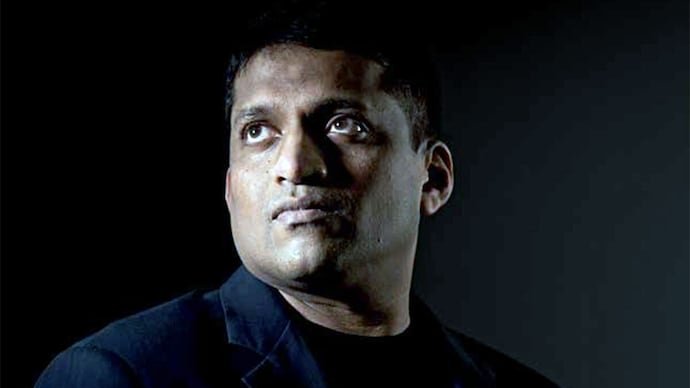
There was a time when Byju’s represented the ultimate Indian startup success story.
The company’s logo appeared on the Indian Cricket team’s jersey. Global football icon Lionel Messi became its brand ambassador. International investors poured billions into the company. Founder Byju Raveendran was celebrated as the face of India’s digital entrepreneurship revolution.
At its peak, Byju’s was valued at an astonishing $22 billion, making it one of the world’s most valuable edtech companies.
Today, that empire is crumbling under the weight of lawsuits, insolvency proceedings, Governance failures, debt disputes, employee unrest, and global court battles stretching from India to the United States and Singapore.
The latest shock came when a Singapore court sentenced Byju Raveendran to six months in prison for contempt over alleged non-compliance with court orders related to asset disclosures.
The ruling has intensified scrutiny of a collapse that many analysts now describe as one of the most dramatic corporate downfalls in India’s startup era.
How Byju’s Became India’s Biggest Edtech Success Story
Founded in 2011 as Think & Learn Pvt Ltd, Byju’s entered the market at the perfect moment.
India was experiencing a rapid smartphone revolution. Affordable internet access was expanding across urban and semi-urban regions. Millions of students were preparing for competitive exams while parents increasingly sought digital learning solutions.
Byju’s capitalized on this demand by offering visually engaging educational content, test preparation tools, and app-based learning systems.
The company quickly differentiated itself through aggressive marketing, celebrity branding, and a highly scalable digital business model.
Then came the Covid-19 pandemic the single biggest accelerator in the company’s growth journey.
As schools shut down globally, online Education became essential rather than optional. Demand for digital learning exploded almost overnight.
Investors rushed into edtech startups worldwide, but few companies expanded as aggressively as Byju’s.
The Pandemic Boom That Changed Everything
During the pandemic years, Byju’s growth appeared unstoppable.
The company raised massive funding rounds from global investors, including major venture capital firms, sovereign wealth funds, and institutional backers.
Its expansion strategy became increasingly ambitious.
Byju’s acquired several companies across different education segments, including:
- Aakash Educational Services
- Great Learning
- Epic
- Toppr
- WhiteHat Jr
The acquisition spree reportedly cost nearly $3 billion.
The company aimed to dominate every major education category from school learning and coding classes to international digital education markets.
The appointment of Lionel Messi as a global ambassador symbolized Byju’s international ambitions. Few Indian Startups had ever projected themselves on such a global scale.
But beneath the rapid growth, several warning signs were quietly emerging.
The $1.2 Billion Loan That Became a Turning Point
The beginning of Byju’s downfall can largely be traced to a major financing decision made in November 2021.
The company secured a massive $1.2 billion term loan from overseas lenders one of the largest startup loans ever raised by an Indian company.
At the time, the deal was celebrated as proof that Indian startups had entered the global financial mainstream.
However, the loan later became the center of a growing crisis.
Unlike venture capital funding, large debt obligations come with strict financial conditions, disclosure requirements, repayment schedules, and governance expectations.
As Byju’s delayed financial filings and struggled with transparency concerns, lender confidence began collapsing rapidly.
The company’s delayed FY21 financial results reportedly revealed losses of around Rs 4,588 crore, shocking investors and creditors alike.
That moment significantly changed market perception.
Why Delayed Audits Triggered Panic
One of the biggest red flags in the Byju’s saga involved audit delays and resignations.
In the startup ecosystem, delayed financial reporting often signals deeper governance or cash flow issues.
The situation escalated dramatically when global audit firm Deloitte resigned as auditor after reportedly citing communication challenges and delays in receiving financial statements.
Later, BDO Global’s India affiliate also stepped down.
For investors, lender institutions, and regulators, the departure of major auditors is often viewed as a serious warning sign.
It raises critical questions about:
- Financial transparency
- Internal controls
- Cash management
- Governance standards
- Accuracy of company disclosures
By this stage, confidence in Byju’s leadership and financial reporting systems had weakened significantly.
| Major Phase in Byju’s Journey | Key Development |
|---|---|
| 2011–2019 | Rapid growth in India’s edtech market |
| 2020–2021 | Pandemic-fueled expansion and global acquisitions |
| November 2021 | $1.2 billion overseas loan raised |
| 2022–2023 | Audit delays and governance concerns emerge |
| 2023–2025 | Global lawsuits, insolvency proceedings, investor exits |
| 2026 | Singapore contempt ruling against founder |
The Alleged $533 Million Fund Diversion Controversy
As tensions escalated between Byju’s and lenders, accusations became increasingly serious.
Creditors reportedly alleged that approximately $533 million linked to the term loan had been moved through multiple entities without adequate disclosure.
Court filings in the United States and Singapore allegedly traced the movement of funds through complex corporate structures connected to Byju’s operations.
The accusations triggered major international legal battles involving:
- US courts in Delaware and New York
- Singapore judicial proceedings
- Cross-border asset disputes
- Investor-backed legal actions
The Controversy intensified concerns that Byju’s rapid global expansion may have outpaced its governance and compliance systems.
Although legal proceedings are ongoing, the allegations alone severely damaged investor confidence.
The Cricket Sponsorship That Became a Symbol of Collapse
One of the most ironic chapters in Byju’s downfall involves cricket.
The company once used its sponsorship of the Indian cricket team as a symbol of national corporate success and brand dominance.
But later, unpaid dues related to cricket sponsorship became one of the triggers for insolvency proceedings.
In July 2024, the Bengaluru bench of the National Company Law Tribunal admitted insolvency proceedings against Think & Learn Pvt Ltd over unpaid dues reportedly amounting to around Rs 158 crore owed to the Board of Control for Cricket in India (BCCI).
The same branding partnership that once reflected Byju’s rise had now become part of its financial collapse.
The Battle Over Aakash Educational Services
Today, one of the biggest fights centers around Aakash Educational Services, widely considered Byju’s most valuable remaining asset.
Byju’s acquired Aakash in 2021 for nearly $1 billion as part of its hybrid education strategy combining online and offline learning.
However, as insolvency pressures intensified, Aakash proposed a rights issue aimed at raising fresh capital.
Byju’s strongly opposed the move, arguing it could drastically dilute the company’s ownership stake.
Reports suggest Byju’s stake could potentially fall from around 25.75 percent to below 5 percent if the dilution proceeds fully.
Losing control of Aakash would represent both a financial and symbolic blow because the acquisition was once viewed as the crown jewel of Byju’s expansion strategy.
How Employees Became Casualties of the Crisis
While investors and lenders fought court battles, employees faced growing uncertainty.
Reports of delayed salaries, layoffs, shrinking teams, and operational disruptions emerged across multiple divisions.
The edtech boom had created thousands of Jobs during the pandemic years, but the collapse exposed how fragile hyper-growth startup models can become when funding slows.
Former employees and industry observers increasingly criticized:
- Aggressive sales culture
- Over-expansion
- Unsustainable hiring practices
- Pressure-driven growth targets
- Weak operational controls
The Byju’s crisis became a warning not only for founders and investors but also for startup employees who had tied careers and financial futures to fast-growing unicorns.
The Bigger Problem: India’s Startup Valuation Bubble
The fall of Byju’s also exposed broader weaknesses within the startup ecosystem itself.
During the global low-interest-rate era, investors aggressively funded startups chasing growth over profitability.
High valuations often depended more on projected future dominance than sustainable financial fundamentals.
Byju’s became one of the clearest examples of this trend.
The company’s rapid valuation surge reflected intense investor competition during the global tech funding boom.
However, once global markets tightened and investor priorities shifted toward profitability, many startups faced severe pressure.
Byju’s simply became the most visible collapse.
Its downfall has triggered wider debates about:
- Corporate governance in startups
- Oversight failures by investors
- Debt-fueled growth strategies
- Aggressive acquisition models
- Startup accountability standards
Comparison With Other Global Startup Collapses
Many analysts now compare Byju’s collapse with international startup failures such as:
- WeWork
- FTX
- Theranos
Although the industries differ, several common patterns appear repeatedly:
- Rapid valuation inflation
- Founder-centric decision-making
- Weak governance systems
- Aggressive expansion
- Investor fear of missing out
- Insufficient oversight
Byju’s stands apart, however, because it was deeply tied to India’s national startup identity and education aspirations.
That emotional and symbolic connection makes the collapse even more significant.
What the Singapore Court Ruling Means
The Singapore court’s decision to sentence Byju Raveendran for contempt adds another serious dimension to the crisis.
The ruling reportedly involved non-compliance with court orders tied to asset disclosures.
International contempt findings are especially damaging because they affect:
- Founder credibility
- Investor trust
- Cross-border financing ability
- Legal standing in other jurisdictions
The case also reflects how modern startup disputes increasingly involve multiple countries due to global funding structures and international corporate entities.
Can Byju’s Still Survive?
The company’s future remains deeply uncertain.
Several scenarios are now possible:
- Asset sales and restructuring
- Further dilution of founder control
- Creditor-led restructuring agreements
- Expanded insolvency proceedings
- Potential breakup of business units
Much will depend on ongoing court decisions, creditor negotiations, and the financial viability of remaining assets like Aakash.
However, rebuilding investor trust may prove far more difficult than restructuring balance sheets.
Conclusion: The Rise and Fall That Changed India’s Startup Narrative
Byju’s collapse is no longer just the story of one failed startup. It has become a defining moment for India’s entire entrepreneurial ecosystem.
The company’s meteoric rise captured the optimism of India’s digital Economy during the startup boom years. Its equally dramatic collapse now serves as a cautionary lesson about unchecked expansion, weak governance, debt dependency, and valuation-driven growth.
The contrast is striking.
A company that once signed Lionel Messi, sponsored the Indian cricket team, and symbolized India’s global startup ambitions is now fighting insolvency proceedings and international legal battles.
For investors, regulators, founders, and employees, the Byju’s saga may permanently reshape how Indian startups are funded, governed, and evaluated.
And for the broader startup ecosystem, one uncomfortable truth has become impossible to ignore: rapid growth alone is no longer enough. Without transparency, governance, and sustainable financial discipline, even the biggest unicorns can collapse with astonishing speed.
For breaking news and live news updates, like us on Facebook or follow us on Twitter and Instagram. Read more on Latest Business on thefoxdaily.com.






COMMENTS 0