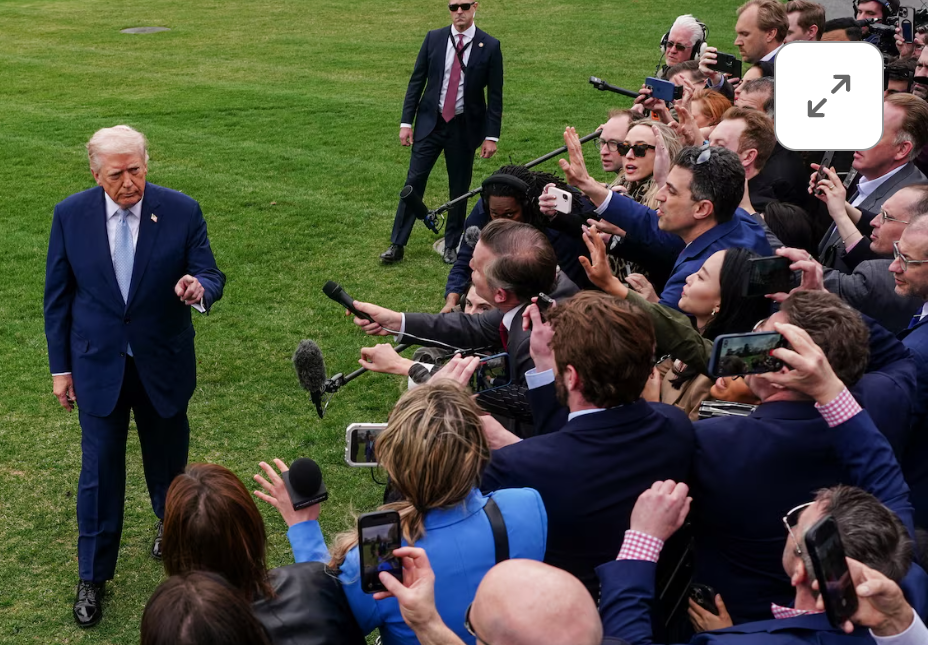
US President Donald Trump has said he is banning CNN, MS NOW and Politico from the White House, escalating his confrontation with news organisations whose coverage he has criticised. The announcement, reported by Reuters on September 19, 2026, has raised questions about press freedom, presidential control over access and the constitutional limits of government action against journalists.
Trump accused the three outlets of publishing what he called “fake news” and said other media organisations could face similar treatment. The full scope of the proposed restrictions was not immediately clear, and the legal implications could depend on whether the administration limits access to particular events or excludes journalists more broadly from White House press facilities and credentials.
The outlets have pushed back. CNN, MS NOW and Politico each said they would continue reporting and defend their rights. Press-freedom experts cited by Reuters said a ban based on critical coverage would conflict with First Amendment protections.
The dispute is unfolding weeks before the November 3 US midterm elections, adding a high-profile press-access controversy to an already tense political environment.
Trump Announces White House Ban on Three News Outlets
On Friday, September 18, Trump said he was banning CNN, MS NOW and Politico from the White House. In a social media post, he accused the outlets of reporting “FAKE NEWS” and said they should not be allowed to repeatedly publish what he characterised as fiction and lies about the president.
Trump also suggested that more outlets could follow. When asked about that statement, he mentioned The New York Times and The Washington Post, describing them as “fake news.”
Asked whether a particular incident had prompted the decision, Trump told reporters in the Oval Office that it was the cumulative effect of stories published over several years. He also argued that he did not have to let the outlets into what he called “the people’s house.”
The announcement was followed by reports that the White House was informing the three organisations they would be barred from the grounds starting Saturday. Reuters noted that representatives of all three outlets were still working at the White House on Friday afternoon after Trump’s post.
The precise scope and implementation of the restriction remained unclear in the report. That uncertainty is important because the constitutional questions may differ depending on the type of access affected.
Why the First Amendment Is Central to the Dispute
The First Amendment to the US Constitution protects freedom of speech and freedom of the press. Those protections are central to the debate over whether a president can exclude news organisations from government facilities because of their reporting.
Press-freedom experts cited by Reuters said the proposed ban would likely face legal challenges if it were imposed in response to coverage critical of the administration.
The key issue is not simply whether the White House can organise press events or manage limited space. It is whether the government can use access decisions to penalise journalists or news organisations because of their viewpoints.
That distinction can matter in practice. A president may have discretion over attendance at a small, space-limited event, while a broader exclusion from generally available press facilities or credentials may raise more substantial constitutional concerns.
Reuters reported that courts have given presidents broad discretion over selective access to events such as Oval Office meetings and small press pools. But wider restrictions on access to White House press facilities or credentials could face stronger challenges under the First Amendment and due-process protections.
Legal Questions Could Depend on the Scope of the Ban
The legal status of the proposed restriction may depend in part on how it is applied.
White House access is not a single, uniform category. Journalists may attend events with limited space, participate in press pools, hold credentials or work in press facilities that serve a broader group of reporters.
Because these arrangements differ, a court may examine the specific access being denied and the reason for the denial rather than treating every restriction as legally identical.
According to Reuters, legal experts have warned that excluding news organisations from a press pool because of their viewpoints could present a particularly serious First Amendment problem. The Knight First Amendment Institute’s executive director, Jameel Jaffer, said the press pool is a public forum for First Amendment purposes and argued that viewpoint-based exclusion would be unconstitutional.
These are legal assessments reported by Reuters, not a court ruling on the specific announcement. The administration’s eventual actions, the details of any restrictions and the arguments presented in litigation would matter to the outcome.
What CNN, MS NOW and Politico Said
The three organisations indicated that they intended to continue covering the Trump administration and defend their ability to report.
CNN
CNN said it stood behind its White House journalists. The network stated that the Constitution gives it the right to report without government hindrance or interference.
CNN also said that if the threatened ban went ahead, it would amount to an illegal assault on a constitutionally protected right.
MS NOW
In a statement on Saturday, MS NOW said it would continue reporting on the Trump administration and take necessary steps to defend its First Amendment rights and the role of independent journalism in a democracy.
Politico
Politico said on X that it would continue to report fairly on the current White House and future administrations. It also said it would vigorously defend its First Amendment rights against attempts to restrict them.
The statements reflect the outlets’ positions. The legal questions raised by the dispute remain dependent on the administration’s actions and any subsequent court proceedings.
Press-Freedom Advocates Warn Against Viewpoint-Based Exclusion
Press-freedom advocates have criticised the proposed restrictions, focusing on the risk that government officials could use access to punish reporting they dislike.
Seth Stern, chief of advocacy at the Freedom of the Press Foundation, described the reported move as a blatant violation of the First Amendment if outlets were excluded for criticising the government.
Jameel Jaffer of Columbia University’s Knight First Amendment Institute argued that the First Amendment prohibits the president from punishing journalists because he disapproves of their coverage.
The distinction between criticism and punishment is central to the controversy. A public official can dispute a report, challenge its accuracy or respond through public statements. A different constitutional question arises when the government uses its control over access to restrict journalists based on their viewpoints.
The experts’ comments cited by Reuters indicate why the issue could become a legal dispute. They should not, however, be confused with a final judicial determination.
A Broader Shift in White House Media Access
The proposed ban comes amid broader changes in the Trump administration’s relationship with the press.
Reuters reported that the administration has altered long-standing practices by reducing access that many major news organisations traditionally had to the president while increasing the presence of newer media outlets viewed as more sympathetic to the administration.
Such changes have prompted questions about how press access is allocated and whether established practices are being replaced by a different approach to media relations.
White House press arrangements are important because journalists rely on access to ask questions, observe official events and obtain information directly from government officials.
At the same time, access is often constrained by practical considerations, including space, security and the format of an event. The controversy arises when those arrangements are alleged to be used to favour some viewpoints and exclude others.
Trump’s Long-Running Conflict With the Press
Trump has criticised news organisations throughout his political career. Reuters noted that he rose to public prominence as a New York developer who attracted tabloid attention and later became widely known as a reality television personality before entering politics.
Since his successful 2016 presidential campaign, he has regularly attacked news coverage he considers unfair. During his second term, he has also urged broadcasters to drop programmes that he dislikes or that have criticised him or his administration.
Trump has called on the Federal Communications Commission to strip disfavoured broadcast stations of their licences, according to Reuters.
He has also filed lawsuits against several media organisations, including The Wall Street Journal, The New York Times, the BBC and the Des Moines Register. Reuters reported that defamation lawsuits against ABC and CBS were settled for $15 million and $16 million, respectively.
These episodes form part of the background to the latest dispute, though each case has its own facts and legal context.
Earlier White House Press-Access Disputes
The current announcement is not the first time the Trump administration has sought to restrict a journalist’s access.
During Trump’s first term, the White House sought to revoke or suspend the credentials of Playboy correspondent Brian Karem and CNN reporter Jim Acosta. Federal judges ordered their White House press passes restored, Reuters reported.
Those earlier cases are relevant because they show that disputes over White House access have previously reached the courts.
However, the legal significance of those cases depends on their specific facts and rulings. They do not automatically determine how a court would assess the latest announcement involving CNN, MS NOW and Politico.
In 2025, Trump also barred the Associated Press from the usual pool of reporters covering his movements after the news agency did not adopt his preferred name for the Gulf of Mexico. Trump had instructed executive branch employees to refer to it as the Gulf of America.
The AP dispute, like the current controversy, raised questions about whether government access could be conditioned on an outlet’s editorial decisions.
Why White House Access Matters to the Public
Press access is not only a matter between a president and individual news organisations. It can affect how the public receives information about government actions.
Journalists covering the White House report on policy announcements, executive decisions, national and international developments, and questions raised by the public or lawmakers.
When some outlets lose access, they may have to rely more heavily on public statements, other reporters’ accounts or information obtained outside official events. That does not necessarily prevent them from reporting, but it can change how they gather information and question officials directly.
Access restrictions can also raise concerns about whether government officials are creating unequal conditions for different news organisations.
For readers and viewers, the central public-interest questions include whether journalists can continue scrutinising government decisions, whether access rules are applied consistently and whether the administration provides clear explanations for restrictions.
The Midterm Election Context
The dispute is unfolding weeks before the November 3, 2026, US midterm elections. Republicans are defending narrow majorities in Congress, according to Reuters.
The timing gives the press-access controversy added political significance, as media coverage and public debate intensify before voters choose members of Congress.
Reuters also reported that polling showed public sentiment souring on Republicans and that Trump’s approval ratings were near historic lows amid an unpopular war with Iran that had pushed energy prices higher.
Those are contextual claims reported by Reuters. They do not establish that the White House announcement will have a particular effect on the election, nor do they determine how voters will respond to the press dispute.
The election context does, however, mean that access to presidential information and the role of independent reporting are likely to remain subjects of public attention.
What Happens Next?
The next developments will depend on how the White House implements the announced restrictions and whether the affected news organisations pursue legal action.
Several questions remain unresolved:
- Scope: Will the restriction apply to all White House grounds, particular facilities, specific events or press credentials?
- Implementation: What formal instructions will the administration issue, and when will they take effect?
- Legal response: Will CNN, MS NOW, Politico or another organisation challenge the restrictions in court?
- Judicial review: How would a court assess the government’s stated reasons and the type of access being denied?
- Broader impact: Could the dispute lead to further changes in how White House press access is allocated?
At the time of the Reuters report, the full extent of the ban was not clear. The outlets had publicly stated their intention to continue reporting and defend their rights, while legal experts had raised constitutional concerns.
Conclusion: White House Access and Press Freedom Face a New Test
President Donald Trump’s announcement that CNN, MS NOW and Politico would be banned from the White House has intensified a long-running conflict between his administration and parts of the US news media.
The three outlets say they will continue covering the administration and defend their First Amendment rights. Press-freedom experts cited by Reuters argue that excluding journalists because of their reporting could violate constitutional protections, particularly if the restrictions extend to generally available press facilities or a press pool.
The legal outcome is not yet established. The scope of the proposed ban, the administration’s implementation and any court challenges will be important in determining how the dispute develops.
The broader issue is whether access to government information can be restricted in response to critical coverage. That question reaches beyond the three named outlets and touches on the role of independent journalism in scrutinising public officials.
With the November 3 midterm elections approaching, the dispute places White House media access and constitutional press protections at the centre of a wider national debate about government accountability and the public’s ability to receive independent reporting.
For breaking news and live news updates, like us on Facebook or follow us on Twitter and Instagram. Read more on Latest Business on thefoxdaily.com.






COMMENTS 0