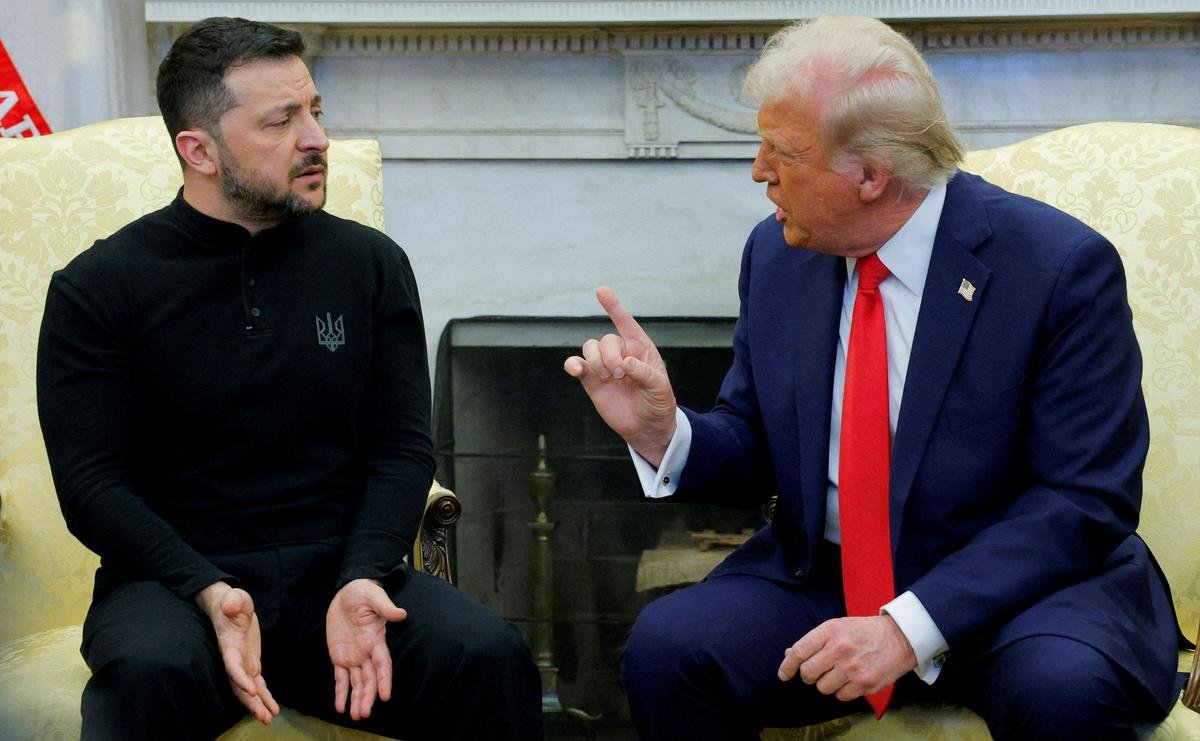
Ukraine’s efforts to secure continued American military support have become a central issue in diplomatic discussions with the Trump administration, as President Volodymyr Zelenskyy met US envoy Steve Witkoff in Norway on Tuesday. Trump’s son-in-law Jared Kushner joined the discussions remotely, with the meeting taking place amid growing disagreements over Washington’s handling of the war with Russia.
The talks came as Kyiv accused the United States of disrupting crucial elements of Ukraine’s defence against Russian missile attacks. Ukrainian officials raised concerns about intelligence warnings, restrictions affecting the Starshield satellite communications service and delays in receiving ballistic missile interceptors.
Secretary of State Marco Rubio rejected the allegations, describing Zelenskyy’s claims as “scandalous” and “outrageous”. He said Washington was not deliberately denying assistance to Ukraine, while acknowledging that the United States faced competing demands for limited supplies of missile interceptors.
The disagreement highlights the uncertainty surrounding US support for Ukraine as the Trump administration pursues diplomatic efforts to end the war. It also raises questions about whether Kyiv can maintain its air defences and military operations while negotiations continue and Russian attacks persist.
What Ukraine says has changed in US military support
Kyiv’s concerns centre on three areas that Ukrainian officials say are essential to protecting cities, military positions and civilians from Russian attacks: early-warning intelligence, ballistic missile interceptors and access to satellite communications.
1. Early warnings of Russian missile attacks
Zelenskyy said Ukraine had not received advance warnings from the United States before Russian ballistic missile attacks on Kyiv on Sunday. He described the incident as the third such occurrence in recent days.
Early-warning information can give Ukrainian authorities and military personnel additional time to assess incoming threats and respond. Depending on the circumstances, warnings may help air-defence units prepare to intercept missiles and allow civilians to seek shelter.
The absence of an expected warning can therefore create serious operational concerns, particularly when a city faces attacks involving ballistic missiles. Ukrainian officials argued that the reported disruption had made it more difficult to protect the population.
However, Washington disputed the suggestion that intelligence sharing had been deliberately suspended. Rubio said the United States had not intentionally withheld support, creating a disagreement between the two governments over what had happened and why.
On Tuesday, Zelenskyy said Ukraine was once again receiving early warnings from its partners following his discussions with American officials. He linked the improvement to his conversations with the US side, including his call with Rubio, although the precise circumstances behind the earlier disruption remained disputed.
2. Delays in ballistic missile interceptors
Ukraine has also raised concerns about delays in receiving ballistic missile interceptors, which are needed to defend against incoming Russian missiles. Zelenskyy told a bipartisan delegation of US lawmakers that the country was running critically low on its supplies.
He alleged that Washington was delaying the delivery of essential interceptors, including weapons that Ukraine needed to protect its cities against Russian attacks. The concerns are particularly significant because air-defence systems depend on having suitable interceptor missiles available when incoming threats are detected.
Rubio acknowledged that some interceptors purchased for Ukraine might not have been delivered, but rejected the claim that the delay reflected a political decision intended to harm Kyiv. He explained that the United States had to balance its commitments to international partners against its own defence requirements.
The distinction matters because a delivery delay and a deliberate refusal to provide assistance are not necessarily the same thing. Establishing the reasons for the delays would require a clearer account of the delivery arrangements, approval process and availability of the weapons.
For Ukraine, however, the immediate concern is operational: interceptors that have not arrived cannot be used to defend against an incoming attack. That makes the timing of deliveries important even when governments disagree about the reasons for delays.
3. Restrictions affecting Starshield
The third dispute concerns Starshield, SpaceX’s military-focused satellite communications service. Ukrainian officials said they were still experiencing speed restrictions affecting the system, without receiving a satisfactory explanation from the American side.
Satellite communications have become an important part of modern warfare, supporting connections between military personnel, units and command structures. Ukraine has relied on SpaceX’s satellite services for military communications, including operations involving drones.
Restrictions on the military service could therefore have consequences for battlefield coordination and the execution of certain operations. Kyiv has argued that the reported limitations are disrupting its military capabilities at a time when Russian attacks continue.
However, the precise scope and operational impact of the reported restrictions were not fully established in the supplied account. The Ukrainian allegations and the American government’s position should therefore be distinguished from independently confirmed details about the system’s performance.
Zelenskyy’s discussion with Rubio covered the satellite issue alongside missile defence and intelligence warnings. The Ukrainian president said the matters were important to protecting lives and maintaining the country’s ability to defend itself.
Rubio rejects allegations of a deliberate US policy shift
The public disagreement intensified when Rubio responded to Ukraine’s claims during his visit to India. He said that nothing had changed in US support for Ukraine and denied that assistance was being deliberately withheld.
Rubio described the accusations as “scandalous”, “outrageous” and inaccurate. He also said that the United States had its own defence requirements and had to manage competing demands for missile interceptors.
His remarks reflected Washington’s position that supply constraints and competing obligations should not be interpreted as evidence of an effort to weaken Ukraine deliberately.
The secretary of state also stressed that the United States could not meet every demand for interceptors immediately. He described the weapons as among the most sought-after products in the defence industry and said American requirements had to be taken into account.
That explanation does not, by itself, resolve Kyiv’s concerns about the timing of deliveries or the reported interruption of early warnings. It does, however, establish the central difference between the two sides: Ukraine is focused on the immediate consequences for its defence, while Washington rejects the suggestion that it has intentionally sought to undermine those efforts.
The dispute could complicate diplomatic discussions if the two governments cannot agree on the status of military support. It also illustrates how disagreements over specific operational decisions can become part of a broader political conflict between allies.
Trump’s remarks add to uncertainty over Washington’s approach to Russia
The Oslo meeting took place against the backdrop of increasingly strained relations between Trump and Zelenskyy. The US president has criticised his Ukrainian counterpart and questioned his approach to negotiations aimed at ending the war.
On Monday, Trump told Zelenskyy to find “somebody else to negotiate”, adding to a series of public rebukes directed at the Ukrainian leader.
Trump also appeared to downplay the scale of Russian military activity in Ukraine, telling reporters that Russia had been “fine on Ukraine” and had not been doing much. His remarks contrasted with Ukraine’s continued reports of missile attacks and civilian casualties.
The American president has also taken steps involving Russia that have raised questions among some US lawmakers and Washington’s allies about the direction of his diplomatic strategy. According to the supplied report, he waived certain sanctions and agreed to a diesel deal with Russia, presenting the moves as part of an effort to reduce fuel prices ahead of the US midterm elections.
For Kyiv, the combination of Trump’s public criticism, the dispute over military support and Washington’s engagement with Moscow has increased uncertainty about the reliability of American assistance.
Nevertheless, the disagreements do not establish that all US support has ended. Rubio has explicitly denied a deliberate policy of withholding assistance, while Zelenskyy has continued to engage with American officials in an effort to address the problems he has identified.
Norway and Finland seek to support diplomatic efforts
The meeting in Oslo also involved European leaders as Ukraine sought to maintain international backing for its defence and diplomatic objectives.
Before meeting the US delegation, Zelenskyy held discussions with Norwegian Prime Minister Jonas Gahr Støre and Finnish President Alexander Stubb. Their involvement placed the talks within a wider European effort to support discussions about the war and Ukraine’s security.
Witkoff met Zelenskyy in person, while Kushner participated remotely. The talks were part of continuing American efforts to find a diplomatic solution to the conflict, although previous negotiations had made limited progress.
The meeting also came as Russia signalled interest in further contact with Trump’s representatives. Kremlin spokesman Dmitry Peskov said Moscow hoped that a meeting with the US envoys could take place in Russia in the near future, without giving a firm date.
Such contacts could create opportunities for further discussions, but meetings alone do not guarantee an agreement. The parties still face difficult questions about security, military operations and the terms of any eventual settlement.
For Ukraine, maintaining a role in decisions about its future is a central concern. Kyiv needs to protect itself against continuing attacks while ensuring that any diplomatic process addresses its security interests.
Russian attacks underline the urgency of Ukraine’s defence concerns
The debate over American assistance is unfolding as Russian attacks continue to cause civilian casualties and damage across Ukraine.
Officials in the eastern Kharkiv region shared images on Monday of a one-year-old girl who they said was killed alongside her mother in a Russian attack on a public park. The incident added to the pressure on Ukrainian authorities to secure effective air defences and reliable warnings of incoming threats.
Zelenskyy condemned the attack and called for the international community to use its available influence to stop the war.
Attacks on civilian areas illustrate why the availability of missile interceptors and advance-warning information is more than a technical matter. The effectiveness of air-defence arrangements can affect the time available to respond to threats and the ability of authorities to protect people in exposed locations.
At the same time, the precise circumstances of individual attacks and the effectiveness of particular defensive measures must be assessed separately. The reported killing in Kharkiv underscores the human cost of the conflict but does not, by itself, establish the extent to which any specific change in American support affected the outcome.
What happens next in US-Ukraine relations?
The immediate question is whether the discussions between Zelenskyy and American officials will lead to practical changes in the areas Ukraine has identified as urgent.
Several developments will be important to watch:
- Intelligence warnings: Whether Ukraine continues to receive advance information about Russian missile attacks and whether both governments provide a clearer account of the recent disruption allegations.
- Missile interceptor deliveries: Whether outstanding deliveries proceed and how the United States balances Ukraine’s requirements against its own defence commitments and those of other partners.
- Starshield access: Whether the reported restrictions are addressed and whether Kyiv receives clarification about the service’s availability for military operations.
- Diplomatic negotiations: Whether discussions involving Washington, Kyiv, Moscow and European partners produce a clearer path towards ending the war.
Each issue presents a different challenge. Restoring or maintaining intelligence warnings involves operational coordination, while missile deliveries depend on supply and approval arrangements. Satellite access raises questions about the availability of military communications services. A broader peace agreement would require progress on political and security questions that remain unresolved.
The latest developments offer some indication that communication between Kyiv and Washington is continuing. Zelenskyy said Ukraine had begun receiving early warnings again, while Rubio said he had discussed the country’s concerns directly with the Ukrainian president.
However, the disagreement over whether American support has been disrupted remains significant. Ukraine’s immediate priority is to ensure that it has the equipment, information and communications capabilities required to defend against Russian attacks. Washington, for its part, insists that it has not deliberately withheld assistance and says its own military requirements must also be met.
The outcome of the Oslo discussions will depend not only on diplomatic statements but also on whether the concerns raised by Ukraine lead to practical and sustained changes. Until the disputes over intelligence, interceptors and satellite communications are resolved, uncertainty over the reliability and timing of American support is likely to remain a major issue in relations between Washington and Kyiv.
For breaking news and live news updates, like us on Facebook or follow us on Twitter and Instagram. Read more on Latest World on thefoxdaily.com.





COMMENTS 0