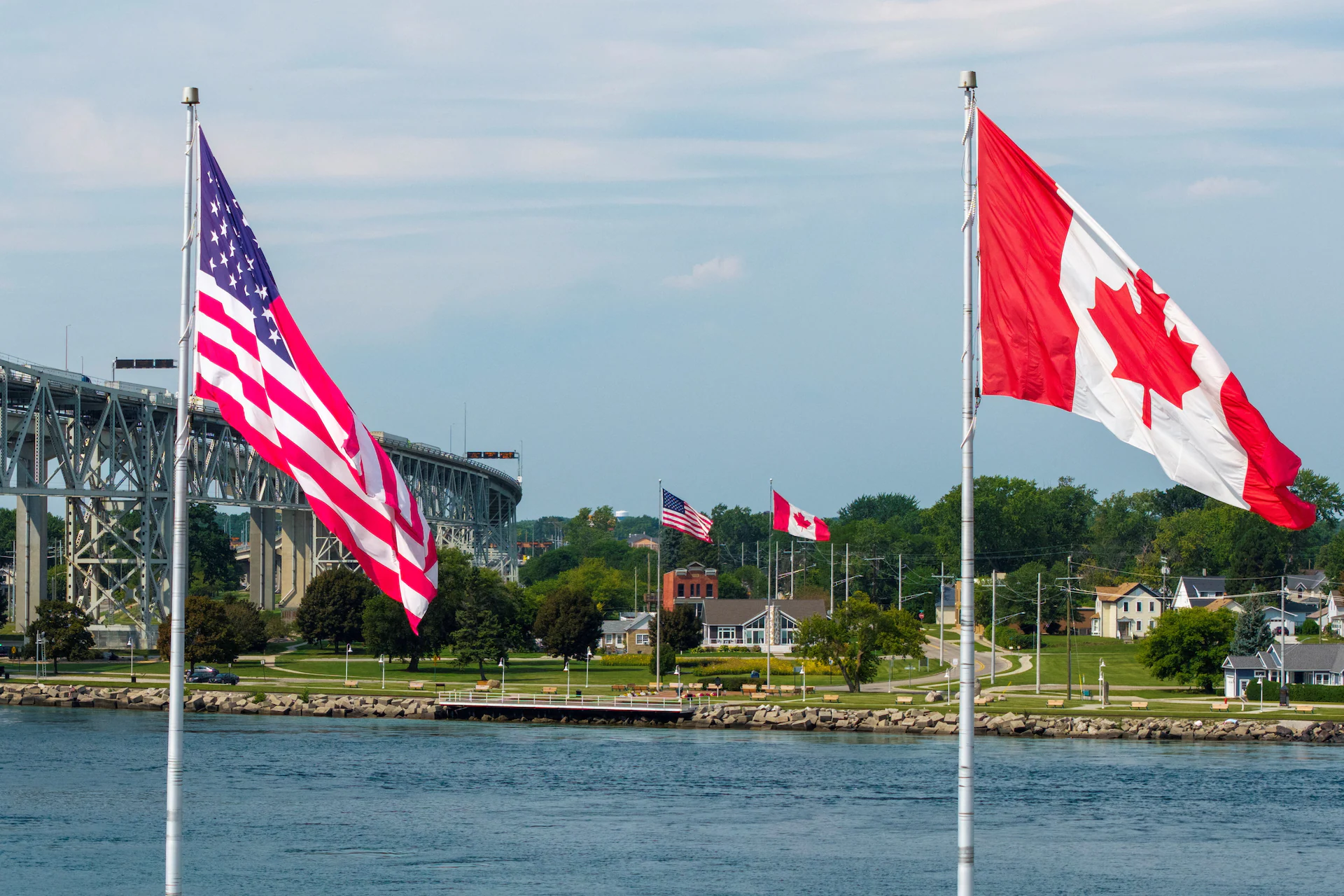
US food importer Gellert Global Group has filed a lawsuit seeking to block the Trump administration’s latest tariffs on Canadian imports, arguing that the president is relying on a decades-old trade law to exercise tariff powers that the US Constitution assigns to Congress. The case, filed on October 20 in the US Court of International Trade in New York, challenges duties of up to 50% imposed on a broad range of Canadian products.
The lawsuit adds another dispute to the growing legal battle over President Donald Trump‘s trade policies during his second term. Gellert Global, a New Jersey-based company with annual revenue of $1.7 billion, imports Canadian cheeses affected by the tariffs and is seeking to represent other businesses facing similar costs.
The challenge centres on Section 338 of the Tariff Act of 1930, a provision the Trump administration invoked when imposing the duties. According to the lawsuit, the provision had not been used in a known case for nearly a century. The importer argues that later trade legislation has superseded the authority the administration is attempting to exercise.
The dispute has implications beyond the food import business. Its outcome could affect how the administration uses older trade laws to impose duties, how importers manage costs and how the United States and Canada navigate an increasingly difficult trade relationship.
Why Gellert Global is challenging Trump’s Canada tariffs
The lawsuit was filed by the Liberty Justice Center, a legal nonprofit representing Gellert Global Group. It argues that the Trump administration has repeatedly attempted to expand presidential control over tariffs by relying on different legal provisions, including statutes whose use has been limited or contested.
At the heart of the dispute is a constitutional question: how far can a US president go in imposing tariffs without new legislation from Congress?
The US Constitution assigns Congress the power to impose duties and regulate foreign commerce. However, Congress has enacted laws that delegate certain tariff-related powers to the president under specified conditions. The legality of an executive tariff measure can therefore depend on whether the administration has met the requirements of the statute it invokes.
Gellert’s lawsuit contends that Section 338 cannot lawfully provide the basis for the challenged tariffs because subsequent trade legislation has changed the legal framework governing presidential tariff authority. The complaint argues that later laws introduced restrictions that the administration cannot simply disregard by returning to an older statute.
The administration, meanwhile, has defended its use of Section 338 as a response to what it describes as discriminatory Canadian trade practices. The US Trade Representative previously said the tariffs were intended to counter measures affecting American exports, including vehicles, alcoholic beverages and dairy products.
These competing positions set up a dispute over both the interpretation of the law and the limits of executive authority. The court will need to consider the statutory language, the relationship between Section 338 and later trade laws, and the arguments presented by the parties.
What is Section 338 of the Tariff Act of 1930?
Section 338 is part of the Tariff Act of 1930, also known as the Smoot-Hawley Tariff Act. The provision authorises the president to impose additional duties of up to 50% under specified circumstances involving discriminatory or unreasonable treatment of US commerce by a foreign country.
The law also contains conditions governing when such duties may take effect and the circumstances under which the president can act. Its existence does not mean that every tariff imposed under the provision is automatically lawful. The administration must still operate within the authority Congress granted.
The Trump administration’s reliance on Section 338 is particularly significant because the provision had not previously been used in a known instance during its nearly century-long history, according to the supplied report.
That lack of precedent creates an unusual legal situation. Courts have less historical application of the provision to draw on when assessing how its language should be interpreted in a modern trade dispute.
The lawsuit also argues that subsequent trade laws have overtaken Section 338. Determining whether the older provision remains available for the administration’s current purposes is therefore central to the case.
For businesses, the legal distinction matters because tariffs can increase the cost of importing goods, while uncertainty about the rules can complicate purchasing decisions and commercial planning.
Which Canadian products are affected by the tariffs?
The challenged duties cover a broad range of Canadian imports, extending beyond the food products central to Gellert Global’s business. The products identified in the supplied report include:
- Dairy products: Canadian cheeses and other dairy goods affected by the duties.
- Wine and alcoholic beverages: Products linked to the wider dispute over Canada’s treatment of US alcohol exports.
- Furniture: Canadian-made furnishings entering the US market.
- Construction materials: Cement and related goods included in the tariff measures.
- Clothing and textiles: Products that may be used by retailers and businesses supplying American consumers.
- Fishing rods and hockey equipment: Sporting goods that form part of the broader set of targeted imports.
The 50% rate is an additional import duty under the challenged measures. For affected businesses, the practical consequences depend on the products imported, their value, the applicable tariff treatment and whether the additional duty remains in force.
Gellert Global’s case focuses on Canadian cheese imports. As a food importer and distributor, the company operates between overseas suppliers and the US market. A sharp increase in import duties can affect the economics of purchasing and distributing goods, particularly when businesses have established supply arrangements before a tariff takes effect.
The company is also seeking to represent a proposed class of other businesses similarly affected by the tariffs. If the court permits the case to proceed on that basis and grants relief extending to the proposed class, the outcome could have implications beyond Gellert itself.
However, the filing of a lawsuit does not automatically suspend the duties. Importers may continue to face the tariffs unless a court issues an order or the government changes the measures.
How the lawsuit fits into Trump’s wider tariff battles
The challenge is part of a broader series of legal disputes over the Trump administration’s use of presidential authority to impose tariffs.
According to the supplied Reuters report, the lawsuit marks the fourth challenge to a wide-ranging tariff policy during Trump’s second term. Previous disputes have involved different legal authorities and different justifications for imposing import duties.
The report says the US Supreme Court ruled against most of the tariffs Trump imposed in 2025 in a February decision. The administration subsequently continued pursuing tariffs through alternative legal approaches, prompting further litigation by businesses and US states.
The US Court of International Trade has also ruled against a temporary 10% global tariff introduced after the Supreme Court decision, according to the report. In another case, the court is considering the legality of a separate round of global tariffs that the administration sought to justify through efforts to combat forced labour in international trade.
Although these disputes concern different statutes and policy objectives, they raise a related question: whether the president has acted within the limits established by Congress.
A ruling against one tariff programme does not automatically invalidate tariffs imposed under another law. Each measure can involve different statutory language, factual findings and legal requirements. The court considering Gellert Global’s lawsuit will therefore need to examine the specific authority invoked for the Canadian duties.
The administration’s use of alternative legal provisions also means that the outcome of one case may not resolve the wider debate over presidential tariff powers. Businesses could continue to face uncertainty if new measures are introduced under other statutes.
How the tariffs could affect American businesses and consumers
For importers, a 50% tariff can substantially change the cost of bringing covered goods into the United States. The eventual financial effect depends on the value of the shipment, the terms of supply agreements and how the business responds to the added expense.
Companies may attempt to absorb some of the increase, negotiate different terms with suppliers, seek alternative sources of supply or pass some costs to customers. These are possible responses rather than confirmed actions by Gellert Global.
Food imports present particular commercial considerations because distributors often work with established suppliers and customers. Changes to import costs can require businesses to reconsider purchasing volumes, pricing arrangements and product availability.
Consumers could face higher prices if businesses pass on part of the additional expense. However, the extent of any price increase cannot be established from the tariff rate alone. It will depend on competition, supply conditions, demand and the choices made by importers, distributors and retailers.
Canadian exporters may also be affected if US buyers reduce orders or seek alternatives. That could create additional pressure on suppliers whose business depends on access to the American market.
The dispute therefore extends beyond the immediate question of whether Gellert Global must pay higher duties. It also concerns the predictability of trade rules for companies operating across the US-Canada border.
US-Canada trade tensions intensify after negotiations stall
The lawsuit comes amid deteriorating trade relations between Washington and Ottawa. Canadian Prime Minister Mark Carney suspended trade negotiations with the United States on August 22 after concluding that the latest American demands would not produce an acceptable agreement for Canada.
Carney’s government said it had been seeking more stable trade conditions and continued access to the US market. Following the breakdown in negotiations, Canada announced plans for retaliatory tariffs on American goods affected by the US measures.
The dispute has involved disagreements over market access, including American concerns about Canada’s treatment of US-made vehicles, alcoholic beverages and dairy products.
The Trump administration has characterised its tariffs as a response to discriminatory Canadian trade practices. Canada has disputed the American approach and has taken steps to protect its own economic interests.
Retaliatory tariffs can add another layer of cost for businesses on both sides of the border. Companies that export to Canada may face higher duties on their products, while Canadian businesses selling into the United States must account for the American measures.
The resulting uncertainty can complicate decisions about investment, sourcing and long-term commercial relationships. Even businesses that are not directly involved in the legal dispute may need to review their exposure to changes in cross-border trade rules.
Canada says negotiations remain possible
Despite the breakdown in talks, Canadian officials have indicated that communication between the two governments continues.
Dominic LeBlanc, the Canadian federal minister leading trade discussions with the United States, told reporters on October 20 that the two countries remained in contact. He also expressed confidence that a future agreement could be reached in the interests of the Canadian economy.
His comments suggest that the suspension of formal negotiations has not necessarily ended the possibility of a settlement. However, no high-level talks had been scheduled following the August breakdown, according to the supplied report.
Any future agreement would need to address the issues that led to the dispute, including the tariffs and the competing demands over market access. Until the governments reach an understanding or the measures change through another route, businesses must contend with the existing trade uncertainty.
What happens next in the Gellert Global lawsuit?
The immediate focus will be on the proceedings at the US Court of International Trade. Gellert Global is challenging the legal basis for the tariffs and seeking relief that could extend to other similarly affected importers.
The Liberty Justice Center has argued that the administration cannot use a rarely invoked provision to impose sweeping duties without respecting the limitations established by Congress. The organisation’s chief executive, Sara Albrecht, said the case concerns whether a president can rely on a dormant statute to impose broad tariffs or import restrictions.
The court’s assessment will determine whether the challenged measures can stand under the legal arguments presented. The administration’s position and the precise statutory questions will be central to that process.
For importers, several developments will matter: whether the court grants interim relief, whether the case proceeds on behalf of a wider class of businesses, and whether the government changes the tariffs while the litigation is pending.
For now, the lawsuit does not mean that the 50% duties have been cancelled. Nor does it establish that the administration’s use of Section 338 is unlawful. Those questions remain subject to the legal process.
The broader significance lies in the continuing uncertainty surrounding US tariff policy. As the administration pursues different legal avenues to impose import duties, businesses must assess not only the direct cost of tariffs but also the possibility of further legal challenges and changes in trade rules.
The Gellert Global case will test one specific use of presidential tariff authority while adding to a wider debate over the balance of power between Congress and the White House. Its outcome could influence how the challenged Canadian tariffs are treated and shape the next stage of the dispute between the United States and Canada.
For breaking news and live news updates, like us on Facebook or follow us on Twitter and Instagram. Read more on Latest World on thefoxdaily.com.




COMMENTS 0