- What Happened During Trump’s Exchange With Rachel Scott?
- The Hot-Mic Moment That Went Viral
- Why This Incident Is Bigger Than Just One Exchange
- Trump’s Long History of Media Clashes
- Why Trump’s Supporters Often Approve of These Confrontations
- The Gender Debate Around the Incident
- The Political Timing Matters
- The Reflecting Pool Visit Was Meant to Signal Something Else
- Social Media’s Role in Amplifying Political Drama
- The Iran Angle Added Fuel to the Story
- The Real Story May Be About Political Attention Economics
- What Happens Next?
- Conclusion: A Two-Minute Exchange That Became a National Story
US President Donald Trump is once again at the center of a media firestorm after a tense exchange with an ABC News reporter escalated into a viral Controversy involving insults, accusations of “fake news,” and speculation over a possible hot-mic slur.
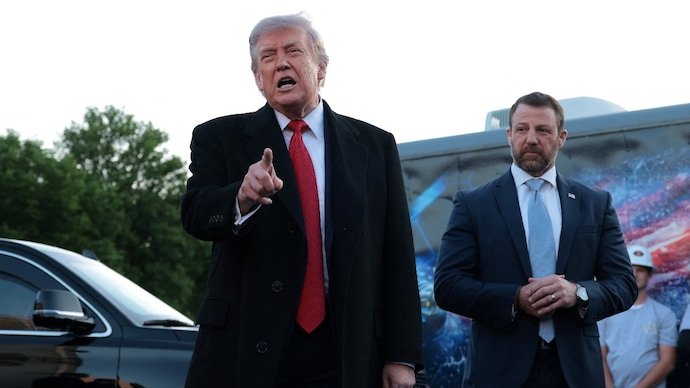
The incident unfolded during Trump’s surprise appearance at Washington D.C.’s National Mall, where he visited restoration work underway at the Lincoln Memorial Reflecting Pool ahead of America’s upcoming 250th anniversary celebrations. What began as a routine press interaction about infrastructure and beautification quickly spiraled into another headline-grabbing confrontation between Trump and the national media.
The clash has since become a major political and social media talking point, not simply because of the insults exchanged, but because it reflects a broader pattern in Trump’s political communication strategy one that thrives on confrontation, spectacle, and viral amplification.
What Happened During Trump’s Exchange With Rachel Scott?
The confrontation began when senior ABC News correspondent Rachel Scott questioned Trump about his priorities at a time of escalating tensions with Iran and rising fuel prices.
Scott asked why the administration was focusing on beautification and restoration projects while Americans were concerned about international conflict and the cost of living.
Trump immediately pushed back.
“Because I want to keep our country beautiful and safe. Beautiful also,” Trump responded before abruptly attacking the question itself.
He then launched into a broader rant about cleanliness and urban conditions in Washington D.C., criticizing what he described as “filth” and “dirt” around the city.
Moments later, Trump directly insulted the reporter, calling her question “stupid” and referring to ABC News as “fake news.”
According to video footage widely circulated online, Trump said:
“That’s such a stupid question that you asked… You can understand dirt better than I can, baby, but I don’t allow it.”
The situation escalated further when Trump turned toward nearby construction workers and continued criticizing Scott personally, calling her “a horror show” and labeling the question “a disgrace to our country.”
The Hot-Mic Moment That Went Viral
The biggest controversy emerged after the formal exchange had seemingly ended.
As Trump walked back toward his limousine, cameras captured him gesturing toward Scott while appearing to mouth a derogatory term. Because there was no audible audio, viewers online began debating whether Trump had said the word “b***h.”
The clip spread rapidly across social media platforms including X, TikTok, Reddit, and YouTube, where millions of users replayed the footage frame-by-frame attempting to interpret the moment.
The absence of clear audio did little to slow speculation.
Within hours, hashtags linked to the incident began trending, with supporters defending Trump’s frustration and critics accusing him of misogyny and hostility toward female journalists.
Why This Incident Is Bigger Than Just One Exchange
At first glance, the confrontation may appear to be another routine Trump-versus-media moment. But the political significance runs deeper.
This incident highlights how modern political communication increasingly operates through viral conflict rather than policy discussion.
In less than two minutes:
- A question about gas prices shifted into a debate about media hostility
- The story moved from infrastructure to personality politics
- A potential hot-mic insult became more viral than the original policy issue
- Social media transformed a brief exchange into a national political event
This transformation reflects a broader media reality in the digital age: emotionally charged confrontations often overshadow substantive policy discussions.
Trump’s Long History of Media Clashes
This is far from the first time Trump has publicly attacked reporters.
Throughout his political career, Trump has frequently used confrontational rhetoric against journalists, often portraying mainstream media outlets as politically biased or dishonest.
Some of his most repeated labels include:
- “Fake news”
- “Enemy of the people”
- “Terrible reporter”
- “Disgraceful”
Rachel Scott herself has previously clashed with Trump during earlier press interactions.
In December 2025, Trump reportedly criticized Scott after she questioned him about US Military operations involving suspected narcotics trafficking routes in the Caribbean.
These repeated confrontations have created a recognizable political pattern where Trump often turns journalist questioning into direct political theater.
Why Trump’s Supporters Often Approve of These Confrontations
One important detail frequently overlooked in mainstream coverage is that many Trump supporters view these media clashes positively rather than negatively.
To critics, Trump’s language may appear combative or disrespectful. But to supporters, his confrontational style often signals authenticity and resistance against what they perceive as elite or hostile media institutions.
For many voters:
- Attacking journalists reinforces Trump’s outsider image
- Rejecting “politically correct” responses feels relatable
- Confrontational exchanges appear unscripted and genuine
- Media criticism strengthens anti-establishment narratives
This dynamic partly explains why controversies that damage traditional politicians sometimes strengthen Trump politically.
The Gender Debate Around the Incident
The speculation surrounding the alleged hot-mic slur intensified another long-running debate surrounding Trump: his treatment of women, particularly female reporters and critics.
Over the years, Trump has repeatedly faced criticism for language viewed as dismissive or insulting toward women in media and politics.
Critics argue that phrases such as:
- “Baby”
- “Horror show”
- “Nasty”
- “Stupid question”
take on additional significance when directed at female journalists.
Supporters, however, argue that Trump attacks male and female reporters alike and that his rhetoric reflects political combativeness rather than gender bias.
The ambiguity surrounding the hot-mic footage has only intensified these competing interpretations.
The Political Timing Matters
The controversy also comes during a highly sensitive geopolitical moment.
The exchange occurred amid:
- Renewed tensions involving Iran
- Concerns about shipping disruptions in the Strait of Hormuz
- Rising fuel prices
- Questions about military escalation in the Middle East
That context made Scott’s original question politically significant.
Critics argue that Trump avoided addressing substantive concerns about Inflation and international conflict by redirecting attention toward media confrontation.
Supporters counter that presidents are capable of managing multiple priorities simultaneously, including domestic projects and foreign policy.
The Reflecting Pool Visit Was Meant to Signal Something Else
Interestingly, Trump’s visit to the National Mall was likely intended to project a very different message before the confrontation overshadowed the event.
The restoration work at the Reflecting Pool is tied to preparations for America’s 250th anniversary celebrations a symbolic milestone aimed at emphasizing patriotism, national identity, and historical legacy.
Trump has consistently used large-scale infrastructure, beautification, and patriotic projects as part of his political branding.
His comments about keeping the country “beautiful and safe” align with a broader narrative he has pushed for years:
- National pride
- Urban restoration
- Public order
- American symbolism
However, the confrontation with Scott quickly shifted media focus away from those themes.
Social Media’s Role in Amplifying Political Drama
This episode also demonstrates how modern politics increasingly unfolds through viral clips rather than full events.
Most people discussing the controversy likely did not watch the full press interaction. Instead, they encountered:
- Short video snippets
- Edited clips
- Reaction posts
- Memes and commentary
This creates a political Environment where moments of outrage travel faster than policy explanations.
In Trump’s case, this phenomenon has become central to his political communication model.
Even negative attention often keeps him at the center of public conversation.
| Traditional Political Coverage | Modern Viral Political Coverage |
|---|---|
| Focus on policy details | Focus on emotional moments |
| Long-form press analysis | Short clips and reactions |
| Controlled messaging | Unpredictable viral exchanges |
| Institution-driven narratives | Social-media-driven narratives |
The Iran Angle Added Fuel to the Story
The incident gained additional traction because it intersected with a rapidly evolving foreign policy crisis.
Just hours before the confrontation, Trump reportedly described the latest US-Iran escalation in the Strait of Hormuz as “a love tap” during another exchange involving Rachel Scott.
That remark itself generated criticism because of the seriousness of the regional tensions.
The combination of:
- Iran-related military tensions
- Economic concerns
- A public media confrontation
- A possible hot-mic insult
created a perfect recipe for viral Political Controversy.
The Real Story May Be About Political Attention Economics
One unique insight many competitors miss is that incidents like this increasingly function as attention-management tools in modern politics.
Whether intentional or not, confrontations with the media often dominate headlines far more effectively than formal policy announcements.
In today’s political ecosystem:
- Conflict drives engagement
- Outrage increases visibility
- Viral moments overpower detailed policy discussion
- Media confrontation energizes political bases
Trump understands this dynamic better than almost any modern politician.
His confrontations frequently reshape news cycles within minutes.
Even when critics condemn his behavior, the controversy often ensures that he dominates public attention.
What Happens Next?
The immediate controversy will likely continue circulating online for several days, particularly as users debate the alleged hot-mic comment.
However, the broader implications extend beyond one viral clip.
The incident reinforces several ongoing trends:
- Increasing hostility between politicians and journalists
- The dominance of personality-driven politics
- The growing influence of social media amplification
- The collapse of boundaries between political communication and entertainment
As the 2026 political environment grows more polarized, these kinds of confrontations are likely to become even more common.
Conclusion: A Two-Minute Exchange That Became a National Story
Donald Trump’s clash with ABC News reporter Rachel Scott was not merely another tense press interaction.
It became a viral political event because it combined nearly every element that defines modern political media:
- Personal insults
- Culture-war framing
- Questions about sexism
- Geopolitical tensions
- Hot-mic speculation
- Social media outrage
In previous political eras, a brief argument during a press appearance might have faded quickly. Today, a few seconds of ambiguous footage can dominate national conversation within hours.
That reality says as much about modern media culture as it does about Trump himself.
And once again, the biggest winner in the attention economy was not policy discussion or diplomatic analysis but viral confrontation.
For breaking news and live news updates, like us on Facebook or follow us on Twitter and Instagram. Read more on Latest World on thefoxdaily.com.






COMMENTS 0