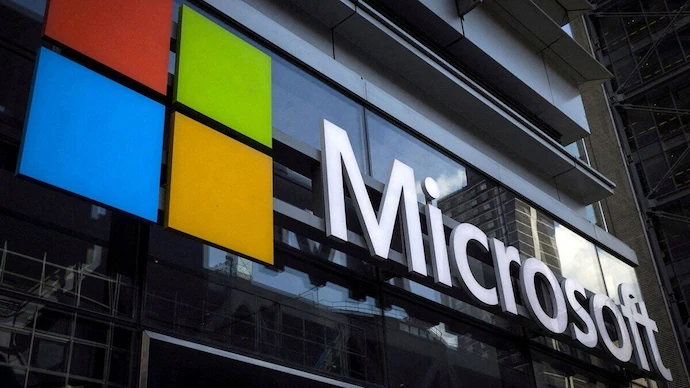
Microsoft is offering a voluntary buyout programme to approximately 60,000 eligible employees across India, the United States, the United Kingdom and Canada as the technology giant seeks to manage workforce costs while investing heavily in Artificial Intelligence (AI). The initiative covers participating teams across several business divisions and comes as Microsoft plans substantial spending on AI infrastructure, including data centres and computing chips.
According to Reuters, the programme will be available to eligible employees at level 70 and below in participating organisations. The offer reflects Microsoft’s effort to adjust its workforce to changing business priorities while continuing to finance its expanding AI operations.
The initiative arrives as major technology companies commit hundreds of billions of dollars to AI infrastructure. Investors are increasingly focused on whether revenue growth and future productivity gains will justify the scale of this spending.
Microsoft Voluntary Buyout Programme: Who Is Eligible?
Microsoft said the voluntary buyout programme will cover eligible employees in participating teams in Canada, India, the United Kingdom and the United States. Employees at level 70 and below may qualify, subject to the programme’s eligibility conditions.
The offer is expected to extend across several divisions, including AI experiences, Copilot, finance, human resources, Xbox and Windows + Devices. Marketing, commercial business and security teams will be excluded, according to a source familiar with the matter who spoke to Reuters on condition of anonymity.
Chief People Officer Amy Coleman explained the purpose of the initiative in an internal staff memo. She said the programme would provide employees who were already considering leaving Microsoft with an additional option, while giving participating organisations another way to adjust their workforce.
“This offer gives eligible employees who may be considering a future outside the company a new choice to make that transition now with support. It also gives participating organizations another way to adapt their workforce to changing needs,” Coleman said.
Microsoft described the offer as a time-limited and voluntary programme informed by experience from an earlier voluntary retirement initiative. The company said eligible employees would receive further details within the following hours.
The distinction between a voluntary buyout and a compulsory layoff is important. The programme allows eligible employees to consider leaving under the offer’s terms; it does not mean that all 60,000 employees will accept the package or that the entire group will lose their jobs.
Why Is Microsoft Offering Buyouts as AI Spending Increases?
The buyout programme comes as Microsoft expands its investment in AI technology and the infrastructure needed to run it. Developing and deploying advanced AI systems requires substantial computing capacity, specialised chips, data centres, networking equipment and electricity.
Microsoft and other major technology companies have been committing large sums to these resources as demand for AI services grows. The investments support products and services such as AI assistants, cloud computing and tools designed to help businesses automate tasks.
However, the scale of spending has raised questions among investors about the pace at which companies will recover their costs. Building infrastructure requires significant upfront capital, while the commercial benefits may take time to emerge and depend on customer adoption, pricing and operating expenses.
Microsoft has forecast capital expenditure of $175 billion for the 2026 calendar year, according to the supplied report. That level of planned investment makes workforce management and spending priorities important areas of attention as the company expands its AI capabilities.
Voluntary buyouts can help companies adjust staffing levels without relying exclusively on compulsory redundancies. They can also allow employees who are already considering a career change or retirement to leave with support, although the financial and employment implications depend on the terms of the individual offer.
The programme does not establish that AI has directly replaced 60,000 jobs. Rather, it reflects Microsoft’s stated effort to adapt its workforce while funding large-scale investments and responding to changing organisational needs.
Microsoft Has 223,000 Employees Worldwide
Microsoft reported 223,000 full-time employees globally as of June 30, 2026, according to its annual filing cited in the supplied report. Against that workforce figure, a buyout offer covering approximately 60,000 eligible employees would represent a substantial potential reach.
However, the number of employees covered by an offer should not be confused with the number expected to leave. Eligibility does not guarantee participation, and the final workforce impact will depend on how many employees accept the terms and how Microsoft manages staffing across the affected organisations.
The programme also spans multiple countries, with eligibility rules and participating teams determining who can apply. Employees in excluded business areas will not be covered by the offer described in the report.
For Microsoft, the outcome could influence workforce costs and organisational structure. For employees, the decision will depend on the buyout package, career prospects, personal circumstances and the availability of other opportunities.
Microsoft’s Earlier Buyouts and Job Cuts
The latest initiative follows earlier workforce changes at Microsoft. The company announced a voluntary buyout programme earlier in 2026 that covered approximately 7% of its US workforce, or around 9,000 employees, according to the supplied report.
Microsoft also announced plans in July to cut 4,800 jobs, equivalent to approximately 2.1% of its global workforce at the time cited in the report. The changes were connected to restructuring within its Xbox gaming business and plans to divest up to five studios.
The gaming division had received substantial investment, and the restructuring was intended to improve returns from the business. The changes illustrate how Microsoft has been adjusting parts of its organisation while continuing to invest in areas considered strategically important.
The latest voluntary offer broadens the focus beyond gaming to include functions associated with AI, Copilot, finance, human resources and devices. It therefore represents a wider workforce adjustment than a restructuring limited to a single business unit.
Still, the programmes should not automatically be treated as evidence of a single cause. Microsoft has not established in the supplied information that every workforce change is directly attributable to AI automation. Cost management, organisational restructuring and evolving business priorities can all influence staffing decisions.
Microsoft Shares Rise Ahead of Quarterly Earnings
Microsoft shares rose approximately 1% on Monday following news of the buyout offer, according to the supplied report. The stock had gained around 10% over the year to that point.
The movement came ahead of Microsoft’s scheduled quarterly earnings announcement after markets closed on Wednesday. Investors were expected to examine the results for evidence of how AI investments are translating into revenue growth, customer demand and financial returns.
The company’s spending plans have become a central consideration for investors evaluating its long-term prospects. AI infrastructure can create opportunities for cloud computing and enterprise software, but the costs associated with building and operating that infrastructure can also weigh on near-term cash flow and profitability.
The share-price movement following the buyout news does not, by itself, establish how investors assess the programme’s long-term financial impact. Market prices respond to multiple factors, including earnings expectations, broader technology-sector performance and changes in forecasts.
What Employees in India, the US and the UK Should Know
Employees in India, the United States and the United Kingdom may be eligible if they work in participating teams, hold a qualifying level and meet Microsoft’s programme conditions. Canada is also included in the announced geographical scope.
Eligibility alone does not determine whether accepting a buyout is the right decision for an individual employee. The terms of the package, applicable employment rules, tax implications, benefits and future career plans can vary by country and personal circumstances.
Employees considering the offer would need to review Microsoft’s official communication to understand the payment structure, deadlines, benefits and any conditions attached to participation. The supplied report does not specify the individual payout amounts or the detailed terms of the package.
It is also important to distinguish this programme from a compulsory redundancy announcement. Microsoft has described the offer as voluntary and time-limited, giving eligible employees an option to leave with support rather than announcing that every employee within the programme’s potential reach will be dismissed.
AI Investment and Workforce Restructuring Will Remain in Focus
Microsoft’s buyout offer highlights the financial and organisational decisions facing technology companies as they expand AI infrastructure. Businesses must balance the cost of developing new capabilities against the need to maintain efficient operations and demonstrate that investments can produce sustainable returns.
The programme could reduce workforce costs if a significant number of eligible employees accept the offer, but its final impact will depend on participation and the company’s subsequent staffing decisions. The offer alone does not establish how many positions will ultimately be eliminated or how the affected teams will be reorganised.
Microsoft’s upcoming earnings announcement is likely to draw attention to its capital expenditure, cloud business and progress in monetising AI products. Investors will be looking for evidence that growing demand can support the substantial infrastructure commitments.
For employees, the immediate issue is whether the voluntary package offers a suitable path to a career transition. For Microsoft, the broader challenge is to align its workforce with changing business needs while continuing to fund AI development at scale.
The voluntary buyout programme is therefore another significant step in Microsoft’s workforce management strategy. Its ultimate significance will become clearer once employee participation, financial results and the company’s subsequent organisational decisions are known.
For breaking news and live news updates, like us on Facebook or follow us on Twitter and Instagram. Read more on Latest Careers on thefoxdaily.com.





COMMENTS 0