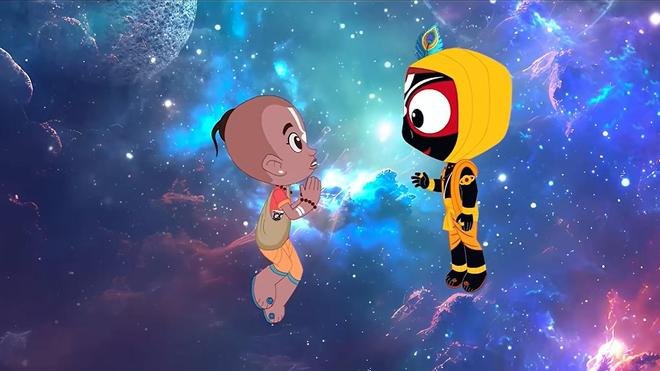
The Supreme Court’s decision on Mahaprabhu Jagannath film release highlights a nuanced approach to a sensitive issue—balancing faith with artistic expression. The court permitted the release of the animated film Mahaprabhu Jagannath, but only after the conclusion of the sacred Rath Yatra on July 27, 2026.
This means the film can officially hit screens on or after July 28, 2026, ensuring that religious observances remain undisturbed.
What the Supreme Court Said
Led by Justice B.V. Nagarathna, the Bench made a significant observation about the nature of devotion and storytelling:
“Devotion is something internal… Can an animated film bring down devotion?”
The court emphasised that animation and fiction cannot undermine religious faith, even if they do not strictly follow scriptures like the Skanda Purana or Brahma Purana.
Why the Film Faced Objections
The controversy began when objections were raised by the Odisha government and temple authorities in Puri.
- Concerns over deviation from scriptures
- Fear of misrepresentation of Lord Jagannath
- Sensitivity during the Rath Yatra period
These concerns led to calls for restricting or delaying the film’s release.
The Court’s “Middle Path” Approach
Instead of outright banning or fully permitting immediate release, the Supreme Court adopted a balanced solution.
| Aspect | Court’s Decision |
|---|---|
| Film release | Allowed |
| Timing | After Rath Yatra (July 28 onwards) |
| Religious concerns | Recognised but not overriding |
| Creative freedom | Upheld |
This “middle path” ensures that religious sentiments are respected without restricting artistic expression.
Faith vs Fiction: A Larger Debate
The case brings back a recurring question in India’s cultural landscape—how should creative works engage with religion?
Key Takeaways from the Verdict
- Faith is personal and internal
- Artistic works are interpretative, not literal
- Legal systems must balance both perspectives
The court’s reasoning suggests that exposure to fictional or artistic interpretations does not weaken belief, but rather coexists with it.
Why Timing Matters: Rath Yatra Context
The Rath Yatra is one of the most significant festivals dedicated to Lord Jagannath, drawing millions of devotees.
By postponing the release until after the festival, the court ensured:
- No disruption to religious observances
- A respectful gap between devotion and entertainment
- Reduced potential for public unrest
Impact on Filmmakers and Creative Industry
This ruling sends an important message to filmmakers working with religious themes.
| Before Verdict | After Verdict |
|---|---|
| Fear of bans due to religious objections | Greater clarity on creative rights |
| Uncertainty around release timing | Structured compromises possible |
| Strict expectations of scriptural accuracy | Recognition of artistic interpretation |
It reinforces that creative storytelling has space within legal and cultural frameworks, as long as it is handled responsibly.
The Bigger Insight: Coexistence, Not Conflict
The Supreme Court’s stance introduces a powerful idea—faith and fiction are not adversaries.
Instead of viewing artistic works as threats, the judgment frames them as parallel expressions of culture.
This perspective could influence future cases involving:
- Films based on mythology
- Creative reinterpretations of religious stories
- Debates around cultural sensitivity
Conclusion: A Landmark Balance
The clearance of Mahaprabhu Jagannath after Rath Yatra is more than just a film release decision—it is a statement on how modern India negotiates tradition and creativity.
By allowing the film while respecting religious timing, the Supreme Court has set a precedent for resolving similar conflicts in the future.
In essence, the verdict affirms that belief is resilient—and storytelling, even in animated form, cannot diminish it.
For breaking news and live news updates, like us on Facebook or follow us on Twitter and Instagram. Read more on Latest Entertainment on thefoxdaily.com.






COMMENTS 0