readers want to understand the oil spill threatening the Hara mangrove forests, what caused the pollution, why the ecosystem is ecologically important, and what the incident could mean for marine life and coastal communities.
Primary keyword: Hara mangrove oil spill
Related semantic keywords: Hara Biosphere Reserve, Persian Gulf oil spill, Hara mangrove forests, Khuran Strait, Iran mangroves, marine nursery habitat, oil pollution, mangrove ecosystem, Persian Gulf biodiversity, oil spill environmental impact
An oil spill in the Persian Gulf has created a serious environmental threat for the Hara mangrove forests in southern Iran, an ecosystem whose importance extends far beyond the trees visible along its tidal waterways. The Hara region forms a complex network of mangroves, mudflats, shallow waters, creeks and marine habitats that supports fish, birds, reptiles and other wildlife.
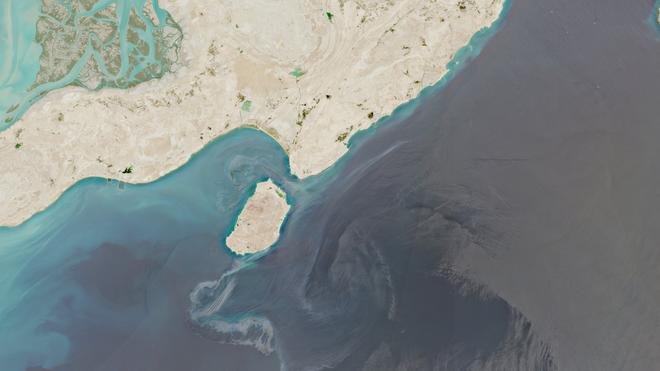
The immediate concern is the movement of oil through the Khuran Strait toward the Hara wetland system. Satellite observations and scientific analysis conducted during 2026 indicate that prolonged oil leakage in the area has produced slicks close to the Hara Mangrove Reserve. The pollution risk is particularly concerning because mangrove ecosystems are located at the boundary between land and sea, where floating oil can become trapped among roots, sediments and tidal channels.
The incident also highlights a larger problem that is easy to overlook when attention is focused on shipping, military activity and oil infrastructure: the same waters that carry enormous quantities of energy resources also contain some of the Persian Gulf’s most valuable ecological systems.
What is happening near the Hara mangrove forests?
The environmental danger is linked to oil leakage in and around the Khuran Strait, including pollution associated with a damaged vessel during the 2026 regional conflict.
The Iranian naval vessel Shahid Bagheri was damaged in March 2026 and subsequently remained in shallow waters in the ecologically sensitive area. Reports indicated that heavy fuel oil leaked from the vessel and that the resulting slick moved toward the Hara wetlands.
Satellite-based observations have provided an important way to monitor the situation because direct environmental assessment can be extremely difficult during conflict. Research using multiple satellite sensors identified persistent oil pollution in the Persian Gulf during the early months of 2026, including prolonged leakage in the Khuran Strait-Hara wetland region.
The significance of the latest observations is not simply that oil has appeared on the water. The greater concern is where the oil is moving and what habitats it could reach.
In a narrow, tidal environment containing mangrove forests and interconnected waterways, contamination can become considerably harder to remove once it reaches sheltered creeks and vegetated shorelines.
Why the Hara mangrove forests matter
The Hara forests are among the most important mangrove ecosystems in the Persian Gulf. The Hara Biosphere Reserve is located in southern Iran, around the Mehran River delta and the Khuran Strait between Qeshm Island and the mainland.
UNESCO designated Hara as a biosphere reserve in 1976. The reserve encompasses an extensive land-and-marine landscape, reflecting the fact that its ecological importance is not confined to the mangrove trees themselves.
The dominant mangrove is Avicennia marina, commonly known as the grey or white mangrove. It is exceptionally well adapted to saline coastal conditions and can survive in an environment that would be hostile to many other tree species.
But describing Hara simply as a forest misses half the story.
It is better understood as a living coastal infrastructure system.
Hara is a nursery for marine life
One of the most important functions of mangrove ecosystems is their role as nursery habitat.
The tangled roots of mangrove trees slow water movement and create sheltered environments where young fish and other aquatic organisms can feed and grow. The surrounding mudflats and shallow waters provide additional feeding and breeding grounds.
This makes the health of Hara relevant not only to wildlife living inside the reserve but also to marine ecosystems beyond it.
Young fish that use mangroves during vulnerable stages of their life cycle may later move into other coastal waters. In ecological terms, the mangrove forest therefore acts as part of a larger production system for the surrounding sea.
That is why an oil spill in a mangrove ecosystem can have consequences that are difficult to measure simply by counting visibly contaminated trees or dead animals.
Why oil is especially dangerous for mangroves
Oil spills are damaging in many marine environments, but mangrove forests present a particular challenge.
Their complex root systems can trap floating oil and contaminated sediment. Unlike an exposed sandy beach, a mangrove shoreline contains narrow channels, dense vegetation and soft sediment that can make mechanical cleanup difficult.
Oil can coat roots and interfere with the exchange of gases through specialised structures that allow mangroves to survive waterlogged, oxygen-poor soils. Heavy contamination can also affect seedlings and organisms living in the sediment.
There is another complication: mangroves grow slowly compared with the speed at which a slick can spread.
A spill can move with tides and currents in hours, while ecological recovery may take far longer.
The hidden threat is not always the oil that can be seen
One of the biggest weaknesses in assessing oil-spill damage is the tendency to focus on visible slicks.
A dark layer of oil on the water is easy to photograph. Less obvious are the hydrocarbons that dissolve into water, become incorporated into sediments or affect organisms without immediately causing visible mortality.
That means an apparently clean shoreline does not necessarily mean an ecosystem has escaped harm.
Potential impacts can include physiological stress in marine organisms, reduced reproductive success, contamination of food webs and changes in the behaviour or distribution of wildlife.
This is particularly important in a nursery habitat. Young organisms may be more vulnerable to environmental stress than adults, meaning damage could become apparent only later.
Hara is also a major bird habitat
The Hara wetlands support a remarkable variety of birds, including migratory species that depend on coastal wetlands during seasonal movements.
Mudflats, shallow waters and mangrove channels provide feeding opportunities for birds ranging from waders to larger waterbirds. The surrounding wetland system therefore forms part of a much wider migration network linking habitats across regions.
Pollution can affect these birds in several ways. Oil may contaminate feathers, interfere with feeding behaviour or reduce the abundance of prey organisms.
For migratory species, timing matters. A polluted wetland can become particularly problematic if birds arrive during a period when food resources are already limited.
Sea turtles and other wildlife face additional risks
The Hara region and surrounding coastal waters support a variety of reptiles and marine organisms, including sea turtles.
Oil contamination can threaten marine animals through direct contact, ingestion of contaminated material and disruption of feeding habitats.
The ecosystem also supports fish, crustaceans, molluscs and other organisms that form interconnected food webs.
This is why the environmental impact of an oil spill cannot be understood by looking at one species at a time. The greater concern is the possibility of a chain reaction in which contamination affects habitat, prey availability and predator behaviour simultaneously.
A unique geographical problem: the Khuran Strait
The location of the Hara forests makes the spill particularly difficult to manage.
The Khuran Strait is a network of shallow coastal waters and tidal environments associated with the Hara wetland system. Water movement can transport floating pollutants between open areas and sheltered channels.
This creates a difficult balance for responders. Strong currents may disperse some contamination, but tidal movement can also carry oil toward sensitive shoreline habitats.
Once oil enters narrow mangrove channels, removing it without damaging vegetation and wildlife can become extremely challenging.
Satellite technology is changing how oil spills are tracked
One of the most important developments in this incident is not happening on the water. It is happening above it.
Scientists are increasingly using satellites to monitor oil pollution in regions where conventional field surveys are difficult or dangerous.
Different satellite technologies can provide different clues. Radar observations can detect changes on the sea surface, optical sensors can help identify visible characteristics of slicks, and thermal observations can provide additional information about environmental conditions.
The 2026 research into Persian Gulf oil pollution demonstrates why this technology is becoming increasingly important.
In conflict zones, researchers may be unable to safely send boats into affected waters. Satellite monitoring can therefore provide an independent environmental record even when ground-level access is restricted.
What makes this spill different from an ordinary coastal pollution event?
The Hara situation combines several environmental risks that would normally be considered separately.
- High ecological sensitivity: The affected area contains mangroves, tidal wetlands and marine nursery habitat.
- Persistent pollution: Prolonged leakage can be more difficult to manage than a short-lived spill.
- Complex currents: Tidal circulation can move oil between open water and sheltered habitats.
- Conflict conditions: Security risks can make cleanup and field assessment more difficult.
- High biodiversity value: Fish, birds, reptiles and other organisms depend on the wetland.
- Human dependence: Coastal communities use surrounding waters for fishing and other economic activities.
The combination makes this more than a conventional pollution incident. It is an ecological risk unfolding inside a strategically important maritime corridor.
The comparison that matters: oil chokepoint versus ecological chokepoint
The Strait of Hormuz is usually discussed as an economic chokepoint because of its importance to global energy transportation.
But there is another way to view the region.
Ecologically, the same narrow maritime geography connects a chain of habitats that include mangroves, mudflats, shallow coastal waters, islands and marine ecosystems.
That means disruption in the region can have two very different consequences: economic disruption for ships and energy markets, and ecological disruption for species that cannot simply move away from contamination.
This is one of the most important aspects of the Hara oil spill that receives less attention in conventional coverage.
The Persian Gulf is not merely an oil transportation corridor. It is also a connected ecological system.
Could the damage become long-term?
It is too early to reduce the situation to a single prediction about the eventual ecological outcome. Oil-spill damage depends on the amount and type of petroleum released, weather and tidal conditions, where the oil accumulates, how quickly it is removed and the sensitivity of individual habitats.
Some coastal ecosystems can recover from limited contamination. Severe or repeated exposure can produce much longer-lasting effects.
For Hara, the most important question is therefore not simply how large the slick appears on a particular day. It is whether oil reaches mangrove roots, sediments, nursery areas and sheltered channels — and whether contamination persists there.
That distinction could determine whether the incident remains a temporary pollution event or becomes a longer ecological problem.
Why mangrove protection matters beyond biodiversity
Mangroves are often described primarily as wildlife habitat, but their value extends to people.
Healthy mangrove systems can reduce wave energy, trap sediment and help stabilise coastlines. They also support fisheries by providing nursery habitat for aquatic species.
In a region exposed to extreme heat, coastal development and increasing environmental pressure, these natural services become increasingly important.
Protecting Hara therefore is not simply about preserving a scenic landscape. It is also about protecting a functioning coastal system that provides ecological and economic benefits.
What should happen next?
The first priority is to establish the movement and concentration of the oil through continued satellite monitoring and, whenever conditions allow, field-based sampling.
Authorities and environmental organisations also need to identify the habitats most exposed to contamination, particularly mangrove channels, nursery grounds and areas used by wildlife.
Cleanup decisions must be carefully designed. Removing oil quickly is important, but aggressive intervention can itself damage fragile mangrove roots, sediments and wildlife.
Long-term monitoring is equally important. The ecological consequences of an oil spill may not become fully visible immediately, particularly where contamination affects reproduction, juvenile survival or food availability.
The bigger lesson from the Hara oil spill
The Hara crisis illustrates a fundamental problem with modern environmental protection: a site can have international conservation status and still remain vulnerable to events occurring outside its boundaries.
A biosphere reserve designation cannot stop an oil slick carried by currents.
That means conservation policy has to consider the wider waters surrounding protected ecosystems. Shipping routes, offshore infrastructure, military activity and emergency response planning can all affect the survival of coastal habitats.
Hara’s future will therefore depend not only on what happens inside the mangrove forest but also on how effectively pollution risks are managed across the surrounding maritime system.
Conclusion: Hara’s mangroves are more than trees at the water’s edge
The Hara mangrove oil spill is a warning about how quickly a regional environmental incident can threaten an ecosystem of international importance.
The Hara Biosphere Reserve is a complex coastal system supporting mangroves, fish, migratory birds, reptiles and countless smaller organisms. Its value lies not just in the trees themselves but in the nursery grounds, tidal channels and food webs connected to them.
The 2026 oil pollution events in the Persian Gulf have also demonstrated the growing importance of satellite technology for environmental monitoring, particularly when conflict makes conventional fieldwork difficult.
The most important question now is whether contamination can be prevented from becoming entrenched in the mangrove ecosystem. If oil reaches roots and sheltered sediments, the environmental clock may continue long after the visible slick disappears.
The Hara forests have survived extreme heat, high salinity and harsh coastal conditions for generations. Their greatest challenge now may be a modern one: protecting a fragile natural system from the consequences of an increasingly industrialised and geopolitically contested sea.
For breaking news and live news updates, like us on Facebook or follow us on Twitter and Instagram. Read more on Latest Health on thefoxdaily.com.


COMMENTS 0