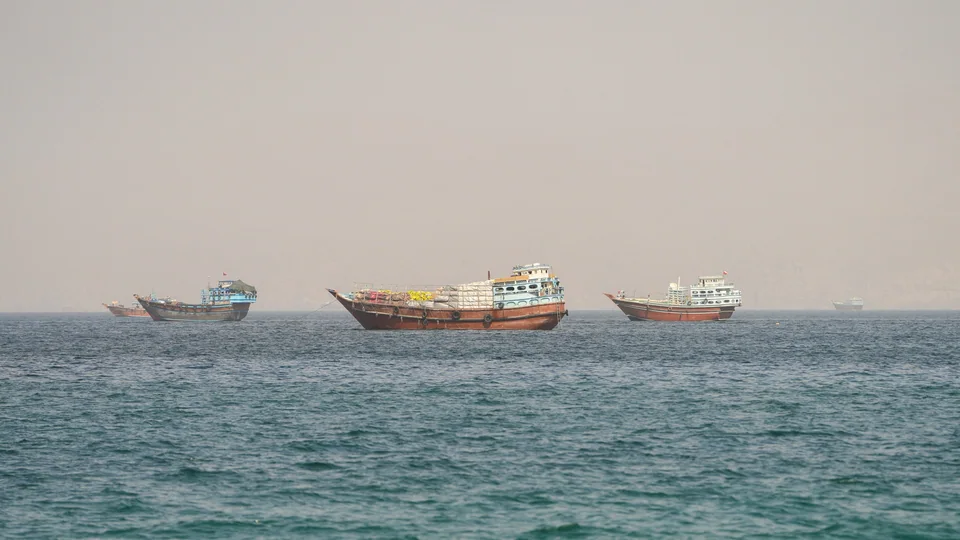
Iran’s Islamic Revolutionary Guard Corps (IRGC) Navy has claimed that it struck and set fire to four oil-carrying vessels in the northern Persian Gulf, while three other ships reportedly hit mines in the western Strait of Hormuz. The allegations, reported by Iranian state broadcaster Islamic Republic of Iran Broadcasting (IRIB), come amid escalating tensions between Tehran and Washington over maritime security, military operations and control of one of the world’s most strategically important shipping routes.
In a statement issued on Thursday, the IRGC Navy said the four vessels had crossed what it described as an “illegal route” despite previous warnings to the maritime companies operating them. Iranian authorities also alleged that three additional vessels struck mines in the western Strait of Hormuz on Wednesday night and were subsequently stopped.
However, the Iranian statement did not identify any of the seven vessels, disclose their ownership or flag states, or provide independently verifiable details about the extent of the reported damage. It also did not confirm whether anyone had been injured or killed. The claims have not been independently established based on the information available in the supplied report.
The reported incidents have intensified concerns about the safety of commercial shipping through the Persian Gulf and the Strait of Hormuz, a critical maritime corridor for international oil and energy supplies. The developments also come as US President Donald Trump has signalled uncertainty over negotiations with Iran and amid reports of preparations for possible renewed American and Israeli military strikes.
Iran Claims Four Oil-Carrying Ships Were Set on Fire
According to IRIB, the IRGC Navy alleged that four vessels carrying oil cargoes were intercepted after previously navigating a route that Tehran considered illegal. Iranian forces claimed they tracked the ships and discovered them transferring oil in the northern Persian Gulf before attacking them.
The IRGC Navy’s statement said the vessels were targeted simultaneously and caught fire. It also accused the maritime companies operating them of disregarding earlier warnings and being misled by the US military.
In its account of the incident, the Iranian force stated that its personnel had observed and pursued the vessels before identifying what it described as an unauthorised oil-transfer operation. The statement presented the strikes as an enforcement action linked to Iran’s restrictions on maritime movement.
Several important details remain unclear. The statement did not identify the ships, name the companies responsible for their operation or specify whether the vessels were oil tankers, other commercial ships carrying petroleum cargoes, or ships involved in a transfer between vessels. It also did not explain the precise route the ships allegedly used or provide evidence supporting the accusation that they had violated Iranian warnings.
There was no independently confirmed information in the supplied report about the condition of the vessels following the alleged strikes. The extent of the reported fires, whether the ships remained operational and whether oil leaked into the sea were also not established.
Until further details emerge from identifiable maritime authorities, vessel operators or other independently verifiable sources, the reported attacks should be understood as claims made by the IRGC Navy rather than independently confirmed accounts of the incidents.
Three More Vessels Reportedly Hit Mines in the Strait of Hormuz
In a separate allegation, the IRGC Navy said three additional vessels struck mines in the western Strait of Hormuz on Wednesday night and were stopped.
The statement did not disclose the vessels’ identities, the type of mines involved, the circumstances in which the ships allegedly encountered them or the damage caused. It also did not establish whether the three reported incidents were connected to the four alleged attacks in the northern Persian Gulf.
The distinction matters because the Persian Gulf and the Strait of Hormuz are connected but separate maritime areas. The Persian Gulf contains major oil-producing and shipping facilities, while the Strait of Hormuz provides the narrow maritime passage connecting the Gulf with the Gulf of Oman and the wider Arabian Sea.
Any confirmed mine-related incident in the strait could have consequences beyond the vessels directly affected. Mines can threaten commercial traffic, complicate naval operations and prompt shipping companies to reassess the risks of entering or leaving the Persian Gulf.
Even the possibility of mines can influence maritime activity. Ship operators, insurers and cargo owners may seek additional information about navigational restrictions, vessel-routing instructions and the safety of particular passages before allowing ships to proceed.
However, the IRGC Navy’s account does not establish the exact location of the alleged mine strikes or whether the incidents resulted in a wider suspension of shipping. The supplied report also contains no verified details about any casualties.
Why the Strait of Hormuz Is So Important to Global Oil Supplies
The Strait of Hormuz is one of the world’s most important energy chokepoints. It connects oil-producing countries in the Persian Gulf with international markets and provides a major route for crude oil, petroleum products and other energy shipments.
Oil exports from several major Gulf producers depend on access to this maritime passage. As a result, disruptions can affect not only regional shipping but also global energy prices, transport costs and economic expectations.
For international markets, the consequences of a maritime security crisis depend on several factors: how many vessels are affected, whether shipping lanes remain open, how long the disruption lasts and whether alternative transport routes can accommodate additional exports.
A limited incident involving a small number of ships may have a different effect from a prolonged interruption that prevents tankers from moving through the strait. Nevertheless, reports of attacks, fires or mines can increase uncertainty even before the full operational consequences are known.
How a Shipping Disruption Could Affect Oil Prices
Oil markets respond to both actual supply disruptions and the possibility that future deliveries may be interrupted. When traders become concerned about the security of a major export route, they may reassess the availability of crude oil and the likelihood of higher transport or insurance costs.
If ships are delayed, rerouted or temporarily prevented from loading and delivering cargoes, the resulting uncertainty can influence prices. The effect would depend on the scale and duration of the disruption, the amount of oil affected and the availability of supplies from other producers.
Shipping companies may also face higher operating costs if they need to obtain additional insurance, change routes or introduce extra security measures. Those costs can affect the economics of transporting oil and other goods, although the extent of any increase would depend on the circumstances.
The reported Iranian incidents do not, by themselves, establish that global oil supplies have been reduced or that prices will rise by a specific amount. Any assessment of their market impact would require confirmed information about the vessels involved, the status of the shipping lanes and actual changes to energy deliveries.
Iran Blames Washington for Encouraging Ships to Use a Dangerous Route
The IRGC Navy used its statement to accuse the United States of encouraging vessels to navigate through what it described as an illegally mined passage. Iranian officials claimed that this approach had contributed to a growing number of maritime incidents.
The Iranian force said its personnel continued to manage maritime movement through the Strait of Hormuz with the support of the Iranian public. It presented its actions as part of Tehran’s assertion of authority over the strategic waterway.
The statement also issued a direct warning to the United States, suggesting that the confrontation could expand beyond maritime incidents if the situation continued.
“The aggressive US army should know that if this trend continues, the scope of the confrontation will be extended to the aggressive bases in the region. This is a serious warning,” the IRGC Navy said, according to IRIB.
The warning raises the possibility that Tehran could seek to extend its response beyond vessels operating in or near the Strait of Hormuz. However, the statement did not specify which bases might be targeted, what actions Iran might take or whether any operational decision had been made.
The allegations also illustrate the competing security narratives surrounding the waterway. Iran maintains that its forces are managing maritime movement and enforcing restrictions, while its accusation that Washington encouraged ships to use a dangerous route has not been independently substantiated in the supplied report.
Without further information from the parties involved and independent maritime monitoring, the circumstances surrounding the alleged attacks remain uncertain.
Trump Says the United States Is Not Negotiating With Iran
The reported maritime incidents came as US President Donald Trump indicated that Washington was not currently negotiating with Tehran, while suggesting that a significant development could occur soon.
In an interview with NewsNation White House correspondent Libbey Dean on Wednesday, Trump was asked about the status of negotiations with Iran. His comments suggested that although some activity may have taken place, he did not consider the two sides to be engaged in active negotiations at that moment.
“A little bit, but we’ll see what happens,” Trump said when asked whether negotiations with Iran were ongoing.
When asked whether he had finished negotiating with the Iranian government, Trump responded that the United States was not negotiating and that a development would occur “fairly soon”.
“No, I think we’re not negotiating…we are going to have something, one way or the other. It’ll happen fairly soon,” Trump said.
Trump did not clarify what he expected to happen or provide a definitive timeline for the next step in Washington’s approach to Iran. His remarks therefore left open the possibility of further diplomatic developments, military action or another change in the confrontation.
The US president also described the situation as a conflict with Iran and said Washington was performing well militarily and financially. He credited American sanctions with putting pressure on Tehran, although he did not provide new details about the effect of the measures during the interview.
The comments came against a backdrop of continued disagreement over Iran’s nuclear programme, regional security and the movement of vessels through the Strait of Hormuz. The alleged attacks on oil-carrying ships add another layer of uncertainty to an already tense situation.
Reports Suggest the US and Israel Are Preparing for Possible Fresh Strikes
The maritime claims have also emerged amid reports that the United States and Israel have developed plans for renewed military strikes against Iran following the American midterm elections.
According to The New York Times report cited in the supplied material, the two countries have prepared plans for a short but intensive operation targeting Iranian energy infrastructure, nuclear facilities and missile and drone capabilities.
The report, which cited US officials and other people briefed on the deliberations, said American and Israeli forces had increased military exercises. These reportedly included aircraft flying over Iraq to practise manoeuvres associated with potential strike operations.
The report also described preparations for a substantial American military deployment expected to be in place by early November. The reported force could include three aircraft carriers, thousands of Marines, fighter aircraft and Special Operations forces.
However, military planning does not necessarily mean an operation has been authorised or that an attack will take place. The timing and scope of any potential action would depend on decisions by political and military leaders, as well as developments on the ground and in diplomatic contacts.
The report also pointed to political considerations surrounding the timing of possible action, including Trump’s earlier pledge not to strike Iran before the midterm elections. The supplied material does not establish that a final decision has been made.
Why the Midterm Elections Matter to the Timeline
The US midterm elections are a significant political event because they determine control of seats in Congress and can influence the administration’s domestic political position. The New York Times report cited in the supplied material suggested that political considerations were among the factors being weighed in discussions about the timing of possible military action.
However, the relationship between the elections and any potential military operation remains uncertain. Neither Trump’s latest remarks nor the reported military preparations provide definitive confirmation that a strike will occur after the elections.
For now, the reports point to continued contingency planning rather than a publicly confirmed timetable for renewed attacks.
Iran Threatens to Unveil the ‘Father of All Bombs’
Tehran has also issued a warning about a weapon it describes as the “Father of All Bombs”, using language that appears intended to signal a possible response to renewed American military action.
According to Iranian state-affiliated media outlet Student News Network, IRGC spokesperson Hossein Mohebbi said Iran would demonstrate a new capability in response to the US military’s possession of the weapon commonly known as the “Mother of All Bombs”.
“The United States has the ‘Mother of All Bombs.’ We will show them the ‘Father of All Bombs,’ and it will definitely be something new for them,” Mohebbi said, according to the report.
Iran has not publicly provided sufficient technical details in the supplied material to establish what the statement refers to. It remains unclear whether the name describes a specific weapon, a new military capability or a rhetorical warning intended to deter further attacks.
The phrase “Father of All Bombs” should therefore not be treated as confirmation that Iran has developed or deployed a particular weapon. Assessing such a claim would require verifiable technical information or independent confirmation.
What Is the US ‘Mother of All Bombs’?
The US weapon referenced in the Iranian statement is the GBU-43/B Massive Ordnance Air Blast bomb, commonly known as the MOAB or the “Mother of All Bombs”. It is a large conventional air-delivered munition designed for a powerful blast effect.
The supplied report says Trump has considered the possibility of using the weapon against Iran’s deeply buried Pickaxe Mountain nuclear facility. However, the reported consideration does not establish that an order to use the bomb has been issued or that an attack on the facility is imminent.
Targeting a deeply buried installation can pose significant operational challenges, depending on the facility’s construction, location and protective features. The effectiveness of a particular weapon would depend on the circumstances, and the supplied material does not provide sufficient technical evidence to assess the likely outcome of any hypothetical strike.
Iran’s warning comes amid the broader military confrontation and should be read in that context. Without more specific information, it is not possible to determine what capability Tehran is referring to or how it might be used.
Iranian President Says the Conflict Is a ‘Super-Challenge’
Iranian President Masoud Pezeshkian has acknowledged the seriousness of the situation, describing the country’s circumstances as a major challenge for Tehran and the wider region.
Addressing the Iranian Parliament, Pezeshkian referred to an earlier memorandum of understanding and argued that the current situation was harmful to Iran, its neighbours and the international community.
“The memorandum of understanding we signed was very good; we hadn’t given anything. The current situation is neither good for us, nor for the region, nor for the world,” Pezeshkian said.
He also said Iran had continued to resist pressure and conflict despite the difficulties facing the country.
“We are in a super-challenge, not a challenge. America didn’t think we would stand firm despite the pressure and war, but we stood firm, and we will continue to stand firm,” he added.
The remarks reflect Tehran’s public position that it intends to withstand American pressure. They also underline the wider consequences of the confrontation, which extend beyond military operations to regional stability, energy security and the prospects for a diplomatic settlement.
The supplied report does not provide the full terms of the memorandum Pezeshkian referenced or establish how it relates to the current negotiations. His remarks nevertheless suggest that Iranian leaders see the confrontation as a prolonged strategic challenge rather than an isolated maritime dispute.
Could the Maritime Crisis Lead to a Wider Regional Conflict?
The combination of reported attacks on vessels, alleged mine incidents, warnings from the IRGC Navy and discussions of possible renewed US-Israeli strikes has increased concerns about escalation across West Asia.
The Strait of Hormuz is especially sensitive because a confrontation there could involve commercial shipping, regional military forces and countries that depend on energy transported through the waterway. Even a limited incident can create uncertainty about whether other vessels are at risk.
Several developments will be important in assessing the situation:
- Confirmation of the vessel incidents: Identifying the ships and establishing the extent of any damage would help determine the immediate maritime consequences.
- Evidence of mine-related hazards: Verified information about the reported mine incidents would be important for assessing navigational risks.
- Changes to shipping activity: Delays, rerouting or restrictions could indicate whether the reported incidents are affecting commercial movement.
- US military decisions: Statements from Washington and any confirmed operational developments would help clarify whether reported strike plans are moving beyond contingency planning.
- Iran’s response: Further actions or official statements from Tehran could indicate whether the confrontation is being contained or expanding.
- Diplomatic contacts: Renewed communication between the parties could reduce uncertainty, although Trump’s latest comments suggest that the immediate status of negotiations remains unclear.
None of these developments can be predicted with certainty from the Iranian statement alone. The reported maritime incidents, if independently confirmed, would need to be assessed alongside subsequent military, diplomatic and shipping developments.
What the Reported Attacks Could Mean for Oil Markets and Shipping Companies
Commercial shipping companies must weigh security risks against the need to move cargoes through major international trade routes. Reports of attacks or mines can prompt operators to review voyage plans, consult security advisers and assess whether insurance arrangements remain appropriate.
Oil traders, meanwhile, monitor the Strait of Hormuz because disruptions could affect the timing and reliability of energy deliveries. If the incidents result in confirmed damage, prolonged delays or restrictions on passage, market participants may reassess the risks to supply.
But it is important to distinguish between the threat of disruption and an actual reduction in oil exports. The supplied report does not confirm that the alleged attacks have halted traffic through the strait or removed a measurable quantity of oil from the global market.
Likewise, there is insufficient information to calculate the potential effect on petrol, diesel or other fuel prices. Such effects would depend on the duration and severity of any disruption, international oil prices, transport costs and conditions in individual markets.
For shipping companies and energy buyers, the immediate priority is obtaining reliable information about the vessels involved and the safety of the routes they intend to use. For governments, the challenge is managing maritime security while avoiding actions that could widen the confrontation.
Frequently Asked Questions
What Has Iran Claimed About the Four Oil Ships?
Iran’s IRGC Navy claims that it struck and set fire to four vessels carrying oil cargoes in the northern Persian Gulf. It alleged that the ships had previously crossed an unauthorised route despite warnings. The identities of the vessels and the extent of the reported damage have not been established in the supplied report.
Did Three Other Ships Hit Mines in the Strait of Hormuz?
The IRGC Navy claims that three additional vessels struck mines in the western Strait of Hormuz on Wednesday night and were stopped. The supplied material does not provide independent confirmation, identify the vessels or specify the damage or casualties.
Why Is the Strait of Hormuz Important?
The Strait of Hormuz connects the Persian Gulf with the Gulf of Oman and the wider Arabian Sea. It is a major route for international oil and energy shipments, making maritime security in the area important for energy markets and global trade.
Why Is Iran Blaming the United States?
The IRGC Navy accused Washington of encouraging ships to navigate through what Iran described as an illegally mined passage. It warned that continued developments could expand the confrontation to US military bases in the region. The accusation has not been independently substantiated in the supplied report.
Is the United States Negotiating With Iran?
Trump said in an interview with NewsNation that the United States was not negotiating with Iran and that a development would occur “fairly soon”. He did not specify what would happen or provide a timeline. The status of any diplomatic contacts remains unclear from the supplied material.
Are the United States and Israel Planning Fresh Strikes on Iran?
A New York Times report cited in the supplied material says the US and Israeli militaries have developed plans for a possible short, intensive operation targeting Iranian energy infrastructure, nuclear facilities and missile and drone capabilities. Such planning does not establish that an attack has been authorised or will take place.
What Is Iran’s ‘Father of All Bombs’?
Iranian state-affiliated media reported that an IRGC spokesperson threatened to unveil a weapon described as the “Father of All Bombs”. Tehran has not provided enough verified technical information in the supplied material to establish what the phrase refers to or whether it describes a specific weapon system.
Could the Reported Incidents Affect Global Oil Prices?
They could influence market sentiment if confirmed incidents threaten shipping or disrupt oil deliveries through the Strait of Hormuz. However, the supplied report does not establish that exports have been interrupted or provide evidence of a specific price impact.
Conclusion: Maritime Security Remains at the Centre of the US-Iran Confrontation
Iran’s claims of attacks on four oil-carrying vessels and mine incidents involving three other ships have added to uncertainty surrounding the Persian Gulf and the Strait of Hormuz. The IRGC Navy has blamed Washington for encouraging vessels to use a route it describes as illegal and warned that the confrontation could expand if the situation continues.
The allegations come as Trump says the United States is not negotiating with Iran, reports point to preparations for possible renewed US-Israeli strikes, and Tehran warns of a new military capability. Together, these developments underline the risk of further escalation, although no final decision on renewed strikes has been confirmed in the supplied material.
For now, the most important unanswered questions concern the identities and condition of the vessels, the circumstances of the alleged mine incidents and whether commercial shipping has been disrupted. Independent confirmation of those details will be essential to understanding the immediate consequences for maritime security and global energy supplies.
Editorial note: The reported attacks, mine incidents and military preparations described above are attributed to the sources identified in the supplied material. The identities of the vessels, the extent of damage, possible casualties and the status of any planned military operation remain unconfirmed in that material.
For breaking news and live news updates, like us on Facebook or follow us on Twitter and Instagram. Read more on Latest World on thefoxdaily.com.





COMMENTS 0