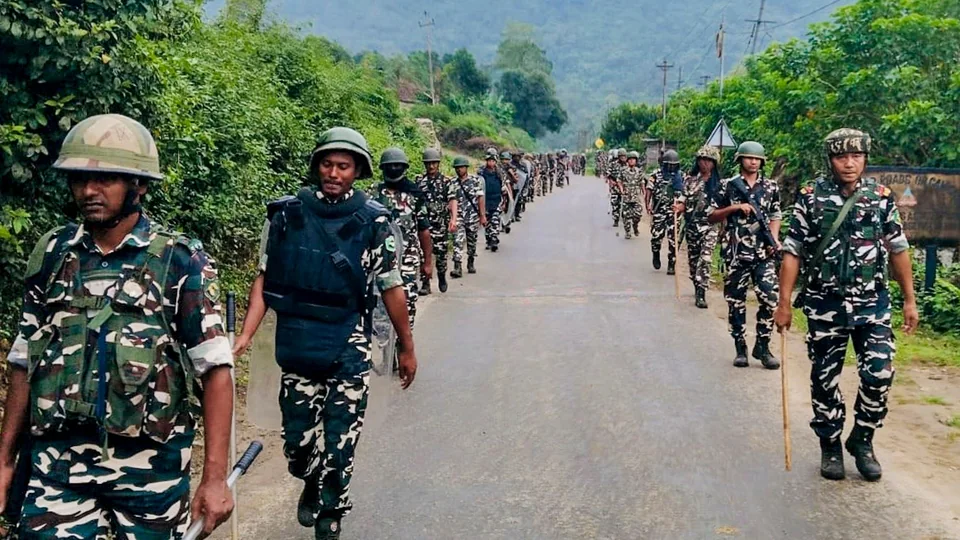
The Arunachal Pradesh Congress Committee (APCC) has criticised the reported deployment of 250 additional Rapid Action Force (RAF) personnel in areas affected by the proposed Siang Upper Multipurpose Project (SUMP), accusing the state government of relying on security measures instead of dialogue to address growing public opposition to the mega-dam.
The political criticism comes amid escalating tensions across Arunachal Pradesh. East Siang police have confirmed the arrest of 26 people, including five juveniles, in connection with violence during an anti-dam bandh in Pasighat on October 23. Meanwhile, a separate protest against a proposed hydropower project in Upper Subansiri district turned violent on Monday, with protesters reportedly damaging vehicles and equipment and injuring two security personnel.
The developments have intensified scrutiny of the government’s handling of opposition to major hydropower projects, with political leaders and community organisations calling for dialogue over concerns about land, livelihoods and the potential consequences for affected communities.
Congress Calls Additional RAF Deployment Provocative
APCC general secretary and spokesperson Kon Jirjo Jotham described the reported deployment of 250 additional RAF personnel as “irresponsible, provocative and deeply alarming”. He alleged that the BJP-led state government was attempting to intimidate communities raising concerns about their land, livelihoods and future.
The Congress warned that increasing the security presence without addressing the underlying grievances could deepen tensions across Siang, Upper Siang and East Siang districts, where opposition to the proposed 11,200-MW SUMP has intensified in recent weeks.
The party condemned the violence, arson and vandalism reported during the October 23 bandh. At the same time, it demanded an independent inquiry into the alleged use of tear gas against protesters at Dite Dime, near Geku in Upper Siang district.
The APCC called for a substantial reduction in additional RAF deployments and urged the government to release detainees wherever legally justified. It also sought the withdrawal of protest-related cases wherever legally permissible and demanded that pre-feasibility report (PFR) survey activities be suspended until meaningful consultations take place with affected communities.
The party further questioned the reported ₹350-crore Special Development and Livelihood Package, seeking details of its eligibility criteria, beneficiary lists and implementation status.
Jotham also alleged that assurances reportedly given by Chief Minister Pema Khandu during meetings with Adi youths had failed to restore public confidence. The Congress urged the government to establish a time-bound dialogue process involving affected communities and organisations opposing the project.
Pasighat Violence: 26 Arrested, Eight Cases Registered
East Siang Superintendent of Police Pankaj Lamba confirmed that 26 people, including five juveniles, had been arrested in connection with the violence that erupted in Pasighat during the October 23 anti-SUMP bandh.
Prominent anti-dam activist Ebo Mili and youth leader Otul Jerang, who have been leading protests against the proposed project, are among those arrested.
According to police, eight criminal cases have been registered under various provisions of the Bharatiya Nyaya Sanhita (BNS). Six other people have been detained for questioning.
The arrests followed a 12-hour shutdown across Siang, Upper Siang and parts of East Siang districts. Organisations had called the bandh to demand the release of activists detained during earlier demonstrations.
Tensions had already escalated near Geku, where security personnel reportedly used tear gas to disperse protesters. Four women were subsequently admitted to a local primary health centre. Police later clarified that all four had been discharged after medical observation.
The unrest subsequently spread to Pasighat, where an NHPC office was set ablaze, a police station was attacked and several vehicles were damaged.
The residences of Arunachal Pradesh BJP president Kaling Moyong and Pasighat West MLA Ninong Ering were also vandalised. The office of Adi Bane Kebang, the apex organisation of the Adi community, was among the properties targeted.
The incidents have added to concerns about the deteriorating law-and-order situation as opposition to the proposed Siang project continues. The arrests, meanwhile, have become a central issue for organisations demanding the release of detained activists.
Upper Subansiri Protest Against 1,605-MW Hydropower Project Turns Violent
Separately, opposition to the proposed 1,605-MW Subansiri Upper Hydroelectric Project, also associated with the Menga Dam, turned violent in Upper Subansiri district on Monday.
The All Tagin Students Union (ATSU), along with other student organisations and groups representing land-affected people, had called a 12-hour bandh over concerns about the project. The organisations also raised objections to an alleged attempt to detain the ATSU president.
Upper Subansiri Superintendent of Police Pawan Kumar Yadav said protesters damaged NHPC equipment, two police vehicles and an NHPC vehicle during the agitation.
A police constable identified as Hibu Lasha and a Central Reserve Police Force (CRPF) personnel sustained injuries and were undergoing treatment in Ziro, Yadav said.
The bandh was subsequently called off, and traffic movement and commercial activities returned to normal, according to the district police chief.
Yadav added that a property assessment survey was conducted peacefully in Jarring, Gusar and Lable despite the protests. Police also carried out a flag march in Daporijo township and appealed to young people to maintain peace and avoid violence.
The situation in Upper Subansiri was normal but remained under close monitoring, the SP said.
Why the Siang Upper Multipurpose Project Is Facing Opposition
The proposed Siang Upper Multipurpose Project has become a major point of contention in parts of Arunachal Pradesh, particularly among communities concerned about how a large hydropower development could affect their land, livelihoods and future.
Opposition has intensified across the Siang region in recent weeks, with local organisations organising shutdowns and demonstrations to press their demands. The reported deployment of additional RAF personnel has now added a political dimension to the dispute, with the Congress arguing that security measures cannot substitute for consultation.
At the centre of the disagreement is the relationship between the government’s preliminary project-related exercises and the concerns of communities that could be affected. Protesters have demanded that survey activities be suspended until their concerns are addressed through meaningful discussions.
The Congress has also questioned the reported ₹350-crore Special Development and Livelihood Package, seeking clarity on how beneficiaries would be selected and whether the proposed assistance had reached intended recipients.
For the state government, the challenge is to explain the project’s current status, address questions raised by local communities and maintain public order as protests continue. The reported violence has also created concerns about the safety of residents, protesters and security personnel.
Government Says Preliminary Exercise Does Not Approve Dam Construction
Chief Minister Pema Khandu has previously maintained that the preliminary feasibility exercise for SUMP does not amount to approval for construction of the dam. He has also reiterated the government’s willingness to engage with affected communities through dialogue.
That distinction is important to the current debate because project-related feasibility work and a final construction decision are separate stages. However, the chief minister’s stated willingness to consult communities will need to be matched by a process that addresses the specific concerns raised by protesters and local organisations.
The Congress has called for time-bound talks, a reduction in additional security deployments and a pause in PFR survey activities until meaningful consultations take place. Police, meanwhile, are investigating the violence in Pasighat and Upper Subansiri.
What Happens Next?
The immediate priorities are likely to include maintaining law and order, investigating the reported arson and vandalism, and clarifying the status of those arrested or detained. The police response and any further security deployments could influence how tensions develop in the affected districts.
At the same time, the dispute over the proposed hydropower projects raises broader questions about consultation, land-related concerns and the handling of development proposals in areas where communities have expressed strong opposition.
The government has said the preliminary feasibility exercise does not constitute approval for dam construction and has expressed its willingness to hold discussions. The Congress and anti-dam organisations are demanding more concrete steps, including greater transparency over the livelihood package and suspension of survey activities pending consultations.
With protests affecting both the Siang region and Upper Subansiri, the next phase will depend on whether authorities can contain violence while creating a credible channel for dialogue. Addressing community concerns alongside the legal investigation into the recent incidents will be central to efforts to prevent further escalation.
For breaking news and live news updates, like us on Facebook or follow us on Twitter and Instagram. Read more on Latest India on thefoxdaily.com.






COMMENTS 0