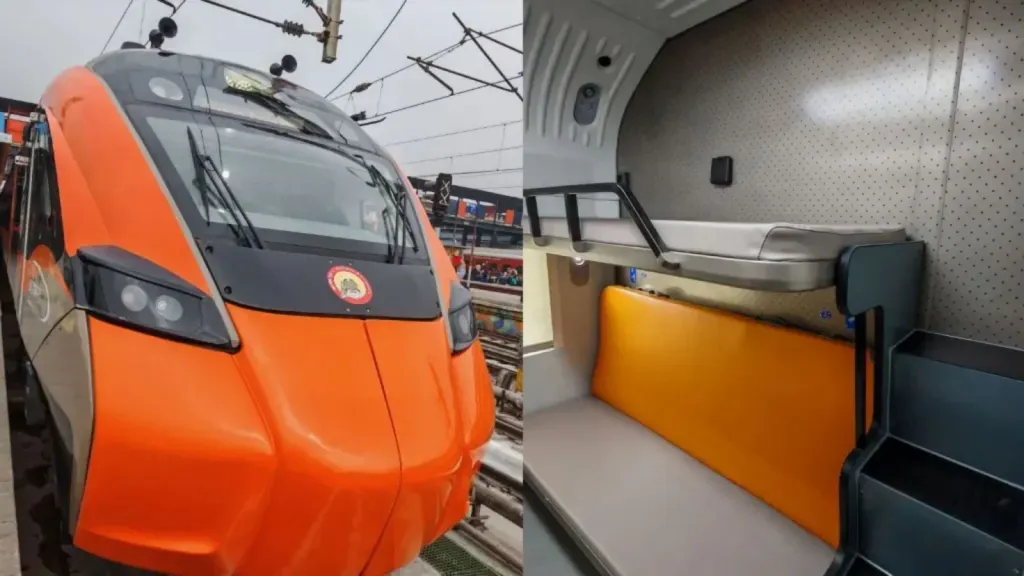
The Bengaluru-Mumbai Vande Bharat Sleeper Express is expected to launch in November 2026, offering passengers a new overnight rail travel option between two of India’s major metropolitan cities. The proposed service is expected to reduce the journey time to less than 20 hours, compared with the approximately 22 to more than 24 hours taken by existing trains on the route.
According to a senior railway official quoted by The Indian Express, the Bengaluru–Chhatrapati Shivaji Maharaj Terminus (CSMT) Mumbai Vande Bharat Sleeper train is likely to begin operations next month, with its inaugural journey starting from Bengaluru. The service is expected to improve connectivity between Karnataka and Maharashtra while introducing modern sleeper-class facilities for long-distance passengers.
The proposed train is expected to operate through Kalaburagi, Solapur, Pune and Kalyan before reaching Mumbai’s CSMT station. Its planned configuration includes 16 coaches, with accommodation across First AC, AC two-tier and AC three-tier classes.
However, the November launch remains an expected timeline rather than a confirmed operational date in the supplied announcement. The final timetable, fare structure, train number, booking opening date and detailed operating schedule have not been provided in the available information.
Bengaluru-Mumbai Vande Bharat Sleeper Train: Latest Update
The proposed Bengaluru-Mumbai Vande Bharat Sleeper Express is part of Indian Railways‘ wider effort to introduce modern train services on important intercity and long-distance routes.
Railway Minister Ashwini Vaishnaw announced in May that a Vande Bharat Sleeper service would connect Bengaluru and Mumbai. A senior railway official subsequently indicated to The Indian Express that the train could be launched in November 2026.
The train is expected to begin its inaugural journey from Bengaluru and operate towards Chhatrapati Shivaji Maharaj Terminus in Mumbai. Bengaluru’s railway operations fall under the South Western Railway (SWR) zone, while CSMT Mumbai comes under Central Railway (CR).
Because the service will connect two major economic centres, it could offer a useful alternative for passengers travelling for work, education, business and personal reasons. The sleeper configuration is particularly relevant for people who prefer to travel overnight rather than spend additional time travelling during the day.
Passengers should note that an expected launch announcement does not automatically mean that reservations are open. The confirmed commencement date and booking availability should be checked through official Indian Railways channels once the operating details are announced.
Bengaluru-Mumbai Vande Bharat Sleeper Express: Route Details
According to the railway official cited in the report, the proposed Vande Bharat Sleeper Express will run between Bengaluru and Mumbai via Kalaburagi in Karnataka. It is expected to connect important railway stations in Karnataka and Maharashtra before terminating at CSMT Mumbai.
The planned route is intended to provide a faster long-distance connection between the two cities while serving passengers travelling to intermediate destinations.
The expected route and major stations are:
- Bengaluru: The proposed starting station for the inaugural journey.
- Kalaburagi: An important city in Karnataka and a planned stop on the route.
- Solapur: A major railway junction in Maharashtra.
- Pune: A significant urban and commercial centre expected to be served by the train.
- Kalyan: An important railway station in the Mumbai metropolitan region.
- Chhatrapati Shivaji Maharaj Terminus (CSMT), Mumbai: The proposed destination station.
These are the major stops identified in the supplied report. The final list of operational halts, their sequence, arrival and departure times, and any additional stops will need confirmation from Indian Railways.
Bengaluru-Mumbai Vande Bharat Sleeper Train: Expected Travel Time
One of the main attractions of the proposed service is its expected reduction in journey time between Bengaluru and Mumbai.
According to the railway official cited in the report, the new train is expected to complete the journey in less than 20 hours. Existing trains reportedly take approximately 22 to more than 24 hours, depending on the service and its schedule.
If the expected journey time is achieved, passengers could save several hours compared with some existing rail options. The actual time saved will depend on the final timetable and the duration of stops along the route.
The train’s design speed is reported to be up to 180 kmph. However, this is a design specification and should not be interpreted as the train’s average speed or a guarantee that it will operate at 180 kmph throughout the journey.
Actual journey times depend on track conditions, permitted operating speeds, signalling infrastructure, traffic on the route, scheduled halts and other operational considerations.
The final timetable will provide the clearest indication of how much faster the Vande Bharat Sleeper service will be compared with existing trains between Bengaluru and Mumbai.
Bengaluru-Mumbai Vande Bharat Sleeper Train: Expected Stoppages
The proposed service is expected to stop at major railway stations along its route, including Kalaburagi, Solapur, Pune and Kalyan. CSMT Mumbai is the planned destination.
These stops could make the train useful not only for passengers travelling between Bengaluru and Mumbai but also for people travelling between intermediate cities.
For example, passengers travelling between Bengaluru and Pune or between Solapur and Mumbai may benefit if the final timetable and fare structure suit their requirements.
However, the complete list of stops and the duration of each halt have not been confirmed in the supplied information. Travellers should wait for the official timetable before making plans based on a particular station or arrival time.
Bengaluru-Mumbai Vande Bharat Sleeper Train: Coach Configuration
The proposed Bengaluru-Mumbai Vande Bharat Sleeper Express is expected to have 16 coaches with a total passenger capacity of 823. The reported configuration includes three accommodation categories: AC three-tier, AC two-tier and First AC.
| Coach Category | Number of Coaches | Reported Passenger Capacity |
|---|---|---|
| AC Three-Tier (3AC) | 11 | 611 |
| AC Two-Tier (2AC) | 4 | 188 |
| First AC (1AC) | 1 | 24 |
| Total | 16 | 823 |
The configuration provides different accommodation options for passengers, depending on their comfort preferences and budget. Three-tier AC accounts for the largest share of the reported capacity, while First AC offers a more limited number of berths.
The figures above reflect the coach configuration and capacity described in the supplied report. Final reservation availability and berth allocation will depend on the operating train’s official configuration and booking rules.
Key Features of the Bengaluru-Mumbai Vande Bharat Sleeper Train
The proposed service is expected to incorporate modern passenger amenities and safety systems associated with the Vande Bharat train family. Its design is intended to support overnight travel, with a focus on sleeping comfort, movement between coaches and onboard safety.
1. Semi-High-Speed Train Design
The train is reported to have a design speed of up to 180 kmph. The semi-high-speed design is intended to support faster rail services where the route’s infrastructure and operating conditions permit.
However, the maximum design speed is not the same as the speed maintained throughout a journey. The actual operating speed will depend on track infrastructure, signalling systems, safety requirements and railway operating decisions.
2. Ergonomically Designed Berths
The sleeper train is expected to feature ergonomically designed berths with improved cushioning. Berth comfort is particularly important on long-distance journeys, when passengers may spend several hours resting or sleeping onboard.
The design aims to make overnight travel more comfortable, although individual experiences may vary depending on berth preference, passenger needs and the final coach specifications.
3. Automatic Doors and Vestibules
The proposed train will feature automatic doors and vestibules to support movement between coaches. These features are intended to improve the passenger experience and provide a more integrated train layout.
Automatic exterior passenger doors are also listed among the train’s expected features. Their operation will be subject to railway safety procedures and the train’s technical design.
4. Improved Suspension and Reduced Noise
The train is expected to incorporate suspension and noise-reduction improvements intended to enhance ride comfort. These features may help create a more comfortable environment during overnight travel.
Actual ride quality will depend on several factors, including track conditions, maintenance, speed and the operating environment.
5. Kavach Safety System
The reported configuration includes Kavach, India’s indigenous automatic train protection system. Such systems are designed to support railway safety by helping prevent certain types of train collisions and responding to defined operating risks.
The presence and configuration of safety systems should ultimately be confirmed through official technical information for the specific service.
6. Emergency Talk-Back System
The proposed train is also expected to feature an emergency talk-back system. This facility is intended to allow passengers to communicate with train staff in an emergency or when assistance is required.
Access to emergency communication can be particularly useful on overnight journeys, when passengers may need help without having to move between coaches.
7. Disinfection Technology
Disinfection technology is among the listed features intended to support onboard sanitation. Maintaining clean passenger areas is an important part of the experience on long-distance sleeper services.
The supplied report does not specify the exact technology, its operating procedure or the frequency of use. Detailed information would need to come from the train’s official technical specifications.
8. Advanced Driver Cabin
The train is expected to have a driver cabin with advanced controls and safety systems. Modern control interfaces are intended to support train operation and help the crew monitor relevant systems.
The precise equipment and technical capabilities of the cabin have not been detailed in the supplied announcement.
9. Aerodynamic Exterior Design
The Vande Bharat Sleeper is expected to feature an aerodynamic exterior design. The train’s styling forms part of the wider design approach used for modern Indian Railways services.
The final operational service will combine the train’s design features with the infrastructure and safety requirements of the route.
How the Bengaluru-Mumbai Vande Bharat Sleeper Could Benefit Passengers
The introduction of a dedicated sleeper service could provide additional options for passengers travelling between Bengaluru and Mumbai. Both cities are important centres for business, technology, education, employment and commerce, creating demand for reliable long-distance connections.
The potential benefits include:
- Overnight travel: Passengers could travel while resting instead of making the journey entirely during daytime hours.
- Potentially shorter journey time: The proposed sub-20-hour schedule could reduce travel time compared with some existing trains.
- Multiple accommodation categories: Three-tier AC, two-tier AC and First AC would provide different berth options.
- Intermediate-city connectivity: Planned stops at Kalaburagi, Solapur, Pune and Kalyan could benefit passengers travelling between these locations.
- Modern onboard facilities: Features such as improved berths, automatic doors and emergency communication systems are intended to support passenger comfort and safety.
The actual benefits will depend on the final timetable, fares, booking availability, punctuality and the number of services operated. Until these details are officially announced, passengers should treat the proposed improvements as expected rather than guaranteed outcomes.
Bengaluru-Mumbai Vande Bharat Sleeper vs Existing Trains
Existing trains between Bengaluru and Mumbai generally take around 22 to more than 24 hours, according to the supplied report. The proposed Vande Bharat Sleeper service is expected to complete the journey in less than 20 hours.
| Feature | Existing Train Services | Proposed Vande Bharat Sleeper |
|---|---|---|
| Journey time | Approximately 22 to over 24 hours, depending on the service | Expected to be less than 20 hours |
| Accommodation | Varies by train and service | Reported 3AC, 2AC and First AC configuration |
| Major route points | Depend on the individual train | Expected to include Kalaburagi, Solapur, Pune and Kalyan |
| Passenger capacity | Varies by train configuration | Reported capacity of 823 passengers |
| Launch status | Services already operate on the route | Expected to launch in November 2026; final date not confirmed in the supplied information |
This comparison is indicative rather than a train-by-train performance assessment. Existing services differ in their routes, stops, departure times and coach configurations, so passengers should compare the official schedules before choosing a service.
Bengaluru-Mumbai Vande Bharat Sleeper Train: Ticket Booking and Fares
The supplied announcement does not include the ticket prices, train number or reservation opening date for the Bengaluru-Mumbai Vande Bharat Sleeper Express.
Passengers should therefore avoid relying on unconfirmed fare estimates or unofficial booking announcements. Once the service is formally introduced, the fare structure and reservation details should be checked through official Indian Railways booking channels.
Before making a reservation, travellers should verify the following information:
- Train number and name: Confirm the exact service listed in the reservation system.
- Departure date: Check the date on which regular commercial services begin, rather than relying only on an inaugural journey announcement.
- Departure and arrival times: Verify the timetable for the selected travel date.
- Boarding and destination stations: Confirm whether the service stops at the intended stations.
- Ticket fare: Check the fare for the required accommodation category.
- Berth availability: Review available berths before completing the reservation.
The official launch date and the start of public ticket bookings may not necessarily be the same. Passengers should confirm both before finalising travel arrangements.
When Will the Bengaluru-Mumbai Vande Bharat Sleeper Train Launch?
The train is expected to launch in November 2026, according to the railway official cited in the report. The inaugural journey is expected to begin from Bengaluru.
However, the supplied information does not identify a confirmed launch date or specify when regular passenger services and bookings will begin. The expected November timeline should therefore be treated as provisional until Indian Railways releases an official schedule.
Passengers planning to travel during November should monitor announcements from the relevant railway authorities and check the official reservation system for confirmed services.
Frequently Asked Questions
When Will the Bengaluru-Mumbai Vande Bharat Sleeper Train Start?
The service is expected to launch in November 2026. However, the exact date has not been confirmed in the supplied announcement.
What Is the Route of the Bengaluru-Mumbai Vande Bharat Sleeper Express?
The proposed route connects Bengaluru with Chhatrapati Shivaji Maharaj Terminus in Mumbai via Kalaburagi, Solapur, Pune and Kalyan.
How Long Will the Bengaluru-Mumbai Vande Bharat Sleeper Journey Take?
The journey is expected to take less than 20 hours. Existing trains reportedly take around 22 to more than 24 hours, depending on the service.
Which Stations Will the Train Stop At?
The major stops identified in the supplied report are Kalaburagi, Solapur, Pune and Kalyan, with CSMT Mumbai as the destination. The final operational timetable may provide further details.
How Many Coaches Will the Train Have?
The proposed train is expected to have 16 coaches: 11 AC three-tier coaches, four AC two-tier coaches and one First AC coach.
What Is the Passenger Capacity of the Train?
The reported passenger capacity is 823, comprising 611 passengers in three-tier AC, 188 in two-tier AC and 24 in First AC.
What Is the Maximum Design Speed of the Train?
The train is reported to have a design speed of up to 180 kmph. Its actual operating speed will depend on track conditions, signalling infrastructure and railway operating requirements.
Have Ticket Prices Been Announced?
The supplied information does not provide confirmed fares or the reservation opening date. Passengers should check official Indian Railways booking channels for the latest information.
Will the Train Begin Its Journey From Bengaluru?
Yes. According to the railway official quoted in the report, the inaugural journey of the proposed Bengaluru-CSMT Mumbai Vande Bharat Sleeper Express will begin from Bengaluru.
Conclusion
The proposed Bengaluru-Mumbai Vande Bharat Sleeper Express is expected to introduce a modern overnight rail option between Karnataka’s capital and Mumbai. With a reported 16-coach configuration, capacity for 823 passengers and planned stops at Kalaburagi, Solapur, Pune and Kalyan, the service is intended to improve connectivity along the route.
The expected journey time of less than 20 hours could make the train a useful alternative to existing services that take approximately 22 to more than 24 hours. Its planned features include improved berths, automatic doors, emergency communication facilities and safety systems.
Although the launch is expected in November 2026, the exact commencement date, ticket fares, train number, detailed timetable and booking schedule remain unconfirmed in the supplied announcement. Travellers should wait for official Indian Railways updates before making reservations or finalising their plans.
For breaking news and live news updates, like us on Facebook or follow us on Twitter and Instagram. Read more on Latest India on thefoxdaily.com.






COMMENTS 0