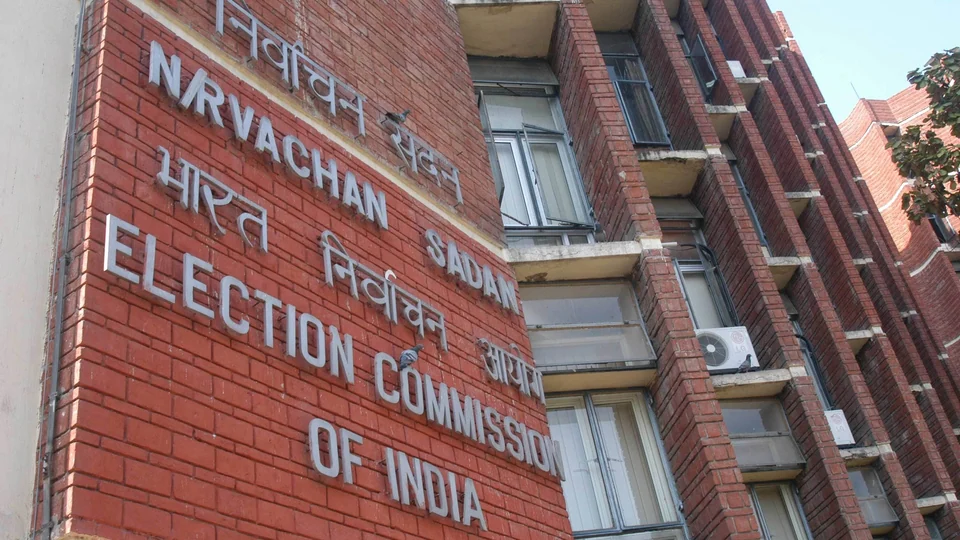
The Election Commission of India (ECI) has informed the Supreme Court that its Information Technology (IT) department has been placed under the supervision of a new senior deputy election commissioner following an internal restructuring of responsibilities. The change was formalised through a work order dated November 4, after Pawan Kumar Sharma joined the poll body on November 2.
Under the revised arrangement, Director General of IT Seema Khanna will work under the oversight of Senior Deputy Election Commissioner Pawan Kumar Sharma. The IT and Information and Communication Technology (ICT) divisions have been assigned to Sharma, with files from the relevant functional divisions to be routed through him.
The development comes amid scrutiny of the Election Commission’s technology operations and the management of digital electoral rolls during the Special Intensive Revision (SIR) exercise. The earlier allocation of responsibilities had triggered objections from two election commissioners, bringing the Commission’s internal decision-making and administrative structure into public focus.
What Does the November 4 Work Order Say?
The Election Commission issued the revised work-allocation order on November 4, 2026, modifying its earlier office order dated September 23, 2025. The fresh arrangement assigned responsibility for the IT and ICT divisions to Senior Deputy Election Commissioner Pawan Kumar Sharma.
Seema Khanna, who heads the IT department as Director General of IT, is required to route files relating to the divisions under her charge through Sharma. The arrangement establishes a defined supervisory channel for the department’s administrative and technical work.
The ECI explained in its affidavit before the Supreme Court that Sharma’s appointment and joining on November 2 necessitated the preparation of a new work order. The Commission said the latest allocation placed oversight of the IT and ICT divisions with a senior deputy election commissioner.
The revised distribution also clarified the responsibilities of other senior officials. Senior Deputy Election Commissioner Maneesh Garg retained charge of election planning, with Deputy Election Commissioner Prakash Rajpurohit assigned to assist him. Rajpurohit also handles responsibilities relating to delimitation.
Why Did the Earlier July 28 Order Become Controversial?
The latest work order follows a dispute over an earlier administrative decision issued on July 28. That order, issued by Senior Deputy Election Commissioner Maneesh Garg, changed the distribution of responsibilities within the Election Commission’s administrative structure, particularly concerning the IT and ICT divisions.
The July order removed IT and ICT from the earlier allocation associated with Deputy Election Commissioner Sanjay Kumar and listed the responsibilities under Director General of IT Seema Khanna. The change raised questions about the supervisory arrangements governing the Commission’s digital infrastructure.
Election Commissioners Sukhbir Singh Sandhu and Vivek Joshi objected to the changes and separately wrote to the Cabinet Secretary on July 29. Their objections concerned the manner in which the revised work allocation had been issued and the internal approval process.
However, the Election Commission has told the Supreme Court that the July 28 order was never implemented. According to its affidavit, a joint direction issued by the two election commissioners on July 30 led to the earlier changes being recalled.
The Commission maintained that its internal distribution of responsibilities continued under the arrangement established through the September 23, 2025, office order. Therefore, the November 4 order represents a fresh allocation of responsibilities rather than the implementation of the controversial July arrangement.
Seema Khanna and the Debate Over Digital Voter Rolls
Seema Khanna has been at the centre of a wider controversy involving the Election Commission’s digital voter-roll infrastructure. The concerns relate to the centralisation of electoral data management and allegations that changes to the software restricted state-level election officials from accessing or modifying voter records in the manner they previously could.
The Commission’s IT division plays an important role in maintaining the digital systems used to manage electoral information. These include platforms supporting election administration, voter services and the handling of electoral rolls.
One of the systems at the centre of the debate is ERONet, which is used by election officials in the electoral registration process. Questions have been raised over whether the digital arrangements provide sufficient access to officials responsible for adding, deleting or correcting names in voter lists.
Concerns about access and control have become particularly significant during the Special Intensive Revision exercise, which involves reviewing electoral rolls and checking voter eligibility. The process requires coordination between the Election Commission and officials working at state, district and local levels.
However, allegations about restrictions on officials’ access to voter data should be distinguished from the Commission’s official position. The ECI has defended its digital systems and told the Supreme Court that electoral roll entries cannot be added, deleted or modified without the order of the legally authorised Electoral Registration Officer.
ECI Says Problems Can Arise During the SIR Process
In its fresh affidavit, the Election Commission also addressed difficulties arising during the Special Intensive Revision of electoral rolls. It acknowledged that challenges were expected because of the large number of voters involved and the extensive use of digitalised data.
The Commission said that problems could emerge at different stages of the exercise but stressed that it remained committed to ensuring that eligible voters were included in electoral rolls while inconsistencies were identified and addressed.
In its submission, the ECI stated that the scale of the exercise and the digital nature of the information created operational challenges. It added that the Commission remained aware of the need to correct problems as they arose.
The affidavit stated:
“The Commission remains committed to its constitutional duty of ensuring the purity of the election process. There are challenges on count of the large numbers involved, and also because the full data is digitalised.”
The Commission further said that it would continue working to ensure that all eligible voters found their names in the electoral rolls while addressing inconsistencies in the lists.
The statement is significant because electoral-roll revision involves more than maintaining a digital database. Officials must process applications, verify information, examine objections and ensure that eligible citizens are not wrongly excluded. At the same time, the process must identify duplicate, incorrect or otherwise ineligible entries in accordance with applicable rules.
Why IT Oversight Matters During Voter-Roll Revision
The Election Commission’s technology infrastructure has become increasingly important as voter registration, electoral-roll management and several election-related services have moved towards digital platforms.
Digital systems can help officials process large volumes of information, identify inconsistencies and coordinate work across different administrative levels. They can also make it easier for citizens to access voter-related services and check their registration details.
However, the growing reliance on digital platforms makes access controls, accountability and system reliability especially important. Electoral Registration Officers and other authorised officials need the technical ability to carry out their statutory responsibilities, while the Commission must maintain appropriate safeguards to prevent unauthorised changes to voter records.
Clear reporting arrangements within the Election Commission are also important. When responsibility for IT systems is distributed among senior officials, defined supervisory channels can help establish who oversees technical operations, who handles administrative decisions and how issues are escalated.
The November 4 work order places the IT and ICT divisions under Sharma’s oversight and establishes a formal route for files through his office. It does not, by itself, resolve the broader questions raised about access to digital voter-roll systems or the functioning of the SIR process.
What Happens Next?
The Election Commission’s latest affidavit provides the Supreme Court with its explanation of the revised work allocation and the earlier administrative dispute. The Commission has maintained that the July 28 order was never implemented and that the November 4 arrangement followed Sharma’s joining.
The wider scrutiny of the ECI’s digital infrastructure, however, remains important because the systems are directly connected to the preparation and maintenance of electoral rolls. Questions surrounding access for state-level officials, accountability within the IT department and the handling of SIR-related difficulties are likely to remain central to discussions about election administration.
For now, the revised order establishes Pawan Kumar Sharma as the senior deputy election commissioner overseeing the IT and ICT divisions, while Maneesh Garg continues to handle election planning with assistance from Prakash Rajpurohit.
The central issue is not simply who supervises the Election Commission’s IT department. It is also whether the digital systems supporting voter registration and electoral-roll revision remain accessible, reliable and accountable while protecting the accuracy of India’s electoral records.
For breaking news and live news updates, like us on Facebook or follow us on Twitter and Instagram. Read more on Latest India on thefoxdaily.com.






COMMENTS 0