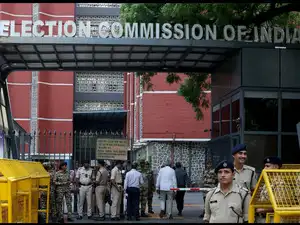
A security vulnerability in the Election Commission of India‘s (ECI) website exposed sensitive voter information and document paths through a browser’s developer tools, according to an investigation by Reuters. The flaw raised concerns that information belonging to voters could potentially have been accessed at scale by exploiting predictable form reference numbers. The Election Commission fixed the vulnerability after Reuters alerted it, but it remains unclear whether anyone had exploited the weakness before it was addressed or how many voters may have been affected.
The incident has renewed questions about the security of India’s digital election infrastructure and the protection of personal information submitted by citizens through online electoral services. Although the reported vulnerability was fixed, the available information does not establish that voter records were stolen or that a large-scale data breach actually occurred.
How Reuters Discovered the Election Commission Website Vulnerability
Reuters identified the security weakness during a review of the Election Commission’s website that lasted more than a month. The investigation found that the problem appeared when a registered voter logged into their account and used the option to request a telephone call from a local electoral officer.
When users submitted such a request, the website generated a reference number associated with the online form they had previously submitted to register as a voter or update their information. This reference number appeared in the browser’s network tab, which is accessible through the developer tools available in ordinary web browsers.
The problem was that the network information revealed more than the reference number. When the number was used in the call-booking process, the website’s network activity exposed personal information connected to the application, including the user’s name, phone number, email address, date of birth and residential address.
It also revealed file paths associated with identity documents uploaded by applicants. These details were not displayed on the website’s main screen, making the vulnerability less obvious to ordinary users.
Indian Cybersecurity researchers Karan Saini and Ehraz Ahmed reviewed Reuters’ findings step by step on the ECI website. They identified the potential consequences of the exposed information and explained how the weakness could be exploited beyond the normal user interface.
Predictable Form Reference Numbers Raised the Risk of Bulk Data Theft
The most serious concern was not limited to the information exposed through an individual request. The reference numbers generated by the website followed a predictable pattern, according to the researchers who examined the vulnerability.
Predictable identifiers can create a significant security risk when a website does not properly verify whether a person requesting information is authorised to access the corresponding record. If attackers can estimate or generate valid reference numbers, they may be able to test multiple records automatically rather than accessing them one at a time through normal website functions.
In the ECI case, researchers warned that cybercriminals could potentially use freely available web-based tools and basic coding knowledge to automate requests and collect large amounts of voter information.
A normal voter would be unlikely to inspect browser network activity or attempt to manipulate form reference numbers while requesting assistance from an electoral officer. However, someone deliberately looking for weaknesses in the website could use the same technical information to attempt unauthorised access to other applicants’ records.
The researchers said the issue appeared to involve insufficient authorisation checks. According to Saini, the server appeared to verify whether a user was logged in but not whether that user had permission to view a particular document.
This distinction is central to website security. Logging into a service establishes a user’s identity, but it does not automatically grant access to every record stored on that service. Each request for sensitive information must also be checked against the user’s actual permissions.
Reuters Reporter Was Able to Download Their Own Identity Document
The investigation also demonstrated that the vulnerability could expose uploaded identity documents, not just basic contact information.
The browser’s network tab revealed file paths associated with documents submitted by voters. Because the form reference numbers followed a predictable pattern, researchers said an attacker could potentially use those paths to retrieve documents belonging to other applicants.
A Reuters reporter was able to download a copy of their own national identity card by following the steps identified during the investigation. This provided a practical demonstration that the weakness extended beyond the visibility of information in browser tools.
Saini explained that understanding how a browser requests documents from a server, combined with access to the disclosed file paths, could have allowed a criminal to download those documents.
The potential exposure of identity documents makes the incident particularly significant. Names and email addresses can be used for targeted phishing, but identity documents contain additional information that may be exploited for impersonation, fraudulent applications or other forms of identity misuse.
The researchers warned that cybercriminals could potentially move beyond retrieving one document and use the predictable reference numbers to attempt downloads involving other voters’ records. However, the investigation did not establish that criminals had actually carried out such an operation.
Election Commission Fixed the Flaw After Reuters Raised the Issue
Reuters first shared its findings with the Election Commission and sought comments from the institution and its three commissioners on October 26, 2026. The report said the Commission did not respond despite repeated requests for comment.
On Thursday, November 26, an ECI spokesperson said the Commission’s information technology division had been asked to examine the findings.
Hours later, the vulnerability was fixed. A subsequent review by Reuters and the two cybersecurity researchers found that sensitive fields, including personal details and document file paths, had been redacted. The researchers confirmed that the changes effectively blocked access through the reported method.
The correction addressed the specific weakness identified in the investigation. However, it did not establish whether information had been accessed or copied before the fix was implemented.
The speed of the correction also raises a broader question about why the vulnerability remained in the system until an external investigation brought it to the Commission’s attention. A website handling sensitive information submitted by voters requires regular security testing, access-control reviews and monitoring for unusual requests.
‘No System Completely Secure’: What the ECI Privacy Policy Says
The Election Commission’s website privacy policy states that reasonable efforts are made to protect information submitted through its digital services. However, it also acknowledges that no system can be guaranteed to be completely secure.
This statement reflects a general cybersecurity reality: no digital platform can eliminate every possible security risk. However, the existence of cyber threats does not remove the responsibility to implement appropriate safeguards, particularly when a government institution collects personal information from citizens.
The distinction between an unavoidable cyberattack and a preventable website vulnerability is important. In this incident, the concern was that information and document paths could be exposed through ordinary browser network activity, while predictable reference numbers potentially made automated access possible.
The Commission’s privacy policy does not, by itself, establish whether the specific weakness was known internally or whether earlier security checks had examined the relevant functionality. The available findings also do not establish how long the vulnerability existed.
How Many Voters Could Have Been Affected?
One of the biggest unanswered questions is the possible scale of the exposure. Reuters said it could not determine whether hackers had exploited the vulnerability, how long it had existed or how many voters’ information may have been accessed.
The call-booking feature through which the weakness was identified was introduced in June 2025. However, the existence of the feature does not establish that the vulnerability was present throughout the entire period or that information was continuously accessible during that time.
India has around one billion voters, and citizens can log into the Election Commission’s website using their voter ID or mobile numbers. That large user base makes the security of electoral services particularly important, but it should not be interpreted as evidence that all voters were affected by this incident.
There is currently no confirmed figure for the number of records exposed, the number of documents potentially accessible or the number of individuals whose information may have been downloaded.
It is equally important to distinguish between information that could potentially have been accessed and information that was actually stolen. The Reuters investigation demonstrated a security weakness and its possible exploitation, but did not establish that a criminal group had harvested voter records.
Why Exposed Voter Information Could Create Security Risks
Personal information held by election authorities can be sensitive because it connects an individual’s identity with their residential details and electoral registration information.
If such information is collected by unauthorised parties, it could potentially be used for several forms of misuse:
- Identity theft: Names, dates of birth, addresses and identity documents could help criminals attempt to impersonate individuals.
- Targeted phishing: Phone numbers and email addresses could be used to create convincing fraudulent messages that appear to relate to voter registration.
- Fraudulent applications: Personal and identity information could potentially be misused in attempts to submit applications or impersonate voters.
- Privacy violations: Exposure of residential addresses and identity documents could put individuals at risk of unwanted contact or misuse of their personal information.
- Voter profiling: Electoral information combined with other datasets could potentially be used to identify and categorise individuals or communities.
These are potential risks associated with the type of information involved, not confirmed consequences of the ECI vulnerability. There is no established evidence from the investigation that voter identities were stolen, that fraudulent applications were submitted or that electoral outcomes were affected.
Nevertheless, the possibility of targeted misuse is especially sensitive in an electoral environment, where personal information could be used to intimidate or pressure individuals.
Congress Calls the Exposure ‘Deeply Alarming’
The disclosure has also attracted political attention because it concerns the security of information maintained by India’s constitutional election authority.
Pawan Khera, a spokesperson for the Congress, described the findings as “deeply alarming” when speaking to Reuters on Thursday.
He argued that the exposure of voters’ personal information could facilitate targeted intimidation, profiling, voter suppression and the manipulation of vulnerable communities.
The remarks reflect the wider political sensitivity surrounding electoral administration and the handling of voter lists. The Election Commission has been facing public criticism over its ongoing efforts to update electoral rolls, while opposition parties and activists have raised concerns about the impact of those exercises.
The BJP has rejected opposition allegations concerning the voter-list revision process, while the ECI has maintained that it has followed applicable regulations.
However, the website vulnerability is a separate technical issue. Its existence does not establish that voter lists were deliberately manipulated or that the exposed information was used to influence elections. The immediate concern is whether personal data submitted to an official government platform was adequately protected.
Why the Latest Incident Raises Questions About ECI’s Cybersecurity Record
The vulnerability identified by Reuters is not the first reported security concern involving the Election Commission’s digital services.
In 2019, cybersecurity researcher Karan Saini identified another weakness in the ECI’s online voter search portal that exposed certain personal details through a browser’s network tab. That issue was fixed after media reporting brought it to attention.
The similarity between the two incidents has renewed questions about whether security testing and access-control practices across the Commission’s digital platforms are sufficiently comprehensive.
More recently, a separate audit by the civic-tech initiative Charchagram reportedly identified a vulnerability involving Form 6 voter enrolment records on the ECI’s citizen service portal. Form 6 is used by individuals applying to register as new voters.
The reported issue involved access to other applicants’ information through predictable reference identifiers. The findings raised concerns about the protection of personal details and uploaded documents associated with voter registration applications.
These reports concern different technical issues and should not be treated as proof that every ECI digital platform has the same vulnerability. However, together they underline the importance of independent security audits, strong server-side authorisation and a clear process for responding to vulnerabilities reported by researchers.
What Needs to Be Examined After the Website Flaw Was Fixed?
Fixing the immediate vulnerability is an important step, but it does not answer every question raised by the incident. The Election Commission’s response and any subsequent technical review will be important in determining whether the exposure had consequences before the correction.
Several issues remain relevant:
- Exposure period: When did the vulnerability first appear, and how long was sensitive information accessible through the affected feature?
- Access records: Can server logs establish whether unusual or automated requests were made using the predictable reference numbers?
- Document protection: Were uploaded identity documents accessible beyond the users and officials authorised to view them?
- Access-control review: Have the Commission’s other voter services been checked for similar weaknesses?
- Impact assessment: Can the ECI establish whether any personal information or documents were actually downloaded by unauthorised users?
- Public communication: Will affected applicants be informed if an investigation establishes that their information was accessed?
These questions matter because removing the vulnerability prevents the reported method from being used in the same way, but it cannot establish whether information was copied before the fix. A proper assessment would require examination of relevant server logs, access patterns and the security controls protecting uploaded documents.
What the ECI Website Vulnerability Means for Voters
For ordinary voters, the incident is a reminder that information submitted to government websites can carry privacy risks if the systems handling it do not enforce appropriate access controls.
The reported vulnerability has been fixed, and there is no confirmed evidence that hackers successfully harvested voter records through the weakness. Voters should therefore avoid assuming that their identity documents have been stolen solely because of the investigation.
However, anyone receiving unexpected calls, emails or messages claiming to relate to voter registration should verify the communication through official channels. Users should avoid sharing identity documents, one-time passwords or other sensitive information in response to unsolicited requests.
For the Election Commission, the incident highlights the need to go beyond fixing individual vulnerabilities after they are reported. Regular independent security assessments, proper authorisation checks, protection of uploaded documents and transparent incident-response procedures are essential for digital systems that handle information belonging to a large population.
The Reuters investigation exposed a weakness that could potentially have allowed sensitive voter details and identity-document paths to be accessed using predictable form references. Although the Election Commission corrected the reported flaw after being alerted, the question of whether any information was harvested remains unanswered.
Ultimately, the significance of the incident will depend not only on the technical fix but also on whether the Commission can establish the extent of the exposure, rule out unauthorised access where possible and strengthen safeguards across its voter services. Protecting electoral information is an essential part of maintaining public confidence in the digital systems that support India’s election process.
For breaking news and live news updates, like us on Facebook or follow us on Twitter and Instagram. Read more on Latest India on thefoxdaily.com.






COMMENTS 0