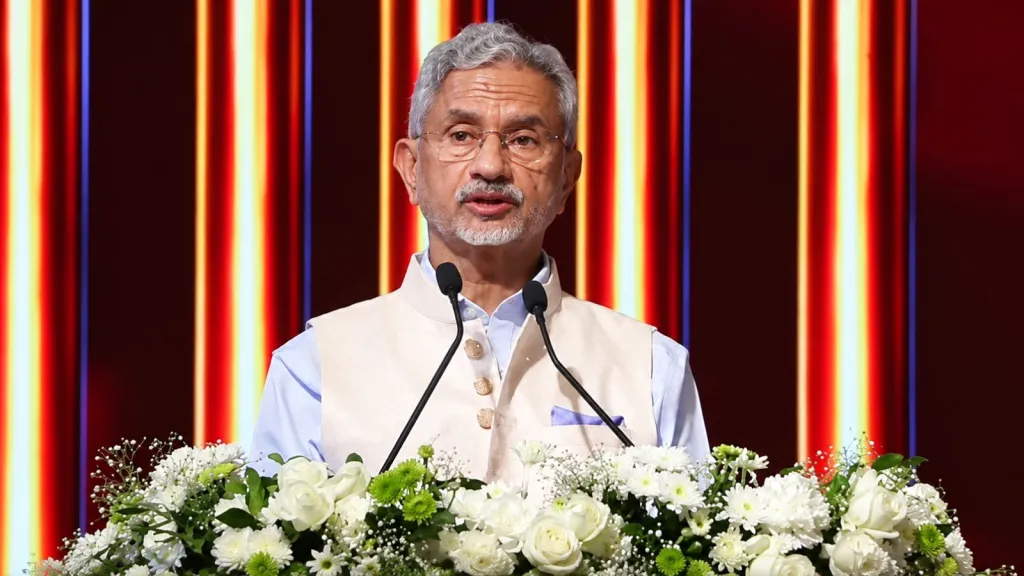
India has invited Pakistan’s National Heritage and Culture Minister Aurangzeb Khan Khichi to attend the Shanghai Cooperation Organisation (SCO) Civilisational Dialogue Forum in New Delhi on November 20–21. The invitation marks the first time India has invited a senior Pakistani minister to an event in the country since military hostilities between the two neighbours escalated in May 2025 following Operation Sindoor.
According to sources cited by The Indian Express, the invitation forms part of India’s responsibilities as host of the multilateral forum. New Delhi is expected to welcome representatives from all SCO member countries for the meeting, which aims to promote cultural engagement, shared heritage and people-to-people ties across Eurasia.
The move comes against the backdrop of strained bilateral relations between India and Pakistan. While direct engagement between the two countries has remained limited, both continue to participate in multilateral forums, including the SCO. The upcoming meeting illustrates how India must balance its bilateral position with its commitments as a member of an international organisation.
First invitation to a senior Pakistani minister since Operation Sindoor
The invitation to Khichi is the first such engagement involving a senior Pakistani minister in India since the military hostilities that followed Operation Sindoor in May 2025. The Indian military operation came after the Pahalgam terror attack and was followed by a period of heightened tensions between the two countries.
India and Pakistan have had difficult bilateral relations for years, with security concerns and cross-border terrorism remaining central issues. The Pathankot and Uri attacks in 2016 further strained relations, and direct bilateral engagement has remained restricted since then.
The last time India hosted a senior Pakistani minister was in May 2023, when Bilawal Bhutto Zardari, then Pakistan’s foreign minister, travelled to Goa to attend a meeting of the SCO foreign ministers. That visit took place within the framework of the regional organisation rather than as part of a separate bilateral initiative.
The invitation to Khichi follows a similar multilateral approach. It does not, by itself, indicate a broader normalisation of India-Pakistan relations. Instead, it reflects the practical requirement for India to engage with representatives of other member states when hosting an SCO event.
The distinction is important because participation in a multilateral meeting does not necessarily signal a change in a country’s bilateral policy. India can maintain its position on security and bilateral engagement while fulfilling its obligations under the SCO framework.
Why India is hosting the SCO Civilisational Dialogue Forum
The Civilisational Dialogue Forum is intended to strengthen cultural engagement and people-to-people connections among SCO member countries. Its stated objectives include showcasing shared heritage, art, literature and traditions while encouraging dialogue among the region’s diverse civilisations.
The idea was first proposed by Prime Minister Narendra Modi during the SCO Council of Heads of State summit in Tianjin, China, in September 2025. The proposal placed cultural and historical engagement alongside the organisation’s wider agenda of regional cooperation.
Defence Minister Rajnath Singh formally announced that India would host the event while addressing the 25th SCO Council of Heads of Government meeting in Dushanbe, Tajikistan, on October 20, 2026. The forum is expected to take place at one of New Delhi’s iconic monuments, providing a setting associated with India’s historical and cultural heritage.
The event is scheduled for November 20–21, bringing representatives from across Eurasia together to discuss civilisational connections and cultural exchange. Organisers aim to use the platform to highlight common historical experiences while recognising the distinct traditions of participating countries.
For India, hosting the forum provides an opportunity to present its cultural heritage to other member states and reinforce its engagement with the organisation. It also creates a setting in which countries with strained bilateral relations can participate in a shared regional initiative.
India’s diplomatic balancing act with Pakistan
India’s decision to invite a Pakistani minister reflects a diplomatic challenge: maintaining a restrictive approach to bilateral ties while continuing to participate in multilateral institutions that include Pakistan.
Relations between the two countries have remained strained following the Pathankot and Uri attacks in 2016, and security concerns have continued to shape the scope of direct engagement. The hostilities following Operation Sindoor in May 2025 added another difficult chapter to the relationship.
However, the SCO operates as a regional platform involving several countries with shared interests in connectivity, security, economic cooperation and cultural exchange. India’s participation requires engagement with other member states through the organisation’s meetings and activities.
That creates a distinction between bilateral diplomacy and multilateral participation. India may choose to limit direct engagement with Pakistan while still inviting Pakistani representatives to an event organised under the SCO’s framework.
The invitation should therefore be understood in the context of India’s role as host. It fulfils the expectation that member countries be represented at a forum proposed by India, without necessarily changing the broader state of bilateral relations.
The event’s cultural focus also differs from high-level negotiations on contentious political and security issues. Its stated purpose is to promote civilisational dialogue, heritage and people-to-people contact rather than to resolve the disputes that have affected relations between India and Pakistan.
SCO engagement between India and Pakistan resumes through multilateral channels
The invitation follows renewed engagement between Indian and Pakistani officials within the SCO framework. Last month, a senior Indian official visited Islamabad for a meeting involving national coordinators from member states, marking the first Indian delegation-level presence at an SCO meeting in Pakistan in almost two years.
Alok Dimri, India’s national coordinator for the grouping and an Additional Secretary in the Ministry of External Affairs, led the Indian delegation at the meeting in Islamabad. During the visit, he discussed issues including connectivity, regional connectivity, transit and trade.
Speaking to Pakistan’s public broadcaster PTV, Dimri said the SCO had reached the neighbourhood after holding its previous two summits in Bishkek, Kyrgyzstan, and Tianjin, China. His remarks highlighted the organisation’s regional reach and the role of member states in maintaining cooperation across geographical areas.
Dimri also recalled Modi’s proposal for a civilisational dialogue among SCO members. He said it had been decided that the event would be held in New Delhi on November 20.
Describing the wider process, Dimri said the Eurasian and Asian landmass member states had come together on the SCO platform. His comments presented the proposed dialogue as part of the organisation’s continuing effort to bring countries together through shared regional initiatives.
The Indian delegation’s presence in Islamabad was significant because it followed a period of limited direct contact between the two countries. However, the visit took place within the SCO structure, where participation is organised around the group’s collective agenda.
Jaishankar’s 2024 visit was the previous major SCO engagement
Before the recent visit by India’s national coordinator, the previous prominent Indian visit to Pakistan under the SCO framework took place in October 2024. External Affairs Minister S Jaishankar travelled to Islamabad for the SCO Council of Heads of Government meeting.
During that visit, Jaishankar met senior Pakistani leaders within the multilateral format. The engagement demonstrated that officials from both countries could interact at SCO meetings even as their broader bilateral relationship remained difficult.
The upcoming Civilisational Dialogue Forum continues this pattern of engagement through an international organisation. Rather than announcing a separate bilateral initiative, India is preparing to host representatives from all SCO members for a meeting focused on culture and shared heritage.
The sequence of events from Jaishankar’s visit in 2024 to the Indian delegation’s participation in Islamabad and the invitation to Pakistan’s culture minister shows that multilateral channels remain available even when bilateral engagement is limited.
Which countries are members of the SCO?
The Shanghai Cooperation Organisation brings together countries across Asia and Eurasia and provides a framework for cooperation on regional issues. Its member states include India, Pakistan, China, Russia, Iran, Kazakhstan, Kyrgyzstan, Tajikistan, Uzbekistan and Belarus.
The organisation’s geographical reach makes it a platform for engagement among countries with different political systems, security priorities and economic interests. Its activities cover a range of areas, including regional cooperation, connectivity and cultural exchange.
For India, participation in the SCO provides an avenue to engage with several important regional partners. It also means interacting with Pakistan and China within the same multilateral framework, despite difficult bilateral relationships with both countries.
The Civilisational Dialogue Forum adds a cultural dimension to this engagement. By bringing member states together around heritage, literature, art and traditions, the meeting aims to create opportunities for exchange beyond conventional diplomatic and security discussions.
What the invitation means for India-Pakistan relations
India’s invitation to Khichi represents a notable diplomatic development because it is the first invitation to a senior Pakistani minister for an event in India since the hostilities associated with Operation Sindoor in May 2025. However, the invitation alone does not establish that the two countries are preparing to resume comprehensive bilateral dialogue.
The event is being organised under the SCO framework, and India’s stated obligation to invite representatives from all member countries provides the immediate context for the decision. Pakistan’s participation would allow its representative to join a regional forum focused on civilisational connections and cultural engagement.
Whether the meeting produces any wider diplomatic effects remains to be seen. The supplied information does not indicate that separate bilateral talks have been scheduled, nor does it announce a change in India’s approach to its relations with Pakistan.
For now, the invitation highlights the continuing role of multilateral diplomacy in a region where bilateral relationships can remain tense. India is preparing to host an SCO event designed to encourage cultural dialogue while maintaining its broader position on bilateral relations with Pakistan.
The November 20–21 forum will bring together representatives from the organisation’s member states in New Delhi. Its immediate focus will be civilisational dialogue, shared heritage and people-to-people engagement, while the invitation to Pakistan underscores the practical demands of India’s role as host of the regional meeting.
For breaking news and live news updates, like us on Facebook or follow us on Twitter and Instagram. Read more on Latest India on thefoxdaily.com.





COMMENTS 0