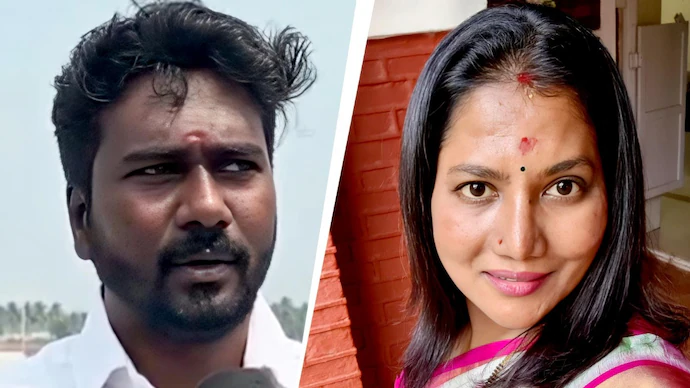
A complaint by a senior woman administrative officer against an elected legislator has triggered a political and administrative controversy in Tamil Nadu, drawing attention to the challenges government officials can face when raising allegations against politically influential individuals.
Kallakurichi District Collector J.E. Padmaja has approached the police with a complaint against Tamilaga Vettri Kazhagam (TVK) MLA Arul Vignesh, alleging harassment and the sending of inappropriate WhatsApp messages. Police have registered a case under provisions of the Bharatiya Nyaya Sanhita (BNS) relating to sexual harassment, stalking and acts intended to insult a woman’s modesty.
IAS officer Kavitha Ramu has now spoken publicly in support of Padmaja, describing the experience as extremely traumatic for the collector and her husband. Praising her decision to remain in Kallakurichi despite the difficult circumstances, Ramu called her “Mighty brave!”
The MLA has rejected the allegations, describing reports about his conduct as false information intended to damage his reputation. The controversy has also drawn a response from former Tamil Nadu Chief Minister M.K. Stalin, who has demanded the legislator’s arrest and a police investigation.
Kavitha Ramu explains why the collector did not complain earlier
In her statement, Kavitha Ramu addressed questions about why fellow IAS officers had not publicly raised the matter before Padmaja approached the police. She said other officers had wanted to support their colleague but believed that her consent and wishes had to come first.
Ramu emphasised that the woman concerned was the aggrieved party and that colleagues could not make decisions on her behalf without understanding what she wanted. She said protecting Padmaja’s dignity and respecting her choice were more important than acting publicly without her approval.
Her explanation also highlighted the difficulty of responding to allegations involving an elected representative. A public intervention by fellow officers could have attracted additional attention to the matter before the complainant was ready to pursue formal action.
Ramu said there was nothing inappropriate about discussing the incident now that a written complaint had been submitted. She suggested that the public discussion should focus on the seriousness of the allegations rather than questioning why the officer had not spoken out earlier.
The statement comes amid widespread social media discussion, with competing narratives circulating about what allegedly happened. Ramu said the online speculation had added to the distress experienced by Padmaja and her husband.
Alleged harassment reportedly began nearly three months earlier
According to Ramu, the incident involving the alleged inappropriate WhatsApp messages and conduct by the elected representative had taken place nearly three months before it became widely known to the public.
The issue gained wider attention only after the complaint and related developments began circulating on social media. Ramu said the gap between the alleged incident and the public controversy had created an especially difficult situation for the collector’s family.
She described the period as extremely traumatising, particularly because social media accounts were circulating their own interpretations of the incident. Some posts, she said, portrayed the situation as though nothing of the kind had happened.
Such competing accounts can complicate sensitive complaints. They can expose the people involved to public scrutiny while the facts are still being examined by authorities. In cases involving allegations of harassment, the distinction between a police complaint, an investigation and a proven offence is particularly important.
Ramu’s intervention was aimed at expressing solidarity with Padmaja and explaining why the officer’s decision to approach the police should be respected.
Collector wanted to continue serving in Kallakurichi despite transfer suggestion
One of the most significant details shared by Ramu concerned Padmaja’s decision to remain in Kallakurichi rather than seek a transfer following the alleged incident.
Ramu revealed that she had spoken to the collector on November 11 to express her support. During their conversation, Padmaja reportedly said that senior officials had taken note of the matter and that appropriate remedial steps were being pursued.
Ramu also asked whether the collector was considering moving to another district. According to her account, Padmaja said the Chief Secretary had previously suggested that she consider a transfer. However, she wanted to continue working in Kallakurichi.
The decision is significant because a transfer can become a sensitive issue when an administrative officer raises concerns involving an elected representative. Moving to another district may be presented as an administrative arrangement, but it can also raise questions about whether the complainant is being required to leave her position following an alleged incident.
Ramu praised Padmaja for choosing to remain in the district, describing her decision as an expression of courage. Her statement also brought attention to the professional and personal pressures that can accompany complaints made by government officers against public representatives.
Police register case against TVK MLA Arul Vignesh
The complaint has led to a police case against Arul Vignesh, who represents the Kallakurichi constituency for Tamilaga Vettri Kazhagam, the political party founded by actor-turned-politician Vijay.
According to the information provided about the case, police have registered allegations under three provisions of the Bharatiya Nyaya Sanhita:
- Section 75: Addresses sexual harassment and specifies different forms of conduct that can constitute the offence.
- Section 78: Deals with stalking, including repeated unwanted contact or attempts to communicate with a woman in circumstances covered by the provision.
- Section 79: Covers words, gestures or acts intended to insult the modesty of a woman.
The registration of these provisions indicates the nature of the allegations being examined by police. It does not establish that the MLA committed the offences. Investigators must examine the complaint and supporting material before the legal process can determine whether the allegations are substantiated.
Sources cited in reports said Padmaja approached the Kallakurichi Superintendent of Police with her complaint. The case has since become a subject of political discussion, with calls for further action and demands for accountability.
Arul Vignesh denies allegations and says he respects government officials
Arul Vignesh has rejected the accusations, maintaining that he has great respect for government officials and did not behave in the manner alleged by the collector.
Speaking to the media, the TVK legislator said he did not understand why such reports were being circulated. He described the claims as false information and said he had nothing further to add.
Vignesh also responded to reports suggesting that a minister had contacted him over the controversy and that he had stopped attending official programmes involving the District Collector.
He said he had been in Chennai attending meetings during some of the events in question. He disputed the suggestion that his absence from those programmes was connected to the complaint.
The MLA further alleged that he was being targeted because he was the only TVK legislator elected from the Kallakurichi region. He claimed that there was anger directed at him and his party and questioned why what he described as fake news was being spread.
His denial represents the opposing position in the controversy. The allegations and the MLA’s response will need to be assessed through the investigation rather than through competing claims made in public statements.
M.K. Stalin demands arrest and police investigation
The controversy has also drawn political attention from former Tamil Nadu Chief Minister M.K. Stalin, who has demanded the arrest of Arul Vignesh and a police investigation into the complaint.
Stalin’s response has added another dimension to the dispute, which now involves questions of police accountability, the treatment of women officers and the conduct expected of elected representatives.
The demand for arrest is a political position and does not determine the outcome of the criminal investigation. Under the legal process, police must examine the available evidence and follow the applicable procedures before deciding what further action is warranted.
The involvement of a serving district collector makes the case particularly sensitive. District collectors occupy an important position in state administration, coordinating government departments and overseeing the implementation of public programmes. Allegations involving a collector and an elected MLA can therefore raise broader questions about the relationship between administrative officials and political representatives.
Why the case matters for women in public administration
The dispute has brought renewed attention to the working environment of women officers in government institutions. Civil servants routinely interact with elected representatives while implementing government policies, handling local administration and responding to public concerns.
Those interactions require cooperation, but they also depend on professional boundaries and respect for institutional responsibilities. Allegations of harassment involving a senior administrative officer and a legislator can raise concerns about whether officials feel able to report inappropriate conduct without fear of professional consequences or public pressure.
Ramu’s statement has focused on the importance of allowing the complainant to decide when and how to seek support. Her account suggests that colleagues were aware of the distress but did not want to take public action without Padmaja’s consent.
This issue is important beyond the individuals involved. When a person reports alleged harassment, the response of colleagues and institutions can influence whether they feel safe pursuing a formal complaint. Respecting the complainant’s wishes, protecting privacy and allowing an impartial investigation are all important parts of handling such cases.
The suggestion that Padmaja had been advised to consider a transfer also raises questions about how administrative decisions are handled when an officer reports alleged misconduct. A transfer may be considered for various official reasons, but it should not become a substitute for addressing a complaint or establishing whether misconduct occurred.
What happens next in the Kallakurichi harassment case?
The immediate focus will be on the police investigation into Padmaja’s complaint. Investigators will need to examine the alleged WhatsApp communications, the circumstances surrounding the reported interactions and any other material relevant to the case.
The MLA’s denial means the allegations remain contested. The investigation will be important in establishing the sequence of events and determining whether the evidence supports the offences mentioned in the police case.
Any decision on arrest or further legal action will have to follow the applicable criminal procedure. The registration of a case does not automatically establish guilt, and the accused retains the right to defend himself through the legal process.
Meanwhile, Ramu’s public support has shifted attention towards the personal and professional challenges Padmaja reportedly experienced before filing her complaint. Her decision to continue serving in Kallakurichi has become a central part of the public discussion.
The case now sits at the intersection of criminal investigation, political accountability and the protection of women working in public institutions. Its outcome will depend on the evidence examined by police and the subsequent legal proceedings, while the broader questions raised by the controversy are likely to remain part of Tamil Nadu’s political and administrative debate.
For breaking news and live news updates, like us on Facebook or follow us on Twitter and Instagram. Read more on Latest India on thefoxdaily.com.






COMMENTS 0