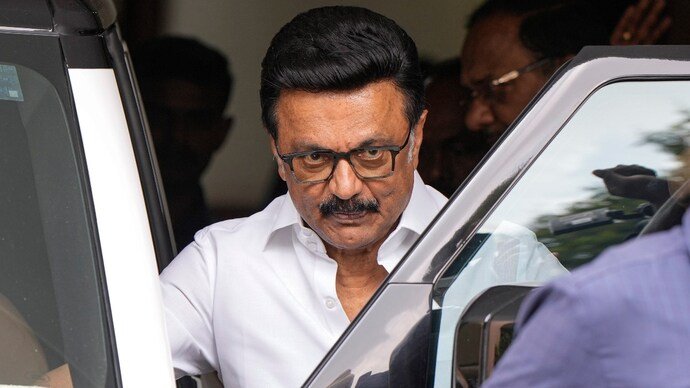
The debate over the proposed delimitation legislation has triggered a fresh political confrontation in Tamil Nadu, with the Dravida Munnetra Kazhagam (DMK) facing questions over its position ahead of the Centre’s planned parliamentary discussions. The controversy intensified after the ruling Tamilaga Vettri Kazhagam (TVK), led by Chief Minister Vijay, suggested that the DMK could be moving closer to the Bharatiya Janata Party (BJP).
The DMK has rejected the allegation of a possible political understanding with the BJP. Its position on delimitation, however, remains tied to its demand that Tamil Nadu’s parliamentary representation and interests must be protected. The proposed legislation is expected to return to the parliamentary agenda when the Houses reconvene from November 30, 2026.
TVK Accuses DMK of Moving Closer to BJP
The latest controversy began after TVK, the party currently governing Tamil Nadu under Chief Minister C Joseph Vijay, alleged that the DMK could be preparing to join hands with the BJP amid discussions over the proposed delimitation legislation.
TVK questioned whether the DMK would support the Centre’s proposed legislation in Parliament, suggesting that the party’s approach to the delimitation issue could indicate a political shift. The ruling party also referred to Leader of the Opposition Udhayanidhi Stalin’s meeting with Governor Rajendra Vishwanath Arlekar as part of its criticism of the DMK.
The allegation has added a political dimension to an already contentious legislative debate. The DMK has rejected suggestions that it intends to form an alliance with the BJP, maintaining that its decisions will be guided by Tamil Nadu’s interests rather than political calculations.
DMK spokesperson Syed Hafeezullah has also dismissed the suggestion of an alliance with the BJP. The party has defended its position on the Governor meeting and rejected the interpretation that it signals a change in political alignment.
What Is the DMK’s Actual Position on the Delimitation Bill?
The DMK’s position has evolved from outright opposition to a more conditional approach based on the provisions of the proposed legislation. The party has consistently argued that delimitation must not reduce Tamil Nadu’s relative representation in the Lok Sabha or disadvantage states that have successfully controlled population growth.
In April 2026, when the Centre introduced a Constitution Amendment Bill linked to delimitation and women’s reservation, the DMK strongly opposed the proposal. Stalin, who was then Tamil Nadu’s Chief Minister, publicly protested by burning a copy of the proposed legislation and describing it as a threat to the state’s interests.
However, after the earlier legislation was defeated in Parliament, the DMK indicated that it would examine the revised Bill before making a final decision. At a meeting of party MPs chaired by Stalin in July, the leadership decided to assess the legislation after its provisions became available.
That approach has fuelled speculation about whether the party could support a revised proposal if its concerns were addressed. The DMK has maintained that protecting Tamil Nadu’s representation and the federal structure remains central to its position.
Reports have also indicated that the party wants the state’s existing share of approximately 7.2 per cent of Lok Sabha seats to be protected. It has previously raised demands for an equal increase in seats across states rather than an exercise that redistributes representation primarily according to population.
Why Tamil Nadu Is Concerned About Delimitation
Delimitation refers to the process of redrawing the boundaries of parliamentary and assembly constituencies and determining the distribution of seats. The exercise is intended to ensure that constituencies broadly reflect changes in population and representation requirements.
However, the proposed exercise has become politically sensitive because states have experienced different population growth rates. Southern states such as Tamil Nadu argue that a population-based redistribution could reduce their relative influence in Parliament, even though they have made progress in controlling population growth.
The DMK has repeatedly argued that states should not be disadvantaged in parliamentary representation because of their population-control efforts. Its concern is not simply about increasing the total number of Lok Sabha seats, but about how those additional seats would be distributed among states.
The party has therefore sought safeguards to ensure that Tamil Nadu retains its existing proportion of parliamentary representation. It has also argued for an approach that protects the federal balance and prevents changes in population from disproportionately shifting political influence between regions.
Delimitation Bill Expected to Return During Special Parliament Sitting
The Centre is preparing to bring the delimitation debate back to Parliament during a special sitting scheduled from November 30 to December 3, 2026. The Lok Sabha is expected to reconvene on November 30, while the Rajya Sabha is scheduled to meet from December 2.
The proposed legislative package is linked to the implementation of 33 per cent reservation for women in legislatures. The earlier constitutional amendment proposal sought to connect the women’s reservation framework with an expansion and delimitation of parliamentary constituencies.
The Constitution (131st Amendment) Bill, 2026, was defeated in the Lok Sabha on April 17 after failing to secure the required two-thirds majority. The government now faces the challenge of building sufficient support if it seeks to revive the proposal.
For the DMK, the contents of the revised legislation will be crucial. The party’s final position cannot be established solely from speculation about its possible support or opposition. Its leadership has indicated that the proposed provisions must be examined before a decision is made.
Why the DMK’s Position Matters in Parliament
The DMK’s parliamentary strength makes its position relevant to the Centre’s efforts to secure support for a constitutional amendment. The party has 22 MPs in the Lok Sabha, giving it a significant role in discussions involving Tamil Nadu’s representation and the proposed changes to the parliamentary seat structure.
The BJP-led government needs support beyond its existing parliamentary numbers to secure the special majority required for a constitutional amendment. This has increased attention on regional parties whose support could influence the outcome.
However, the possibility of the DMK supporting specific provisions should not automatically be interpreted as evidence of a political alliance with the BJP. Parliamentary support for an individual piece of legislation and a formal electoral or political alliance are separate matters.
The DMK has rejected the allegation that it is preparing to join hands with the BJP. Its stated approach is to examine the legislation and protect Tamil Nadu’s interests before taking a final position.
What Happens Next for Stalin and the DMK?
The immediate test for the DMK will come when the Centre makes the proposed legislation available and Parliament takes up the issue. Stalin and the party leadership will have to consider whether the revised provisions address Tamil Nadu’s concerns about representation, population-based redistribution and federal balance.
The TVK’s allegations have brought additional political attention to the DMK’s position, particularly because the two parties are now on opposite sides of Tamil Nadu’s political landscape. But the controversy over a possible BJP alliance remains separate from the substantive questions surrounding delimitation.
For now, the DMK has rejected claims of an alliance with the BJP and reiterated its commitment to protecting the state’s interests. Its final parliamentary position on the proposed Bill will depend on the legislation’s provisions and whether the safeguards sought by the party are addressed.
The coming parliamentary session is therefore likely to be important not only for the Centre’s delimitation plans but also for clarifying where the DMK stands on the proposed changes. Until the revised Bill is examined and the party announces its decision, claims that the DMK has agreed to support the Centre’s proposal or join hands with the BJP should be treated as political speculation rather than a confirmed development.
For breaking news and live news updates, like us on Facebook or follow us on Twitter and Instagram. Read more on Latest India on thefoxdaily.com.





COMMENTS 0