- What Happened: The Dehradun Case That Exposed the Racket
- How the Political Ticket Scam Worked
- Why the Scam Was Effective
- Scale of the Fraud: More Victims Emerging
- Legal Framework: Charges and Consequences
- Comparison: Genuine Political Process vs Fraudulent Promise
- Digital Tools in Modern Fraud: A Growing Threat
- Unique Insight: The “Access Economy” in Politics
- Impact on the Political Ecosystem
- Red Flags: How to Avoid Political Ticket Scams
- What Happens Next?
- Conclusion: A Scam That Exploits Ambition and Trust
A major political ticket scam in India has come to light after police arrested a man accused of impersonating a close aide of a senior national leader to defraud politicians across multiple states. The case, which began with a complaint in Dehradun, has now expanded into a wider investigation involving victims from Uttarakhand, Rajasthan, and Bihar.
At its core, the scam reveals a troubling reality: the growing commercialization of political access and how fraudsters are exploiting ambition, influence, and digital tools to run sophisticated cons.
This article goes beyond the incident to decode how the scam worked, why it succeeded, and what it means for India’s political ecosystem.
What Happened: The Dehradun Case That Exposed the Racket
The case surfaced after a political leader filed a complaint alleging she had been cheated of ₹25 lakh by a man claiming to be a senior political aide capable of securing party positions.
According to investigators:
- The accused posed as a high-level insider with direct access to decision-makers
- He promised election tickets or influential roles in exchange for money
- An associate was sent to collect cash from the victim’s residence
- After receiving payment, the accused cut off communication and disappeared
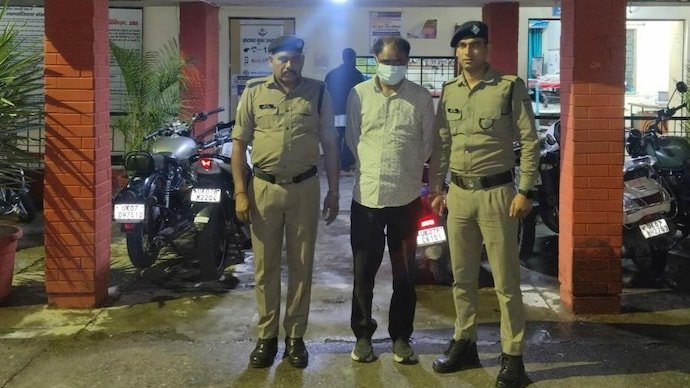
Following a targeted operation, police tracked and arrested the suspect in Dehradun while he was allegedly attempting to repeat the scam.
How the Political Ticket Scam Worked
This was not a random act of cheating it was a carefully structured operation using psychological manipulation and digital tools.
Step-by-Step Modus Operandi
- Data Mining: The आरोपी identified potential victims through political websites and public profiles
- Impersonation: He posed as a trusted political aide using fake caller ID profiles
- Authority Projection: Claimed direct influence over ticket distribution and appointments
- Financial Demand: Asked for large sums as “processing” or “arrangement” fees
- Cash Collection: Used intermediaries to collect money in person
- Disappearance: Switched off communication after receiving payment
This method allowed him to operate across states without raising immediate suspicion.
Why the Scam Was Effective
The success of this fake political aide fraud lies in exploiting a unique combination of factors:
- High demand for political tickets: Elections create intense competition
- Lack of transparency: Candidate selection processes are often opaque
- Influence culture: Perception that “connections” matter more than merit
- Digital trust gaps: People rely on caller IDs and online profiles without verification
In such an Environment, even experienced individuals can fall victim.
Scale of the Fraud: More Victims Emerging
During interrogation, the accused reportedly admitted to multiple instances of fraud across states.
Known cases include:
- Large payments collected from political aspirants in Rajasthan
- Additional victims in Bihar
- Multiple attempts to extract money from leaders in Uttarakhand
Authorities suspect that the actual scale of the scam may be significantly larger, as some victims may have avoided reporting due to reputational concerns.
Legal Framework: Charges and Consequences
The accused has been booked under provisions related to cheating and fraud under Indian law.
Potential charges include:
- Cheating and dishonestly inducing delivery of property
- Impersonation
- Criminal conspiracy
If additional victims come forward, the case could expand into a major multi-state financial Crime investigation.
Comparison: Genuine Political Process vs Fraudulent Promise
| Aspect | Legitimate Political Process | Fraudulent Scheme |
|---|---|---|
| Ticket Allocation | Based on party evaluation | Claimed to be “for sale” |
| Communication | Official channels | Private calls/messages |
| Payments | Transparent and regulated | Cash-based, unofficial |
| Verification | Public and documented | Fake identities |
Digital Tools in Modern Fraud: A Growing Threat
One of the most striking aspects of this case is the use of Technology.
The आरोपी allegedly:
- Created fake identities on caller identification apps
- Used online data to profile victims
- Leveraged mobile communication to build credibility
This reflects a broader trend where traditional scams are being upgraded with digital sophistication.
Unique Insight: The “Access Economy” in Politics
This case highlights a deeper structural issue what can be called the “access Economy” in Politics.
In this system:
- Access to decision-makers is perceived as a commodity
- Intermediaries claim influence over outcomes
- Aspirants are willing to pay for perceived shortcuts
Fraudsters exploit this belief system, turning ambition into opportunity for deception.
In many ways, the scam is less about the conman and more about the ecosystem that enables such claims to sound believable.
Impact on the Political Ecosystem
1. Trust Deficit
Such scams erode trust within political parties and among aspirants.
2. Reputation Risk
Victims often hesitate to report fraud, fearing damage to their public image.
3. Increased Scrutiny
Political organizations may face pressure to make selection processes more transparent.
4. Law Enforcement Challenges
Multi-state operations require coordinated policing and digital tracking.
Red Flags: How to Avoid Political Ticket Scams
Experts suggest being cautious of the following warning signs:
- Claims of guaranteed election tickets
- Requests for large cash payments
- Unofficial communication channels
- Pressure to act quickly
- Inability to verify identity through official sources
Verification through party offices remains the safest approach.
What Happens Next?
Investigators are now focusing on:
- Tracking the आरोपी’s associates
- Identifying additional victims
- Analyzing recovered digital devices for evidence
Further arrests are expected as the probe expands.
Conclusion: A Scam That Exploits Ambition and Trust
The political ticket scam in India uncovered in this case is a stark reminder of how ambition, opacity, and digital manipulation can combine to create powerful fraud schemes.
While law enforcement action has brought one आरोपी to justice, the larger challenge remains closing the gaps that make such scams possible.
As politics becomes more competitive and digital, the need for transparency, verification, and awareness becomes even more critical.
Because in today’s landscape, influence can be faked but the consequences of trusting it are very real.
For breaking news and live news updates, like us on Facebook or follow us on Twitter and Instagram. Read more on Latest India on thefoxdaily.com.

COMMENTS 0