- Why the Sanctum Sanctorum Is Treated Differently
- Priests Push Back: “A Violation of Sacred Norms”
- Security Protocol vs Religious Sensitivity
- Administrative Response: Enquiry Ordered
- Why This Incident Matters Beyond One Temple
- A Pattern of Growing Friction?
- Insight: The Need for a Clear Middle Ground
- Conclusion: Respect, Protocol, and Public Perception
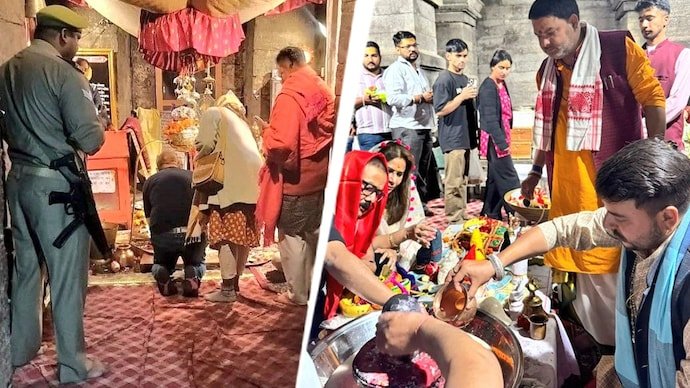
A Controversy has erupted at the revered Jageshwar Dham temple complex in Uttarakhand’s Almora after a senior Uttar Pradesh bureaucrat entered the sanctum sanctorum accompanied by an armed Security guard. The incident, which took place during a religious ritual, has triggered sharp objections from priests and reignited a broader debate over the balance between state protocol and religious sanctity.
The official at the centre of the row, Bareilly District Magistrate Avinash Singh, had reportedly visited the temple to perform a Navagraha puja. However, what might have otherwise been a routine religious visit quickly turned contentious when his security personnel, carrying a firearm, entered the innermost shrine an area considered the most sacred part of the temple.
Why the Sanctum Sanctorum Is Treated Differently
In Hindu temples, the garbhagriha (sanctum sanctorum) is not just another space it is the spiritual core where the deity resides. Entry into this area is governed by strict customs, often limiting access to priests and designated individuals under specific conditions.
Objects considered impure or disruptive including footwear, leather items, and certainly weapons are typically prohibited. This is not merely tradition but a deeply embedded religious principle aimed at preserving the sanctity of the space.
Priests at Jageshwar Dham argue that the presence of a firearm within the sanctum crosses a clear red line.
Priests Push Back: “A Violation of Sacred Norms”
The reaction from the temple’s priest community was immediate and unified. Several priests objected during the ritual itself, stating that allowing an armed guard into the sanctum undermines centuries-old traditions.
They emphasised that even during visits by high-profile dignitaries including Prime Ministers and Chief Ministers security personnel do not carry weapons into the sanctum.
This, they argue, is precisely what makes the incident stand out. It is not about who visited, but how established norms were bypassed.
- Sanctum entry rules were allegedly violated
- Weapons inside shrine seen as unacceptable
- No precedent for such an exception, even for top leaders
The priests have demanded stricter enforcement of temple protocols to ensure such incidents are not repeated.
Security Protocol vs Religious Sensitivity
From the administration’s perspective, the presence of armed security is standard procedure for senior officials. सुरक्षा protocols are designed to minimise risk, especially in public spaces.
However, this incident highlights a recurring challenge in India: what happens when state security norms collide with religious customs?
Security personnel reportedly maintained that they were simply following protocol. But critics argue that protocols should be adaptable especially in sensitive religious environments where tradition takes precedence.
Administrative Response: Enquiry Ordered
Following the backlash, authorities have initiated an official enquiry into the incident. The probe is expected to examine whether protocols were breached and if exceptions were wrongly made.
Interestingly, the incident has also exposed a gap in on-ground enforcement. Priests pointed out that there were no clear warning signs prohibiting weapons inside the temple complex at the time.
In response, authorities have now installed signage explicitly restricting the entry of firearms and other prohibited items within the premises.
| Issue | What Happened | Response |
|---|---|---|
| Armed entry into sanctum | Security guard carried weapon inside shrine | Priests protested immediately |
| Protocol vs tradition | Security cited standard procedure | Debate over flexibility of rules |
| Lack of signage | No clear weapon restriction notice earlier | Warning signs installed post-incident |
Why This Incident Matters Beyond One Temple
At first glance, this may seem like a localised dispute. But the implications are far broader. India is home to thousands of religious sites, each governed by its own customs and traditions. Ensuring that administrative protocols respect these traditions is essential to maintaining public trust.
Incidents like this can quickly escalate into larger controversies, especially in an era where visuals and narratives spread rapidly on Social Media.
The key issue here is not just the presence of a weapon it is the perception of disregard for religious norms.
A Pattern of Growing Friction?
This is not the first time that questions have been raised about VIP access and protocol in religious spaces. Across the country, debates have emerged over preferential treatment, security arrangements, and adherence to traditional rules.
What makes this case different is the symbolic nature of the sanctum sanctorum. Any perceived violation here carries greater emotional and cultural weight.
Insight: The Need for a Clear Middle Ground
This incident reveals a deeper systemic issue the absence of a clearly defined framework that balances security requirements with religious sensitivities.
A possible solution could involve:
- Pre-defined temple-specific security protocols
- Mandatory coordination between temple authorities and प्रशासन
- Clear guidelines for VIP visits to religious sites
Such measures would prevent confusion and ensure that neither security nor tradition is compromised.
Conclusion: Respect, Protocol, and Public Perception
The controversy at Jageshwar Dham is a reminder that Governance in a culturally diverse country like India requires more than just rules it requires sensitivity.
While security protocols are essential, they cannot operate in isolation from social and religious contexts. Similarly, traditions must be respected without undermining safety considerations.
As the enquiry progresses, the focus will not just be on accountability but also on setting a precedent. Because in matters involving faith and governance, even small missteps can have far-reaching consequences.
Ultimately, the lesson is clear: respect for tradition and adherence to protocol must go hand in hand not at odds with each other.
For breaking news and live news updates, like us on Facebook or follow us on Twitter and Instagram. Read more on Latest India on thefoxdaily.com.




COMMENTS 0