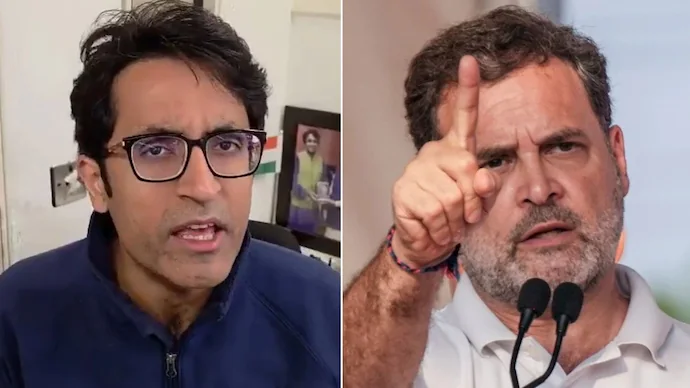
The Bharatiya Janata Party (BJP) on Thursday renewed its criticism of the Congress over the United Progressive Alliance (UPA) government’s response to the November 26, 2008, Mumbai terror attacks, raising questions about why India did not launch military action against Pakistan after the assault that killed 166 people. BJP leaders also questioned remarks associated with the Congress and the Rashtriya Swayamsevak Sangh (RSS), and raised allegations about Rahul Gandhi‘s activities in the days following the attacks.
The political confrontation coincided with the anniversary of the attacks, when leaders across party lines paid tribute to the civilians and security personnel killed during the three-day siege. While the BJP used the occasion to challenge the Congress’s record on national security, the larger historical question remains significant: why did the UPA government choose diplomatic and international pressure over an immediate military response despite strong evidence linking the attackers to Pakistan-based Lashkar-e-Taiba?
The decision was shaped by concerns about escalation between two nuclear-armed neighbours, the need to establish Pakistan’s responsibility internationally, and the possibility that military retaliation could trigger a wider conflict without dismantling the terrorist infrastructure responsible for the attacks.
What BJP Leaders Said About the UPA Government’s Response
BJP national spokesperson Pradeep Bhandari questioned the Congress and Rahul Gandhi over three issues related to the 26/11 attacks. In a post on X on November 26, he asked why the Congress-led government did not attack Pakistan, why Congress leaders allegedly described the attacks as an RSS conspiracy, and why Rahul Gandhi was reportedly attending a party shortly after the tragedy.
Bhandari also shared a media report that purportedly referred to Gandhi attending a social gathering in the period following the attacks. He accused the Gandhi-Vadra family of prioritising vote-bank politics over national security and alleged that Congress had effectively given Pakistan a clean chit.
These statements represent the BJP’s political allegations. They do not, by themselves, establish that Congress officially absolved Pakistan of responsibility for the attacks or that Gandhi’s reported social activities reflected the position of the UPA government.
The BJP’s central argument is that the scale of the Mumbai attacks demanded a stronger response and that the government’s decision against military retaliation demonstrated a lack of political resolve. The Congress’s approach, however, must also be examined in the context of the security and diplomatic calculations confronting India in November 2008.
Why Did the UPA Government Not Launch Military Strikes Against Pakistan?
The UPA government, led by Prime Minister Manmohan Singh, faced an extraordinary national security crisis after the Mumbai attacks. Ten heavily armed terrorists had entered the city by sea and launched coordinated assaults on several locations, including the Taj Mahal Palace Hotel, the Oberoi-Trident Hotel, Chhatrapati Shivaji Terminus and Nariman House.
The attacks continued for nearly three days. Indian security forces eventually killed nine attackers and captured the tenth, Ajmal Kasab, who was later tried, convicted and executed. The investigation established the attackers’ links to Pakistan-based Lashkar-e-Taiba and exposed the planning, training and logistical support behind the operation.
Despite the evidence, the government did not order airstrikes or a conventional military operation against Pakistan. Instead, it pursued a strategy built around diplomatic pressure, intelligence cooperation, criminal investigations and efforts to isolate the groups responsible.
1. Risk of a wider war between two nuclear-armed countries
India and Pakistan are both nuclear-armed states with a long history of military confrontation. Any large-scale Indian attack on Pakistani territory carried the possibility of retaliation, potentially turning a counterterrorism operation into a broader military conflict.
The risk was particularly serious because the attacks had created enormous public anger in India. A military response could have been politically popular in the immediate aftermath, but the government also had to consider how Pakistan’s military establishment might react and whether the conflict could be contained.
Military escalation would not necessarily have been limited to the terrorist camps or individuals responsible for the Mumbai operation. It could have triggered air and ground confrontations, disrupted civilian life and created pressure for further retaliation on both sides.
The absence of an immediate military response therefore reflected a strategic calculation about the consequences of escalation, rather than an absence of evidence connecting the attackers to Pakistan.
2. Building international pressure against Pakistan
Another major element of India’s response was the effort to establish Pakistan’s responsibility before the international community. New Delhi shared evidence with foreign governments and sought action against Lashkar-e-Taiba and its leadership through international diplomatic channels.
India wanted the attacks to be recognised as a cross-border terrorist operation rather than treated as an isolated domestic security incident. This was important because international pressure could increase the costs for Pakistan of allowing terrorist organisations to operate from its territory.
India also sought cooperation from countries whose citizens had been killed in the attacks. Foreign nationals were among the 166 victims, making the assault an international security concern rather than an issue affecting India alone.
A military strike could have shifted the diplomatic debate towards a confrontation between India and Pakistan. The UPA government instead prioritised building international consensus around the terrorist threat and the need to bring those responsible to justice.
3. Evidence collection and the prosecution of Ajmal Kasab
The capture of Ajmal Kasab gave Indian investigators a direct source of evidence about the attackers’ identities, training and links to Pakistan. His interrogation, the investigation into the attackers’ communications and other material helped establish the cross-border nature of the operation.
India pursued the legal case against Kasab and used the evidence to strengthen its diplomatic position. He was convicted by an Indian court and executed in November 2012.
The legal and investigative approach also served a broader purpose: demonstrating that the attacks were planned and supported by an organised terrorist network. This helped India argue that Pakistan needed to take action against the groups and individuals operating from its territory.
4. Military retaliation was not the only available response
The UPA government faced pressure to demonstrate that an attack of this magnitude would carry serious consequences. However, retaliation did not necessarily have to take the form of an immediate conventional military operation.
India strengthened its diplomatic campaign, increased pressure on Pakistan to act against Lashkar-e-Taiba and pursued international action against terrorist organisations and their leadership. The government also faced criticism over domestic intelligence failures and the need to improve coastal security, police preparedness and coordination between agencies.
These measures did not satisfy critics who believed military action was necessary. Nevertheless, they formed part of the government’s broader response to the attacks.
What Happened During the 26/11 Mumbai Terror Attacks?
On November 26, 2008, ten terrorists associated with Pakistan-based Lashkar-e-Taiba entered Mumbai by sea and launched coordinated attacks across the city. Their targets included crowded public spaces, hotels and locations with international significance.
Chhatrapati Shivaji Terminus became one of the first major sites of the assault, with gunmen opening fire on passengers and railway staff. Other attackers targeted the Taj Mahal Palace Hotel, the Oberoi-Trident complex and Nariman House, a Jewish community centre.
The siege continued until November 29, when security forces completed operations at the remaining attack sites. The final toll was 166 people killed and more than 300 injured.
The victims included Indian civilians, police officers, members of the security forces and foreign nationals. The attacks also exposed vulnerabilities in India’s coastal surveillance, intelligence-sharing systems and emergency response arrangements.
The operation was not simply a series of shootings. Investigators found that the attackers had been trained and directed by handlers based in Pakistan, who communicated with them during the assault. The level of coordination and the selection of targets demonstrated the planning behind the operation.
Why the Question of Pakistan’s Responsibility Remains Central
The link between the 26/11 attackers and Pakistan-based Lashkar-e-Taiba became a central issue in India’s diplomatic relationship with Islamabad. India repeatedly demanded action against the organisation’s leadership and individuals accused of planning or facilitating the attacks.
Pakistan faced international pressure after the evidence emerged, but India’s concerns over the continued presence and activities of militant organisations remained unresolved. The case also highlighted a persistent challenge in counterterrorism policy: establishing responsibility for an attack is not the same as securing the arrest and prosecution of everyone involved.
India’s position was that Pakistan needed to take credible action against the perpetrators and the infrastructure that enabled the attacks. Pakistan’s handling of the case became a recurring source of tension between the two countries.
The Mumbai attacks also reinforced India’s concerns about the use of non-state armed groups as instruments of cross-border violence. For New Delhi, the challenge was not limited to responding to one operation but preventing similar attacks in the future.
Did Congress Call the 26/11 Attacks an RSS Conspiracy?
One of the allegations raised by Bhandari concerns the phrase “RSS ki saajish”, or an RSS conspiracy. The BJP spokesperson accused Congress of giving Pakistan a clean chit by suggesting that the Mumbai attacks were linked to an alleged conspiracy involving the RSS.
The allegation refers to a politically sensitive debate that emerged around claims of Hindu extremist involvement in separate acts of terrorism in India. The phrase has also been used in political arguments over whether the Congress attempted to associate the RSS with the Mumbai attacks.
However, the established investigation into the 26/11 attacks identified the ten gunmen as members of Lashkar-e-Taiba, a Pakistan-based terrorist organisation. The attackers’ identities, their route into Mumbai and the evidence collected during the investigation established the operation’s connection to the group.
It is important to distinguish political accusations from the findings of the criminal investigation. A claim made by a party spokesperson does not establish an official Congress position, just as an allegation about political rhetoric does not alter the evidence concerning the perpetrators of the attacks.
The BJP has used the issue to question Congress’s national security record. The Congress’s response to the allegations, and the exact statements being referred to, remain important to assessing the political dispute fairly.
BJP Leaders Pay Tribute to 26/11 Victims and Security Personnel
Alongside its criticism of Congress, the BJP marked the anniversary by remembering the victims and the security personnel who lost their lives during the attacks.
Defence Minister Rajnath Singh paid tribute to those killed and praised the courage of police and security personnel who confronted the terrorists. He said their sacrifice remained an enduring inspiration and reiterated India’s commitment to eliminating terrorism in all its forms.
External Affairs Minister S Jaishankar also remembered the innocent civilians and security personnel who lost their lives. He reiterated India’s commitment to combating terrorism and bringing those responsible to justice, describing the country’s position as one of zero tolerance for terrorism.
BJP national media convenor Ashish Usha Agarwal offered tributes to the soldiers and civilians killed in the attacks. He said their courage and sacrifice would remain in the memory of the country and described national unity against terrorism as India’s greatest strength.
The tributes reflected the continuing significance of 26/11 in India’s public memory. The attacks remain one of the most consequential terrorist incidents in the country’s modern history, both because of the number of victims and the security challenges they exposed.
How 26/11 Changed India’s Security and Counterterrorism Approach
The Mumbai attacks triggered a major reassessment of India’s internal security arrangements. The scale and duration of the operation exposed weaknesses in coastal surveillance, intelligence coordination and the ability of local security forces to respond to heavily armed attackers.
One major institutional development was the establishment of the National Investigation Agency (NIA) under the NIA Act, 2008. The agency was created to investigate and prosecute offences related to terrorism and other serious national security threats, providing a specialised national-level investigative mechanism.
India also moved to strengthen coastal security through improved surveillance, coordination among maritime agencies and greater attention to the protection of ports and coastal communities. The attacks had demonstrated that a sea route could be exploited to bring armed attackers into a major city.
The National Security Guard’s regional deployment and response arrangements also received greater attention. The delay in deploying specialised counterterrorism forces during the Mumbai siege had highlighted the importance of faster mobilisation and better coordination between central and state agencies.
At the international level, 26/11 reinforced India’s efforts to secure cooperation against terrorist financing, recruitment, training and cross-border movement. The attacks became a reference point in India’s arguments for stronger global action against organisations operating across national boundaries.
UPA’s Decision Remains a Political and Strategic Debate
The BJP’s questions on the anniversary of the Mumbai attacks have revived a debate that has continued since 2008: should India have launched military strikes against Pakistan after the evidence linking Lashkar-e-Taiba to the assault became clear?
Critics of the UPA government argue that not responding militarily weakened deterrence and allowed Pakistan-based terrorist groups to believe that attacks on Indian cities would not trigger direct consequences. They view the decision as a missed opportunity to impose a higher cost on those responsible.
Supporters of the government’s approach point to the risks of escalation, the nuclear capabilities of both countries and the importance of securing international support. They argue that a military response could have produced a wider conflict without guaranteeing the destruction of the terrorist networks behind the attacks.
Neither argument can be assessed solely through the political statements made on an anniversary. The decision must be understood against the information available to the government at the time, the military options under consideration and the potential consequences of each course of action.
The BJP’s latest criticism places Rahul Gandhi and Congress at the centre of that debate, but the larger question extends beyond party politics. The 26/11 attacks remain a reminder of the human cost of terrorism and the difficult choices governments face when balancing national security, military deterrence and the risk of a wider war.
For the families of the 166 people killed, the anniversary is above all a day of remembrance. For India’s political and security establishment, it is also an occasion to examine whether the country has done enough to prevent another attack of similar scale and ensure that those responsible for terrorism are held accountable.
For breaking news and live news updates, like us on Facebook or follow us on Twitter and Instagram. Read more on Latest India on thefoxdaily.com.




COMMENTS 0