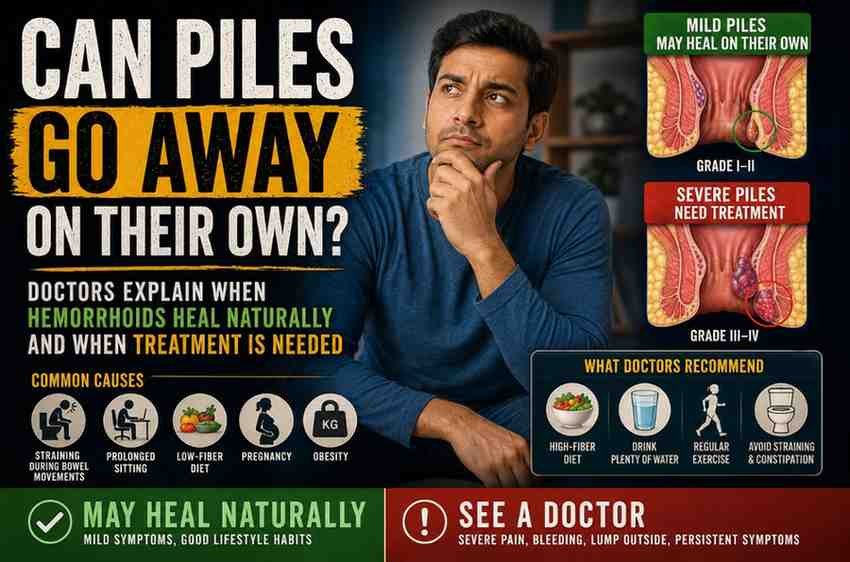
Piles, medically known as hemorrhoids, are among the most common causes of rectal discomfort and bleeding. They occur when veins in the lower rectum or around the anus become swollen due to increased pressure, often caused by straining during bowel movements, chronic constipation, prolonged sitting, pregnancy, or obesity.
One of the most common questions people ask is whether piles can disappear without treatment. The answer is yes many mild cases improve on their own or with simple lifestyle measures. However, some hemorrhoids may persist or worsen over time, making medical treatment necessary.
Understanding the type and severity of hemorrhoids is key to knowing whether they are likely to resolve naturally.
What Exactly Are Piles?
Hemorrhoids are enlarged blood vessels located inside the rectum or under the skin around the anus.
They are broadly classified into two types:
- Internal hemorrhoids: Located inside the rectum and usually painless, though they may cause bleeding.
- External hemorrhoids: Develop under the skin around the anus and can cause pain, itching, or swelling.
Both forms are common and affect millions of adults worldwide.
Can They Heal Without Treatment?
Mild hemorrhoids often improve naturally, especially when the underlying causes are addressed.
Simple measures can reduce pressure on rectal veins and allow inflammation to subside.
These include:
- Increasing dietary fiber.
- Drinking plenty of water.
- Avoiding straining during bowel movements.
- Exercising regularly.
- Avoiding prolonged sitting on the toilet.
Symptoms such as itching, mild pain, or minor bleeding may gradually resolve over days or weeks.
Why Constipation Plays a Major Role
Constipation is one of the leading causes of piles. Hard stools and excessive straining increase pressure inside rectal veins, causing them to swell.
Preventing constipation can significantly improve symptoms.
Fiber-rich foods that support bowel health include:
- Whole grains.
- Fresh fruits.
- Vegetables.
- Legumes and beans.
- Seeds and nuts.
Adequate hydration is equally important for keeping stools soft and easier to pass.
Common Symptoms of Piles
Symptoms vary depending on the type and severity of hemorrhoids.
Common signs include:
- Bright red blood after bowel movements.
- Itching around the anus.
- Pain or discomfort.
- Swelling or a lump near the anus.
- A feeling of incomplete bowel evacuation.
- Mucus discharge.
While rectal bleeding is often due to hemorrhoids, doctors stress that persistent bleeding should never be ignored, as other conditions can produce similar symptoms.
| Mild Hemorrhoids | Hemorrhoids Needing Medical Attention |
|---|---|
| Occasional itching | Persistent or severe pain |
| Minor bleeding | Frequent bleeding |
| Improves with diet changes | Symptoms that worsen over time |
| Temporary swelling | Large protruding hemorrhoids |
| Resolves in days or weeks | Symptoms interfering with daily life |
An Overlooked Factor: Prolonged Sitting Can Make Piles Worse
Many people focus on constipation but overlook the effects of prolonged sitting, especially sitting on the toilet for extended periods.
Spending too much time scrolling on phones or reading while using the bathroom increases pressure in rectal veins and may aggravate hemorrhoids.
Experts recommend responding promptly to the urge to pass stools and avoiding unnecessary time on the toilet.
Home Remedies That May Provide Relief
Several simple measures can help ease symptoms:
- Warm sitz baths for 10–15 minutes.
- Increasing fluid intake.
- Using fiber supplements if needed.
- Applying doctor-recommended creams.
- Maintaining regular physical activity.
- Avoiding heavy straining.
These approaches can reduce inflammation and promote healing.
When Should You See a Doctor?
Medical evaluation is recommended if:
- Bleeding continues or becomes heavy.
- Pain is severe.
- Symptoms persist despite lifestyle changes.
- A lump becomes painful or hard.
- Bowel habits change unexpectedly.
- Weight loss or anemia develops.
Doctors may recommend medications, rubber band ligation, or other minimally invasive procedures for persistent cases.
Can Surgery Be Avoided?
Most hemorrhoids do not require surgery.
Early intervention and lifestyle modifications often prevent progression.
However, advanced hemorrhoids that prolapse or cause recurrent symptoms may need procedures such as:
- Rubber band ligation.
- Sclerotherapy.
- Infrared coagulation.
- Hemorrhoidectomy in severe cases.
The choice of treatment depends on the severity and individual circumstances.
Prevention Is Better Than Treatment
Doctors emphasize that preventing recurrence is just as important as treating existing hemorrhoids.
Healthy habits include:
- Eating a high-fiber diet.
- Staying hydrated.
- Exercising regularly.
- Maintaining a healthy weight.
- Avoiding prolonged sitting.
- Not delaying bowel movements.
These measures help maintain bowel regularity and reduce pressure on rectal veins.
Conclusion
Many cases of piles can improve on their own, especially when supported by healthy lifestyle changes and better bowel habits. Mild hemorrhoids often resolve within days or weeks, but persistent pain, bleeding, or worsening symptoms should not be ignored.
The key is to address the underlying causes—particularly constipation and straining—because while piles may disappear naturally, preventing them from returning requires long-term attention to digestive health and daily habits.
For breaking news and live news updates, like us on Facebook or follow us on Twitter and Instagram. Read more on Latest Lifestyle on thefoxdaily.com.


COMMENTS 0