
For travelers who dream of soaring above snow-capped peaks and endless mountain landscapes, the world’s highest ropeways offer a unique blend of adventure and engineering. Stretching across some of the planet’s most extreme terrain, these cable car systems provide access to ski resorts, remote summits, and even urban transportation networks.
From the Himalayas of India to the Andes of Bolivia and the Alps of Europe, these ropeways combine stunning views with record-breaking altitudes.
1. Gulmarg Gondola, India
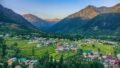
Located in Jammu and Kashmir, the Gulmarg Gondola is among the world’s highest cable cars.
- Maximum altitude: About 3,980 metres (13,058 feet)
- Location: Gulmarg, Kashmir
- Highlights: Snow-covered peaks, skiing, Himalayan panoramas
The second phase carries visitors to Apharwat Peak, offering spectacular views and access to one of Asia’s premier ski destinations.
2. Dagu Glacier Cable Car, China
This ropeway climbs to the famous Dagu Glacier in Sichuan Province.
- Maximum altitude: Around 4,860 metres (15,945 feet)
- Highlights: Glacier landscapes and alpine scenery
Visitors experience one of the highest cable car journeys in the world while overlooking ancient ice formations.
3. Mérida Cable Car (Mukumbarí), Venezuela
The Mukumbarí system holds the distinction of being one of the world’s highest and longest cable cars.
- Maximum altitude: Approximately 4,765 metres (15,633 feet)
- Location: Andes Mountains, Venezuela
- Highlights: Multi-stage ascent and dramatic Andean landscapes
4. Mi Teleférico, Bolivia
Unlike mountain gondolas, Mi Teleférico serves as an urban transport network connecting La Paz and El Alto.
- Maximum altitude: Around 4,000 metres (13,123 feet)
- Highlights: World’s largest urban cable car network
Passengers enjoy panoramic views of the Andes and the city below.
5. Aiguille du Midi Cable Car, France
This iconic Alpine ropeway transports visitors close to Mont Blanc.
- Maximum altitude: Approximately 3,842 metres (12,605 feet)
- Location: Chamonix, France
- Highlights: Stunning views of Mont Blanc and the French Alps
It remains one of Europe’s most famous cable car rides.
6. Klein Matterhorn Cable Car, Switzerland
Also known as Matterhorn Glacier Paradise, this ropeway reaches one of Europe’s highest stations.
- Maximum altitude: Around 3,883 metres (12,740 feet)
- Highlights: Glacier views and year-round snow
The panoramic scenery includes the iconic Matterhorn peak.
7. Peak 2 Peak Gondola, Canada
Located in British Columbia, this engineering marvel links Whistler and Blackcomb Mountains.
- Maximum altitude: About 1,880 metres (6,168 feet)
- Highlights: Long unsupported span and spectacular mountain views
Though not the highest in elevation, its remarkable span and scenery make it one of the world’s most impressive ropeways.
| Ropeway | Country | Approximate Highest Point |
|---|---|---|
| Dagu Glacier Cable Car | China | 4,860 m |
| Mukumbarí Cable Car | Venezuela | 4,765 m |
| Mi Teleférico | Bolivia | 4,000 m |
| Gulmarg Gondola | India | 3,980 m |
| Klein Matterhorn | Switzerland | 3,883 m |
| Aiguille du Midi | France | 3,842 m |
| Peak 2 Peak Gondola | Canada | 1,880 m |
An Overlooked Reality: High Altitude Can Affect the Body
While these ropeways offer extraordinary views, rapid ascents to high elevations can expose travelers to thinner air.
Symptoms of altitude sickness may include:
- Headache.
- Dizziness.
- Shortness of breath.
- Nausea.
- Fatigue.
People with heart or lung conditions are advised to consult doctors before visiting extremely high-altitude destinations.
Why These Ropeways Matter Beyond Tourism
Modern ropeways are increasingly valued for:
- Eco-friendly transport.
- Reduced traffic congestion.
- Improved access to remote areas.
- Boosting local tourism and economies.
- Providing sustainable mountain mobility.
Urban systems like Bolivia’s Mi Teleférico demonstrate that cable cars can be practical transportation solutions, not just tourist attractions.
Conclusion
From India’s Gulmarg Gondola to Bolivia’s Mi Teleférico and China’s Dagu Glacier Cable Car, the world’s highest ropeways offer unforgettable journeys above some of Earth’s most dramatic landscapes. These engineering feats are more than scenic rides—they connect communities, support tourism, and showcase humanity’s ability to build amid some of the planet’s most challenging environments.
Whether gliding above the Himalayas, the Andes, or the Alps, these ropeways transform Travel into an experience that feels almost as spectacular as flying itself.
For breaking news and live news updates, like us on Facebook or follow us on Twitter and Instagram. Read more on Latest Lifestyle on thefoxdaily.com.





COMMENTS 0