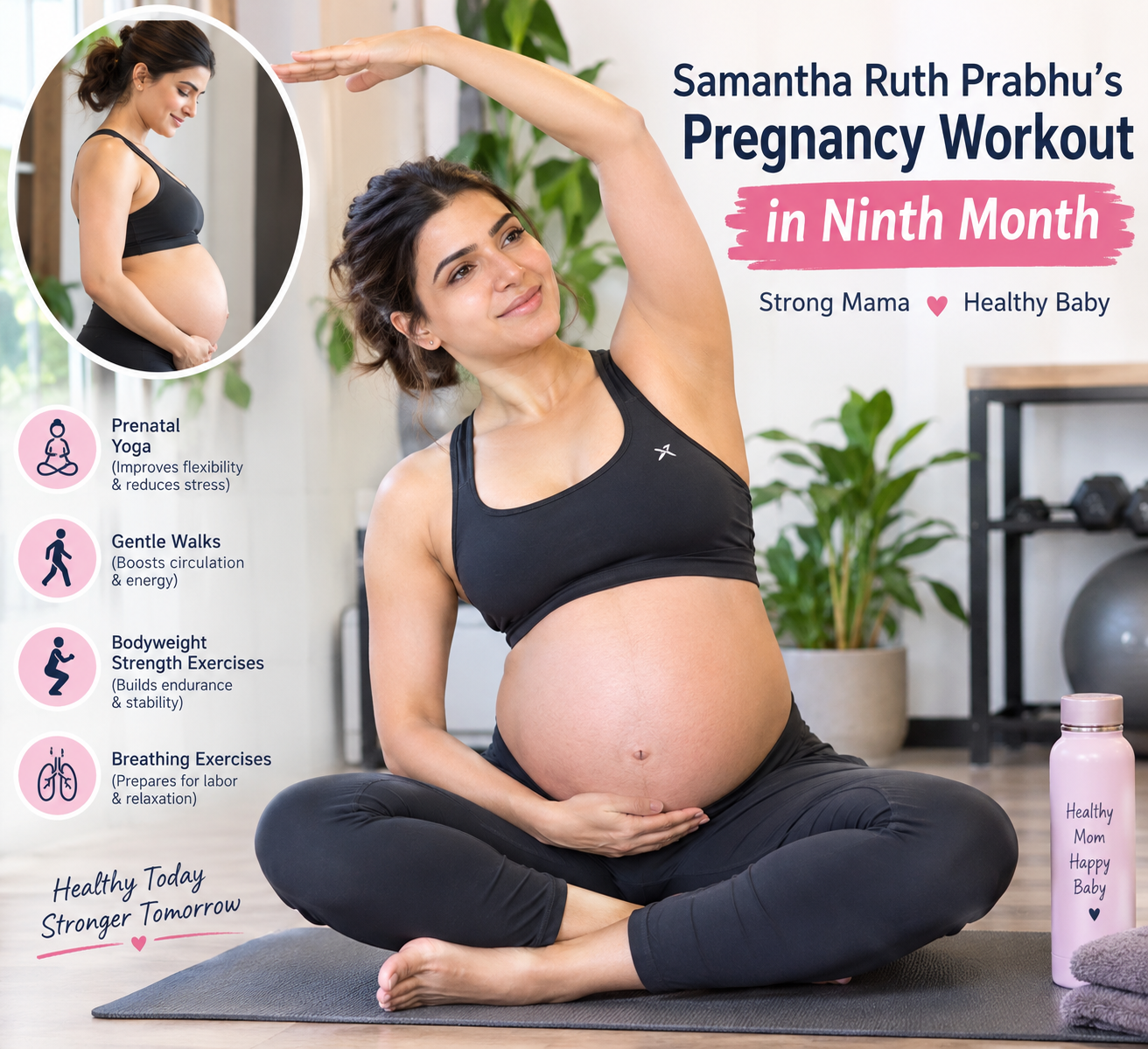
Actor Samantha Ruth Prabhu has offered fans a glimpse into her fitness routine during the final stage of her pregnancy, showing that she has continued to prioritise movement and strength as she prepares to welcome her baby with husband Raj Nidimoru. Known for regularly sharing updates from her fitness journey, the actor has now posted a video comparing her workouts from the beginning of pregnancy with those in the ninth month.
For Samantha, the latest update is not simply about maintaining a fitness routine. It also highlights the importance of preparing the body for the physical demands of childbirth while looking after Maternal Health. Her post has drawn attention from fans, who praised her consistency, strength and dedication.
On October 30, Samantha shared an Instagram Reel with the caption, “#9. The final lap.” The video features clips of her exercising during the first month of pregnancy and again in the ninth month. One detail stands out: she appears to be performing the same exercise in both clips, demonstrating continuity in her workout routine.
Samantha Ruth Prabhu’s Workout in the Ninth Month of Pregnancy
Samantha’s latest Instagram Reel shows her performing weighted squats in two different stages of pregnancy. The first clip captures her working out during the initial month, while the second shows her repeating the movement in the ninth month.
The comparison highlights how she has maintained a consistent approach to strength training throughout her pregnancy. However, it is important to remember that pregnancy-related fitness routines are highly individual. An exercise that is suitable for one woman may not be appropriate for another, depending on her health, pregnancy stage, fitness history and doctor’s advice.
What are weighted squats and which muscles do they target?
Weighted squats are a compound strength-training exercise that involves lowering the body into a squat position while holding an additional weight. They engage several muscle groups at the same time and are commonly included in lower-body strength programmes.
The exercise primarily works the:
- Quadriceps: The muscles at the front of the thighs, which help straighten the knees.
- Hamstrings: The muscles at the back of the thighs, which support hip and knee movement.
- Glutes: The muscles around the hips and buttocks, which contribute to hip extension and stability.
- Calves: The muscles in the lower legs, which help with balance and movement.
Squats also involve the core and other stabilising muscles, helping improve coordination and functional strength. In everyday life, movements similar to squats are used when sitting down, standing up, lifting objects and climbing stairs.
For pregnant women who are already accustomed to strength training, appropriately modified exercises may help maintain muscle strength and physical endurance. However, the weight, depth, repetitions and overall intensity should be adjusted according to individual comfort and medical guidance.
How Did the Internet React to Samantha’s Pregnancy Workout Video?
Samantha’s post received an enthusiastic response from fans, with several Instagram users praising her commitment to fitness during pregnancy. Many described her as an inspiration and expressed excitement about her journey towards motherhood.
One user commented, “Pregnancy glow, fitness goals and unstoppable strength. Truly inspiring you are, Sam.” Another wrote, “Supermom! You’re going to be an amazing mother, Samantha.”
Other reactions included comments such as “That kid is gonna be super healthy,” “Santoor mommy” and “Momma of the year”. The responses reflected the admiration many followers have for the actor’s approach to maintaining an active lifestyle.
However, social media reactions should not be treated as medical assessments. A person’s workout video cannot establish whether a particular exercise or weight-training routine is suitable for every pregnant woman. Pregnancy Fitness should always be guided by individual health needs rather than celebrity routines or online trends.
Is Working Out During Pregnancy Safe for the Mother and Baby?
Exercise during pregnancy is generally encouraged for women who do not have medical or obstetric conditions that make physical activity unsafe. Staying active can support physical fitness, help manage pregnancy-related discomfort and contribute to emotional well-being.
In a conversation with HT Lifestyle, Dr Sindhu Bhargavi, obstetrician and gynaecologist at Apollo Cradle and Children’s Hospital, explained that exercise, including strength training, is recommended for most pregnant women. It can help keep muscles toned, support healthy weight management and improve mental well-being.
According to the doctor, physical activity may also improve endurance for labour and delivery. Maintaining strength and stamina can help women prepare for the physical demands associated with childbirth and recovery.
However, the fact that exercise is generally beneficial does not mean that every activity is appropriate throughout pregnancy. The type, intensity and duration of exercise need to be considered carefully, particularly as the pregnancy progresses.
What are the potential benefits of exercise during pregnancy?
When medically appropriate and performed safely, regular physical activity can offer several benefits during pregnancy.
- Supports muscle strength: Appropriate strength training can help maintain the muscles used in everyday movements and physical activities.
- Improves endurance: Regular movement can help maintain cardiovascular fitness and stamina.
- Supports weight management: Exercise can contribute to healthy weight gain during pregnancy when combined with appropriate nutrition and medical care.
- Promotes mental well-being: Physical activity may help improve mood, reduce stress and support better sleep.
- Maintains mobility: Suitable exercises can help women remain active and manage some of the physical changes associated with pregnancy.
These benefits depend on the individual’s health and the suitability of the exercise programme. Women who have been inactive before pregnancy may need a different approach from those who regularly exercised before conceiving.
Can Pregnant Women Lift Weights?
Strength training does not automatically have to stop during pregnancy. Dr Bhargavi said that weightlifting can be a valuable part of a pregnant woman’s fitness routine when performed properly and under professional guidance.
For women who were already familiar with resistance training before pregnancy, continuing appropriately modified exercises may help maintain muscle strength. However, pregnancy is not the time to begin lifting heavy weights or attempting challenging movements without medical assessment and expert supervision.
Several factors should be considered before continuing weight training, including the woman’s previous fitness experience, pregnancy stage, medical history, balance, comfort and any complications.
Dr Bhargavi specifically advised avoiding vigorous exercises that carry a risk of falling or sustaining an injury. She also emphasised that consulting a doctor before starting or continuing weightlifting is the safer approach.
Precautions to take while strength training during pregnancy
Pregnancy changes the body’s centre of gravity, joint stability and physical requirements. As the baby grows, movements that once felt comfortable may become more difficult. Women should therefore pay attention to how their bodies respond during exercise.
Some important precautions include:
- Consult an obstetrician first: Discuss your exercise routine with your doctor, especially before starting a new strength-training programme or continuing heavy lifting.
- Modify exercises as pregnancy progresses: Adjust the weight, range of movement and intensity according to comfort and medical advice.
- Avoid activities with a high risk of falling: Exercises involving unstable surfaces, sudden movements or a significant risk of injury may be unsuitable.
- Focus on controlled movements: Avoid rushing through repetitions or lifting weights that compromise posture and balance.
- Stay hydrated: Drink fluids as appropriate and avoid exercising in excessively hot or poorly ventilated environments.
- Do not ignore discomfort: Stop exercising if a movement causes pain, unusual discomfort or symptoms that feel concerning.
- Seek professional supervision: A qualified prenatal fitness professional can help adapt exercises to the changing needs of pregnancy.
When should a pregnant woman stop exercising?
Exercise should be stopped and medical advice sought if a pregnant woman experiences warning signs such as vaginal bleeding, fluid leakage, painful contractions, dizziness, chest pain, severe breathlessness before exertion or significant abdominal pain.
Other concerning symptoms may include a headache that does not settle, muscle weakness affecting balance or calf pain and swelling. Any sudden or unusual change during physical activity should be discussed with a healthcare professional.
Women with certain pregnancy complications or medical conditions may need to avoid particular forms of exercise altogether. The decision should be based on an individual assessment rather than general fitness recommendations.
Why Should Pregnant Women Avoid Comparing Their Fitness Routines With Celebrities?
Celebrity fitness updates can encourage people to stay active, but they do not provide a universal guide to exercising during pregnancy. Every pregnancy is different, and factors such as age, medical history, previous fitness levels, multiple pregnancies and complications can influence what activities are appropriate.
A workout that a trained athlete or an experienced fitness enthusiast can perform comfortably may not be suitable for someone who has not exercised regularly. Similarly, a woman who has been advised to restrict physical activity for medical reasons should not feel pressured to follow a celebrity’s routine.
Social media videos also offer only a brief view of a person’s fitness journey. They may not show the professional supervision, modifications, recovery periods or medical advice involved in the routine.
The more useful takeaway from Samantha’s post is the importance of approaching fitness with consistency and awareness of personal health needs. Pregnancy exercise should be about supporting the mother, not meeting an external standard of strength or appearance.
Preparing for Labour: Why Strength and Endurance Matter
Pregnancy brings significant physical changes, and labour and delivery can require considerable stamina. Maintaining an appropriate level of physical activity may help women preserve strength and endurance, which can support their ability to manage everyday movements and the physical demands of childbirth.
Strength training, walking, prenatal yoga and other suitable activities may form part of a pregnancy fitness plan, depending on medical advice. Exercises that focus on posture, mobility and controlled breathing may also help women remain comfortable as their bodies change.
However, there is no single workout that guarantees an easier delivery or a particular birth outcome. Labour depends on several medical and individual factors, and exercise should not be viewed as a way to control how childbirth unfolds.
Dr Bhargavi’s advice highlights the importance of taking precautions while remaining physically active. When exercise is appropriate, properly modified and supervised, it can support a woman’s physical health and help prepare her for the demands of labour and delivery.
The Bottom Line
Samantha Ruth Prabhu’s latest workout video has offered fans a glimpse into how she has maintained her fitness routine during the final stage of pregnancy. By sharing clips of weighted squats from the first and ninth months, the actor has highlighted her commitment to staying active as she prepares to welcome her baby with Raj Nidimoru.
Medical experts say that exercise, including appropriately modified strength training, can be beneficial for many pregnant women. It may help maintain muscle strength, support healthy weight management, improve endurance and promote mental well-being. However, the suitability of each exercise depends on individual health and pregnancy-related factors.
Pregnant women should consult their obstetricians before starting or continuing weightlifting, avoid activities with a high risk of falling and stop exercising if warning symptoms develop. The goal should always be maternal health and safety rather than matching another person’s fitness routine.
Note to readers: This article is for informational purposes only and is not a substitute for professional medical advice. Always seek the advice of your doctor with any questions about a medical condition or exercise during pregnancy.
Disclaimer: This report is based on user-generated content from social media. HT.com has not independently verified the claims and does not endorse them.
Frequently Asked Questions
1. What workout did Samantha Ruth Prabhu share during her ninth month of pregnancy?
Samantha shared an Instagram Reel showing her performing weighted squats during the first and ninth months of pregnancy. The video, posted on October 30 with the caption “#9. The final lap”, compared the two stages of her fitness journey.
2. Are weighted squats safe during pregnancy?
Weighted squats may be suitable for some pregnant women who are already accustomed to strength training, provided the exercise is appropriately modified and approved by their doctor. The weight, intensity and technique should be adjusted according to individual health and comfort.
3. Can pregnant women continue strength training?
Many pregnant women can continue suitable strength-training exercises, particularly if they were physically active before pregnancy. However, they should consult an obstetrician and avoid exercises that involve excessive strain or a high risk of falling.
4. What are the benefits of exercising during pregnancy?
Appropriate exercise can help maintain muscle strength, support healthy weight management, improve endurance and promote mental well-being. It may also help women remain mobile and prepare physically for the demands of labour and delivery.
5. Which exercises should pregnant women avoid?
Activities with a high risk of falling, abdominal injury or collision should generally be avoided. The suitability of vigorous workouts, heavy lifting and other challenging movements depends on individual medical circumstances and should be discussed with a doctor.
6. When should a pregnant woman stop exercising?
Exercise should be stopped if symptoms such as vaginal bleeding, fluid leakage, painful contractions, dizziness, chest pain, severe breathlessness or significant abdominal pain occur. Medical advice should be sought promptly.
7. Should women consult a doctor before lifting weights during pregnancy?
Yes. A doctor should assess whether weight training is appropriate based on the woman’s health, pregnancy stage, medical history and fitness experience. Professional guidance can help ensure that exercises are performed safely.
8. Does exercising during pregnancy guarantee an easier delivery?
No. Appropriate physical activity may help maintain strength and endurance, but it cannot guarantee an easier delivery or a particular birth outcome. Labour and delivery depend on several individual and medical factors.
For breaking news and live news updates, like us on Facebook or follow us on Twitter and Instagram. Read more on Latest Lifestyle on thefoxdaily.com.






COMMENTS 0