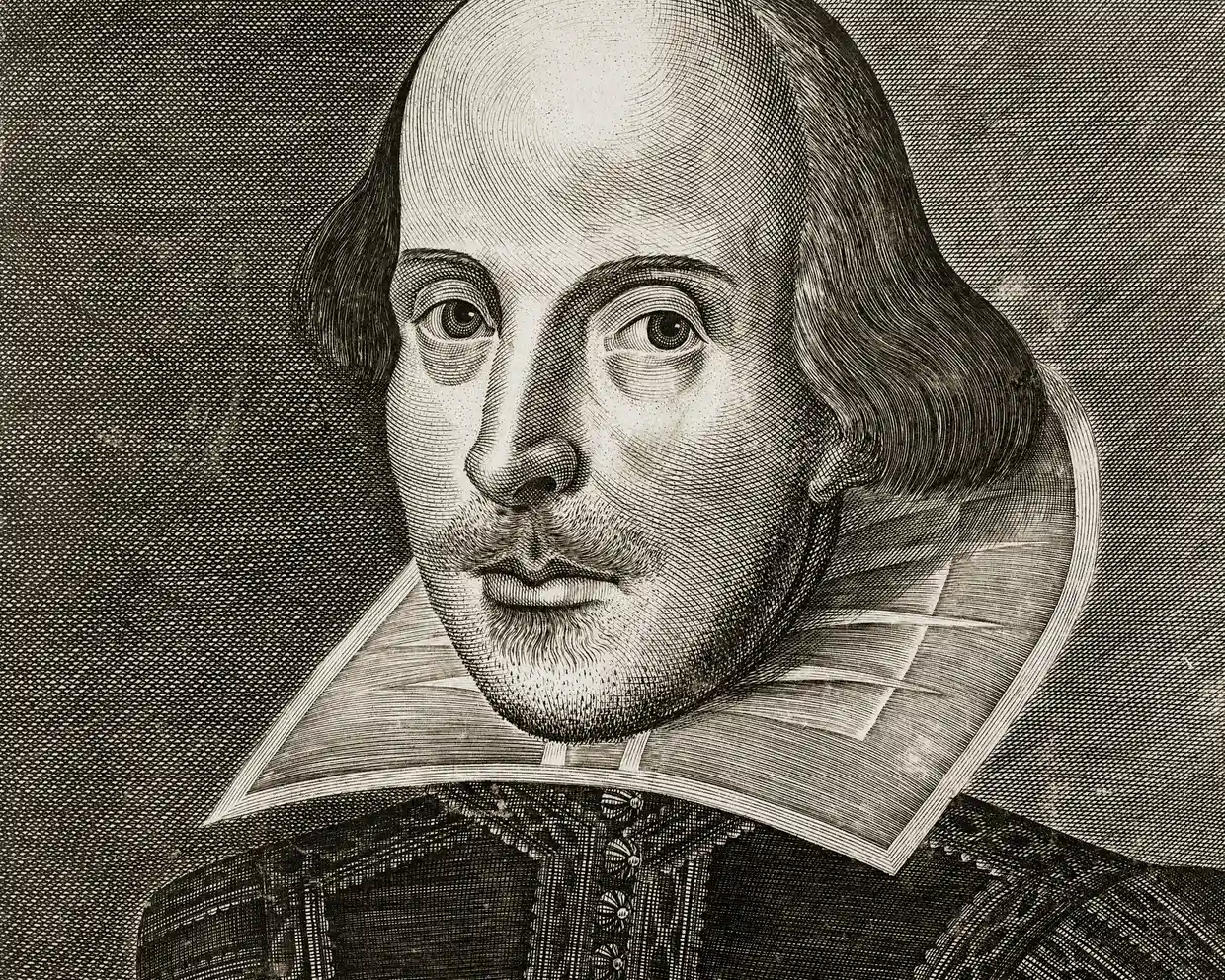
New computer-assisted linguistic research has strengthened the case that William Shakespeare was the principal author of the anonymously published play Edward III, while identifying Christopher Marlowe as a significant collaborator. The findings could reshape how scholars understand the early careers of two of English literature’s most influential dramatists, challenging the traditional view of Shakespeare and Marlowe as purely theatrical rivals.
For centuries, questions about the authorship of early modern plays have challenged literary historians. Unlike many modern publications, plays produced for the Elizabethan stage were not always accompanied by reliable records identifying everyone involved in their creation. Some works were published anonymously, while others emerged from a theatrical culture in which collaboration between playwrights was common.
One such work is Edward III, a history play first published anonymously in 1596. Although scholars have long suspected that Shakespeare contributed to parts of the drama, the extent of his involvement has remained a subject of debate.
Now, researchers Dr Rory Loughnane of the University of Kent and Professor Brett Greatley-Hirsch of the University of Leeds have presented new computer-assisted textual evidence supporting Shakespeare’s role as the play’s principal writer and Marlowe’s contribution to other sections.
Loughnane described the findings to The Guardian as taking the case for Shakespeare’s authorship “beyond any reasonable doubt”. He also emphasised the significance of identifying Marlowe as a collaborator, arguing that the discovery could change how scholars understand both playwrights’ bodies of work and their professional relationship.
The research offers more than a possible addition to Shakespeare’s canon. It raises broader questions about how Renaissance plays were written, how playwrights worked together and how modern technology can help resolve literary mysteries that have persisted for generations.
What Is Edward III, and Why Does Its Authorship Matter?
Edward III is an English history play centred on the reign of King Edward III and the conflicts associated with his military ambitions, including the English campaigns in France. Its dramatic world combines royal authority, warfare, political calculation and questions of honour.
The play first appeared anonymously in 1596 and was not included in the 1623 First Folio, the landmark collection of Shakespeare’s plays published several years after his death.
The absence of Edward III from the First Folio does not, by itself, establish that Shakespeare had no involvement in its creation. Early modern theatrical publishing was not a comprehensive or consistent record of authorship, and the collection did not include every play that has subsequently been associated with Shakespeare.
Over time, literary scholars began to identify passages that appeared consistent with Shakespeare’s writing. However, establishing whether he wrote a few scenes, contributed to a larger collaborative effort or served as the principal author required more systematic investigation.
The new study addresses that question by comparing linguistic patterns in Edward III with those found in works attributed to other dramatists active during the period.
If the findings withstand further scholarly scrutiny, the play could become an even more important part of discussions about Shakespeare’s early development. It could also provide evidence of a more sustained writing partnership between Shakespeare and Marlowe than scholars have previously been able to demonstrate.
How Researchers Used Computer Analysis to Identify the Authors
Determining who wrote a historical play is not as straightforward as matching a familiar phrase to a known author. Playwrights could imitate one another, share theatrical conventions and write in styles that changed throughout their careers.
To investigate Edward III, Loughnane and Greatley-Hirsch used several forms of computer-assisted linguistic analysis. Their research compared the play with securely attributed works by 10 dramatists who were active between the late 1580s and the mid-1590s.
Rather than relying on one famous quotation or an isolated similarity, the researchers examined patterns in language and the distribution of words associated with particular writers.
1. Comparing Linguistic Patterns Across Multiple Plays
Every writer develops habits of expression. These may include preferences for particular words, recurring grammatical structures, characteristic combinations of terms and differences in how language is used to construct dramatic speeches.
Individual features are rarely conclusive on their own. A word might appear in several writers’ works because it was common in the period, appropriate to the subject or part of the shared vocabulary of the theatre.
However, examining many features together can help researchers identify patterns that are more consistent with one writer than another.
In the case of Edward III, the researchers applied different analytical approaches to distinguish sections associated with Shakespeare from those associated with Marlowe.
The importance of this method lies in the combination of evidence. Instead of assuming that one stylistic similarity proves authorship, researchers can investigate whether multiple linguistic signals point towards the same conclusion.
2. Examining Distinctive Marker Words
The study also examined the distribution of particular words that appear more frequently in some playwrights’ works than in others.
One example highlighted in the report is “martial”, a word associated with warfare that the researchers identify as characteristic of Marlowe’s writing relative to that of other dramatists.
Such marker words can help distinguish writing styles when they are considered alongside broader linguistic patterns. Their value does not come from the mere presence of a particular word, but from how its use fits into a larger profile of an author’s language.
Historical context remains essential. Writers working in the same theatrical environment naturally shared vocabulary, themes and conventions. Computer analysis therefore needs to account for the language of the period rather than treating every shared expression as evidence of direct collaboration.
3. Dividing the Play Into Sections
One of the study’s notable findings was the classification of individual sections of Edward III.
According to the researchers, 23 segments described as “the lion’s share” of the play were identified as Shakespeare’s work, while nine segments were classified as Marlowe’s.
This division supports the argument that Shakespeare was the principal writer and Marlowe contributed substantial portions of the drama.
However, the researchers also acknowledge a complication inherent in analysing collaborative writing. Individual sections may contain overlapping contributions, and a passage that appears stylistically consistent with one author may include material revised or shaped by another.
Consequently, the findings should be understood as a linguistic attribution of sections rather than a definitive identification of every individual line as the work of one writer.
Which Parts of Edward III Were Written by Shakespeare and Marlowe?
The research highlights passages from the play that illustrate the different contributions attributed to the two dramatists.
Shakespeare’s Contribution: An Ominous Change in the Sky
One passage identified as Shakespeare’s appears near the beginning of scene 13. In this section, the sudden darkening of the sky frightens the French camp, prompting King Jean to comment on the unsettling change.
The speech includes the line:
“A sudden darkness hath defaced the sky …”
The moment uses a change in the natural world to heighten the atmosphere of uncertainty surrounding the characters. The ominous sky becomes a dramatic signal, reflecting the anxiety of those confronting the unfolding events.
The researchers’ analysis identifies the speech as Shakespeare’s work based on its linguistic features and its relationship to patterns found in his securely attributed writing.
The attribution is significant because it provides a concrete example of the kind of passage scholars have debated when considering Shakespeare’s contribution to Edward III.
Marlowe’s Contribution: A Speech Honouring Military Power
A passage from the play’s final scene was attributed to Marlowe. The speech includes the lines:
“Great servitor to bloody Mars in arms, / The Frenchman’s terror and his country’s fame.”
The language evokes military service, the god of war and the reputation of a celebrated warrior. Its emphasis on martial identity is consistent with the study’s broader analysis of linguistic features associated with Marlowe.
The attribution is especially notable because Marlowe is widely known for dramatic works that explore ambition, power, violence and the limits of human aspiration.
However, the researchers’ argument does not rest simply on the military subject matter or the sound of these lines. Their conclusion emerges from the wider pattern of linguistic evidence gathered through the computer-assisted analysis.
Why the Discovery Could Change Shakespeare’s Literary Canon
The term “Shakespeare canon” refers to the body of plays, poems and other writings accepted as Shakespeare’s work, including works whose authorship remains disputed or involves collaboration.
Adding Edward III more firmly to this body of work would have implications for literary scholarship, editorial practice and the way readers understand Shakespeare’s career.
The play has already been included in modern editions of Shakespeare’s works. Rory Loughnane edited it for the 2016 New Oxford Shakespeare: Complete Works, where the editorial treatment recognised Shakespeare’s likely involvement in selected scenes.
The play had also appeared in a 2005 volume. Further scholarship, including work associated with the New Oxford Shakespeare: Authorship Companion, had made the case for Shakespeare’s partial authorship while acknowledging the need for additional research.
The new findings go further by arguing that Shakespeare was not merely a contributor to a small number of scenes but the principal author of the play.
This distinction matters because the classification of a work can influence how it is edited, taught, performed and interpreted.
If Edward III is accepted more widely as a Shakespeare-led collaboration, scholars may examine its themes, language and dramatic structure alongside the works that have traditionally defined his early career.
It may also help researchers reconsider how Shakespeare developed his distinctive dramatic techniques while working in a theatrical world where writing could involve more than one author.
Why the Discovery Matters for Christopher Marlowe Too
The findings could also significantly affect the study of Christopher Marlowe, Shakespeare’s contemporary and one of the most influential dramatists of the Elizabethan period.
Marlowe is known for works including Doctor Faustus, which explores ambition, knowledge, temptation and the consequences of attempting to exceed human limits.
His dramatic style helped shape the theatrical environment in which Shakespeare developed his career. The two men were born within weeks of one another and established their reputations during the late 1580s and early 1590s.
For a long time, discussions of their relationship have often emphasised competition and artistic influence. Their overlapping careers and reputations have encouraged comparisons between their approaches to language, dramatic character and theatrical ambition.
The new study presents a more complicated possibility: the two writers may have worked directly together on Edward III.
Loughnane told The Guardian that the findings challenge the idea that Shakespeare and Marlowe were simply rivals or influences on one another. Instead, he argued that their relationship was more complex.
This interpretation does not eliminate the possibility of professional competition. Rather, it suggests that rivalry and collaboration need not have been mutually exclusive in the theatrical culture of the time.
For scholars of Marlowe, identifying his contribution to another play would also provide new material for understanding his writing habits, his range as a dramatist and the development of his career.
Did Shakespeare and Marlowe Collaborate on Other Plays?
The possibility of collaboration between Shakespeare and Marlowe is not entirely new to scholarship.
The report notes that a 2016 study had identified Marlowe as a co-author of Shakespeare’s three Henry VI plays. That earlier research helped establish a basis for investigating whether the two playwrights may have shared authorship responsibilities in additional works.
The proposed collaboration on Edward III, which Loughnane associates with 1592, could suggest that their professional relationship was more sustained than previously understood.
Instead of viewing each possible collaboration as an isolated incident, scholars may be able to investigate whether these works form part of a wider pattern of shared writing.
Such a conclusion would have to be supported by careful comparisons across multiple plays and historical records. Similarities between two writers can arise from shared influences, common theatrical conventions or later revisions, so evidence of collaboration must be distinguished from evidence of stylistic resemblance.
Nevertheless, the new research adds to the debate about collaborative authorship in the Elizabethan theatre and encourages a more nuanced understanding of how plays were produced.
Why Collaboration Was Important in Elizabethan Theatre
Modern audiences often imagine a play as the product of one writer working independently from beginning to end. The theatrical environment of Shakespeare and Marlowe was more complicated.
Playwrights worked within a competitive entertainment industry in which theatre companies needed material to attract audiences. The demands of performance, the availability of writers and the need to develop new plays created circumstances in which collaboration could be useful.
Working together could allow dramatists to divide a play into sections, contribute different strengths or revise material as the work developed.
For modern researchers, this creates an authorship challenge. A play may contain several writers’ contributions, while the surviving printed text may not identify those contributions clearly.
Collaboration can also complicate stylistic attribution. One writer might imitate another, revise a colleague’s lines or reshape a scene so thoroughly that the final language contains features associated with more than one person.
Computer-assisted analysis can help investigate these problems, but it cannot eliminate the need for historical interpretation. Researchers must still consider the limits of surviving evidence, the reliability of comparison texts and the possibility of revisions made at different stages.
The Edward III findings are important partly because they bring these questions into sharper focus. They suggest that the accepted boundaries between individual authors’ works may not always reflect the collaborative realities of early modern theatre.
Can Computer Analysis Really Establish Shakespearean Authorship?
Computer-assisted authorship attribution has become an important tool in literary research. It allows scholars to examine large quantities of text and identify patterns that may be difficult to detect consistently through reading alone.
However, the reliability of any attribution depends on the quality of the method, the material being compared and the assumptions built into the analysis.
Why Multiple Tests Matter
Professor Brett Greatley-Hirsch said the strength of the research lies in the use of different forms of analysis examining different linguistic features.
He explained that the researchers were not relying on a single verbal parallel or statistical test. Instead, their methods repeatedly appeared to distinguish Marlowe’s writing from Shakespeare’s within the play.
This approach is important because any individual test may be affected by the subject matter, the length of a passage or the conventions of the period.
When different methods point towards a consistent result, the combined evidence may provide a stronger basis for attribution than an isolated similarity.
Why Some Uncertainty Remains
Even sophisticated computer models cannot provide an infallible record of who wrote every sentence in a historical text.
Results can be influenced by the selection of comparison works, the amount of surviving material and the way the text is divided into sections. Editorial changes, transcription errors and revisions can also complicate the analysis.
Collaborative writing creates an additional challenge because authors may influence one another’s language, and individual passages may contain overlapping contributions.
The researchers’ strong conclusion reflects their interpretation of the combined evidence. The wider scholarly community will still need to assess the methods, findings and implications as the research becomes available for detailed examination.
The report states that the study is due to be published in Shakespeare Quarterly later in the year. Its publication will provide an opportunity for other specialists to evaluate the evidence and consider how it fits into the broader history of Shakespearean authorship research.
What Happens Next for the Edward III Research?
The findings are likely to generate interest among Shakespeare scholars, theatre historians, editors, performers and readers interested in the origins of familiar literary works.
One immediate question is how future editions of Shakespeare’s plays will present Edward III. Editors may need to consider whether the new evidence justifies changes to how authorship is described and how the contributions of Shakespeare and Marlowe are identified.
Another question concerns performance. Directors and actors may explore the play with a clearer awareness of its proposed collaborative origins, potentially drawing attention to differences in language, tone and dramatic emphasis.
There is also a wider research opportunity. If similar methods can be applied reliably to other disputed plays, scholars may be able to reassess works whose authorship has remained uncertain for centuries.
However, any new attribution should be evaluated on its own evidence. A successful analysis of one play does not automatically establish the authorship of another.
The central contribution of the Edward III study is therefore not simply the proposed identification of two famous writers. It is the demonstration of how multiple forms of textual analysis can contribute to a more detailed understanding of literary collaboration.
Shakespeare at Thirty and the Making of Marlowe Exhibition
The research also arrives alongside wider efforts to explore the lives and literary environments of Shakespeare and Marlowe.
Rory Loughnane’s forthcoming book, Shakespeare at Thirty, published by Princeton University Press, examines aspects of Shakespeare’s early career, according to the supplied report.
Loughnane has also curated an exhibition exploring Marlowe’s life and times in Canterbury, the playwright’s native city. Titled The Making of Marlowe, the exhibition is scheduled to run until 22 November at the Beaney House of Art & Knowledge.
These projects complement the authorship research by placing the playwrights within the cultural and historical setting in which they worked.
Understanding the environment surrounding a writer can help explain the pressures, opportunities and relationships that shaped a career. In the case of Shakespeare and Marlowe, whose working lives overlapped during a formative period in English theatre, that context is especially relevant.
Frequently Asked Questions
1. What is the main finding of the new Edward III study?
The research argues that William Shakespeare was the principal author of Edward III, with Christopher Marlowe contributing substantial sections. The researchers reached this conclusion through several forms of computer-assisted linguistic analysis.
2. Who conducted the research on Edward III?
The study was conducted by Dr Rory Loughnane, a reader in early modern studies at the University of Kent, and Professor Brett Greatley-Hirsch, a professor of Renaissance literature and textual studies at the University of Leeds.
3. When was Edward III published?
Edward III was published anonymously in 1596. It was not included in the 1623 First Folio collection of Shakespeare’s plays.
4. How did researchers identify Shakespeare and Marlowe’s contributions?
They compared the play with securely attributed works by 10 dramatists active between the late 1580s and mid-1590s. Their methods examined linguistic patterns and the distribution of distinctive words to identify sections associated with each writer.
5. How many sections were attributed to Shakespeare and Marlowe?
According to the report, 23 segments were identified as Shakespeare’s work and nine were classified as Marlowe’s. The researchers caution that individual sections may contain overlapping contributions.
6. Did Shakespeare and Marlowe collaborate on other plays?
The report notes that a 2016 study identified Marlowe as a co-author of Shakespeare’s three Henry VI plays. The proposed collaboration on Edward III adds to the scholarly discussion of their possible shared writing projects.
7. Why was Edward III not included in Shakespeare’s First Folio?
The play was absent from the 1623 collection, but that absence does not establish that Shakespeare had no role in writing it. The new research focuses on linguistic evidence to assess his contribution.
8. When will the research be published?
The supplied report states that the research is due to appear in Shakespeare Quarterly later in the year. The published study will allow scholars to examine the methods and evidence in greater detail.
Conclusion: A New Chapter in the Shakespeare-Marlowe Story
The new research on Edward III offers a potentially significant development in the study of Shakespeare and Christopher Marlowe. By combining different forms of computer-assisted linguistic analysis, Rory Loughnane and Brett Greatley-Hirsch argue that Shakespeare was the play’s principal author and that Marlowe contributed substantial portions.
The findings could reshape how the play is classified within Shakespeare’s body of work and provide fresh evidence about the relationship between two dramatists whose careers developed in the same competitive theatrical environment.
Just as importantly, the research highlights the value and limitations of modern technology in literary scholarship. Computer analysis can reveal patterns across historical texts, but interpreting those patterns still requires expertise, careful comparison and engagement with the wider historical record.
If the findings gain wider scholarly acceptance, Edward III may become an even more important work for understanding Shakespeare’s early career and Marlowe’s influence on Elizabethan drama. The possibility that the two writers collaborated directly also offers a more complex picture of their relationship than the familiar story of two rivals competing for theatrical fame.
For readers and theatre audiences, the discovery is a reminder that literary history is not fixed. Even works published centuries ago can reveal new insights when scholars revisit them with fresh questions and better analytical tools.
SEO Details
SEO Title: Shakespeare Was Main Author of Edward III, New Study Finds
Meta Description: New computer-assisted research identifies Shakespeare as the principal author of Edward III and Christopher Marlowe as a collaborator, potentially reshaping both literary canons.
Primary Keyword: Shakespeare Edward III authorship
Secondary Keywords: William Shakespeare, Christopher Marlowe, Edward III play, Shakespeare and Marlowe collaboration, Shakespeare authorship research, computerised textual analysis, Shakespeare canon, Elizabethan theatre, Renaissance literature
Suggested URL Slug: shakespeare-edward-iii-marlowe-collaboration
Suggested Excerpt: New computer-assisted linguistic research suggests William Shakespeare was the principal author of the anonymously published play Edward III, with Christopher Marlowe contributing several sections. The findings could reshape scholarly understanding of their literary canons and professional relationship.
For breaking news and live news updates, like us on Facebook or follow us on Twitter and Instagram. Read more on Latest Lifestyle on thefoxdaily.com.

COMMENTS 0