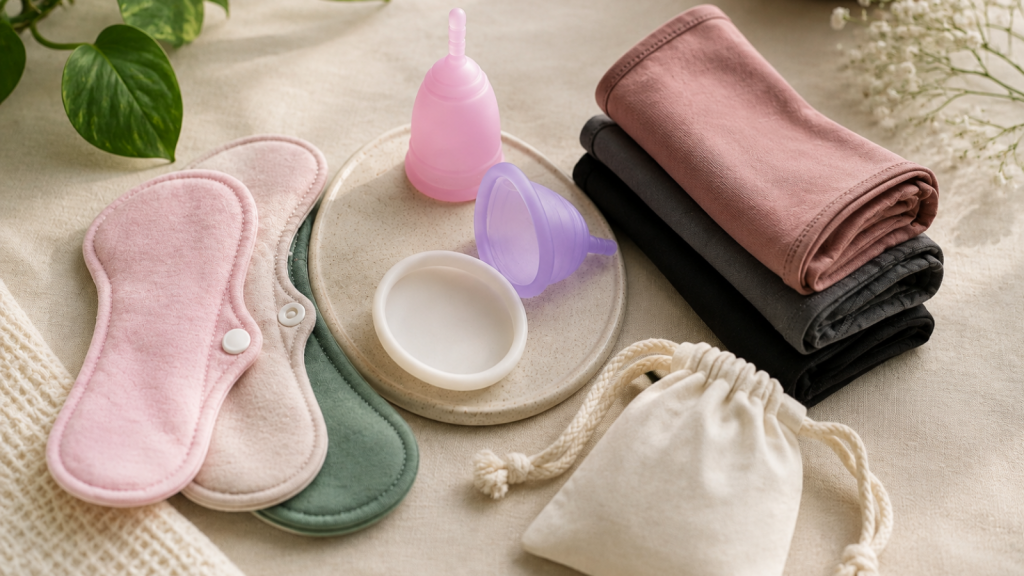
Menstrual cups, menstrual discs and period underwear are gaining attention as alternatives to disposable sanitary pads and tampons. These reusable period products can offer convenience, reduce waste and help some people manage menstruation more comfortably. However, choosing the right option involves more than following a trend. Factors such as menstrual flow, skin sensitivity, comfort, hygiene, lifestyle and individual health needs all play an important role.
For first-time users, the variety of products available can feel overwhelming. Menstrual cups and discs are inserted internally, while period underwear absorbs menstrual blood externally. Reusable pads offer another alternative for those who prefer a familiar approach to menstrual care.
According to Sujata Pawar, founder of Avni Wellness and a certified functional nutritionist, there has been a gradual shift in how women approach period products. More people are asking questions about materials, irritation, cleaning, product lifespan and suitability for their everyday routines. Nevertheless, disposable products remain part of many people’s menstrual care choices.
Dr Kiran Yadav, Senior Consultant in Obstetrics and Gynaecology at Motherhood Hospital, Gurgaon, emphasises that reusable period products can be safe for regular use when they are used correctly and maintained properly.
So, which option should you choose? Understanding how each product works, what its advantages and limitations are, and how to maintain it can help you make an informed decision.
Why Are More People Exploring Reusable Period Products?
Menstrual care is increasingly being discussed in terms of comfort, convenience, personal preference and environmental impact. Reusable products offer an alternative to disposable pads and tampons, but their suitability depends on individual circumstances.
For some users, the appeal lies in reducing the number of disposable products they purchase. Others are interested in finding an option that feels more comfortable during exercise, travel or long working days.
Skin sensitivity can also influence the decision. People who experience irritation with particular products may want to explore alternatives, although reusable products can also cause irritation depending on their materials, fit and cleaning methods.
Cost is another consideration. Reusable products may reduce repeated purchases over time, but the initial price, product lifespan, replacement needs and maintenance requirements should all be considered before making a decision.
As Pawar points out, sustainability is only one factor in the decision. Comfort, convenience, skin sensitivity, cost and Menstrual Health awareness are equally relevant.
The most important principle is that there is no single period product that works best for everyone. The right choice is the one that suits your body, menstrual flow, routine and comfort level.
1. Menstrual Cups: An Internal, Reusable Option
Menstrual cups are small, flexible cups designed to be inserted into the vagina to collect menstrual blood. They are typically made from medical-grade silicone or other materials specified by the manufacturer and are designed for repeated use when maintained according to the product instructions.
Unlike disposable sanitary pads, which absorb menstrual blood externally, a menstrual cup collects it internally.
What Makes Menstrual Cups Worth Considering?
For people who are comfortable with internal menstrual products, cups may offer convenience during everyday activities, including work, exercise and travel. They can also reduce the need to carry multiple disposable products, provided users can empty and clean the cup appropriately.
However, menstrual cups require a learning period. First-time users need to become familiar with insertion, positioning, removal and cleaning. Choosing a suitable size and understanding the product’s instructions are important parts of the process.
Some users become comfortable with cups relatively quickly, while others need more time or decide that an internal product is not right for them.
What Should Beginners Know?
- Choose carefully: Consider the manufacturer’s sizing guidance and the product’s material.
- Learn the technique: Practise insertion and removal according to the instructions without forcing the cup into place.
- Follow emptying guidance: Empty the cup according to your menstrual flow and the manufacturer’s recommended maximum wear time.
- Maintain hygiene: Wash your hands before handling the cup and clean it as directed.
- Pay attention to discomfort: Persistent pain, irritation or difficulty removing the cup should not be ignored.
A cup should not cause ongoing pain. If insertion or removal remains uncomfortable despite following the instructions, consider stopping its use and seeking advice from a healthcare professional.
2. Menstrual Discs: An Alternative to Cups
Menstrual discs are another type of internal period product. Like cups, they collect menstrual blood rather than absorbing it. However, they differ in shape and positioning, so the experience of using a disc may be different.
A disc is designed to sit higher in the vagina, near the cervix, with its rim positioned behind the pubic bone. The exact fit depends on the individual anatomy and the design of the product.
Who Might Prefer a Menstrual Disc?
People who want an internal alternative to pads or tampons may consider a menstrual disc. However, comfort and ease of use vary from person to person, and someone who finds a cup uncomfortable may not necessarily find a disc more suitable.
Discs require users to learn how to insert and remove them correctly. They also need to be emptied and cleaned according to the manufacturer’s instructions and the user’s menstrual flow.
Some products are reusable, while others are designed for single use. It is important to check which type you are purchasing rather than assuming that every menstrual disc can be washed and reused.
What Should You Consider Before Trying One?
- Check whether the disc is reusable or disposable.
- Read the instructions for insertion, positioning, removal and cleaning.
- Choose a product designed for menstrual collection and appropriate for your needs.
- Allow time to learn how the disc fits and feels.
- Stop using it and seek medical advice if you experience persistent pain or unusual symptoms.
As with menstrual cups, the learning process can take time. A product that works comfortably for one person may not be the best fit for another.
3. Period Panties: An External Option for Everyday Comfort
Period panties, also known as menstrual underwear, are specially designed underwear with absorbent layers that collect menstrual blood. They provide an external option for people who prefer not to insert a product into the vagina.
For some users, period underwear can feel like a straightforward alternative because it resembles ordinary underwear and does not require learning an insertion technique.
Why Do Some People Choose Period Underwear?
Period panties can be useful for people who want freedom of movement without wearing a conventional disposable pad. Depending on their design and absorbency, they may be used during everyday activities, at home, while travelling or as part of a broader menstrual care routine.
They may also appeal to people who are uncomfortable with internal products. However, period underwear is not automatically suitable for every flow level or situation.
How Do You Choose the Right Absorbency?
Absorbency is one of the most important factors when selecting period underwear. Products differ in how much menstrual fluid they are designed to hold, and the appropriate choice depends on your flow and how often you can change.
A product that works well on a lighter day may not provide enough protection during heavier bleeding. Users should check the manufacturer’s absorbency information and monitor how the underwear performs during actual use.
Some people may prefer period underwear on lighter days, while others may use it alongside another menstrual product when additional protection is needed. The choice should reflect personal comfort and the product’s intended use.
How Should Period Underwear Be Maintained?
Reusable period underwear needs to be washed, dried and stored properly between uses. The exact cleaning method depends on the product’s construction and the manufacturer’s instructions.
Before putting it away, ensure that the underwear is completely dry. Storing damp underwear can encourage unpleasant odours and microbial growth.
It is also important to use suitable washing methods and avoid products that may damage the absorbent layers. If a detergent or fabric treatment appears to cause irritation, consider whether it may be contributing to the problem.
4. Reusable Pads: A Familiar Starting Point for Beginners
Although menstrual cups, discs and period underwear often receive attention, reusable sanitary pads can be another option for people who want to reduce disposable product use without changing how they manage their periods.
Reusable pads work in a familiar way: they are worn externally and absorb menstrual blood. Their design may feel less intimidating for someone who has used conventional sanitary pads for years.
Pawar recommends considering reusable pads when a familiar method feels more comfortable. However, proper washing, drying and storage are essential.
What Are the Advantages?
Reusable pads do not require internal insertion, making them an option for people who prefer external menstrual products. They are available in different designs and absorbency levels, although users should check the manufacturer’s guidance to find an appropriate option for their flow.
They may also be useful when someone wants to try reusable products gradually rather than switching to an unfamiliar internal product immediately.
What Should You Keep in Mind?
- Choose an absorbency level suitable for your menstrual flow.
- Follow the washing instructions provided by the manufacturer.
- Allow the pad to dry completely before storing it.
- Keep clean products in a dry, hygienic storage space.
- Change the pad as needed rather than wearing it for too long.
Reusable pads still require access to appropriate washing and drying facilities. If these are difficult to arrange during travel or at work, another product may be more practical in those circumstances.
Menstrual Cups vs Discs vs Period Panties: Which Is Right for You?
Choosing between these products becomes easier when you compare how they work and what each requires.
| Feature | Menstrual Cup | Menstrual Disc | Period Underwear | Reusable Pad |
|---|---|---|---|---|
| How it works | Collects menstrual blood internally | Collects menstrual blood internally | Absorbs menstrual fluid externally | Absorbs menstrual fluid externally |
| Insertion required | Yes | Yes | No | No |
| Learning curve | Insertion, positioning and removal | Insertion, positioning and removal | Choosing fit and absorbency | Choosing fit and absorbency |
| Cleaning needs | Follow the product’s cleaning and sterilisation instructions | Follow the product’s instructions; reusable and disposable types differ | Wash and dry according to the manufacturer’s instructions | Wash and dry according to the manufacturer’s instructions |
| Key consideration | Fit, comfort and correct use | Fit, comfort and correct use | Absorbency and changing frequency | Absorbency and changing frequency |
No product is universally superior. Cups and discs may suit people who prefer internal collection, while period underwear and reusable pads may be more comfortable for those who want external protection.
Your decision should also account for practical circumstances, such as access to clean water, private changing facilities, storage space and the ability to wash and dry reusable products.
Is It Safe to Use Reusable Period Products Regularly?
Hygiene is one of the most common concerns among first-time users. According to Dr Kiran Yadav, reusable menstrual products can be safe for regular use when used correctly and maintained properly.
The key is to understand that reusable does not mean maintenance-free. Each product has specific requirements for cleaning, changing, emptying and storage.
Incorrect insertion, prolonged use or poor cleaning can increase the risk of irritation, discomfort and infection. Choosing the right size and material and following the manufacturer’s instructions are therefore important.
Essential Hygiene Practices
Wash your hands before handling internal products. Clean hands help reduce the transfer of microorganisms during insertion and removal.
Follow the product’s cleaning instructions. Menstrual cups and reusable discs may have specific washing and sterilisation requirements. Reusable pads and underwear require appropriate laundering. Do not assume that every product should be cleaned in the same way.
Respect recommended wear times. Internal products must be emptied or changed according to the manufacturer’s instructions and your menstrual flow. Reusable products should not be left in place for longer simply because they can be used again.
Dry external products completely. Reusable pads and period underwear should be fully dry before storage. Keep them in a clean, dry place until their next use.
Replace damaged products. If a product develops damage, deterioration or other signs that it is no longer suitable for use, follow the manufacturer’s guidance on replacement.
Good hygiene also involves paying attention to your body’s response. If a product causes persistent discomfort, reassess its suitability rather than assuming that the symptoms are an unavoidable part of adjustment.
What About Leaks, Irritation and Infections?
Leakage is a common concern, particularly for people who are trying reusable products for the first time. The possibility of leaks depends on factors such as fit, positioning, absorbency, menstrual flow and how the product is used.
For cups and discs, incorrect positioning or an unsuitable fit may contribute to leakage. For period underwear and reusable pads, insufficient absorbency or delayed changing may reduce protection.
Some trial and error may be necessary, but repeated leaks should prompt a review of the product’s fit, instructions and suitability for your flow.
Signs of Irritation You Should Not Ignore
Reusable products may cause irritation or allergic reactions in some users. The material, fit, friction or detergents used during cleaning may contribute to symptoms.
Dr Yadav advises users to watch for persistent itching, burning, unusual discharge, foul odour, swelling, pain or fever. These symptoms should not automatically be attributed to a new product or treated as a normal adjustment period.
If you experience unusual or persistent symptoms, stop using the suspected product and consult a gynaecologist. Fever, significant pain or other concerning symptoms warrant prompt medical assessment.
Repeated discomfort may indicate that the product, its fit or the cleaning routine needs to be reconsidered. A healthcare professional can help assess whether another menstrual product would be more appropriate.
Who Should Be More Cautious Before Switching?
Reusable menstrual products may not be suitable for everyone in every circumstance. Some people may benefit from individual medical advice before trying a new product.
Dr Yadav specifically highlights the importance of medical guidance for women with recurrent infections, unexplained pelvic pain, very heavy menstrual bleeding or certain gynaecological conditions.
In these situations, product selection should take account of menstrual flow, anatomy, comfort and medical history.
For example, someone experiencing unusually heavy bleeding may need an assessment to understand the cause rather than relying solely on a more absorbent product. Similarly, persistent pelvic pain should not be ignored or managed simply by changing menstrual products.
People who find internal insertion painful or uncomfortable should not force themselves to use a menstrual cup or disc. External products may be more suitable, depending on their needs.
The goal is not to adopt a reusable product at any cost. It is to find a menstrual care method that is comfortable, appropriate and manageable.
How to Start Using Reusable Period Products Without Feeling Overwhelmed
Switching from a familiar disposable product to a reusable alternative does not need to happen all at once. A gradual approach can help you understand how a product works before relying on it during a busy day or while travelling.
Step 1: Identify Your Priorities
Start by considering what matters most to you. Is it reducing waste, avoiding internal products, finding a comfortable option for exercise or managing your period more conveniently at work?
Knowing your priorities can help narrow down the choices.
Step 2: Consider Your Menstrual Flow
Think about how your flow changes throughout your cycle. A product that works well on a lighter day may not be sufficient on a heavier day. Check the product’s capacity or absorbency information and follow its instructions.
Step 3: Start With a Familiar Option If Necessary
If internal products feel intimidating, consider beginning with reusable pads or period underwear. If you want to try a cup or disc, take time to understand the insertion and removal process before depending on it for a full day away from home.
Step 4: Try It in a Comfortable Setting
Pawar suggests trying a new product at home, preferably on a lighter-flow day, before deciding whether to use it regularly.
This can provide an opportunity to learn how the product feels, practise the required cleaning routine and understand how frequently it needs to be changed or emptied.
Step 5: Review Your Experience
After trying a product, consider whether it was comfortable, easy to maintain and suitable for your routine. Note any leaks, irritation or difficulties with insertion, removal, washing or drying.
If the product does not suit you, trying another type is reasonable. Menstrual care should be based on individual needs, not pressure to use a particular product.
Frequently Asked Questions About Reusable Period Products
1. Are menstrual cups safe for everyday use during periods?
Menstrual cups can be safe for regular use when used correctly and maintained according to the manufacturer’s instructions. Users should observe recommended wear times, clean the cup appropriately and seek medical advice if they experience persistent pain or unusual symptoms.
2. Are menstrual discs better than menstrual cups?
Neither product is automatically better for everyone. Cups and discs differ in design, positioning and handling. Comfort, anatomy, ease of insertion and removal, and personal preference should guide the choice.
3. Can period panties be used on heavy-flow days?
Some period underwear is designed for heavier flow, but absorbency varies between products. Check the manufacturer’s specifications and change the underwear as needed. A product suitable for lighter days may not provide sufficient protection during heavier bleeding.
4. How should reusable pads and period underwear be cleaned?
Follow the manufacturer’s washing instructions. Ensure that the products are completely dry before storing them in a clean, dry place. Avoid assuming that all reusable fabrics require identical cleaning methods.
5. Can reusable period products cause infections?
Reusable products can be safe when used and maintained correctly. However, poor cleaning, prolonged use or incorrect insertion may increase the risk of irritation, discomfort or infection. Stop using a product and consult a healthcare professional if concerning symptoms develop.
6. What is the easiest reusable period product for beginners?
There is no universal answer. People who already use pads may find reusable pads easier to adapt to, while period underwear may appeal to those who prefer an external product. Menstrual cups and discs require learning how to insert, position and remove them correctly.
7. Can I switch between disposable and reusable period products?
Many people choose products according to their circumstances and preferences. You may prefer one option at home and another while travelling or during a particular part of your cycle. Each product should be used and maintained according to its instructions.
8. When should I consult a gynaecologist before trying a reusable product?
Seek individual medical advice if you have recurrent infections, unexplained pelvic pain, very heavy bleeding or a gynaecological condition that may affect product suitability. Consult a healthcare professional if you experience persistent irritation, unusual discharge, foul odour, swelling, pain or fever.
Conclusion: Choose Comfort, Not Trends
Menstrual cups, discs, period underwear and reusable pads offer different ways to manage menstruation, but choosing the right product is a personal decision. The most suitable option depends on your menstrual flow, comfort, skin sensitivity, lifestyle and ability to maintain the product hygienically.
As Sujata Pawar and Dr Kiran Yadav emphasise, reusable period products can be safe when used correctly and maintained properly. Following product instructions, observing recommended changing or emptying times, washing products appropriately and paying attention to unusual symptoms are essential parts of responsible menstrual care.
If you are new to reusable products, start gradually. You do not have to change your entire routine immediately, and you do not have to continue using a product that feels uncomfortable.
The best period product is one that suits your body, fits your routine and allows you to manage your period comfortably and safely. If you have an underlying gynaecological condition or experience persistent symptoms, consult a qualified healthcare professional before making changes to your menstrual care routine.
Medical Disclaimer
This article is for general informational purposes only and is not a substitute for personalised medical advice, diagnosis or treatment. Product suitability and hygiene requirements can vary. Follow the manufacturer’s instructions and consult a qualified healthcare professional if you have an underlying medical condition or experience persistent pain, irritation, unusual discharge, foul odour, swelling or fever.
SEO Details
SEO Title: Menstrual Cups vs Discs vs Period Panties: How to Choose
Meta Description: Menstrual cups, discs, period panties or reusable pads? Learn how they differ, essential hygiene practices, potential risks and how to choose a product that suits you.
Primary Keyword: Menstrual cups vs discs vs period panties
Secondary Keywords: Reusable period products, menstrual cup safety, menstrual disc guide, period underwear benefits, reusable sanitary pads, menstrual hygiene tips, choosing period products, menstrual product irritation
URL Slug: menstrual-cups-discs-period-panties-guide
Excerpt: Choosing between menstrual cups, discs, period panties and reusable pads can feel overwhelming. Discover how each product works, how to maintain hygiene, what to know about leaks and irritation, and how to find an option that fits your body and lifestyle.
For breaking news and live news updates, like us on Facebook or follow us on Twitter and Instagram. Read more on Latest Lifestyle on thefoxdaily.com.





COMMENTS 0