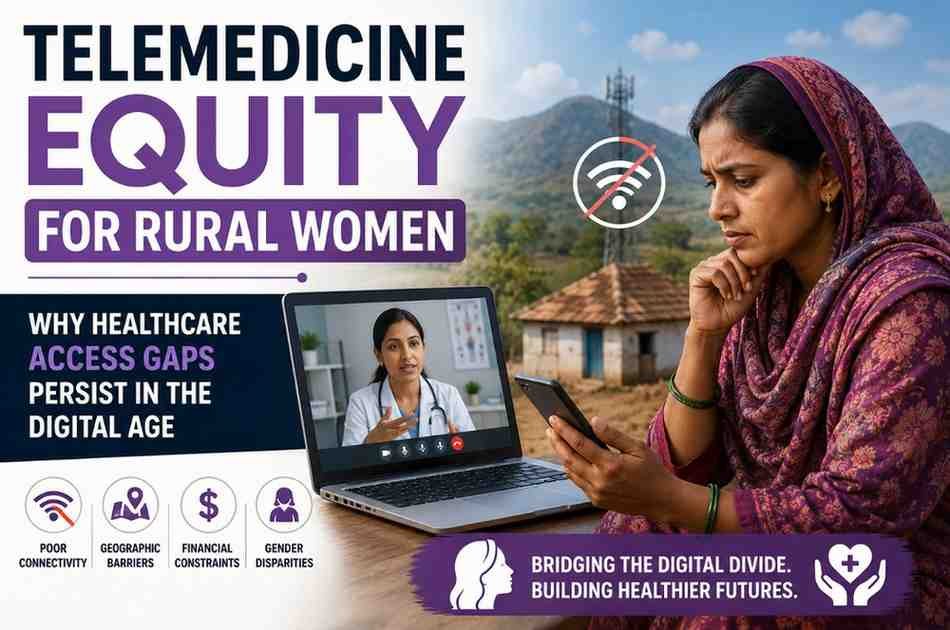
In the spring of 2020, Telemedicine did something it had never quite managed in three decades of incremental adoption: it became indispensable. Virtual visits surged by thousands of percent in a matter of weeks. Policymakers who had long stalled on reimbursement parity suddenly found the political will to act. Patients who had never spoken to a doctor through a screen became fluent in it within a month. The technology that Healthcare advocates had been quietly championing for years was, almost overnight, the only healthcare most people could access.
Now, six years on, the victory lap being taken by the digital health industry deserves a more searching examination. Telemedicine’s gains are real but they are not evenly distributed. The communities with the most to gain from a healthcare model that dissolves geographic barriers are, in many cases, the same communities that the digital infrastructure underpinning telemedicine has bypassed entirely. And at the sharpest intersection of geography, gender, and systemic neglect sits a patient population that healthcare policy has never quite known what to do with: rural women.
They are the most likely to live in a county without a single obstetrician. The most likely to face a mental health crisis with no provider within a 60-mile radius. The most likely to need reproductive or prenatal care and find neither a clinic nor a stable internet signal in their county. If telemedicine’s gains are to be truly equitable, this is where the work must concentrate not as a future aspiration, but as an immediate corrective to a system that has been celebrating access it has not yet delivered.
The Crisis Before the Crisis: What Rural Women’s Healthcare Actually Looks Like
To understand why telemedicine equity for rural women is so urgent, it helps to understand what the baseline looks like and it is not reassuring. According to the March of Dimes’ most recent national data, 35.1% of U.S. counties qualify as maternity care deserts: places with no birthing facility, no obstetrician, no gynecologist, and no certified nurse-midwife. Nearly two-thirds of those deserts fall in rural areas. Roughly one in ten people who give birth in the United States live in counties without full access to maternity care.The mortality numbers are the inevitable downstream consequence. Maternal mortality ratios in rural areas have historically run more than 50% higher than in large urban areas. A 2025 analysis found that over half of rural hospitals 52.4% no longer offer obstetric services at all, compared to 35.7% of urban hospitals. Rural residents are more than twice as likely to lack access to an OB/GYN. And that workforce gap is not recovering; it is widening.
Maternity care is only one dimension of the disparity. Rural women also face significantly higher barriers across:
- Mental health care: Rural counties are disproportionately affected by provider shortages in behavioral health. For postpartum depression, perinatal anxiety, and pregnancy-related mood disorders, the gap between need and available care in rural areas is acute and compounded by community-level stigma that makes asking for help harder.
- Reproductive health: Contraception, cancer screening, and gynecological care that urban women access routinely require, for many rural women, a half-day journey to a distant clinic if one exists at all.
- Chronic disease management: Rural women carry higher rates of hypertension, obesity, and diabetes all risk factors that worsen pregnancy outcomes and long-term health yet have substantially reduced access to the specialist management these conditions require.
- Domestic and intimate partner violence: Rural women experiencing intimate partner violence are nearly twice as likely to be turned away from services due to capacity constraints. They also face isolation that compounds both the danger and the difficulty of seeking help.
Telemedicine, in theory, addresses every single one of these gaps. In practice, getting from theory to delivery requires something rural communities have consistently been denied: reliable infrastructure.
The 40% Threshold: Why Broadband Is Not a Convenience Issue It Is a Survival Issue
The foundational prerequisite for telemedicine is connectivity. Not nominal connectivity not a signal that drops midway through a prenatal consultation but reliable, high-speed broadband that sustains a video call, transmits monitoring data in real time, and supports the secure platforms that clinical-grade healthcare requires. For millions of rural households, that connectivity simply does not exist.
Federal estimates put the number of Americans lacking high-speed internet access at somewhere between 21 and 42 million, with rural households disproportionately concentrated in that range. When rural households do have connectivity, they typically pay more for slower, less consistent service than their urban counterparts receive as a baseline. The American Medical Informatics Association urged recognition of broadband as a social determinant of health in 2017. Nearly a decade later, the infrastructure gap persists and the political will to close it has been episodic at best.
The research consequences of this gap are now quantified with precision. A 2025 study examining telehealth outcomes data across 42 countries identified what researchers called a critical threshold effect: below a 40–50% rural internet penetration rate, telehealth investments showed minimal measurable impact on preventive care outcomes. The finding is both clarifying and damning. You can build the most sophisticated digital health infrastructure in the world AI-assisted triage, remote fetal monitoring, telepsychiatry platforms but if the connection at the patient’s end cannot support a stable video call, the investment delivers nothing to the patient it was most meant to serve.
For rural women, the implications are direct and specific. Studies focused on maternal-fetal medicine found that 51% of providers cited patient internet access as the primary barrier to telehealth delivery. Remote pregnancy monitoring blood pressure cuffs, weekly glucose review, fetal movement tracking apps requires both a device and a connection that many rural patients do not have. Digital literacy adds another layer: navigating secure health portals, managing app-based monitoring tools, and troubleshooting connectivity problems are not evenly distributed skills, and rural women who are older, less formally educated, or more geographically isolated face steeper learning curves with less support.
The promise of telemedicine is that geography should not determine health outcomes. The reality, in 2026, is that it still does and for rural women, the gap between the promise and the reality is measured in lives.
Beyond Broadband: The Barriers That Are Specific to Rural Women and Almost Never Discussed
Reducing the telemedicine access problem for rural women to a broadband gap fixable with enough infrastructure investment misses a set of barriers that are just as real and considerably less frequently addressed. These are the barriers that most telehealth equity frameworks fail to name, and they are disproportionately borne by women.
The Domestic Safety Problem
Telemedicine assumes a private space. For women in controlling or abusive Relationships, that assumption is not a minor caveat it is the whole problem. Research on telehealth use among Domestic Violence survivors has identified three consistent thematic barriers: lack of Privacy from others at home; lack of safety from their abuser; and the pressure to manage competing demands during a consultation. In rural settings, where households often include multiple adults, where leaving home requires explanation, and where the nearest domestic violence resource is a significant distance away, the absence of a private space is not an inconvenience it is a safety risk. A telehealth platform that has not been designed with household safety dynamics in mind is not a safe platform for the women who need it most urgently.
The Trust and Cultural Dimension
In many rural communities particularly among Indigenous, Black, and Hispanic rural populations there is a layered and historically founded distrust of medical institutions. Structural racism, documented patterns of neglect, and a long record of institutional harm have given many rural women of color genuine reasons to approach centralised health systems with skepticism. Add data privacy concerns, and the reluctance to share sensitive health information through digital platforms becomes not only understandable but rational. Technically accessible is not the same as functionally trustworthy, and telehealth platforms that have not done the community-level relationship work to earn trust will find low uptake among the populations they were most designed to reach.
The Time and Caregiving Paradox
Telehealth is routinely marketed as more convenient than in-person care and for many patients, it is. But convenience is relative to context. Rural women who are primary caregivers managing children, elderly family members, or both, without the childcare infrastructure and support networks available to urban counterparts still need uninterrupted time, a private room, a working device, and a stable connection to conduct a healthcare consultation. None of these are guaranteed. The framing of telemedicine as inherently more convenient quietly assumes conditions of relative stability that the most underserved rural women frequently do not have.
| Healthcare Indicator | Rural Women | Urban Women |
|---|---|---|
| Maternal mortality ratio vs. large urban areas | 33–50% higher | Baseline reference |
| Counties classified as maternity care deserts | 35.1% of all U.S. counties; ~65% are rural | Significantly fewer |
| Rural hospitals without obstetric services | 52.4% | 35.7% |
| Likelihood of lacking an OB/GYN | More than 2x more likely | Baseline reference |
| Primary provider-reported barrier to maternal telehealth | Patient internet access (cited by 51% of providers) | Lower incidence |
| Broadband threshold for telehealth preventive impact | 40–50% rural internet penetration required before measurable outcomes occur | |
| Likelihood of being turned away from DV services | Nearly 2x more likely due to capacity constraints | Lower incidence |
| Telemedicine utilization rate | Lower rural, female, lower-income, and older patients all correlate with reduced use | Higher across all categories |
The Policy Gap: What Lawmakers Have Done and What They Have Left Undone
Telemedicine policy has moved unevenly, incrementally, and often only under the pressure of a public health emergency. The Consolidated Appropriations Act of 2026 extended several pandemic-era Medicare telehealth flexibilities through 2027, including the ability of Rural Health Clinics and Federally Qualified Health Centers to serve as distant-site providers for non-behavioral health visits. The Drug Enforcement Administration extended pandemic-related telehealth flexibilities for controlled substance prescribing through December 2026. These are real advances.
But real is not the same as sufficient. Reimbursement parity between telehealth and in-person visits the single most important structural incentive for rural providers to build telehealth programmes is still not universal across payers. Interstate medical licensing compacts, which allow providers to see patients across state lines without navigating each state’s individual licensing requirements, are not adopted everywhere. State-level telehealth parity laws are a patchwork, and the states with the weakest protections are, not coincidentally, often the states with the most maternity care deserts.
The deeper policy failure is one of design philosophy. Most federal and state telehealth equity frameworks are built around race and income as the primary axes of disparity analysis. These are legitimate and important lenses. But they are insufficient for rural women, whose disadvantage is produced by the intersection of gender, geography, digital infrastructure, cultural context, and physical isolation in ways that income-only or race-only frameworks do not capture. Without data that disaggregates telehealth access and outcomes specifically by gender and rurality simultaneously, the policy system cannot measure the gap it is supposed to close and what cannot be measured will not be managed.
What Working Models Prove Is Possible and Why They Have Not Been Scaled
The strongest rebuttal to fatalism about rural women’s telehealth access is the existence of programmes that have already proven the model works when it is designed with genuine understanding of who it is serving.
The MOTHeRS Project (Maternal Outreach Through Telehealth for Rural Sites), developed at Eastern Carolina University, built a multidisciplinary care model centred on maternal mental health for rural patients. By integrating telepsychiatry, screening, and care coordination into a single access point, and by training providers specifically in the cultural and logistical realities of the patient population, the programme demonstrated that the access gap is not inevitable it is a product of design choices that can be made differently.
New Mexico’s RMOMS network (Rural Maternity and Obstetrics Management Strategies) used a combination of telehealth and health information technology to expand obstetric access across five rural counties demonstrating that maternity care deserts can be partially remediated without waiting for brick-and-mortar solutions that the workforce shortage makes impossible to staff.
The Medical University of South Carolina’s Women’s Reproductive Behavioural Health Programme generated concrete evidence about what trauma-informed, privacy-respecting virtual care looks like in practice including how to maintain therapeutic relationships through a screen, how to design for household safety, and how to conduct sensitive reproductive health consultations in digital environments without creating new risks for the patient.
What all three share is an inconvenient characteristic for those hoping for a simple infrastructure fix: they were built from within the community context, not deployed upon it. They invested in trust before they invested in technology. They understood the social and structural landscape before they built the digital solution. That approach is more expensive in the short term and slower to scale than a universal platform rollout. It is also the only approach that actually works.
Five Things That Must Change for Telemedicine to Deliver on Its Equity Promise
The gap between telemedicine’s potential and its current reality for rural women is not primarily a technology problem. The technology exists. The gap is one of political will, resource allocation, and policy design. Closing it requires action on five specific fronts simultaneously, not sequentially.
1. Classify Broadband as Health Infrastructure and Fund It Accordingly
2. Make Reimbursement Parity Permanent, Not Provisional
Rural health providers cannot build financially sustainable telehealth programmes on the basis of flexibilities extended one or two years at a time. Permanent reimbursement parity across Medicare and Medicaid, and universal adoption of parity laws at the state level, are structural prerequisites for the investment that rural telehealth infrastructure requires.
3. Fund Telehealth-Specific Digital Literacy Programmes for Rural Women
Generic digital literacy does not translate to health platform navigation. Programmes embedded in trusted rural institutions libraries, community health centres, women’s health organisations that specifically train rural women in using telehealth tools, remote monitoring devices, and secure health portals are among the highest-return investments a rural health system can make. Community health workers trained as telehealth navigators are the human bridge between the technology and the patient.
4. Mandate Safety-Informed Platform Design
Healthcare technology platforms need to build domestic safety features as standard, not afterthought. Quick-exit protocols, discreet session management, provider training in virtual safety screening, and guidance for patients on conducting consultations safely these are not difficult to implement. They require the industry to acknowledge that not every patient is sitting safely and privately at a kitchen table, and to design accordingly.
5. Require Gender-by-Rurality Disaggregation in Telehealth Equity Reporting
Federal and state telehealth equity metrics must track the intersection of gender and geography explicitly. Without data that measures how rural women specifically are accessing and experiencing telehealth across maternal, mental, reproductive, and chronic disease care, the system cannot identify where gaps remain or whether interventions are working. The policy cannot outrun the measurement.
Conclusion: The Test of Equity Is Not Who Benefits It Is Who Still Does Not
The true measure of whether telemedicine constitutes a genuine healthcare revolution is not how many total consultations it enables or how much it has improved access for the already-well-served. The true measure is whether it reaches the people and places that the pre-digital healthcare system most completely failed.
By that measure, the work is largely unfinished. Rural women managing pregnancies in counties with no obstetrician, navigating postpartum depression with no mental health provider within driving distance, seeking reproductive care in states where the nearest clinic is two hours away and the broadband cuts out before the video call connects remain the clearest evidence that digital health’s gains have been real but not universal.
The path forward is not mysterious. The evidence base is solid. The working models exist. The policy levers are identifiable. What has been missing is the recognition that rural women’s health is not a niche concern it is the test case for whether healthcare equity means anything at all.
A technology that works beautifully for the already-connected is an upgrade. A technology that reaches into the maternity desert, the mental health void, the domestic danger zone, and the digital blackout and delivers clinical-grade care anyway is a revolution. We have the former. We are still building toward the latter. And the women waiting for it to arrive cannot afford to wait much longer.
For breaking news and live news updates, like us on Facebook or follow us on Twitter and Instagram. Read more on Latest Health on thefoxdaily.com.






COMMENTS 0