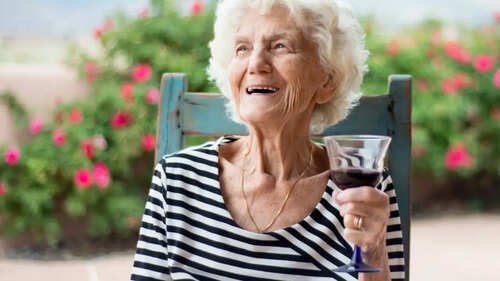
Could living more like a 90-year-old Italian improve your health in just one month? A 39-year-old British writer put the idea to the test by temporarily trading her sedentary routine for the slower, more active lifestyle of a mountain village in Liguria, Italy.
Instead of structured gym sessions and convenience foods, her month involved walking steep cobbled streets, climbing hills, eating mostly simple home-cooked food and becoming part of the local community. By the time she returned to the UK, she had lost 1.6 kg, reduced her waist circumference by more than two inches and noticed a clear improvement in her stamina. Her cholesterol, however, increased slightly.
The experiment was not a clinical trial, and it cannot prove that the Ligurian lifestyle causes longer life. But it offers an interesting real-world look at several habits that researchers have repeatedly associated with healthier ageing: regular everyday movement, minimally processed foods and strong social connections.
What Is The Italian Longevity Lifestyle?
The phrase “Italian Longevity Lifestyle” can sound like another wellness trend, but the habits described in the Ligurian experiment were remarkably ordinary.
The writer, Rosie Taylor, spent a month in a mountain village in Liguria with her husband and six-year-old son. Before leaving the UK, she recorded measurements including weight, waist circumference, BMI, blood pressure and cholesterol, while also tracking activity with a smartwatch. She then repeated the health checks after returning home.
Her goal was not to follow a strict diet or undertake an extreme fitness challenge. Instead, she tried to live in a way that resembled the daily routines of older residents in the village.
That meant walking more, eating fresh and seasonal foods, spending time outdoors and participating in community activities.
More Walking Without A Traditional Workout
One of the biggest differences was movement.
In the Ligurian village, narrow and steep streets made walking a natural part of everyday life. Getting groceries, visiting neighbours or moving around the village often meant navigating hills and stairs rather than driving.
During the experiment, the writer averaged about 8,000 steps a day, approximately 2,000 more than she typically achieved in her UK routine. She also climbed the equivalent of around 40 flights of stairs each day.
The physical challenge was initially difficult. But after a couple of weeks, she reported being able to walk uphill while carrying shopping with considerably less difficulty.
This illustrates an important distinction between exercise and physical activity. Health-promoting movement does not necessarily have to happen during a formal gym session. Walking for transportation, climbing stairs, gardening and carrying groceries can all contribute to daily energy expenditure and physical fitness.
Why Everyday Movement May Matter For Healthy Ageing
The Ligurian experience is consistent with a broader body of research linking regular physical activity with healthier ageing.
Importantly, this does not mean that walking 8,000 steps or climbing 40 flights of stairs guarantees longevity. The experiment involved one person for only one month.
Instead, the more useful takeaway is the idea of making movement part of normal life.
For someone who spends most of the day sitting, replacing a short car journey with walking, taking stairs instead of lifts or adding brief periods of movement throughout the day may be more sustainable than relying exclusively on intense workouts.
The Mediterranean-Style Food Pattern
Food was another major part of the Ligurian lifestyle.
The writer described a diet centred around vegetables, beans, olive oil and seasonal ingredients, with meat eaten less frequently. Meals were generally prepared at home, and foods such as pasta and pizza were made with relatively simple ingredients rather than heavily processed convenience products.
This pattern overlaps with characteristics of the Mediterranean diet, which typically emphasises vegetables, fruits, legumes, whole grains, nuts, olive oil and other minimally processed foods, with moderate amounts of fish, dairy and meat depending on the specific dietary pattern.
The key lesson is not that pasta or olive oil is a magic longevity food. Rather, the overall dietary pattern matters more than any individual ingredient.
Fresh Food Does Not Automatically Mean Perfect Health
The experiment also provides an important reminder against turning the Mediterranean diet into a simplistic health narrative.
After returning to the UK, the writer’s total cholesterol had increased slightly. Her LDL cholesterol also rose. According to the report, the longevity expert who reviewed her results suggested that changes in dietary fat intake and increased alcohol consumption during the summer could have contributed.
This is significant because a diet containing foods commonly associated with healthy Mediterranean eating is not automatically beneficial in every quantity or combination. Olive oil, cheese, wine and other calorie-dense foods can still contribute substantial energy, and alcohol is not required for the health benefits associated with a Mediterranean dietary pattern.
Individual health markers can also fluctuate for many reasons, meaning one month’s measurements should not be interpreted as proof that a particular food caused a change.
The Most Underrated Part Of The Lifestyle: Social Connection
Perhaps the most interesting part of the experiment was not food or exercise at all.
It was community.
Within days of arriving in Liguria, the writer was invited to a local street gathering where neighbours brought homemade food and ate together. She also participated in concerts, talks and other community activities.
Older residents remained active participants in village life rather than becoming isolated from younger generations.
This aspect of healthy ageing is increasingly recognised as important. Social isolation and loneliness have been associated with poorer health outcomes, while meaningful social relationships can support emotional wellbeing and engagement with daily life.
What The Writer’s Health Results Showed
After a month in Liguria, the changes were measurable but mixed.
- Weight: She lost approximately 1.6 kg.
- Waist circumference: Her waist became more than two inches smaller.
- BMI: Her BMI decreased.
- Fitness: She reported noticeably improved stamina and greater ease walking uphill.
- Blood pressure: It remained broadly unchanged.
- Resting heart rate: It also remained unchanged.
- Cholesterol: Total cholesterol increased slightly.
The changes demonstrate why health cannot be reduced to a single number on a weighing scale.
Improved physical fitness and a smaller waist can represent meaningful changes, even when every laboratory measurement does not move in the same direction.
Does Living Like An Italian Really Make You Live Longer?
Not necessarily—and the experiment does not prove it.
One person living differently for one month cannot establish whether the lifestyle will extend lifespan. Longevity is influenced by a complex combination of genetics, socioeconomic conditions, healthcare access, environment, physical activity, diet, smoking, alcohol consumption, social relationships and many other factors.
Even within Italy, people do not all follow the same lifestyle. Liguria is also different from Sardinia, another Italian region that has received considerable attention for longevity research.
It would therefore be misleading to describe one village lifestyle as a universal “secret” to living to 90 or beyond.
What Can Be Borrowed From The Ligurian Lifestyle?
The most useful lesson may be that healthy living does not always require an elaborate wellness programme.
Several elements of the experiment can be adapted to ordinary urban life:
- Walk for short journeys: Replace some car or public-transport trips with walking when practical and safe.
- Build movement into daily routines: Take stairs, walk while speaking on the phone or perform household tasks instead of remaining seated.
- Cook more often: Base meals around vegetables, legumes, whole grains and other minimally processed ingredients.
- Eat more seasonal foods: Seasonal produce can make a simple diet more varied without relying heavily on packaged foods.
- Make meals social: Eating with family or friends can turn food into an opportunity for connection rather than simply fuel.
- Spend time outdoors: Regular outdoor activity can combine movement, daylight and social interaction.
- Stay connected: Community participation and meaningful relationships are important components of overall wellbeing.
You Do Not Need To Move To Italy
The writer herself concluded that some aspects of the Ligurian lifestyle could be incorporated into life back in the UK.
That may be the most realistic interpretation of the experiment. You do not need a mountain village, centuries-old cobbled streets or a Mediterranean climate to become more physically active or socially connected.
A person living in a city could walk to a nearby shop, take the stairs, prepare more meals at home, visit friends, participate in a local group or spend more time outdoors.
The surroundings may change, but the underlying behaviours can be similar.
Why The “Slow Living” Element May Matter
Modern lifestyles often separate exercise, food and socialising into scheduled activities. A person may spend eight hours sitting at work, drive home, exercise for 30 minutes and then spend the rest of the evening sitting again.
The Ligurian lifestyle described in the experiment works differently. Movement is incorporated into transportation and household tasks. Food is prepared and eaten socially. Community activities create reasons to leave the house. Outdoor environments naturally encourage walking.
This kind of lifestyle may make healthy behaviours less dependent on motivation.
Instead of asking, “When will I find time to exercise?” the environment creates opportunities to move throughout the day.
The Alcohol Reminder Is Important
The experiment also contains a useful caution about romanticising traditional lifestyles.
The writer reported drinking more alcohol during the summer and did not always follow the traditional pattern of consuming wine only with meals. Her LDL cholesterol increased, and the expert who reviewed her results suggested the change in alcohol consumption may have contributed.
That is an important distinction when discussing Mediterranean-style living. The potential health benefits of Mediterranean dietary patterns should not be interpreted as evidence that drinking alcohol is necessary or beneficial for longevity.
Key Takeaways From The Italian Longevity Experiment
- A 39-year-old British writer spent one month living in a mountain village in Liguria.
- She increased her everyday walking to about 8,000 steps per day.
- She climbed the equivalent of around 40 flights of stairs daily.
- Her diet emphasised vegetables, beans, olive oil and seasonal, home-cooked foods.
- She participated more actively in community life and social gatherings.
- She lost approximately 1.6 kg and more than two inches from her waist.
- She reported noticeably improved stamina after returning home.
- Her cholesterol increased slightly, demonstrating that the health effects were not uniformly positive.
- The experiment involved one person and lasted only one month, so it cannot establish a causal effect on longevity.
Bottom Line
The Italian longevity lifestyle may offer a useful lesson, but not because Liguria has a secret formula for living longer. The more transferable idea is to make healthy behaviours part of ordinary life: walk more, eat mostly minimally processed foods, spend time outdoors and remain socially connected.
The 39-year-old writer’s month-long experiment was followed by weight loss, a smaller waist and improved stamina, although her cholesterol also increased slightly. Those mixed results are a reminder that individual experiences are not scientific proof.
Rather than trying to copy every habit of a 90-year-old Italian, the practical takeaway is simpler: build more movement, nutritious food and meaningful social interaction into everyday life. These habits may be far more sustainable than chasing the latest longevity supplement or extreme fitness trend.
For breaking news and live news updates, like us on Facebook or follow us on Twitter and Instagram. Read more on Latest Lifestyle on thefoxdaily.com.


COMMENTS 0