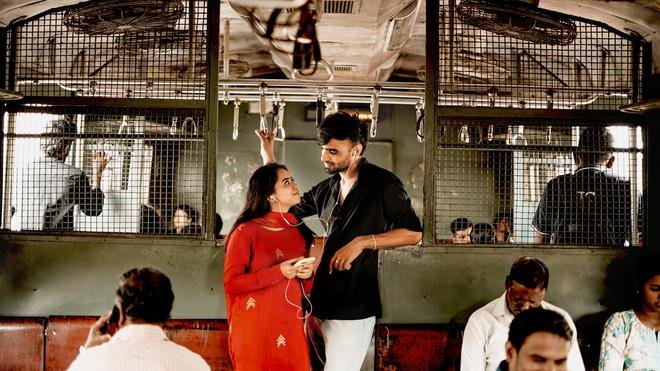
There is a particular kind of romance that belongs to railway stations. It is not the romance of sunsets or carefully chosen restaurants. It happens between announcements, beneath station clocks, beside crowded platforms and in those strange minutes when a train is late and two people suddenly have more time together than they expected.
For generations of Chennai residents, railway stations have been accidental meeting places for love. They are where somebody arrives after a long journey, where somebody else waits anxiously, where a relationship begins with a shared commute, and where a goodbye can feel much larger than the few minutes available before a train leaves.
That makes the railway station dating culture in Chennai an unusual part of the city’s romantic geography. Unlike a beach or café, a station is designed for movement. Yet lovers often experience it as a place where time temporarily stops.
Everyone else is rushing. You are waiting for one person.
Why railway stations have always been romantic
The emotional power of railway stations comes from a simple contradiction: they are public spaces built around private moments.
Hundreds or thousands of people may pass through the same platform every day, each carrying a different destination, schedule and reason for travelling. Amid that movement, two people can become completely absorbed in one another.
This creates an unusual sense of privacy without physical isolation.
A couple does not need an empty platform. They only need a few minutes when the rest of the station becomes background noise.
That is one reason railway stations have appeared so often in Indian popular culture. Trains represent journeys, distance, migration, separation and return. A station therefore carries emotional meaning before anything romantic happens there.
In Chennai, that symbolism is amplified by the city’s dependence on suburban rail, long-distance trains and the extensive movement of students, workers and families between the city and surrounding regions.
Chennai’s stations are stages for different kinds of love
Not every railway station creates the same emotional atmosphere.
A major terminus can feel overwhelming, crowded and cinematic. A suburban station may become meaningful because two people use it every day. A smaller station can become memorable simply because somebody waited there for someone who was late.
The romance is therefore not necessarily attached to the architecture of the station. It is attached to repetition.
When two people meet on the same platform every morning, the station gradually becomes part of their relationship. The familiar tea stall, staircase, footbridge or platform sign becomes a shared reference point.
Eventually, a place designed for transit becomes part of someone’s personal history.
Central Station: where departures become memories
Chennai Central has an emotional scale that matches its importance to the city.
For countless travellers, it represents arrival and departure. Friends wait for one another. Families gather. Students leave for another city. Workers return home. Someone boards a train for a new chapter, while someone else remains behind.
That makes Central especially powerful as a setting for parting.
A goodbye at a railway station is different from a goodbye at a café because the timetable imposes a deadline. There is a literal moment when the conversation must end.
The announcement comes. The train arrives. Bags are lifted. People move towards the doors.
Suddenly, a conversation that might have continued for another hour has only a few minutes left.
That scarcity can make ordinary words feel important.
Egmore: the softer romance of arrival and departure
Chennai Egmore carries its own historical character and serves as another important railway gateway for the city.
Its heritage architecture gives the experience a different visual quality from the contemporary infrastructure surrounding newer transport spaces.
For couples, stations such as Egmore can become meaningful because of the journeys associated with them. A person may remember the first time they travelled together, the first reunion after months apart or the final goodbye before one person moved away.
The station itself may not have been the reason for the memory. But it becomes inseparable from it.
Suburban trains: where everyday romance begins
If major railway stations represent dramatic moments, Chennai’s suburban trains represent something quieter: routine romance.
For students and young professionals, a daily commute can provide repeated opportunities to see the same person. Familiarity develops gradually. A shared platform becomes a meeting point. A conversation that begins casually continues over several days.
This kind of romance is fundamentally different from a planned date.
There is no reservation, no special outfit, no carefully chosen restaurant and often no formal invitation. There is simply the daily rhythm of travelling through the city.
That makes suburban rail an important part of Chennai’s social geography. Public transport does not merely move people; it creates repeated encounters between people who might otherwise never meet.
The platform as an “otherworld”
The idea of a railway station as an otherworld comes from its strange relationship with time.
Inside the station, ordinary routines become temporarily suspended.
You are technically on your way somewhere, but until the train arrives, you are neither here nor there. You wait between departure and arrival, between one part of the day and another.
For two people, that in-between state can become emotionally significant.
They might talk about plans they have never discussed elsewhere. They might finally acknowledge a relationship that had remained undefined. Or they might simply sit together and watch trains pass without needing to say much.
The station becomes a threshold—not just between places, but between different stages of life.
Why waiting can feel more romantic than arriving
Modern life rarely gives people permission to wait.
Phones fill empty minutes. Notifications interrupt conversations. Navigation apps remove uncertainty. Online messaging means that people can communicate instantly across enormous distances.
Railway stations preserve an older form of waiting.
You cannot make the train arrive by refreshing an app. You cannot skip the platform. You have to remain there.
For a couple, this forced pause can be surprisingly valuable.
Waiting creates unstructured time. And unstructured time allows conversations to wander.
That may be one reason railway memories often feel more vivid than memories of highly planned dates. Nothing was necessarily supposed to happen. Something simply did.
When the station becomes a place of goodbye
Romantic stories about railway stations often focus on reunions. But departures can be just as important.
In a city where people regularly move for education, employment and family reasons, distance can become part of relationships.
A train leaving Chennai can represent a new job, university admission, family relocation or another major life transition. The person staying behind may not know when the next meeting will happen.
The platform therefore becomes a place where relationships confront practical reality.
Love is no longer only about affection. It is also about distance, schedules, communication and uncertainty.
That is what makes the railway station such a powerful romantic setting: it forces emotions to interact with real life.
From handwritten letters to WhatsApp messages
The technology of railway romance has changed dramatically.
Earlier generations relied on letters, postcards, landline calls and carefully timed meetings. Later came SMS, social media and instant messaging. Today, someone can remain connected to a partner throughout an entire journey through video calls and messages.
Yet the station remains important because digital communication cannot completely replace physical presence.
A message saying “I miss you” is not the same as standing on a platform watching someone board a train.
The physical farewell has a beginning and an end. It is embodied, public and irreversible in that particular moment.
Technology can document the journey, but it cannot entirely reproduce the feeling of watching the train leave.
A comparison: beach romance versus railway romance
| Feature | Beach romance | Railway-station romance |
|---|---|---|
| Core emotion | Leisure and togetherness | Waiting, anticipation and separation |
| Sense of time | Open-ended | Controlled by schedules |
| Typical setting | Walks, food and conversation | Platforms, arrivals and departures |
| Symbolism | Continuity and openness | Journey and transition |
| Most memorable moment | Watching the sea together | Meeting or saying goodbye |
The comparison reveals why railway romance deserves its own category.
A beach encourages people to stay. A station reminds them that they eventually have to leave.
That deadline gives railway encounters an emotional intensity that a leisurely date may not have.
The overlooked romance of the ordinary commute
There is another story hidden behind the dramatic platform farewell: the ordinary commute.
Most relationships do not begin with cinematic music and a perfectly timed train. They develop through repetition.
Seeing someone regularly creates familiarity. Familiarity creates recognition. Recognition creates conversation. Conversation can eventually become friendship, and friendship may become something more.
The suburban railway network therefore functions as a kind of accidental social infrastructure.
This is an important part of Chennai’s romantic geography that deserves more attention. The city’s love stories are not created only in destinations people deliberately choose for dates. Some begin in spaces people use because they simply need to get somewhere.
The etiquette of romance in a public station
Because railway stations are public and busy, romance there comes with boundaries.
Passengers have places to be. Staff are working. Families and elderly travellers share the space. Platforms and railway infrastructure also involve genuine safety risks.
A romantic moment should never interfere with passenger movement, restricted areas or railway operations. Couples should remain attentive to announcements, platform edges and crowd conditions.
There is also a broader principle worth remembering: public romance should remain respectful of the people around you.
The beauty of a railway station is that it allows private emotion to exist within a shared public environment. That balance works only when everyone gets to use the space comfortably.
Why railway stations may become even more romantic in the future
As Chennai’s transport networks expand and mobility becomes an even larger part of metropolitan life, stations are likely to become increasingly important social spaces.
New transport links will change how people move across the city. More people will meet across neighbourhoods that were previously difficult to access. Long-distance relationships may become easier to maintain because travel itself becomes more convenient.
Yet the emotional role of stations is unlikely to disappear.
If anything, the contrast between instant digital communication and physical journeys may make railway encounters more meaningful. When people can speak to one another at any time, choosing to travel to meet someone carries a different kind of significance.
The prediction is simple: Chennai’s stations will continue to produce romantic memories, but the stories may change from traditional waiting and handwritten messages to reunions shaped by migration, education, work and increasingly connected lives.
The station remembers what the city forgets
A railway station is designed to keep people moving. That is its purpose.
But for the people who fall in love there, it often does the opposite.
It preserves a particular morning when someone arrived early. It remembers the platform where two people first met. It becomes associated with a train that carried someone away. A station clock can become a marker of the last five minutes before goodbye.
None of these things are officially recorded in the history of Chennai’s railway infrastructure.
Yet they form another kind of urban history—the personal history of ordinary people.
Where Chennai falls in love between arrivals and departures
Perhaps that is why railway stations occupy such a peculiar place in the city’s romantic imagination.
They are not designed for romance. They are designed for movement. They are noisy, crowded, practical and relentlessly punctual.
And still, people fall in love there.
They meet between platforms. They share journeys. They wait for delayed trains. They exchange hurried words before departure. They watch someone disappear through a carriage door and promise to meet again.
Sometimes the promise survives the journey. Sometimes it does not.
But the station remains.
In a city constantly moving forward, railway platforms offer one of the few places where a person can stand still long enough to realise what—or whom—they are about to leave behind.
That is the old, enduring romance of Chennai’s railway stations: everyone is in a hurry to get somewhere, but for a few minutes, you are simply waiting for yours.
For breaking news and live news updates, like us on Facebook or follow us on Twitter and Instagram. Read more on Latest Lifestyle on thefoxdaily.com.

COMMENTS 0