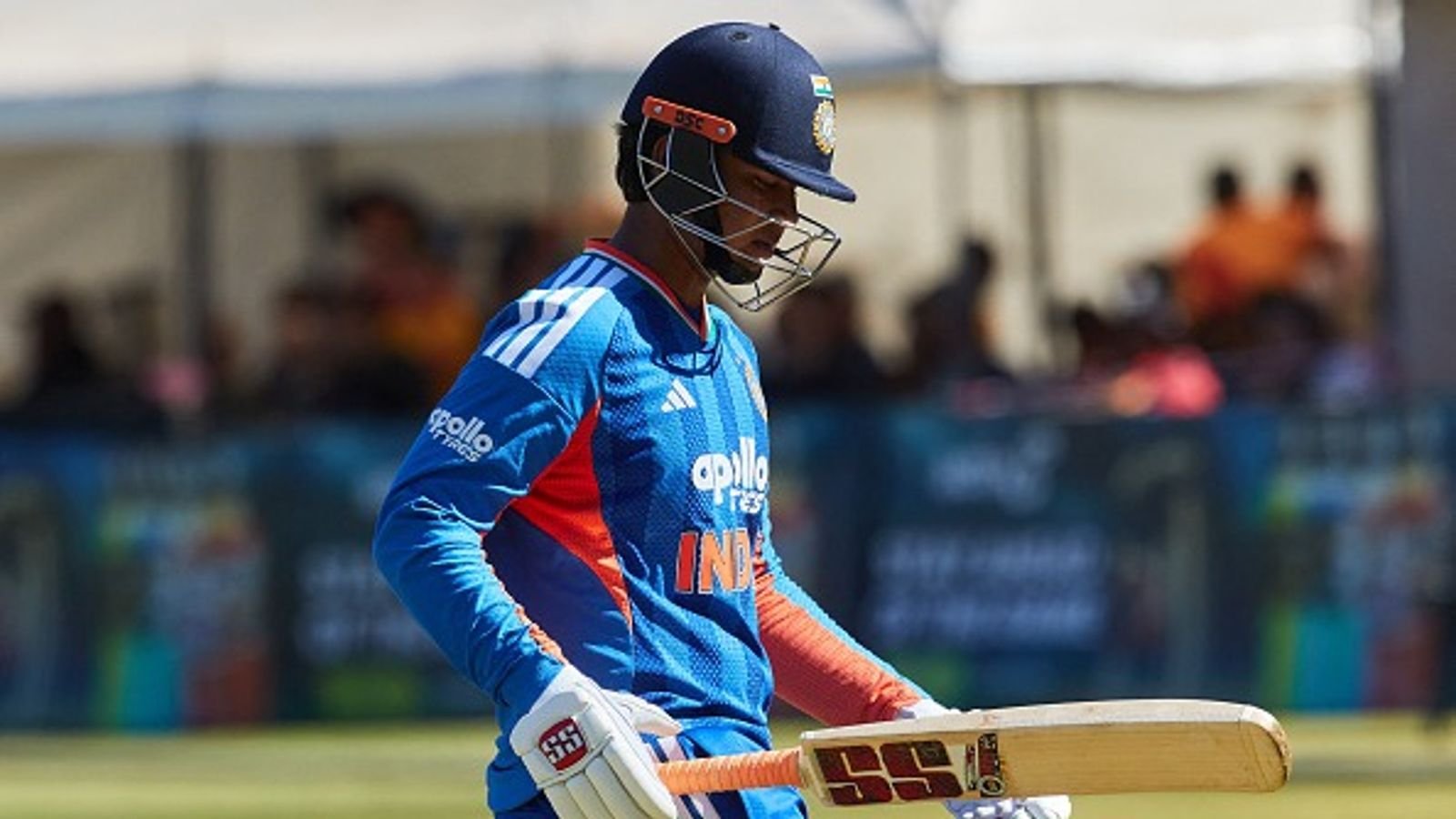
BCCI Asian Games 2026 plans could change significantly after concerns emerged over the facilities being prepared for cricket at the Aichi-Nagoya Games. India are the defending champions in men’s cricket, but doubts over player amenities and venue arrangements could lead the board to consider second-string squads.
The Asian Games cricket competitions are scheduled for September and October, with the women’s event planned from September 17 to 22 and the men’s competition from September 24 to October 3. The BCCI is expected to send an official representative to Japan to assess the arrangements before deciding whether India’s leading international players should travel.
The concerns reportedly include temporary tent-based dressing rooms, washroom facilities located around 500 metres from those areas and small hotel rooms. The BCCI and Asian Cricket Council have reportedly raised these issues with officials involved in the Games.
The final decision could therefore have implications beyond squad selection. It could affect India’s title defence, the opportunities available to younger players and the overall competitive balance of the cricket tournament.
Why is the BCCI considering a second-string team?
The central issue is not simply the standard of the cricket ground. Player facilities and accommodation are also crucial when an international team is expected to participate in a major multi-sport event.
According to the report, concerns were raised about dressing rooms being arranged in tents, with toilets reportedly situated roughly 500 metres away. Hotel room sizes have also been identified as a concern.
These arrangements have prompted the BCCI to seek an independent assessment before committing its first-choice players.
The logic is straightforward. If the facilities are considered unsuitable for India’s leading international cricketers, the board could decide that sending a developmental or second-string squad is a more practical option.
That would allow India to participate in the Asian Games while reducing the exposure of established players to facilities the board considers inadequate.
What will the BCCI observer check?
The BCCI’s representative is expected to provide decision-makers with a ground-level assessment of the arrangements in Japan.
Although the final inspection criteria have not been publicly detailed, several areas are likely to matter when evaluating whether an international cricket squad can operate comfortably and professionally.
- Cricket venue: The quality and readiness of the playing surface and surrounding match facilities.
- Dressing rooms: Whether players and support staff have suitable spaces before, during and after matches.
- Medical facilities: The accessibility and readiness of appropriate medical and recovery support.
- Restroom access: Whether essential facilities are conveniently located for players.
- Accommodation: Hotel room size, privacy, rest and general living conditions.
- Training arrangements: Whether teams have suitable spaces and facilities for preparation.
- Logistics: Travel time and movement between accommodation, training areas and the venue.
The report from the observer could become the most important factor in determining the strength of India’s final squad.
India are defending Asian Games champions
A second-string squad would be particularly notable because India enter the 2026 Asian Games as the defending men’s cricket champions.
At the 2023 Asian Games in Hangzhou, India won the men’s gold medal after the final against Afghanistan was abandoned because of rain. India were awarded the title because of their higher seeding.
India’s success in Hangzhou established them as the team to beat in the next edition.
That makes the current facilities controversy more significant. The BCCI must balance the prestige of defending a gold medal with its responsibility toward player welfare and professional standards.
India originally selected a star-studded men’s squad
The uncertainty is even more striking because India had initially named a powerful T20I squad for the Asian Games.
The group included experienced international players such as Jasprit Bumrah and Shreyas Iyer, along with a number of established T20 performers and exciting young talents.
The planned squad also included players capable of making a major impact in a short tournament, including Abhishek Sharma, Tilak Varma, Sanju Samson, Axar Patel and Arshdeep Singh.
Vaibhav Sooryavanshi’s inclusion also attracted attention because of his status as one of India’s highly regarded young batting talents.
| Player | Role |
|---|---|
| Shreyas Iyer | Captain |
| Tilak Varma | Vice-captain |
| Sanju Samson | Wicketkeeper-batter |
| Ishan Kishan | Wicketkeeper-batter |
| Abhishek Sharma | All-round batting option |
| Axar Patel | All-rounder |
| Jasprit Bumrah | Fast bowler |
| Arshdeep Singh | Fast bowler |
| Vaibhav Sooryavanshi | Young batting option |
The possibility of replacing this group with a second-string team would represent a substantial change in India’s original approach.
Full India men’s squad announced for the Asian Games
The originally selected men’s T20I squad is led by Shreyas Iyer and includes a blend of experienced players, established T20 performers and younger prospects.
- Shreyas Iyer – Captain
- Sanju Samson – Wicketkeeper
- Abhishek Sharma
- Ishan Kishan – Wicketkeeper
- Shivam Dube
- Tilak Varma – Vice-captain
- Axar Patel
- Washington Sundar
- Nitish Kumar Reddy
- Varun Chakravarthy
- Ravi Bishnoi
- Harshit Rana
- Arshdeep Singh
- Vaibhav Sooryavanshi
- Jasprit Bumrah
What would a second-string India team mean?
If the BCCI ultimately decides against sending the first-choice group, the Asian Games could become a valuable development opportunity for India’s emerging players.
A second-string side would still represent India, but the composition could shift toward players outside the initial senior squad and younger cricketers seeking international exposure.
That could create opportunities for players who are already performing strongly in domestic cricket or are on the fringes of India’s T20 setup.
However, there is a trade-off.
Sending a weaker team could reduce India’s chances of defending the gold medal. It could also affect the competitive profile of the tournament, especially if other participating nations field their strongest available squads.
Comparison: first-choice squad vs second-string strategy
| Factor | First-choice squad | Second-string squad |
|---|---|---|
| Gold-medal prospects | Likely stronger on paper | Potentially reduced |
| Player development | Limited opportunities for fringe players | Greater exposure for emerging talent |
| Player welfare | Senior players exposed to disputed facilities | Top players could remain at home |
| International experience | Established players gain more tournament exposure | Younger players receive valuable experience |
| Title defence | Stronger commitment to defending gold | Greater emphasis on development |
The table illustrates why the BCCI’s decision is more complicated than simply choosing between a strong and weak team.
India’s women’s squad is also packed with experience
The facilities issue could also have implications for India’s women’s cricket team because the women’s tournament is scheduled before the men’s competition.
India had named a strong women’s squad featuring several established international players.
- Harmanpreet Kaur – Captain
- Smriti Mandhana – Vice-captain
- Shafali Verma
- Jemimah Rodrigues
- Deepti Sharma
- Richa Ghosh – Wicketkeeper
- G. Kamalini – Wicketkeeper
- Bharti Fulmali
- Sree Charani
- Renuka Thakur
- Kranti Gaud
- Arundhati Reddy
- Shreyanka Patil
- Radha Yadav
- Nandni Sharma
Any change in the approach to the men’s squad could therefore prompt broader questions about how India intends to manage its cricket contingent across the Asian Games.
Why player facilities matter at a multi-sport event
Cricket teams competing at international level spend long periods at venues and hotels during tournaments. Facilities are not simply a matter of comfort; they can influence preparation, recovery and daily routines.
For a professional athlete, access to appropriate changing areas, medical support, training facilities and adequate accommodation forms part of the overall competition environment.
This becomes particularly important in a multi-sport event because cricket is being staged alongside numerous other disciplines, all competing for organizational resources.
The BCCI’s reported concerns therefore reflect a broader question: can the host arrangements meet the standards expected by a full-strength international cricket team?
The Asian Games schedule leaves little room for delay
Timing is another important part of the equation.
The women’s cricket tournament is scheduled from September 17 to 22, while the men’s competition is planned from September 24 to October 3.
With the Games approaching, the BCCI cannot leave the squad question unresolved indefinitely.
The inspection therefore needs to provide administrators with enough information to make a decision about travel, player selection, preparation and logistics.
Could the decision benefit India’s next generation?
If India sends a second-string squad, the move could unexpectedly create a major opportunity for emerging cricketers.
Young players would receive experience in an international multi-sport environment and could be exposed to pressure situations that domestic cricket cannot completely replicate.
It could also strengthen India’s player pool ahead of future T20 competitions.
The potential presence of young players such as Vaibhav Sooryavanshi in the original squad already indicates that the BCCI sees the Asian Games as more than simply a senior tournament.
A second-string selection could take that developmental approach even further.
The biggest risk: India could weaken its title defence
The obvious downside is competitive.
India won gold in Hangzhou and would normally be expected to defend that title with a strong squad. Replacing established internationals with less experienced players could make the tournament less predictable from India’s perspective.
There is also a psychological dimension. A team representing India at a major multi-sport event carries expectations regardless of its selection strength.
A young squad could therefore find itself under pressure to deliver results while simultaneously gaining experience.
That is not necessarily a bad thing, but it would require careful squad planning and strong leadership.
Unique insight: the facilities decision could reshape India’s tournament philosophy
The most interesting aspect of the current situation is that the BCCI may have to choose between two different philosophies.
The first is medal maximization: send the strongest possible squad and prioritize defending India’s Asian Games title.
The second is player development: use the tournament to give emerging cricketers international exposure while keeping India’s established stars available for other commitments.
The facilities concerns could push India toward the second model even if that was not the original intention.
In that sense, the final squad could reveal more than the BCCI’s opinion of the Japanese arrangements. It could also indicate how Indian Cricket views the role of the Asian Games within its increasingly crowded international calendar.
What happens next?
The immediate next step is the BCCI inspection.
The observer’s assessment will help determine whether the reported concerns can be addressed satisfactorily. If the facilities meet the board’s requirements, India could continue with its original squad strategy.
If significant issues remain, a second-string squad becomes a realistic alternative.
The decision will likely involve several competing considerations, including player welfare, tournament prestige, international commitments, squad depth and India’s desire to defend its Asian Games title.
Conclusion
BCCI Asian Games 2026 plans are now under scrutiny after concerns over facilities in Japan raised the possibility of India sending second-string cricket teams.
The BCCI is expected to assess the arrangements before making a final decision. Reported concerns include tent-based dressing rooms, restroom facilities located around 500 metres away and cramped hotel rooms.
India originally selected strong men’s and women’s squads, with major names such as Shreyas Iyer, Jasprit Bumrah, Harmanpreet Kaur and Smriti Mandhana included.
However, if the facilities are deemed unsuitable, the board could prioritize player welfare and use the Asian Games as an opportunity to expose emerging talent to international cricket.
That would come with a sporting cost: India could enter the competition with reduced experience while attempting to defend the men’s gold medal won at the 2023 Asian Games.
The final decision will ultimately depend on the inspection report. Until then, India’s Asian Games campaign remains a moving target, with the quality of the arrangements in Japan potentially determining whether the defending champions arrive with their biggest stars or a new generation ready to make its mark.
For breaking news and live news updates, like us on Facebook or follow us on Twitter and Instagram. Read more on Latest Cricket on thefoxdaily.com.






COMMENTS 0