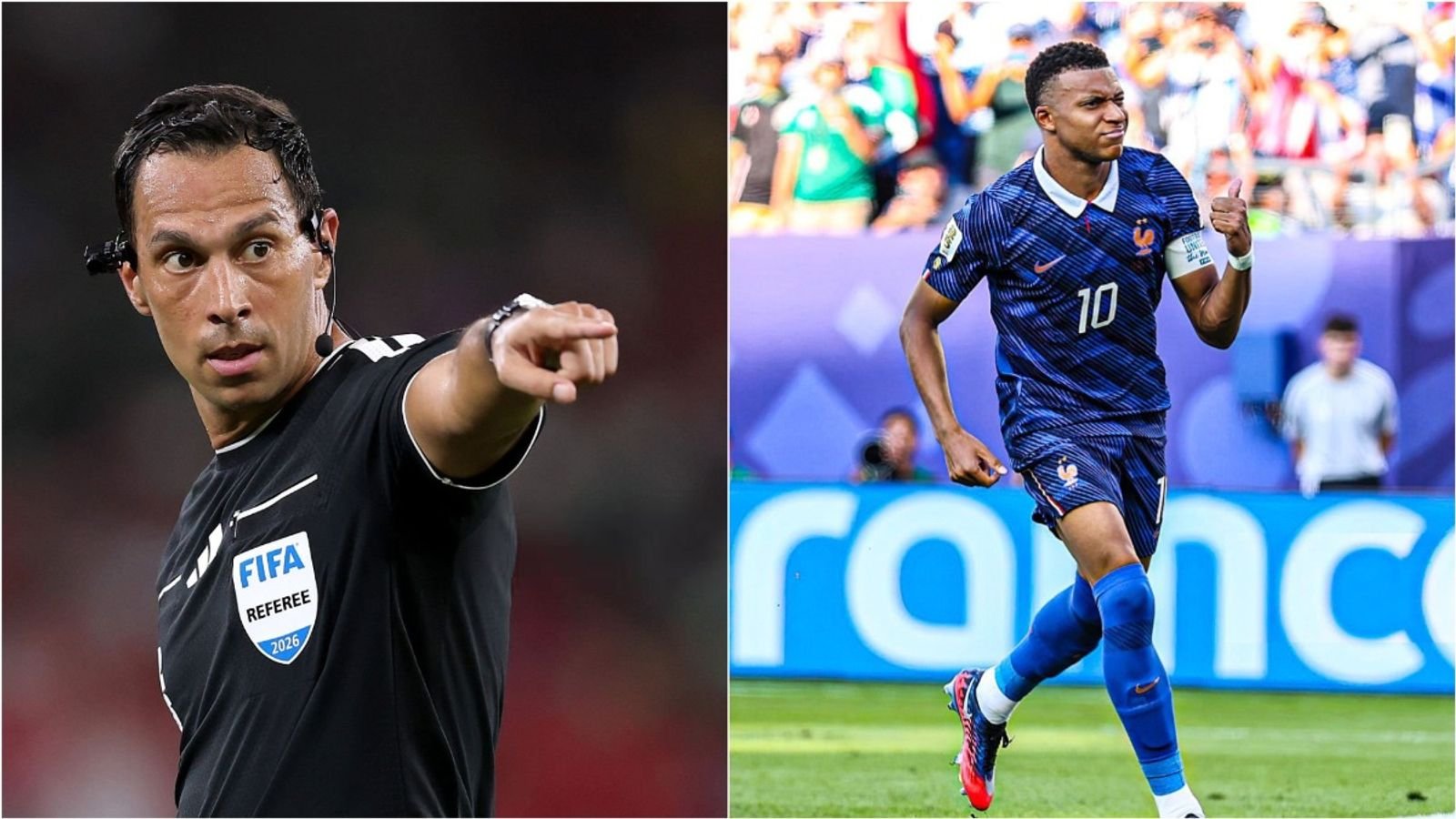
The FIFA World Cup is often remembered for unforgettable goals, dramatic comebacks, and historic achievements. However, as the 2026 tournament enters its decisive knockout phase, conversations are increasingly shifting away from Football and toward officiating.
FIFA’s decision to appoint an all-Argentine refereeing crew for the highly anticipated quarter-final between France and Morocco has generated widespread discussion among supporters, analysts, and former players. While referee appointments are typically routine administrative decisions based on experience and availability, the timing of this particular appointment has drawn unusual attention.
The decision arrives just days after Egypt formally raised concerns about officiating during its controversial Round of 16 defeat against Argentina. Although there is no evidence linking the two situations, the overlap has intensified public scrutiny and fueled debate regarding perception, transparency, and trust in football’s biggest tournament.
At a World Cup where every decision is analyzed by millions of viewers worldwide, even standard referee appointments can quickly become major storylines.
Who Will Officiate France vs Morocco?
FIFA has selected experienced Argentine referee Facundo Tello to oversee the quarter-final clash between France and Morocco.
He will be supported by a fully Argentine officiating team, including assistant referees and match officials responsible for managing one of the tournament’s most important fixtures.
The appointment reflects FIFA’s confidence in Tello’s experience at the highest levels of international football.
Over recent years, he has officiated major international competitions and developed a reputation for handling high-pressure matches. His previous experience in knockout football likely played a significant role in FIFA’s decision.
However, because Argentina remains an active participant in the tournament, the appointment has inevitably attracted additional attention.
Why the Appointment Is Generating Discussion
In most circumstances, the nationality of referees assigned to a match would attract little attention provided they are not directly involved with either competing team.
France and Morocco are not facing Argentina in this quarter-final.
From a purely procedural standpoint, there is no direct conflict of interest.
Yet football is not governed solely by rules. Public perception often plays a powerful role in shaping narratives.
The appointment comes shortly after Egypt publicly questioned refereeing decisions during its elimination against Argentina. That controversy has already generated significant discussion across football communities worldwide.
As a result, FIFA’s decision is being viewed through the lens of an existing debate about officiating standards rather than as an isolated appointment.
The Egypt-Argentina Controversy Changed the Context
The broader discussion surrounding officiating at this World Cup began intensifying after Egypt’s dramatic defeat to Argentina.
Egypt led by two goals before Argentina mounted an impressive comeback to secure a quarter-final place. However, several refereeing decisions during the match became major points of contention.
Among the disputed incidents were:
- A disallowed Egyptian goal following a VAR review.
- Penalty appeals that Egypt believed were ignored.
- Questions surrounding consistency in officiating decisions.
- Frustration regarding key moments that influenced momentum.
Although FIFA has not indicated any wrongdoing, the controversy created an environment in which subsequent officiating decisions would inevitably face increased scrutiny.
That context explains why the appointment of an all-Argentine referee team has become a headline story.
Understanding FIFA’s Referee Selection Process
To fully evaluate the controversy, it is important to understand how FIFA generally assigns referees during major tournaments.
Appointments are typically based on several factors:
- Experience at international level.
- Performance ratings during the tournament.
- Physical fitness and availability.
- Previous assignments.
- Avoidance of direct national conflicts.
Referees are assessed continuously throughout the competition. Strong performances often result in appointments to more significant matches as the tournament progresses.
From FIFA’s perspective, selecting highly rated officials for important knockout fixtures is a standard practice designed to ensure quality and consistency.
The governing body generally focuses on professional qualifications rather than public narratives.
Why Neutrality Is About More Than Rules
One of the most interesting aspects of the current debate is the distinction between actual neutrality and perceived neutrality.
A referee can be completely impartial while still becoming the subject of public suspicion.
In elite sport, perception matters almost as much as reality.
Supporters want confidence that major matches are being conducted under conditions that appear unquestionably fair.
When appointments create room for speculation—even if no genuine conflict exists—controversies can emerge.
This challenge is not unique to football. Similar debates occur in basketball, tennis, cricket, and numerous other international sports.
France’s Response: Focus on Football, Not Officials
France has taken a calm and pragmatic approach to the discussion.
Defender Dayot Upamecano made it clear that the team is focused entirely on preparing for Morocco rather than analyzing referee appointments.
His comments reflect a common mindset among elite athletes.
Professional players understand that refereeing decisions are beyond their control. Successful teams generally prefer concentrating on tactics, preparation, and execution rather than external factors.
France’s response also suggests confidence in their ability to manage the occasion regardless of who officiates the match.
Morocco’s Historic Opportunity
Lost within the officiating debate is the significance of Morocco’s achievement.
Morocco has once again established itself as one of the most compelling stories of the tournament.
The North African side has demonstrated tactical discipline, defensive organization, and impressive resilience throughout its campaign.
Reaching the quarter-finals places Morocco among the elite teams remaining in the competition and offers another opportunity to make football history.
For Moroccan supporters, the focus remains firmly on the team’s performance rather than discussions surrounding officiating.
Why Refereeing Has Become a Bigger Topic in Modern Football
Modern football generates more scrutiny than ever before.
Several factors contribute to this reality:
- Multiple broadcast camera angles.
- Instant social media reactions.
- Advanced statistical analysis.
- Global audiences numbering in the billions.
- VAR reviews creating additional discussion points.
Every decision is replayed, analyzed, and debated almost immediately.
As a result, referees now operate under unprecedented levels of visibility.
A controversial call that might once have disappeared into history now becomes a worldwide discussion within minutes.
The VAR Era Has Changed Expectations
Ironically, technology introduced to reduce controversy has sometimes increased public expectations.
Before VAR, many supporters accepted that mistakes were part of football.
Today, because technology exists, fans often expect near-perfect accuracy.
When controversial decisions occur despite video review systems, frustration can become even greater because supporters believe every angle and piece of evidence should already be available.
The Egypt-Argentina debate illustrates this phenomenon perfectly.
Rather than eliminating disagreement, VAR shifted discussions toward interpretation and consistency.
How FIFA Can Address Growing Concerns
Whether concerns surrounding the France-Morocco referee appointment are justified or not, the discussion highlights an important challenge for FIFA.
Trust is a critical component of sporting integrity.
Several analysts have suggested measures that could increase transparency:
- Publishing detailed referee appointment explanations.
- Releasing selected VAR communications.
- Providing educational content about decision-making processes.
- Offering clearer officiating guidelines to supporters.
Such initiatives could help reduce speculation and improve public understanding of how major decisions are reached.
A Comparison With Previous World Cups
Refereeing controversies are not unique to the 2026 tournament.
| World Cup | Major Officiating Debate | Impact |
|---|---|---|
| 1986 | Hand of God goal | Historic controversy |
| 2002 | Knockout-stage officiating decisions | Global criticism |
| 2010 | Disallowed England goal | Accelerated technology adoption |
| 2018 | Early VAR debates | Changed refereeing standards |
| 2026 | Egypt-Argentina controversy and referee appointments | Renewed focus on transparency |
The pattern demonstrates that discussions about officiating have accompanied nearly every major World Cup.
What changes is not the existence of controversy but the technology and circumstances surrounding it.
France vs Morocco: The Football Story Remains the Priority
Despite the headlines, the match itself remains the main attraction.
France enters the quarter-final as one of the tournament favorites, possessing a squad filled with world-class talent and major tournament experience.
Morocco, meanwhile, continues to thrive as one of the competition’s most disciplined and determined teams.
The clash promises contrasting styles, tactical intrigue, and potentially dramatic moments.
Ultimately, both teams will seek to ensure that football—not officiating—becomes the dominant story after the final whistle.
What Happens Next?
Much of the current discussion may disappear if the match proceeds without major controversy.
Referees often receive the most attention when things go wrong. A well-managed quarter-final could quickly shift focus back toward the players and tactical battles on the field.
However, because of recent events, every significant decision made during France vs Morocco is likely to be examined closely.
The officials will enter the match knowing that scrutiny levels are exceptionally high.
Conclusion
FIFA’s decision to appoint an all-Argentine officiating team for the France vs Morocco quarter-final has generated significant debate, largely because of its timing rather than any confirmed conflict of interest. Coming shortly after Egypt’s complaints regarding refereeing decisions in its defeat to Argentina, the appointment has inevitably become part of a wider conversation about officiating standards and transparency at the 2026 World Cup.
While France has publicly dismissed concerns and chosen to focus entirely on football, the discussion highlights the growing importance of perception in modern sport. In an era of VAR, instant analysis, and global audiences, even routine administrative decisions can become major talking points.
As the tournament enters its decisive stages, FIFA faces the challenge of maintaining confidence in its officiating processes while ensuring that the spotlight remains where it belongs—on the players competing for football’s greatest prize.
For breaking news and live news updates, like us on Facebook or follow us on Twitter and Instagram. Read more on Latest Sports on thefoxdaily.com.






COMMENTS 0