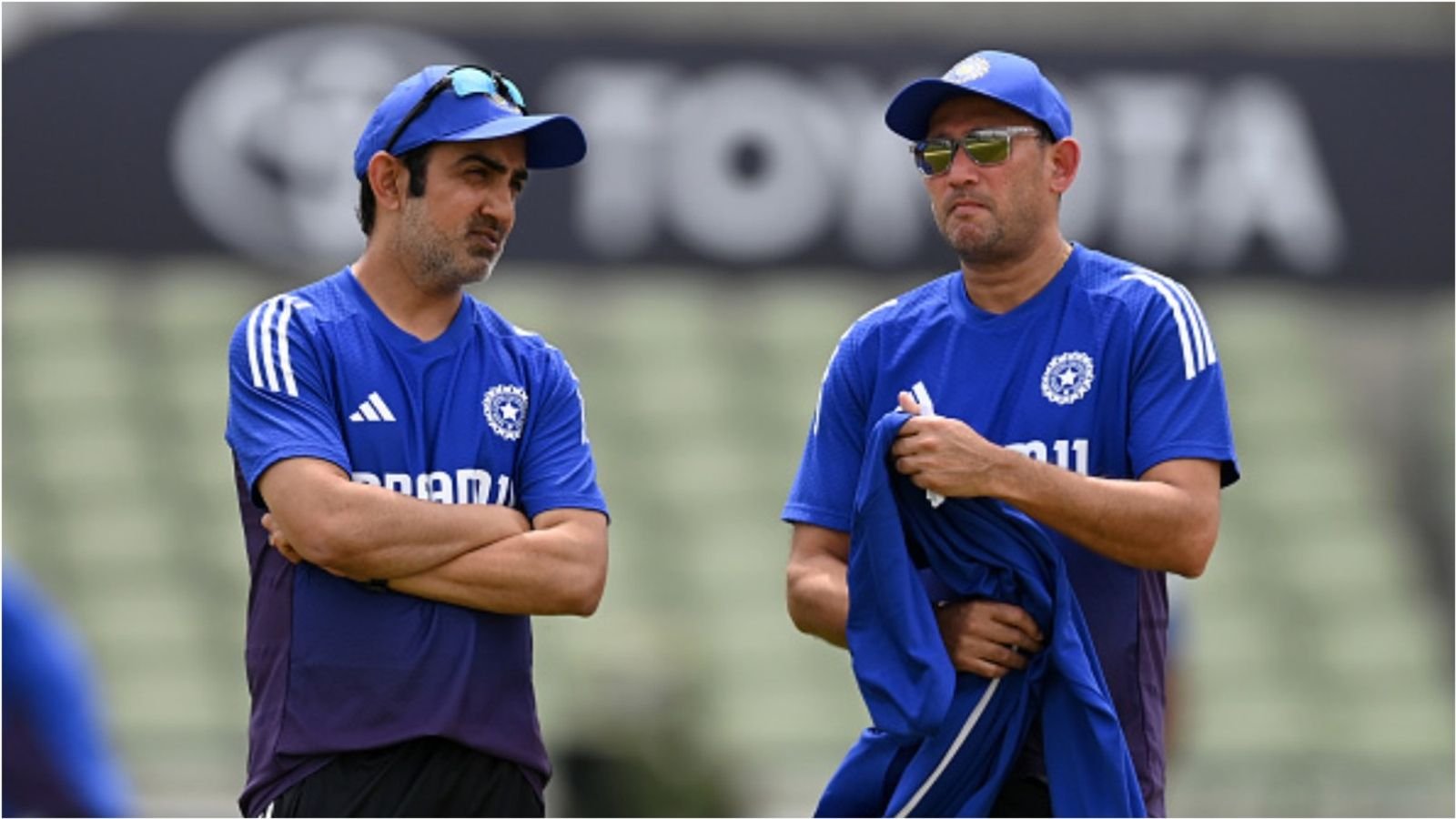
India’s preparations for the ICC Cricket World Cup 2027 are officially underway. While the tournament is still over a year away, the Board of Control for Cricket in India (BCCI) has made it clear that planning has already begun, with head coach Gautam Gambhir, chief selector Ajit Agarkar, and the support staff working closely together to shape the future of India’s ODI team.
The confirmation comes at a crucial time for Indian cricket. A new leadership group has emerged, young talents are pushing for opportunities, and questions continue to surround the long-term futures of senior stars. As a result, every ODI series from this point forward could play a significant role in determining India’s squad for the global event scheduled to take place in South Africa, Zimbabwe, and Namibia in 2027.
BCCI Reveals Early Planning for ODI World Cup 2027
BCCI Secretary Devajit Saikia has confirmed that preparations for the marquee tournament have already started. According to Saikia, the board, selectors, coaching staff, and team management are working together to identify the best possible combination capable of challenging for cricket’s biggest prize.
The announcement sends a strong message about India’s intent. Rather than waiting until the final year before the tournament, the management wants a structured approach that allows players to be tested in different conditions and match situations.
Modern international cricket demands long-term planning, especially in a format where consistency and squad depth often determine success. By starting early, India aims to avoid last-minute experimentation and build a settled core before the tournament begins.
Why the 2027 ODI World Cup Matters So Much
India remain one of the most successful teams in ODI cricket, but the wait for another 50-over World Cup title continues.
The Men in Blue last lifted the trophy in 2011 under MS Dhoni after defeating Sri Lanka in a memorable final at Mumbai’s Wankhede Stadium. Since then, India have consistently remained among the strongest teams in world cricket but have fallen short in key knockout matches.
The 2027 edition presents another opportunity to end that drought.
Adding to the significance is the tournament’s return to Africa. It will be the first ODI World Cup hosted on the continent since 2003, when India reached the final before losing to a dominant Australian side.
The unique conditions expected in South Africa, Zimbabwe, and Namibia mean preparation will be critical. Teams capable of adapting quickly to pace-friendly surfaces and varied weather conditions could gain a major advantage.
The Gambhir Era Faces Its Biggest Challenge
Since taking charge as head coach, Gautam Gambhir has focused on building a fearless and aggressive Indian side. His coaching philosophy emphasizes adaptability, intent, and clarity of roles.
While those principles have already influenced India’s approach in white-ball cricket, the ODI World Cup will represent the ultimate test of his leadership.
Unlike bilateral series, World Cups require teams to maintain consistency over several weeks while handling immense pressure. Gambhir’s challenge will be balancing experience with youth and ensuring the team peaks at the right time.
The next eighteen months could ultimately define his tenure as head coach.
Are Gautam Gambhir and Ajit Agarkar Finally on the Same Page?
One of the most encouraging aspects of Saikia’s statement was his emphasis on collaboration.
In modern cricket, success often depends on alignment between selectors and team management. Conflicting visions can lead to uncertainty, frequent squad changes, and unclear player roles.
The BCCI secretary’s remarks suggest that chief selector Ajit Agarkar and Gautam Gambhir are working closely on a shared roadmap.
This partnership could prove crucial as India navigates a transitional phase. Several established players remain key contributors, while a new generation continues to push for opportunities.
A unified selection strategy may help India avoid the confusion that has affected many international teams during major transitions.
Shubman Gill Emerging as the Face of India’s ODI Future
The recent ODI series against Afghanistan provided another glimpse into India’s future leadership plans.
Shubman Gill led the side successfully and registered his first ODI century as captain, reinforcing his status as one of the most important players in India’s long-term plans.
At a relatively young age, Gill already combines technical excellence with maturity and consistency. His ability to anchor innings while accelerating when required makes him an ideal modern ODI batter.
If India are building towards 2027, Gill is expected to remain at the center of those plans.
His development as both a batter and leader will be one of the biggest storylines over the next two years.
The Virat Kohli and Rohit Sharma Question
No discussion about India’s ODI future can ignore Virat Kohli and Rohit Sharma.
Both players remain among the most accomplished cricketers of their generation and continue to be match-winners on their day. Their experience in ICC tournaments is invaluable, particularly during high-pressure knockout matches.
However, as the 2027 World Cup approaches, questions regarding workload management, fitness, and long-term availability will naturally intensify.
The selectors must decide whether to continue building around their veteran stars or gradually transition towards a younger core.
For now, both remain firmly in India’s plans, with Kohli and Jasprit Bumrah returning for the upcoming ODI series against England.
India’s Middle Order Finally Looks Settled
One of the biggest positives from recent ODI assignments has been the stability of India’s middle order.
Ishan Kishan has emerged as a reliable option capable of changing the momentum of a match. Shreyas Iyer continues to provide solidity against spin, while KL Rahul offers flexibility and wicketkeeping options.
This depth gives the management multiple tactical combinations depending on opposition and conditions.
Unlike previous World Cup cycles where India often searched for the ideal middle-order formula, the current setup appears more balanced and versatile.
Young Players Fighting for a Spot
Perhaps the most exciting aspect of India’s World Cup planning is the growing pool of young talent.
Several emerging cricketers have impressed across domestic competitions, the IPL, and international cricket.
Players such as Yashasvi Jaiswal, Harshit Rana, Prince Yadav, Harsh Dubey, and Gurnoor Brar represent the next generation of Indian cricket.
While some missed out on the latest ODI squad, their performances ensure they remain firmly in contention.
The next eighteen months will likely see constant competition for places, creating healthy pressure within the squad.
India’s Probable Core for the 2027 World Cup
| Role | Key Contenders |
|---|---|
| Openers | Shubman Gill, Rohit Sharma, Yashasvi Jaiswal |
| Middle Order | Virat Kohli, Shreyas Iyer, Ishan Kishan, KL Rahul |
| All-Rounders | Axar Patel, Washington Sundar, Nitish Kumar Reddy |
| Spinners | Kuldeep Yadav, Axar Patel |
| Fast Bowlers | Jasprit Bumrah, Arshdeep Singh, Harshit Rana, Prasidh Krishna |
The Importance of the England ODI Series
India’s upcoming three-match ODI series against England could provide valuable insights into the team’s future direction.
England remain one of the strongest white-ball teams in the world, making the series an ideal testing ground.
Performances against high-quality opposition often carry greater weight than statistics accumulated against weaker teams.
For several players, the England series may represent an opportunity to strengthen their World Cup credentials.
Selectors will be closely monitoring not just performances but also adaptability, temperament, and consistency.
What India Must Improve Before 2027
Despite possessing enormous talent, India still have areas requiring attention.
Finishing games under pressure remains an important focus area. The team must also identify reliable backup options across batting and bowling departments.
Fielding standards, adaptability to overseas conditions, and workload management for key fast bowlers will also be critical.
Winning bilateral series is important, but building a squad capable of handling knockout pressure is the ultimate objective.
The management’s long-term approach suggests these factors are already being considered.
Can India End Their ODI World Cup Drought?
India undoubtedly possess the talent required to challenge for the 2027 ODI World Cup.
The combination of experienced stars, emerging youngsters, and strong leadership provides a solid foundation.
However, history shows that World Cups are rarely won on talent alone. Preparation, planning, squad balance, and execution during crucial moments often make the difference.
The encouraging sign for Indian fans is that the process has already begun.
Rather than reacting late, the BCCI appears committed to a structured and collaborative roadmap involving Gautam Gambhir, Ajit Agarkar, selectors, and support staff.
Conclusion
India’s journey towards the ICC ODI World Cup 2027 is officially underway, with BCCI Secretary Devajit Saikia confirming that long-term planning has already started. The close coordination between Gautam Gambhir, Ajit Agarkar, selectors, and support staff highlights a unified approach aimed at building the strongest possible squad.
With experienced stars still contributing and a new generation pushing for opportunities, India enters a crucial phase of transition. The next eighteen months will shape the team’s identity, determine its core group, and ultimately influence its chances of lifting the ODI World Cup for the first time since 2011.
If the current planning translates into consistent execution on the field, India could arrive in Africa in 2027 as one of the strongest contenders for cricket’s most prestigious trophy.
For breaking news and live news updates, like us on Facebook or follow us on Twitter and Instagram. Read more on Latest Sports on thefoxdaily.com.






COMMENTS 0