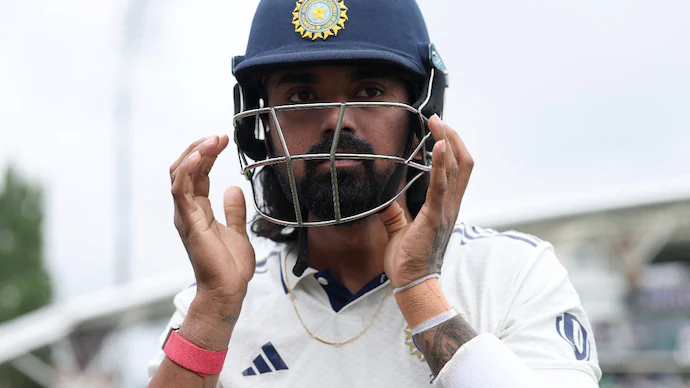
KL Rahul believes mastering Test Cricket was a process that took years of experience, missed opportunities and a better understanding of his own game. The India batter has reflected on the challenges of switching between all three formats, explaining how he gradually learned to separate the attacking approach required in white-ball cricket from the patience and discipline expected in the longest format.
His latest achievement against New Zealand at the Basin Reserve offered a reminder of how far he has come. Rahul scored an impressive 136, becoming the first Indian opener to register Test centuries in all four SENA countries: South Africa, England, New Zealand and Australia. He also became only the second Asian opener, after Saeed Anwar, to accomplish the feat.
The landmark innings made Rahul the first Indian batter in 12 years to score a Test century in New Zealand. However, the milestone represented more than an individual record. It reflected a journey shaped by difficult transitions, injuries, preparation and lessons learned from opportunities that did not always go his way.
Learning to switch between all three formats
Rahul acknowledged that playing Test cricket alongside ODIs and T20Is once made it difficult for him to adapt quickly to the different demands of each format. The aggressive instincts developed through limited-overs cricket sometimes carried over into Tests, where leaving deliveries, defending carefully and playing late are essential parts of building a long innings.
He explained that the transition could be particularly challenging when the gap between formats was short. Moving from an approach focused on scoring quickly to one that required restraint within a week was not something he initially found easy.
“There was a time in my career when I was playing all three formats… I could not make that switch from trying to get bat on ball in T20 and ODI cricket to switching quickly in a week’s time to leaving balls and trying to play as late as I possibly can, which is the basics of Test batting,” Rahul said in a video posted on the BCCI website.
His comments highlight one of the biggest challenges facing modern international cricketers. Each format has its own rhythm, expectations and tactical requirements. A batter who is encouraged to attack from the beginning in a T20 match may need to show considerably more restraint when facing a new ball in Test cricket.
Rahul eventually understood that succeeding across formats required more than making small technical adjustments. He needed to develop separate mindsets and preparation routines instead of approaching every international match in the same way.
“Test cricket requires a completely different skill set and a different way of thinking, a different way of prepping. And white-ball cricket requires a completely different way of doing things and not to get mixed up in that,” he said.
That understanding developed over several years. Rahul believes the experience of playing at the highest level, including the disappointment of missed opportunities, helped him recognise what worked for him in different conditions. His 136 against New Zealand was his 13th Test century in 71 appearances.
Why patience and preparation matter in Test cricket
For Rahul, Test batting is not simply about having the right technique. It also requires concentration, discipline and attention to detail over extended periods. A batter may spend hours negotiating difficult conditions, resisting pressure and building an innings, but one poor decision can bring that effort to an end.
Rahul illustrated the importance of precision by comparing batting with another personal interest: preparing coffee. He suggested that both activities demand care and consistency, because overlooking even a small detail can affect the final result.
“One small mistake, one bad shot as a batter and your whole innings can mean nothing even if you’ve worked hard for three or four hours, battled through the new ball, seen through the tough sessions,” he said.
The comparison reflects the unforgiving nature of Test cricket. Unlike shorter formats, where batters may have more freedom to take calculated risks, the longest format often rewards the ability to remain focused for long stretches. A player must judge when to defend, when to leave the ball and when an opportunity to score is worth taking.
Rahul’s approach also involves preparing well before a tour begins. He explained that his planning for assignments in countries such as New Zealand, England and Australia starts five or six months in advance.
This preparation includes understanding the conditions, identifying the challenges he might face and considering how to respond to them. Overseas cricket can require adjustments to technique and temperament, particularly when pitches, weather and bowling conditions differ from those a player regularly encounters at home.
Rahul believes that mental preparation is just as important as physical and technical work. Knowing what to expect before arriving at a venue can help a batter approach unfamiliar conditions with greater clarity.
His experience across different batting positions also makes preparation important. A player may have to adjust to different responsibilities depending on where he is placed in the order, the condition of the ball and the situation of the match. Understanding those possibilities in advance can help reduce uncertainty once the game begins.
Injuries remain Rahul’s biggest regret
Although Rahul is pleased with the progress he has made as a Test batter, he admitted that injuries remain a major disappointment in his career. He believes physical setbacks cost him at least 10 to 15 Test appearances and prevented him from enjoying the uninterrupted run he would have preferred.
Rahul was careful to explain that his missed matches were not the result of a lack of commitment. He said he had always been motivated to represent India, perform at the highest level and continue improving as a cricketer.
“That’s not because of my commitment. I’ve always been very hungry and committed to playing cricket at this level and excelling and being the best version of myself,” he said.
He added that avoiding those injury setbacks could have significantly increased his number of Test appearances.
“If that hadn’t happened, maybe at least 10-15 Test matches, I would have played a lot more than 71. So that’s the only thing I look back at and feel could have been different.”
For an international batter, injuries can interrupt more than match participation. They can affect rhythm, preparation, confidence and the opportunity to establish consistency in a demanding format. Rahul’s comments underline how much he values the chance to play regularly and build on his experience.
His reflection also offers an explanation for why the New Zealand century meant so much to him. The achievement came after years in which he had to adapt his game while dealing with setbacks that limited his opportunities.
A century that brought rare satisfaction
Rahul revealed that he barely slept after scoring his century against New Zealand. He described the innings as one of those rare performances that left him genuinely satisfied and proud of what he had achieved.
Although he does not necessarily approach cricket with records as his primary motivation, he recognised the significance of becoming the first Indian opener to score Test centuries in all four SENA countries.
The achievement places his innings in a notable category of overseas performances. South Africa, England, New Zealand and Australia present different challenges for visiting batters, and scoring centuries in all four countries requires the ability to adjust to a variety of conditions.
Rahul’s century at the Basin Reserve was particularly significant because Indian batters had gone 12 years without a Test hundred in New Zealand. His 136 ended that wait and added another major overseas achievement to his career.
It also demonstrated the value of the lessons he described. The patience to leave deliveries, the discipline to wait for scoring opportunities and the preparation required to understand unfamiliar conditions were all central to the approach he believes he has developed over time.
Looking ahead to the next phase of his career
Rahul believes there is still more he can achieve in Test cricket. As he approaches the latter phase of his career, maintaining his current run-scoring form and adding to his century tally will remain important objectives.
His reflections suggest that he now has a clearer understanding of how to manage the demands of the longest format. Rather than allowing the attacking instincts of white-ball cricket to influence his Test approach, he has learned to treat each format as a separate challenge with its own preparation and mindset.
There is also a sense of perspective in his comments about injuries and missed opportunities. While he cannot change the matches he was unable to play, he can continue making the most of the opportunities available to him.
Rahul’s journey towards mastering Test cricket has not been straightforward. It has involved technical adjustments, mental preparation, physical setbacks and years of learning. His landmark century in New Zealand stands as a reflection of that progress, showing how experience and patience can help a batter develop into a more complete player.
For Rahul, the achievement is not simply about adding another record to his name. It is also a reminder of the lessons that helped him understand what Test cricket demands and how important it is to approach every format on its own terms.
For breaking news and live news updates, like us on Facebook or follow us on Twitter and Instagram. Read more on Latest Cricket on thefoxdaily.com.






COMMENTS 0