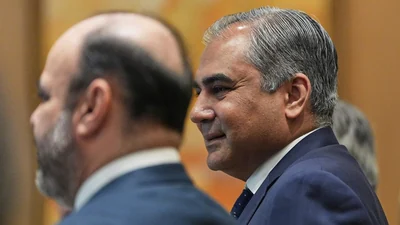
Mohammad Kaif has questioned Mohsin Naqvi’s role in Pakistan cricket after another controversial Asia Cup trophy presentation involving India. The former India batter raised concerns about Naqvi holding major responsibilities in both cricket administration and Pakistani politics following the Women’s Asia Cup final in Dubai.
India defeated Sri Lanka by 72 runs on Sunday to win the Women’s Asia Cup 2026. However, the celebrations were overshadowed by a delayed trophy presentation after India’s players remained unwilling to receive the trophy from Naqvi, who was present at the venue.
Naqvi currently holds senior positions in Pakistan cricket administration and government. He is the chairman of the Pakistan Cricket Board (PCB) and also serves as Pakistan’s Interior Minister, while his role as Asian Cricket Council (ACC) president places him at the centre of regional cricket administration.
The latest trophy ceremony closely resembled an incident from the previous men’s Asia Cup, when India also refused to accept the trophy from Naqvi. The repeated situation has once again brought his multiple responsibilities and the wider India-Pakistan cricket relationship into focus.
Mohammad Kaif questions Mohsin Naqvi’s responsibilities
Kaif believes running a national cricket board requires considerable time and attention. He questioned whether someone with significant political responsibilities can devote enough time to managing the complex demands of Pakistan cricket.
Speaking on Cricbuzz, the former India batter argued that a cricket administrator needs to remain closely involved with the sport and understand what is happening inside the organisation.
Kaif’s central concern was not simply about Naqvi attending cricket matches. Instead, he questioned whether the combination of political responsibilities and cricket administration could allow Naqvi to give Pakistan cricket the sustained attention it requires.
According to Kaif, the role involves much more than representing the board at major events. A cricket chief has to monitor the system, understand its problems, work with players and officials and spend significant time on long-term development.
His comments therefore place the focus on governance rather than just the latest trophy controversy.
India’s Women’s Asia Cup victory overshadowed by trophy stand-off
The immediate trigger for the latest discussion was India’s trophy presentation after their dominant victory over Sri Lanka.
India produced an impressive performance in the final, winning by 72 runs to claim a record-extending eighth Women’s Asia Cup title. Yet the post-match ceremony became a major talking point because the champions did not formally receive the trophy from Naqvi.
The situation resulted in a delay to the presentation. Naqvi remained at the venue, but India’s position reportedly did not change.
Instead of ending the tournament with a routine presentation, the moment revived the political and diplomatic tension that has increasingly surrounded major India-Pakistan cricket events.
For Indian cricket supporters, the trophy incident became another chapter in an already complicated relationship. For Pakistan cricket administration, it again placed Naqvi at the centre of attention for reasons extending beyond the sport itself.
The controversy is similar to last year’s Asia Cup incident
The latest episode is significant because it was not an isolated incident. A similar stand-off occurred after the men’s Asia Cup final the previous year, when India’s victorious team also refused to accept the trophy from Naqvi.
The repetition has made the issue more prominent. Instead of being viewed simply as an unusual presentation ceremony, the two incidents have created a broader discussion about the relationship between cricket administration, politics and the India-Pakistan rivalry.
Naqvi’s position makes the situation particularly sensitive because he is not solely a cricket administrator. His government responsibilities mean his public role extends well beyond the sport.
That overlap is precisely what Kaif has questioned.
Why Naqvi’s dual role has become a talking point
Mohsin Naqvi occupies an unusual position within the cricketing landscape. As PCB chairman, he is responsible for overseeing Pakistan’s cricket administration. As ACC president, he is also involved in the governance of cricket across the Asian region.
At the same time, his responsibilities in the Pakistani government add another significant workload.
Kaif believes these commitments can make it difficult to give cricket administration the level of attention required. His argument is that running a major cricket board is itself a demanding responsibility and requires consistent involvement.
The former India player suggested that administrators need to focus closely on their sporting responsibilities instead of dividing their attention across multiple major roles.
Whether Naqvi’s workload directly affects Pakistan cricket is a matter for debate, but Kaif’s comments have opened another discussion about how cricket boards should be managed.
Kaif says Pakistan has talent but needs a stronger system
Kaif did not stop at questioning Naqvi’s dual responsibilities. He also offered his assessment of the wider problems facing Pakistan cricket.
According to the former India batter, Pakistan cannot simply blame a lack of talented players for its struggles. He believes the country continues to produce naturally gifted cricketers but needs a stronger system to develop that talent.
This distinction is important because Pakistan has historically produced high-quality fast bowlers, batters and all-rounders. The challenge, according to Kaif’s assessment, is ensuring that talented youngsters receive the right coaching, structure and support once they enter professional cricket.
In other words, identifying talent is only one part of building a successful national team. A strong domestic pathway, professional coaching, effective administration and long-term planning are also required.
Kaif therefore believes Pakistan’s cricket problems should be viewed as a structural issue rather than simply a question of player quality.
Pakistan cricket continues to face pressure
The discussion comes during a difficult period for Pakistan cricket. The team has faced criticism over performances, selection decisions and administration, while the relationship between cricket and politics has added another layer to the conversation.
The repeated Asia Cup trophy controversy has only increased public attention on the PCB and ACC leadership.
For Pakistan, the bigger challenge is to ensure that attention surrounding administrative controversies does not distract from the long-term task of improving the national cricket system.
Kaif’s comments suggest that structural reforms and better management of existing talent should be given greater importance.
India’s title triumph remains the main sporting achievement
Despite the controversy surrounding the presentation, India’s performance in the Women’s Asia Cup final was emphatic.
The team defeated Sri Lanka by 72 runs and secured an eighth continental title. India’s strong batting and bowling performances ensured that the result was never seriously in doubt during the latter stages of the match.
The title also provided India with a response after Sri Lanka had beaten them in the 2024 final. The latest victory therefore carried additional significance for the Indian team.
However, the trophy presentation meant that the post-match conversation quickly moved beyond the cricket itself.
Instead of focusing exclusively on India’s dominant performance, much of the attention turned to Naqvi’s presence and the decision not to formally accept the trophy from him.
What Kaif’s comments mean for Pakistan cricket
Kaif’s criticism should be viewed as an opinion about cricket administration rather than proof that Naqvi’s multiple roles are directly responsible for Pakistan’s problems.
His broader point is that national cricket boards require consistent leadership and detailed attention. Pakistan has several areas that need improvement, from player development to domestic structures and the transition of young talent into international cricket.
If administrators are spread across multiple demanding responsibilities, questions about their availability and priorities are naturally likely to emerge.
At the same time, the success or failure of a cricket board cannot be attributed to one individual alone. Players, coaches, selectors, domestic structures and administrators all influence a national team’s performance.
The India-Pakistan relationship remains central to the debate
Cricket between India and Pakistan has long carried significance beyond the boundary lines. Political tensions between the two countries have frequently influenced discussions surrounding bilateral cricket, tournaments and administrative decisions.
The Asia Cup has provided one of the most visible stages for those tensions because teams from both countries regularly participate in the same competition.
Naqvi’s dual position makes him an especially prominent figure whenever the cricketing and political dimensions overlap. The latest trophy presentation has therefore attracted attention well beyond the result of the Women’s Asia Cup final.
With a similar situation having occurred after the previous men’s Asia Cup final, the issue is unlikely to disappear immediately.
Will the trophy controversy overshadow the tournament?
India’s eighth Women’s Asia Cup title should ultimately remain the central sporting story. The team’s performance against Sri Lanka was decisive and deserved recognition on its own merits.
Nevertheless, the trophy presentation has created a separate administrative and diplomatic discussion that will continue after the tournament.
Kaif’s comments have added another perspective by questioning whether Naqvi can effectively balance his political and cricketing responsibilities.
For Pakistan cricket, the more important question may be whether its leadership can create a stable system capable of consistently converting the country’s considerable talent into international success.
Final Verdict
Mohammad Kaif has questioned Mohsin Naqvi’s ability to balance his political responsibilities with his leadership roles in cricket after another India trophy presentation stand-off at the Asia Cup.
India defeated Sri Lanka by 72 runs in the Women’s Asia Cup final but did not formally receive the trophy from Naqvi, who is PCB chairman, ACC president and Pakistan’s Interior Minister. The situation echoed the previous men’s Asia Cup final.
Kaif believes running a cricket board requires sustained attention and argues that Pakistan has enough natural talent but needs stronger systems to develop its players.
Whether Naqvi’s multiple responsibilities are affecting Pakistan cricket remains a matter of debate. What is clear is that the latest Asia Cup controversy has once again placed the intersection of cricket, administration and India-Pakistan tensions under the spotlight.
For breaking news and live news updates, like us on Facebook or follow us on Twitter and Instagram. Read more on Latest Cricket on thefoxdaily.com.





COMMENTS 0