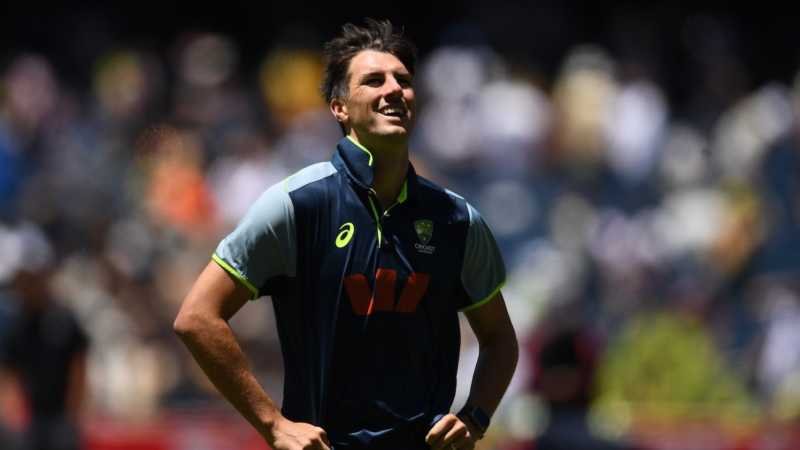
Pat Cummins’ support for Imran Khan’s medical care has added a significant new voice to an international campaign involving former cricket captains from several major nations.
The Australia Test and ODI captain publicly backed calls for Imran to receive appropriate medical attention while in prison, saying he hoped the former Pakistan captain would be treated with the dignity anyone deserves.
Cummins’ intervention comes after 22 former international captains wrote to Pakistan Prime Minister Shehbaz Sharif last week, urging authorities to ensure that Imran receives proper medical care. The group included former leaders from India, Australia, England, New Zealand and the West Indies.
The latest appeal follows an earlier letter signed by 14 former international captains in February. According to the report, that appeal did not receive a response from the Pakistan government.
The issue has now moved beyond a group of retired players. Cummins, who remains an active international captain, has become the first current captain to publicly express support for the campaign surrounding Imran’s medical care.
What did Pat Cummins say about Imran Khan?
Cummins expressed his support while responding to a post from former Australia captain Greg Chappell, who had also raised concerns about Imran’s well-being.
“I hope the court ordered medical assessment be allowed to run its course, and that family visits continue. I hope Imran Khan is treated with the dignity anyone deserves.”
The message was carefully focused on medical care, family access and dignity rather than wider political issues.
That distinction is important because Imran’s case sits at the intersection of cricket, politics and human rights concerns. Cummins’ statement did not endorse a political position; instead, it highlighted basic concerns about medical assessment and treatment.
Why Cummins’ intervention is significant
Imran Khan remains one of the most influential figures in Pakistan’s cricket history. He captained Pakistan to its first men’s World Cup title in 1992 before moving into politics and eventually becoming the country’s prime minister.
Because of that background, comments from prominent international cricketers about his treatment naturally attract attention.
Cummins’ position carries additional weight because he is still an active international captain. Unlike the former captains who signed the recent letter, he remains directly involved in international cricket.
His decision to speak publicly therefore demonstrates that concern over Imran’s reported medical situation is not limited to retired players who previously shared the cricketing world with him.
How the campaign for medical care developed
The current campaign has developed over several months.
- February 2026: A group of 14 former international captains wrote to Pakistan’s prime minister seeking appropriate medical attention for Imran.
- August 2026: A larger group of 22 former captains renewed the appeal, again asking authorities to ensure proper medical care.
- Last week: Pakistan’s Supreme Court ordered that Imran be admitted to Shifa Hospital in Islamabad for medical treatment.
- Following the court order: Imran was taken to the state-run Pakistan Institute of Medical Sciences instead and returned to prison after a check-up.
- August 28: Cummins publicly backed the calls for the court-ordered medical assessment and continued family visits.
The timeline shows how an issue initially raised by former cricketers has gradually become an increasingly visible international cricket story.
What happened after the Supreme Court order?
The medical situation became particularly prominent after Pakistan’s Supreme Court ordered that Imran be admitted to Shifa Hospital in Islamabad.
According to the report, he was instead taken to the government-run Pakistan Institute of Medical Sciences, commonly known as PIMS, where he underwent a check-up before being returned to prison.
That development prompted renewed concerns from his family and supporters about whether the court’s intended medical arrangement had been properly followed.
Cummins specifically referred to allowing the court-ordered medical assessment to run its course, making the judicial direction an important part of his public statement.
Pakistan government disputes allegations of mistreatment
The concerns surrounding Imran’s health have been strongly contested by the Pakistan government.
In comments reported last week, the government rejected allegations that Imran had been mistreated in prison or prevented from maintaining contact with family members and lawyers.
The government also stated that Imran had received more than 900 visits from relatives, lawyers and doctors since his imprisonment in August 2023.
This creates an important distinction in understanding the controversy. There are competing accounts about the quality of Imran’s medical care and his access to people outside prison, meaning claims about his condition should be separated from verified facts and allegations made by different parties.
For international audiences, that distinction is particularly important because the matter involves both medical claims and a politically sensitive legal situation.
Imran Khan’s cricket legacy gives the story extra weight
Long before becoming a political leader, Imran was one of Pakistan’s most successful cricketers.
His greatest sporting achievement came in 1992, when he led Pakistan to its first men’s Cricket World Cup title.
His leadership during that tournament became a defining chapter in Pakistan cricket history. Imran subsequently became one of the country’s most prominent public figures before entering politics.
That unique journey explains why his imprisonment and health have attracted attention from people across the cricketing world.
For former international captains, the connection is also personal in a sporting sense. Many of them competed against Imran or encountered him during international cricket’s earlier era.
Why former captains from multiple countries are involved
The international nature of the letters is another important part of the story.
The former captains who have supported calls for medical care reportedly come from India, Australia, England, New Zealand and the West Indies.
These countries have historically been major rivals of Pakistan in international cricket. The involvement of figures from across those cricketing nations makes the campaign broader than a domestic sporting dispute.
At the same time, the captains’ appeal has been framed around medical care and dignity rather than cricketing rivalry or political alignment.
That makes the issue particularly relevant to the wider sporting community.
PCB-Sky Sports dispute adds another layer
The discussion surrounding Imran’s health also became connected to the ongoing England-Pakistan Test series.
Sky Sports recently broadcast an interview with Imran’s sons, Sulaiman and Kasim, during the lunch interval on the opening day of the Lord’s Test.
The Pakistan Cricket Board reportedly complained to Sky Sports about the interview. The report also stated that the PCB considered whether Pakistan’s players should refuse to return to the field after lunch as a form of protest.
The players ultimately continued the match, but the incident demonstrated how Imran’s situation has increasingly intersected with cricket-related events.
For broadcasters and cricket authorities, the situation presents a difficult editorial and diplomatic challenge. Imran remains a major cricketing figure, but his current circumstances are also deeply political and legal.
Why the Sky interview mattered
The interview with Imran’s sons gave viewers an opportunity to hear directly from members of his family about their concerns.
That made the broadcast different from a standard sports interview because the subject was not a current cricket match, selection decision or tactical issue.
Instead, the discussion focused on the former Pakistan captain’s health and the family’s efforts to secure appropriate medical treatment.
The PCB’s reported objection illustrates the sensitivity surrounding the subject, particularly while Pakistan’s national team was playing an international Test match in England.
Pat Cummins’ approach was notably measured
One of the more significant aspects of Cummins’ statement is its restrained wording.
He did not make broad political accusations or comment on Imran’s legal cases. His message focused on three straightforward principles: allowing the court-ordered medical assessment to proceed, continuing family visits and treating Imran with dignity.
That approach allows Cummins to express concern without presenting himself as taking a position on Pakistan’s wider political disputes.
For an active international captain, that can be an important distinction.
Comparison: former captains and an active captain
| Group | Position | Key action |
|---|---|---|
| Former international captains | Retired from international captaincy | Signed letters seeking proper medical care for Imran |
| Pat Cummins | Active Australia captain | Publicly backed the medical-care campaign |
| Pakistan government | Government authority | Rejected allegations of mistreatment and restricted access |
| Pakistan Cricket Board | Cricket governing body | Reportedly complained to Sky Sports over the sons’ interview |
The contrast highlights why Cummins’ comments have attracted attention. He is not simply another former player revisiting a historic rivalry; he is the current leader of one of international cricket’s most prominent teams.
The wider impact on cricket
The controversy illustrates how cricket can sometimes become a platform for issues extending beyond sport.
Players and former players often have significant public profiles, particularly in countries where cricket is closely connected with national identity. When a legendary former captain becomes involved in a major political and legal controversy, comments from other cricket figures can receive enormous attention.
That creates both opportunities and risks.
On one hand, prominent athletes can draw attention to humanitarian concerns. On the other, cricket boards and players must navigate sensitive political circumstances while protecting the neutrality and integrity of sporting competitions.
The England-Pakistan Test series has therefore become an unusual backdrop to a story that is primarily about events away from the cricket field.
What happens next?
The immediate focus is likely to remain on Imran’s medical care and whether the court-directed assessment proceeds as intended.
Family access will also remain an important issue because Cummins specifically included continued family visits in his statement.
Meanwhile, the response from Pakistan’s authorities will continue to shape the international discussion. The government’s denial of mistreatment claims means there are competing narratives that need to be reported carefully.
For the cricket community, further comments from current or former international players could also keep the issue in the spotlight.
Unique insight: cricket’s influence extends beyond the boundary
The most notable development is not simply that another cricketer has spoken about Imran Khan. It is that an active international captain has chosen to do so at a time when the issue is already connected to an ongoing Test series.
That demonstrates the unusual influence former sporting leaders can retain decades after their playing careers.
Imran’s journey from World Cup-winning captain to prime minister means his identity cannot easily be separated into “cricketer” and “politician.” For many people around the world, he remains both.
Cummins’ intervention reinforces that legacy while keeping the focus on a narrow humanitarian principle: a former sporting icon and political leader should receive appropriate medical attention and dignified treatment.
Conclusion
Pat Cummins’ support for Imran Khan’s medical care has added a powerful new voice to an international campaign involving former cricket captains from several countries.
The Australia captain has called for the court-ordered medical assessment to be allowed to proceed, family visits to continue and Imran to be treated with dignity.
The statement comes amid continuing disagreement over Imran’s medical arrangements in prison. His family and supporters have raised concerns, while the Pakistan government has rejected allegations of mistreatment and highlighted the number of visits he has received from relatives, lawyers and doctors.
The issue has also spilled into cricket coverage through the reported PCB complaint over Sky Sports’ interview with Imran’s sons during the Lord’s Test.
For now, the central question remains medical rather than sporting: whether Imran receives the assessment and care sought by his family and supported by the court order. Cummins’ decision to speak publicly ensures that the former Pakistan captain’s situation will continue to receive attention well beyond the cricket field.
For breaking news and live news updates, like us on Facebook or follow us on Twitter and Instagram. Read more on Latest Cricket on thefoxdaily.com.






COMMENTS 0