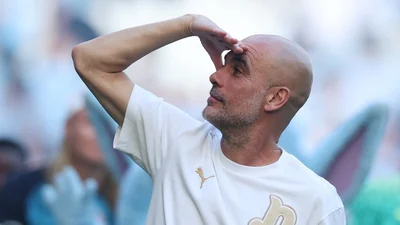
The decision by Pep Guardiola to reject Italy’s approach has become one of the most significant developments in international football following the 2026 FIFA World Cup cycle. At a time when Italy is desperately searching for direction after another major disappointment, the prospect of Guardiola taking charge had generated excitement among supporters, analysts, and football executives alike.
Instead, the former Barcelona, Bayern Munich, and Manchester City manager has chosen to step away from coaching for now, emphasizing that he would only accept a new role if he could commit himself completely.
While Guardiola’s decision closes one chapter, it opens several important questions. Why did Italy target him? Why did he decline? What does this mean for the future of the Italian national team? And could this decision ultimately reshape the international coaching landscape ahead of Euro 2028 and the 2030 FIFA World Cup?
The answers reveal much about the challenges facing modern football’s biggest nations.
Why Italy Wanted Pep Guardiola
Few managers in football history possess a résumé comparable to Guardiola’s.
Across multiple leagues and football cultures, he has consistently built dominant teams that combined tactical innovation with sustained success.
His achievements transformed him from an elite coach into a global football institution.
For Italy, approaching Guardiola was an understandable move.
The Azzurri are attempting to recover from one of the most difficult periods in their modern history. Once regarded as one of international football’s most reliable tournament teams, Italy now faces serious questions about player development, tactical identity, and long-term planning.
In such circumstances, attracting one of the greatest managers of his generation would have represented a statement of ambition and intent.
Italy’s Crisis: How Did It Reach This Point?
Italy’s current situation would have seemed almost unimaginable two decades ago.
For generations, the country was synonymous with tactical excellence, defensive organization, and tournament success. The Azzurri won multiple World Cups and consistently produced some of football’s most influential players and coaches.
However, recent years have been far less successful.
| Era | Italy’s Position in World Football |
|---|---|
| 1980s–2000s | Consistent global powerhouse |
| 2006 | FIFA World Cup champions |
| 2020s | Growing inconsistency and rebuilding phase |
| 2026 Cycle | Failure to qualify for another World Cup |
The repeated inability to return to football’s biggest stage has forced Italian football authorities to confront difficult questions about the future.
Hiring a transformational figure like Guardiola was seen by many as a potential solution.
The End of Guardiola’s Manchester City Era
Guardiola’s decision cannot be fully understood without considering what he recently experienced at Manchester City.
His decade-long spell in England was one of the most influential managerial tenures in modern football history.
During that period, City evolved from a successful club into a dominant football machine capable of controlling matches, winning trophies consistently, and influencing tactical trends worldwide.
Building and maintaining that level of excellence requires extraordinary physical and mental energy.
Elite management involves constant preparation, media obligations, squad management, tactical innovation, and intense public scrutiny.
After spending years operating under that pressure, Guardiola’s desire for a break is hardly surprising.
Why the Sabbatical Makes Sense
Football history is filled with examples of managers who benefited from stepping away temporarily.
The demands of elite coaching have increased dramatically over the past decade.
Today’s managers face:
- Continuous media coverage.
- Intense social media scrutiny.
- Increased tactical preparation requirements.
- Expanded commercial obligations.
- Higher expectations from clubs and supporters.
For someone who has spent most of his professional life operating at football’s highest level, a sabbatical may be less about retirement and more about renewal.
Guardiola’s comments suggest exactly that.
Rather than accepting a role without complete commitment, he has chosen patience over urgency.
“If I Do It, I Do It 100%” – The Meaning Behind Guardiola’s Words
Perhaps the most revealing aspect of the story is Guardiola’s explanation for rejecting the position.
His statement reflects a philosophy that has defined his career.
Whether at Barcelona, Bayern Munich, or Manchester City, Guardiola has always approached management with total immersion.
His teams are renowned for their tactical complexity, attention to detail, and relentless pursuit of improvement.
Such an approach is difficult to sustain without complete motivation.
By declining the Italy role rather than accepting it half-heartedly, Guardiola demonstrated the same standards that helped make him one of football’s most successful coaches.
What Italy Was Hoping to Gain
The attraction of Guardiola extended beyond trophies.
Italy’s football authorities appear focused on a broader rebuilding project that includes both the senior national team and youth development structures.
That objective aligns closely with Guardiola’s strengths.
Throughout his career, he has influenced not only teams but entire football cultures.
His ideas regarding possession, positional play, technical development, and tactical intelligence have shaped coaching methods across the globe.
Italy likely viewed him as a figure capable of driving long-term transformation rather than merely improving short-term results.
Paolo Maldini’s Rebuilding Mission
Another intriguing aspect of the situation is the role being played by Paolo Maldini.
One of the greatest defenders in football history, Maldini has been tasked with helping guide Italy’s football revival.
His challenge extends far beyond appointing a head coach.
The broader objective involves modernizing technical structures, strengthening development pathways, and ensuring the national team remains competitive for future generations.
In many ways, the next coaching appointment may become the most important decision of this rebuilding process.
The manager selected will likely shape Italy’s direction for years rather than months.
How International Football Is Changing
Guardiola’s rejection also highlights a growing trend in international football.
National associations increasingly seek elite club managers to accelerate development and improve competitiveness.
Recent years have seen several major nations turn toward coaches with proven club success.
The reasoning is clear.
Modern football has become increasingly sophisticated, and national teams want leaders capable of introducing advanced tactical concepts while managing high-profile players.
However, attracting such managers remains difficult because many prefer club environments where they have greater control and more time with players.
Could Guardiola Manage a National Team in the Future?
Although he has rejected Italy’s proposal, it would be premature to rule out an international coaching career entirely.
In fact, many football observers believe national-team management could eventually suit Guardiola well.
Several factors support that possibility:
- Reduced match frequency compared to club football.
- Opportunity to focus on major tournaments.
- Less daily operational pressure.
- Chance to work with elite players from across a nation.
- Potential to leave a different type of legacy.
The key issue appears to be timing rather than interest.
At this stage, Guardiola simply seems unwilling to begin another demanding project immediately after leaving Manchester City.
Who Could Italy Turn to Next?
With both Carlo Ancelotti and Guardiola reportedly declining opportunities, Italy faces a more complicated search.
The federation now confronts a difficult balancing act.
It needs a coach capable of producing immediate improvement while also embracing a long-term developmental vision.
That combination is not easy to find.
Potential candidates will likely be evaluated not only on tactical credentials but also on their willingness to participate in structural reform across Italian football.
The next appointment could ultimately define the country’s trajectory heading into Euro 2028 and beyond.
Comparing Italy’s Situation to Germany’s Klopp Appointment
The timing of Guardiola’s decision is particularly interesting because it coincides with Germany’s appointment of Jurgen Klopp.
Both countries entered rebuilding phases after disappointing international results.
| Germany | Italy |
|---|---|
| Appointed Jurgen Klopp | Still searching for coach |
| Clear leadership direction | Transition phase continues |
| Long-term project established | Project yet to be finalized |
| Immediate roadmap available | Future strategy still developing |
While both nations face challenges, Germany has already secured its chosen leader. Italy remains in the evaluation phase.
This difference could influence preparation and planning over the coming years.
What This Means for Euro 2028
Every major decision made today is ultimately connected to future tournaments.
For Italy, Euro 2028 represents the next major opportunity to restore credibility and competitiveness.
Success will depend not only on the eventual coaching appointment but also on broader improvements in player development, squad depth, and tactical identity.
The sooner those processes begin, the greater the chances of meaningful progress.
That reality increases the importance of finding the right coach rather than simply the most famous one.
Prediction: Italy Needs More Than a Superstar Manager
One lesson from modern football is that even the world’s best managers cannot solve every problem alone.
Successful national-team projects typically involve alignment between federations, coaching staffs, youth systems, clubs, and players.
While Guardiola would undoubtedly have elevated expectations, sustainable success requires structural support.
Italy’s recovery will likely depend as much on long-term planning as on the identity of the next manager.
The federation’s emphasis on rebuilding technical structures suggests that decision-makers understand this reality.
Conclusion: Guardiola’s Rejection Is About Timing, Not Ambition
Pep Guardiola’s decision to reject Italy’s offer may disappoint many supporters, but it reflects the same professionalism that has defined his managerial career. Rather than accepting one of football’s biggest jobs without complete commitment, he chose honesty and patience.
For Italy, the search continues. The federation remains tasked with identifying the coach capable of leading one of football’s proudest nations through a crucial rebuilding phase after years of disappointment.
While Guardiola’s arrival would have generated enormous excitement, his rejection also reinforces an important lesson: successful football projects are built on preparation, vision, and long-term commitment.
The next chapter for both Guardiola and Italy remains unwritten. Guardiola appears determined to recharge before considering his future, while Italy must continue searching for the leader who can restore the Azzurri to the top tier of international football.
Whether those paths eventually cross in the future remains uncertain. For now, however, one of football’s most coveted managerial opportunities remains vacant, and the race to fill it has become even more fascinating.
For breaking news and live news updates, like us on Facebook or follow us on Twitter and Instagram. Read more on Latest Sports on thefoxdaily.com.


COMMENTS 0