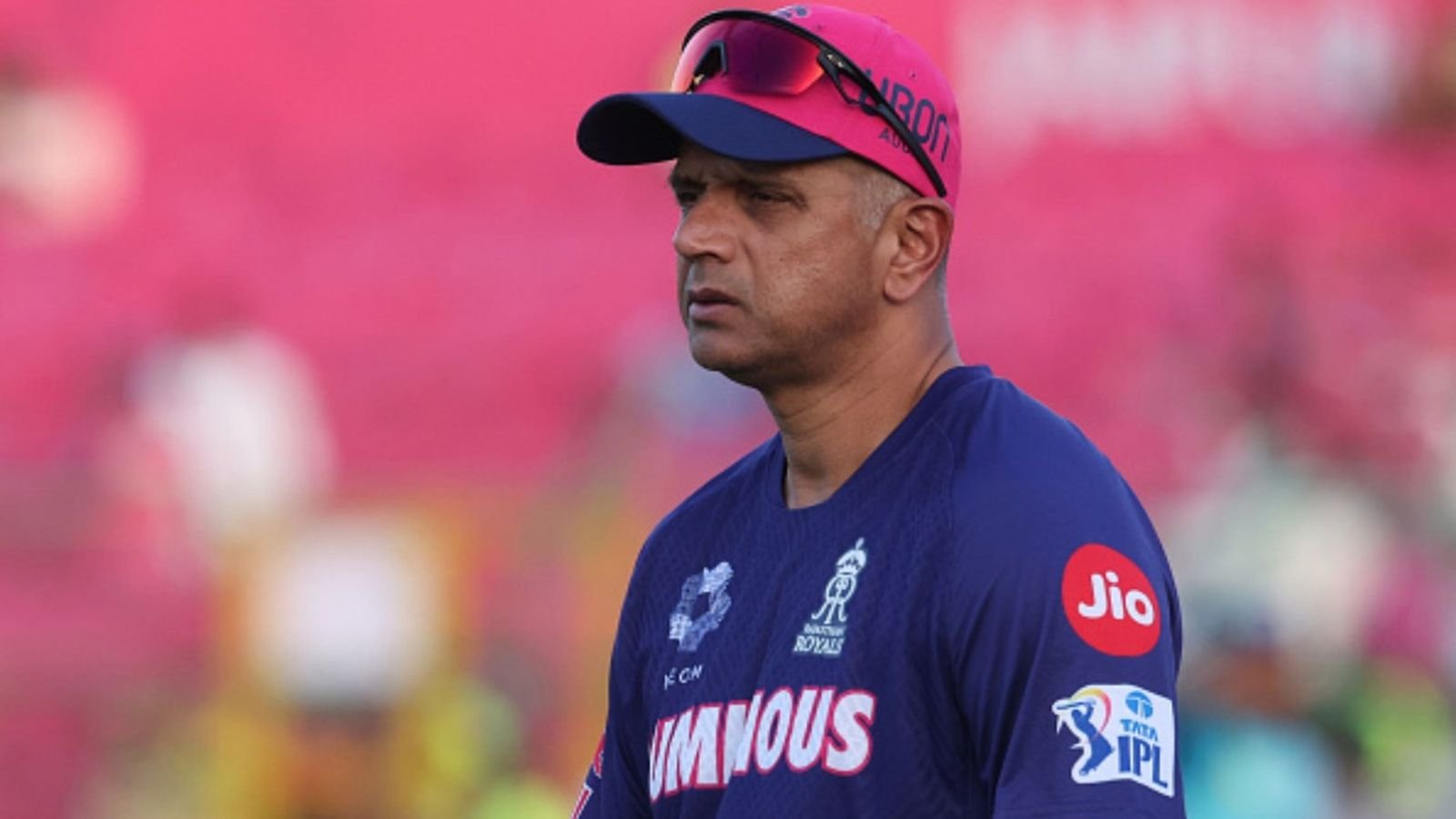
Rahul Dravid’s latest comments on T20 Cricket and Test cricket have highlighted one of the biggest questions facing the sport: how can cricket preserve its traditional identity while reaching a much larger global audience?
The former India captain and coach has made his position clear. Dravid remains deeply attached to Test cricket and considers it the most important format of the game. However, he also believes cricket must be realistic about the role of T20 if it wants to grow beyond its established markets.
Speaking recently on JioStar, Dravid explained that while Test cricket will always remain his personal No.1, T20 cricket offers an effective way to introduce the sport to new audiences. His comments come at a time when cricket continues to expand through franchise leagues, shorter international competitions and new markets.
The larger issue is therefore not simply whether Test cricket or T20 cricket is better. The more important question is what each format contributes to cricket’s future.
What did Rahul Dravid say about Test cricket and T20?
Rahul Dravid said that Test cricket would always remain the No.1 format for him, but he also stressed that cricket must use T20 to avoid becoming a niche sport played only by a limited number of countries.
Dravid’s argument reflects two different realities within modern cricket. Test matches represent the sport’s history, technical depth and traditional values, while T20 cricket provides a faster and more accessible route for new fans to discover the game.
His comments are particularly relevant because cricket’s global ambitions depend on attracting audiences that may not have grown up watching five-day matches.
Why T20 cricket is so important for global expansion
T20 cricket has several characteristics that make it suitable for introducing the sport to emerging markets.
First, the time commitment is considerably lower than a Test match. A viewer can watch an entire T20 game in one sitting and understand the outcome within a few hours.
Second, the format creates frequent moments of excitement. Boundaries, wickets, aggressive bowling changes and tactical decisions happen regularly, making the game easier to package for television and digital platforms.
Third, T20 competitions can be organised in countries where cricket does not yet have a deep domestic structure. A franchise league can bring international players together, create local interest and potentially inspire young athletes to try the sport.
That does not automatically create a successful cricket culture, but it can provide an important starting point.
Test cricket has something T20 cannot replace
While T20 may be an excellent growth tool, Dravid’s comments also underline why Test cricket cannot simply be pushed aside.
Test cricket remains the format that places the greatest emphasis on patience, concentration, technique and adaptability. Players have to deal with changing conditions, long spells of pressure and tactical battles that can develop over several days.
A batter may need to defend for long periods before attacking. A bowler may have to create pressure through repeated deliveries before eventually producing a breakthrough. Captains have to think several sessions ahead rather than simply planning for the next few overs.
Those qualities have historically made Test cricket the ultimate examination of a cricketer.
That is why Dravid’s position is more nuanced than simply saying that T20 is the future. His message suggests that cricket can use T20 to grow without abandoning the format that provides much of the sport’s traditional identity.
The biggest misunderstanding in the format debate
The cricket world often frames the discussion as Test cricket versus T20 cricket. That comparison is useful for debate, but it may not be the best way to understand the future.
Different formats can perform different jobs.
| Format | Main Strength | Potential Role |
|---|---|---|
| Test cricket | Depth, technique and tradition | Elite competition and long-term cricketing identity |
| ODI cricket | Balance between time and tactical depth | Major international tournaments and global storytelling |
| T20 cricket | Speed, accessibility and entertainment | Fan acquisition, commercial growth and market expansion |
This ecosystem approach could be more sustainable than treating one format as the winner and another as the loser.
T20 could become cricket’s gateway format
One of the most interesting implications of Dravid’s argument is the possibility that T20 cricket becomes a gateway rather than a replacement for traditional cricket.
A young person who has never watched cricket may find a short-format match easier to understand. Once that person develops an interest in a team or player, they may begin exploring international cricket, major tournaments and eventually Test cricket.
This is similar to how audiences in many sports consume different competitions and formats at different stages of their lives.
The important point is that the first contact with cricket does not necessarily determine the final level of engagement.
T20 can provide the introduction. International cricket can build national loyalty. Test cricket can offer the deeper version of the sport to fans who want to understand its tactical and technical layers.
Why global expansion matters more than simply adding tournaments
Cricket becoming more global cannot be measured only by the number of competitions being played.
True expansion requires sustainable participation, domestic pathways, coaching infrastructure, quality facilities, local competitions and opportunities for talented players.
This is where Dravid’s comments become particularly relevant.
If cricket wants to move into new countries, it needs formats that can attract spectators and encourage participation without requiring a decades-old cricket culture. T20 can help create that initial connection.
But the long-term challenge is turning interest into infrastructure.
A country may successfully host a T20 event, but the real test of expansion is what happens after the tournament ends. Are children playing cricket? Are local coaches being trained? Are domestic competitions improving? Are talented players receiving a pathway toward professional cricket?
Without those foundations, global expansion risks becoming temporary entertainment rather than genuine sporting development.
Dravid’s involvement in T20 makes his argument especially interesting
Dravid’s perspective also carries additional relevance because he has remained involved in the modern franchise side of cricket while maintaining a strong connection with traditional cricket.
That gives him a viewpoint from both sides of the format debate.
He understands why Test cricket remains technically and culturally important, but he also recognises the commercial and accessibility advantages of T20 cricket.
His position therefore avoids an easy conclusion. Instead of asking cricket to choose one format, he is effectively pointing toward a division of responsibilities.
The impact on young cricketers
The rise of T20 has also changed what young players need to learn.
Modern cricketers are increasingly expected to possess multiple skills. Batters need to score at different tempos, bowlers must adapt to changing tactical demands and fielders are expected to contribute athletic performances across formats.
For a young player, T20 can teach decision-making under pressure and the importance of scoring quickly. Test cricket, meanwhile, teaches patience, defensive technique and the ability to build pressure over long periods.
Learning both can produce a more complete cricketer.
That is why the development of young players should not be viewed as a choice between traditional coaching and modern short-format skills. The strongest pathway may be one that teaches players how to adjust their game according to the demands of each format.
Could T20 actually help protect Test cricket?
This is perhaps the most interesting question raised by Dravid’s comments.
At first glance, the growth of T20 appears to threaten Test cricket because players, broadcasters and fans have limited time and attention. However, the relationship could also work in the opposite direction.
If T20 introduces millions of new people to cricket, a percentage of those viewers could eventually become interested in longer formats.
That means T20’s success does not necessarily have to come at Test cricket’s expense.
The challenge is creating a pathway between the formats rather than allowing them to exist as completely separate products.
The commercial reality cricket cannot ignore
Modern professional sport depends heavily on audience attention, broadcasting agreements, sponsorship and digital engagement. T20 cricket fits naturally into this environment because matches are shorter and easier to schedule around other entertainment options.
Test cricket operates under a different commercial model. A five-day match requires a deeper commitment from viewers and broadcasters.
That does not make Test cricket less valuable. It simply means that the two formats have different economic characteristics.
Cricket administrators therefore face a difficult balancing act: protecting the highest level of traditional competition while creating enough space for the formats that drive audience growth.
What could happen next?
If Dravid’s broader philosophy becomes increasingly influential, cricket’s future could involve a clearer division between formats rather than a direct competition for survival.
T20 could become the primary tool for introducing cricket to new markets and younger audiences. ODI cricket could continue to provide a major international tournament format, while Test cricket could remain the ultimate test of elite cricketing ability.
The key will be maintaining quality.
Simply adding more matches is not the same as expanding the sport. Cricket needs meaningful competitions, strong player development and sustainable domestic structures if new markets are going to become genuine cricket nations.
Rahul Dravid’s message is ultimately about cricket’s identity
Dravid’s comments are important because they avoid the simplistic argument that modern cricket must either protect tradition or embrace change.
Cricket needs both.
Test cricket provides the sport with depth and heritage, while T20 cricket can provide the accessibility and reach required for global expansion.
The real danger would be allowing the success of one format to weaken the ecosystem supporting the others.
If cricket can use T20 as an entry point while continuing to develop players capable of succeeding in longer formats, the two sides of the game can complement each other.
Conclusion: T20 may be the door, but Test cricket remains the destination for depth
Rahul Dravid’s latest comments offer a measured perspective on one of cricket’s biggest challenges. His affection for Test cricket remains clear, but he also recognises that the sport cannot expand globally by relying exclusively on its longest format.
T20 cricket has the potential to introduce new audiences to cricket, create commercial opportunities and encourage participation in countries where the sport is still developing.
But global expansion should not mean abandoning cricket’s traditional foundations. The ultimate goal should be a healthier ecosystem in which T20 attracts new fans, international cricket builds wider interest and Test cricket continues to represent the game’s deepest competitive challenge.
That may be the most important idea behind Dravid’s warning: cricket does not have to choose between its past and its future. It needs to find a way for both to survive together.
For breaking news and live news updates, like us on Facebook or follow us on Twitter and Instagram. Read more on Latest Cricket on thefoxdaily.com.






COMMENTS 0