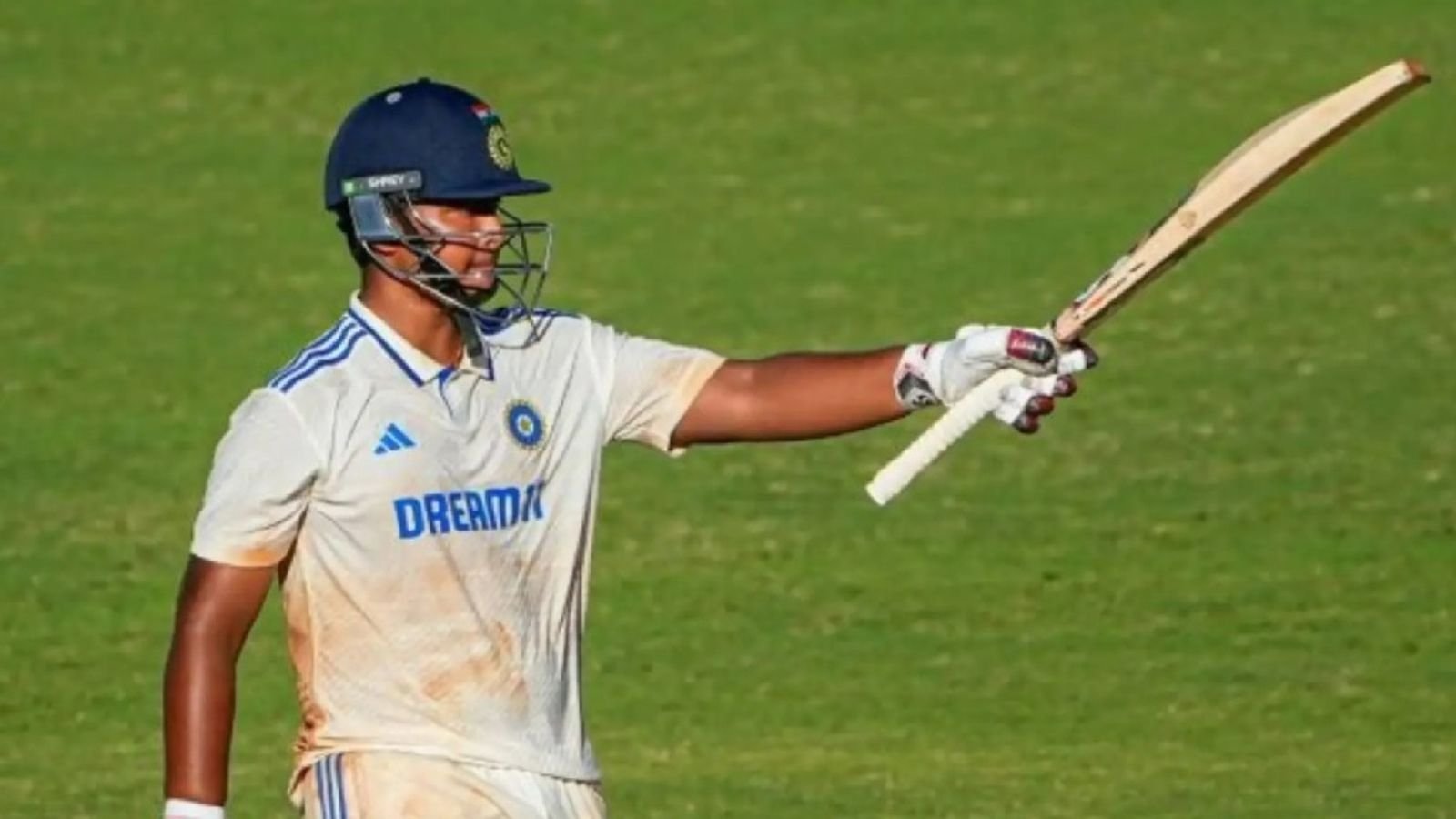
Rahul Dravid has backed Vaibhav Sooryavanshi to develop into an all-format cricketer, arguing that young players with the teenager’s talent could play an important role in keeping Test cricket relevant for future generations.
The 15-year-old batter has already attracted enormous attention through his performances in franchise and limited-overs cricket. His next challenge, however, is very different. Sooryavanshi is set to begin an important phase of his red-ball development with East Zone in the Duleep Trophy 2026.
Dravid, who previously worked with Sooryavanshi at Rajasthan Royals, believes the youngster needs sustained exposure to multi-day cricket. The former India head coach’s comments also highlight a larger issue facing modern cricket: how can young players develop the patience, technique and temperament required for Test cricket when T20 cricket increasingly dominates the calendar?
For Sooryavanshi, the answer will not come from one spectacular innings. His real test will be whether he can gradually build the skills required to succeed across formats.
What Rahul Dravid said about Vaibhav Sooryavanshi
Dravid believes players such as Sooryavanshi are important to the future of Test cricket and wants to see the teenager develop the ability to play every format.
“All of us also want to see Tests survive, all of us want to see Tests grow and we need players like him to be able to hopefully play all formats of the game,” Dravid said.
The statement goes beyond praise for one talented teenager. Dravid is effectively making the case for a development pathway in which young cricketers are not pushed exclusively toward white-ball cricket.
Sooryavanshi’s rise has happened largely through the shortest format, making his transition to first-class cricket particularly significant. The Duleep Trophy could therefore become an important stage in determining how quickly he adapts to the demands of red-ball cricket.
Why red-ball cricket is a completely different challenge
T20 cricket rewards immediate impact. Batters are expected to score quickly, take calculated risks and exploit small gaps in the field.
Test cricket demands something different.
A batter may need to leave deliveries outside the off stump for long periods, defend patiently, understand changing pitch conditions and maintain concentration across multiple sessions. Shot selection also becomes more complicated because a mistake can have consequences far beyond one over.
For an aggressive young batter like Sooryavanshi, learning this balance will be crucial.
His ability to attack is an asset, but Test cricket will ask him to understand when aggression creates an advantage and when patience is the better weapon. That is a skill developed through repeated exposure rather than a few practice sessions.
Vaibhav Sooryavanshi’s red-ball numbers show why patience is needed
Despite his enormous reputation in limited-overs cricket, Sooryavanshi’s early first-class numbers demonstrate that his red-ball journey is still at the beginning.
Across 12 Ranji Trophy Plate League innings, he has averaged 17.25. Those figures are modest compared with the expectations surrounding him, but they should not be interpreted as a verdict on his long-term potential.
At 15, Sooryavanshi is still developing physically, technically and mentally. His early first-class struggles are part of the learning process that Dravid believes is necessary.
That distinction is important because young players are often judged against the hype surrounding them. When expectations rise quickly, ordinary failures can appear much bigger than they actually are.
For Sooryavanshi, the more useful question is not whether he immediately dominates the Duleep Trophy. It is whether he improves his decision-making, defence and ability to bat for extended periods.
Duleep Trophy 2026 could be a major development opportunity
Sooryavanshi’s participation in the Duleep Trophy gives him an opportunity that short-form cricket cannot replicate: uninterrupted time at the crease.
He is expected to play at least two matches for East Zone, with a potential third match if the team reaches the final.
That means he could receive multiple opportunities to experience the different phases of a first-class game.
- First innings: Learning to build an innings against a fresh bowling attack.
- Middle sessions: Managing concentration when the initial excitement disappears.
- Second innings: Adjusting technique and temperament based on the match situation.
- Pressure situations: Learning how to bat when the team needs survival rather than rapid scoring.
Those experiences are difficult to reproduce in T20 cricket because the tactical and time demands are completely different.
Why Dravid wants Sooryavanshi to play all formats
Dravid’s argument is not that Sooryavanshi should abandon white-ball cricket. Quite the opposite.
The former India captain wants young players to develop enough technical depth to move between formats successfully.
An all-format batter needs to understand that the same basic skill can have different applications. A shot that is highly effective in a T20 powerplay may be dangerous during the opening hour of a Test. Similarly, defensive technique developed in first-class cricket can strengthen a batter’s foundation in shorter formats.
That adaptability can make a player more valuable to a national team.
For India, producing cricketers who can transition between formats could become increasingly important as international schedules become more demanding and players face competing priorities.
Sooryavanshi’s T20 success has created enormous expectations
Sooryavanshi’s rise has been remarkably fast. His explosive batting performances have made him one of the most discussed teenage prospects in Indian Cricket.
However, that attention also creates a potential problem.
Every successful innings increases expectations, while every failure can attract disproportionate criticism. A teenager making the transition to first-class cricket needs the freedom to fail, learn and adjust without being treated as though every innings is a career-defining event.
Dravid’s comments are significant because they emphasize patience rather than immediate results.
The objective should be to develop Sooryavanshi into a better cricketer over several years, not simply to turn his current popularity into a quick international debut.
Rahul Dravid’s experience makes his advice especially relevant
Dravid’s own career gives context to his emphasis on red-ball cricket. He was one of India’s most accomplished Test batters and built his reputation through concentration, technique and the ability to play long innings.
His coaching career has also exposed him to the development of young players in modern cricket, including his association with Rajasthan Royals.
Dravid’s previous involvement with Sooryavanshi means his assessment comes from having observed the youngster in a professional environment rather than simply watching his highlights.
That makes his central message clear: talent can open the door, but long-format cricket requires a separate layer of development.
From IPL success to Test cricket: The difficult transition
The modern pathway from domestic cricket to international cricket is increasingly influenced by franchise leagues.
For young players, T20 cricket can provide exposure to international stars, high-pressure situations and sophisticated coaching systems. That experience is valuable, but it does not automatically prepare a batter for five-day cricket.
The transition requires patience.
A young batter may have to learn how to play 150 or 200 balls instead of 30 or 40. They need to understand how a bowler’s strategy evolves over several spells and how a pitch can change dramatically between sessions.
These are not simply technical lessons. They are habits that develop through experience.
The biggest test for Sooryavanshi will be shot selection
One of the most interesting aspects of Sooryavanshi’s development will be how he manages his natural attacking instincts.
There is no reason for him to completely abandon aggressive batting. Modern Test cricket increasingly rewards positive intent, and attacking batters can change matches rapidly.
The challenge is knowing when to attack.
A mature Test batter can identify when the bowler is offering an opportunity and when the correct decision is simply to defend or leave the ball. That judgment separates sustained red-ball success from occasional brilliance.
Sooryavanshi’s development should therefore focus on expanding his options rather than restricting his natural game.
Why domestic cricket matters for India’s future
The larger lesson from Dravid’s comments is the importance of India’s domestic red-ball structure.
International cricket can provide opportunities, but domestic first-class cricket is where young players can accumulate the experience needed to handle long-format demands.
For a player as young as Sooryavanshi, the Duleep Trophy offers a bridge between youth cricket, domestic first-class cricket and eventually international Test cricket.
If that pathway works correctly, the player can progress naturally instead of being rushed into international cricket because of short-term hype.
Sooryavanshi could also benefit from India A exposure
Another important opportunity could arrive in September, when India A are scheduled to face Australia A in two unofficial Tests.
For Sooryavanshi, exposure to another first-class environment could provide another valuable learning experience if selected.
Facing strong Australian opposition would test his technique against different bowling styles and provide a useful benchmark for his development.
But again, the emphasis should be on learning rather than demanding immediate dominance.
What Sooryavanshi needs to improve in red-ball cricket
There are several areas that will naturally become important as the teenager develops his first-class game.
- Defensive technique: Building confidence in leaving and defending good-length deliveries.
- Concentration: Maintaining focus across long periods at the crease.
- Shot selection: Understanding when aggression is beneficial and when restraint is required.
- Bowling adaptation: Learning how different bowlers create pressure over longer spells.
- Game awareness: Reading match situations rather than focusing only on personal scoring.
- Physical development: Building the endurance required for multi-day cricket as he grows.
None of these areas needs to be perfected immediately. The objective is gradual improvement.
Why Test cricket needs young stars like Sooryavanshi
Dravid’s comments also touch on a much broader question: the future of Test cricket.
As franchise T20 leagues continue to expand, Test cricket must remain attractive to the next generation of players. Young stars choosing to invest time in red-ball cricket can help maintain that connection.
Players like Sooryavanshi have the visibility to influence younger fans. If a teenage star becomes successful across formats, it can demonstrate that Test cricket still has a place alongside modern short-form competitions.
That is why Dravid’s statement that players like Sooryavanshi are important for the survival and growth of Tests carries significance beyond one player.
A comparison: T20 development vs Test development
| Area | T20 cricket | Test cricket |
|---|---|---|
| Primary requirement | Immediate impact | Sustained performance |
| Batting tempo | Usually aggressive | Flexible and situation-dependent |
| Concentration | Short, intense periods | Long periods across multiple sessions |
| Shot selection | Risk can create high rewards | Risk must be carefully managed |
| Development benefit | Exposure to pressure and innovation | Technique, patience and game awareness |
For Sooryavanshi, becoming an all-format player means learning to combine both skill sets rather than choosing one over the other.
The prediction: Sooryavanshi’s next breakthrough may come in red-ball cricket
It would be too early to predict exactly when Sooryavanshi could become an India Test player. His age alone means there is plenty of development still ahead.
However, the Duleep Trophy could become an important turning point.
If he can use the competition to improve his defence, build longer innings and develop patience, the benefits could eventually extend to every format he plays.
His early red-ball struggles may ultimately prove useful if they teach him how to respond to difficult conditions before he reaches international Test cricket.
In that sense, failure at 15 can be more valuable than easy success if the player and coaching staff use it properly.
Conclusion: Rahul Dravid’s message is bigger than Vaibhav Sooryavanshi
Rahul Dravid’s backing of Vaibhav Sooryavanshi is not simply a prediction about one teenage batter. It is a strong argument for giving talented young cricketers enough time and opportunity to develop across formats.
Sooryavanshi has already demonstrated the ability to attract attention through explosive white-ball cricket. His next challenge is to prove that he can adapt those natural abilities to the patience and technical demands of first-class cricket.
The Duleep Trophy 2026 provides an ideal platform for that process. With at least two matches expected and the possibility of a third, Sooryavanshi can gain valuable red-ball experience before potentially entering another important phase with India A.
His early first-class average of 17.25 shows that the transition will not necessarily be easy. But that is precisely why Dravid is asking for patience.
If Sooryavanshi can develop into a genuine all-format cricketer, his value could extend far beyond personal records. He could become part of a generation that keeps India’s Test cricket pipeline strong while thriving in the T20 era.
For breaking news and live news updates, like us on Facebook or follow us on Twitter and Instagram. Read more on Latest Cricket on thefoxdaily.com.






COMMENTS 0