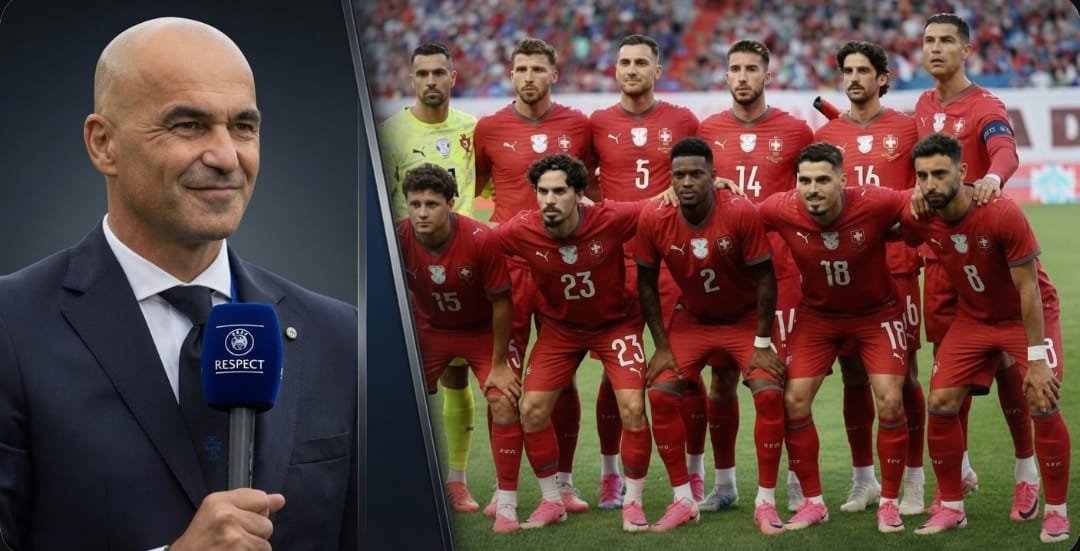
The debate around Portugal’s starting XI has taken a new turn after head coach Roberto Martínez made a striking statement following his team’s 2-1 friendly win over Nigeria. With the 2026 FIFA World Cup fast approaching, Martínez has challenged traditional football thinking by insisting that Portugal do not actually have a fixed starting lineup.
Instead, the Spanish manager is promoting a fluid, competition-driven system where all 26 squad players are considered starters depending on form, tactics, and opposition. This philosophy comes at a crucial time as Portugal prepare for their World Cup opener against DR Congo on June 17.
The match against Nigeria not only offered tactical insights but also raised questions about Cristiano Ronaldo’s evolving role at age 41, squad rotation strategy, and how Portugal plan to compete against elite international opposition with a flexible system rather than a settled XI.
Context: Portugal’s evolving identity under Roberto Martínez
When Roberto Martínez took charge of Portugal, expectations were clear: maximize one of the most talented generations in world football. With stars like Cristiano Ronaldo, Bruno Fernandes, Bernardo Silva, Pedro Neto, and emerging talents such as Francisco Conceição, Portugal were expected to establish a stable core.
However, Martínez has chosen a different route—prioritizing adaptability over consistency. His latest comments reinforce a long-term tactical vision where Portugal function less like a traditional national team and more like a club system with interchangeable roles.
This philosophy has been tested in Portugal’s recent fixtures:
- 0-0 draw vs Mexico
- 2-0 win vs USA
- 2-1 win vs Chile
- 2-1 win vs Nigeria
While results have been positive, the bigger takeaway is experimentation. Martínez is not just building a team; he is building a system designed to adapt within matches rather than before them.
Key developments from the Nigeria friendly
The 2-1 victory over Nigeria at the Estádio Municipal de Leiria provided a snapshot of Portugal’s tactical flexibility.
Martínez started with Cristiano Ronaldo leading the line, supported by Francisco Trincão and Pedro Neto. The early goal from Neto showcased Portugal’s ability to stretch defenses through pace and wide movement.
Nigeria responded through Akor Adams, exposing occasional defensive transitions that still need refinement. However, Portugal’s depth proved decisive when Francisco Conceição came off the bench to score the winner.
The match highlighted a key theme: Portugal are no longer dependent on a single attacking structure. Instead, they can shift momentum through substitutions and tactical reshaping during the game.
Martínez’s bold claim: “There is no starting XI”
The most controversial moment came after the final whistle when Martínez stated:
“It’s a mistake to think I have a starting XI. There are 26 players who can help. I can’t limit talent to 11 players.”
This philosophy breaks away from traditional national team management, where a stable core XI is usually preferred for chemistry and consistency.
Instead, Martínez is applying a modern football principle seen in elite club sides: rotation based on match context rather than fixed hierarchy.
His reasoning is rooted in three key ideas:
- Form changes quickly during tournament cycles
- Different opponents require different tactical solutions
- Substitutes can be as decisive as starters
This approach signals that even established stars like Cristiano Ronaldo are not guaranteed automatic starts in every game.
Portugal’s tactical evolution: From hierarchy to flexibility
Historically, Portugal relied heavily on a stable core group, especially during the Ronaldo era. Systems were often built around maximizing the output of their captain.
Under Martínez, however, the structure is more fluid. The team can shift between:
- 4-3-3 attacking width-based system
- 4-2-3-1 controlled possession structure
- Hybrid pressing system with false winger movements
This flexibility allows Portugal to adapt mid-game without substitutions, a crucial advantage in tournament football where matches often hinge on tactical adjustments rather than raw talent.
Ronaldo at 41: Leadership role vs tactical dependency
Cristiano Ronaldo remains central to Portugal’s identity, but his role is clearly evolving. Against Nigeria, he failed to register a shot on target despite multiple attempts and was substituted in the 65th minute.
While his influence remains significant, the data suggests a transition phase:
| Aspect | Observation | Implication |
|---|---|---|
| Minutes played in friendlies | 110 total across four matches | Managed workload for tournament peak |
| Goal contribution | No goals in recent friendlies | Shift from scoring dependency |
| Shot accuracy vs Nigeria | 0 shots on target | Declining finishing efficiency in buildup games |
| Tactical role | Central striker / focal point | Still used as reference attacker |
Despite these numbers, Ronaldo’s importance goes beyond statistics. His leadership, movement in the box, and psychological presence remain vital in knockout tournaments.
Emerging stars pushing for starting roles
One of the biggest outcomes of Martínez’s rotational philosophy is increased competition among attacking players.
Francisco Conceição’s winning goal against Nigeria is a clear example of how substitutes are influencing selection decisions. Meanwhile, Pedro Neto continues to impress with direct attacking runs, while Bruno Fernandes remains the creative engine of the team.
This creates a selection dilemma:
- Should Portugal prioritize experience or form?
- Should Ronaldo start every match or be used strategically?
- Can young attackers handle knockout-stage pressure?
The answers to these questions will likely define Portugal’s World Cup campaign.
Why Martínez’s system could be a tournament advantage
While critics argue that constant rotation may disrupt chemistry, there is a strong strategic upside.
Modern tournaments are increasingly decided by tactical depth rather than fixed lineups. Teams like France and England have previously benefited from having multiple match-winners on the bench.
Portugal’s approach mirrors this trend by ensuring:
- Fresh legs in every match phase
- Unpredictable attacking patterns
- Reduced reliance on individual players
This system also makes Portugal harder to analyze for opponents preparing in advance.
Potential risks: Chemistry vs consistency
However, the “no fixed XI” philosophy is not without risks.
Football at international level often rewards cohesion built over repeated combinations. Constant rotation may lead to:
- Reduced defensive synchronization
- Unclear attacking relationships
- Pressure on players to constantly adapt
Against elite opponents, even small miscommunications can decide matches. Martínez will need to carefully balance experimentation with stability as the tournament progresses.
Comparison: Traditional XI vs Martínez’s fluid model
| Factor | Traditional Fixed XI | Martínez Fluid System |
|---|---|---|
| Team Chemistry | High due to repetition | Variable depending on rotation |
| Tactical Flexibility | Limited mid-game changes | Highly adaptable structure |
| Player Motivation | Stable roles | High competition for places |
| Opponent Preparation | Easier to predict | Harder to analyze |
| Risk Factor | Low instability | Higher coordination risk |
What this means for Portugal’s World Cup campaign
Portugal enter the 2026 FIFA World Cup with one of the deepest squads in international football. However, depth alone does not guarantee success.
Martínez’s philosophy suggests that Portugal will not rely on a predictable starting XI. Instead, they will evolve game by game depending on opponent structure and player form.
The opening match against DR Congo will be the first real test of this system under World Cup pressure.
Key factors to watch include:
- Whether Ronaldo starts or is managed carefully
- How quickly substitutions influence match tempo
- Whether defensive consistency holds under rotation
Conclusion: A bold experiment at football’s biggest stage
Roberto Martínez’s claim that “there is no starting XI” represents more than just a tactical comment—it signals a shift in how elite international teams may be structured in the modern era.
Portugal are entering the 2026 World Cup with a hybrid identity: part traditional powerhouse led by Cristiano Ronaldo, and part modern tactical laboratory driven by rotation and adaptability.
If the system works, Portugal could become one of the most unpredictable and dangerous teams in the tournament. If it fails, questions will arise about whether consistency was sacrificed for flexibility.
Either way, Martínez has ensured one thing: Portugal’s journey will be one of the most closely watched stories of the World Cup.
For breaking news and live news updates, like us on Facebook or follow us on Twitter and Instagram. Read more on Latest Sports on thefoxdaily.com.






COMMENTS 0