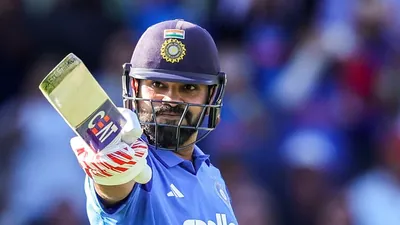
Rohit Sharma’s future has once again become a major talking point in Indian Cricket, with the Board of Control for Cricket in India preparing for a high-powered meeting that could provide greater clarity about the veteran opener’s international career.
The meeting in Mumbai is expected to cover several important issues, including chief selector Ajit Agarkar’s tenure, India’s recent tours of England and Sri Lanka, and the team’s planning for the next phase of international cricket.
Among the most closely watched subjects will be Rohit’s place in India’s ODI plans. Reports have suggested that the selection committee had earlier considered moving in a different direction ahead of the 2027 ODI World Cup, while BCCI officials have appeared more supportive of the former captain continuing his career.
That difference in approach has created an unusual situation. Rohit remains one of India’s most experienced white-ball players, but the selectors must also plan for the future and determine how the next generation fits into the team.
The issue became even more complicated after speculation that the Lord’s ODI against England could be Rohit’s final appearance for India. Instead of ending his international career, however, Rohit responded with a commanding century that immediately changed the conversation.
Why Rohit Sharma’s Future Has Become a BCCI Issue
The debate surrounding Rohit is not simply about one player. It reflects the larger challenge of managing a transition between an established generation and the players expected to lead India toward the 2027 World Cup.
Rohit has already experienced an extraordinary international career, including leadership at the highest level and major tournament success. His continued presence can provide experience, but selectors must also determine whether his role fits their long-term plans.
Reports previously indicated that the selectors did not see Rohit as part of their preferred plans for the 2027 World Cup and that the matter had been communicated to him.
That reported position appeared to clash with the subsequent public support coming from BCCI secretary Devajit Saikia, who backed Rohit’s continuation after retirement speculation intensified.
The difference between selection planning and board-level support is what has made the situation particularly significant. A player’s future is normally handled through selection discussions, but when senior board officials publicly express their views, it can create questions about who ultimately determines the direction of Indian cricket.
The Mumbai Meeting Could Provide Important Answers
The upcoming BCCI meeting is expected to bring several influential figures together. BCCI secretary Devajit Saikia, head coach Gautam Gambhir, chief selector Ajit Agarkar and Centre of Excellence head VVS Laxman are among those expected to be involved.
There have also been reports suggesting that captains Shubman Gill and Shreyas Iyer could attend, adding another layer of senior cricketing perspective to the discussions.
The meeting is therefore more than a routine administrative gathering. It comes at a time when India are reviewing performances from recent overseas assignments while also considering the composition of the side for the next major ODI cycle.
Rohit’s future naturally fits into that discussion because the decision affects not only one player but also India’s opening combination, leadership structure and succession planning.
How the England ODI Series Changed the Narrative
Rohit’s position became particularly uncertain during India’s ODI tour of England.
He started the series with scores of 11 and 26, performances that immediately led to questions about his place in the side. The discussion became even louder because Yashasvi Jaiswal was not part of the playing combination, leading to wider questions about India’s preferred opening options.
For a player of Rohit’s stature, two low scores were enough to trigger intense debate. At the same time, the criticism demonstrated how quickly expectations can change around senior players.
However, Rohit responded in the strongest possible manner: with runs.
In the third ODI at Lord’s, he scored 138. Although India ultimately lost the match, the innings provided a powerful reminder of his ability to influence a game against high-quality opposition.
The century complicated any suggestion that his career had naturally reached its conclusion. It also raised an obvious question for the selectors: should a player capable of producing such an innings still be considered for the 2027 World Cup?
Rohit’s 138 Was More Than Just a Century
Statistics alone cannot determine a player’s future, but important performances can influence the context of a selection debate.
Rohit’s 138 came when his place in the team was under significant scrutiny. That timing made the innings particularly important from a narrative perspective.
It demonstrated that even after early struggles in the series, he could still produce a major performance in a high-profile ODI.
However, one century cannot automatically settle a long-term selection decision. The selectors must consider fitness, consistency, age, workload, performance across the next series and the requirements of the 2027 World Cup.
That is why the BCCI discussion is likely to focus on the bigger picture rather than treating the Lord’s innings as the final answer.
The Selector-Board Rift Adds Another Dimension
The most sensitive aspect of the situation is the reported difference between the selection committee and senior BCCI officials.
If selectors believe that India should transition away from Rohit before the 2027 World Cup while board officials believe he should continue, the issue becomes larger than individual selection.
Selectors are responsible for building squads based on performance, balance and future requirements. Board officials, meanwhile, oversee the wider administration of Indian cricket.
Maintaining a clear division of responsibilities is important because selection decisions need credibility. Players and supporters need to understand that places are determined through a transparent sporting process.
That does not mean senior board officials cannot have opinions. It means those opinions need to coexist with the authority and independence of the selection process.
What Does the 2027 World Cup Mean for Rohit?
The 2027 ODI World Cup is central to the discussion because India must decide what kind of squad it wants to take into the tournament.
A World Cup campaign requires players who can handle pressure, perform consistently and remain physically available throughout a demanding tournament. Experience can be extremely valuable, particularly in major knockout matches.
Rohit has considerable experience in global tournaments and understands the pressure associated with playing for India. His leadership background also means he can offer knowledge to younger players.
At the same time, long-term planning requires India to prepare the next generation. Shubman Gill is already a major part of that future, while other opening options will also need opportunities before the World Cup.
The challenge is finding the right balance between experience and succession.
Rohit Sharma and the Next Generation
India’s ODI planning cannot revolve around one player indefinitely. Even if Rohit continues, selectors will need to identify who could eventually replace him at the top of the order.
That makes the role of younger batters particularly important. Players such as Yashasvi Jaiswal represent the future of Indian batting, while Gill has already moved into a leadership position.
The key question is whether India should make the transition immediately or allow the younger players to develop around experienced campaigners.
There is no universally correct answer. Some teams benefit from a gradual transition, while others prefer to make major changes well before a World Cup.
For India, the decision will depend heavily on performances over the next year.
Upcoming ODI Series Could Influence the Decision
India’s upcoming ODI schedule will provide an important opportunity to evaluate the team’s options.
India are scheduled to play five ODIs in New Zealand in November, followed by three home matches against Sri Lanka toward the end of the year.
Those eight matches could give selectors valuable evidence before making long-term decisions about the ODI squad.
If Rohit performs consistently, the argument for retaining him will naturally become stronger. If younger players perform exceptionally well and establish themselves, the selectors may find it easier to begin the transition.
That makes the upcoming matches important not just for results but also for squad planning.
India’s ODI Planning: Experience vs Youth
| Factor | Rohit Sharma | Younger Options |
|---|---|---|
| Experience | Extensive international and tournament experience | Limited compared with Rohit |
| Big-match exposure | Highly experienced in major tournaments | Developing at international level |
| Future planning | Shorter-term option | Potential long-term core |
| Leadership experience | Former India captain | Primarily part of the next-generation setup |
| Selection question | Can he remain effective through 2027? | Can they establish themselves before the World Cup? |
This is the fundamental balancing act facing Indian selectors. Retaining experienced players can provide stability, while introducing younger players early can make the eventual transition smoother.
The ideal solution may not necessarily involve choosing one group over the other. India could potentially use experienced players alongside younger talent while gradually preparing the next generation.
Why Shubman Gill’s Role Matters
Shubman Gill is an important part of the wider conversation because he represents the direction in which Indian cricket is moving.
With Gill already occupying a major leadership role, India’s transition is no longer something that exists only in future plans. A new generation is already becoming central to the national setup.
That does not automatically mean there is no room for Rohit. Instead, it creates the possibility of a team combining experienced campaigners with emerging leaders.
How that combination develops over the next year will be closely watched.
Could Rohit Still Make the 2027 World Cup Squad?
At this stage, it would be premature to say that Rohit is certain to play in the 2027 World Cup or certain to miss it.
The available reports indicate that his future remains under discussion, and even his impressive century at Lord’s did not completely settle the matter.
The selectors will likely evaluate several factors before reaching a final decision. These include his ODI performances, fitness, role within the batting order, the development of younger players and India’s tactical requirements.
The most important factor will ultimately be sustained performance. If Rohit continues to demonstrate that he can make meaningful contributions against strong opposition, removing him becomes a much more complicated decision.
The Leadership Question Has Also Changed
Rohit’s situation is different from previous years because he is no longer the central captain of India’s ODI setup.
That could potentially make selection decisions simpler in one respect. The selectors can focus primarily on his role as a batter and senior player rather than combining that discussion with captaincy responsibilities.
At the same time, his experience can still influence the dressing room. Senior players often contribute through guidance and tactical understanding even when they are not captains.
For a young Indian squad entering another major tournament cycle, that experience could have significant value.
What the BCCI Must Get Right
The most important requirement for the board and selectors is clarity.
If Rohit remains part of the ODI plans, his role should be clearly defined. If the selectors intend to transition toward younger players, that process should also be communicated and managed carefully.
Uncertainty can create unnecessary speculation and distractions around the team. A transparent selection strategy would allow both experienced and younger players to understand what is expected of them.
The situation also highlights the importance of maintaining a healthy relationship between the board, coaching staff and selection committee.
India’s cricket structure contains several powerful stakeholders, but the ultimate objective should remain the same: building the strongest possible team for upcoming international assignments and major tournaments.
Why the Next Few ODI Series Could Be Decisive
The upcoming matches against New Zealand and Sri Lanka could become an important testing ground for India’s ODI combination.
Selectors can assess Rohit alongside younger alternatives, examine different opening combinations and determine how the middle order and leadership group fit together.
That makes the next phase of India’s ODI calendar potentially more significant than any single statement or meeting.
Performance on the field will eventually provide the strongest evidence.
Rohit Sharma’s Legacy Is Already Secure
Regardless of the final decision, Rohit does not need a place in the 2027 World Cup to establish his importance to Indian cricket.
He has already built a remarkable international career and played a central role in India’s white-ball cricket for many years.
His ability to produce a 138-run innings at Lord’s after retirement speculation showed why his name continues to generate such strong interest. Even when his future is questioned, his capacity to produce decisive performances remains a major part of the conversation.
However, legacy and selection are separate issues. The selectors must look forward as well as backward when planning for a World Cup several months away.
Conclusion: Rohit Sharma’s Future Remains Open
Rohit Sharma’s future with India has entered another important phase as senior BCCI officials, selectors and team management prepare to discuss the direction of Indian cricket.
Reports of differences between the board and selection committee have made the issue more complicated, while Rohit’s 138 against England has ensured that his case cannot simply be dismissed on the basis of age or recent criticism.
The upcoming ODI assignments against New Zealand and Sri Lanka should provide further evidence. Rohit will have opportunities to demonstrate whether he can remain an effective part of India’s long-term plans, while younger players will have their own chance to establish themselves.
The central question is therefore not simply whether Rohit Sharma will retire or continue. It is whether his performances, experience and role can fit into the India team that selectors want to take toward the 2027 World Cup.
For now, there is no definitive answer. The BCCI meeting may provide greater clarity, but the performances that follow it are likely to have an even bigger influence on Rohit Sharma’s international future.
For breaking news and live news updates, like us on Facebook or follow us on Twitter and Instagram. Read more on Latest Cricket on thefoxdaily.com.






COMMENTS 0