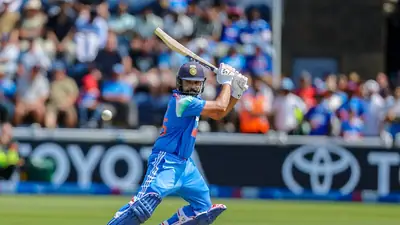
Few cricketers in modern history have shaped India’s white-ball identity as profoundly as Rohit Sharma. Yet in 2026, the conversation surrounding the former India captain has shifted from records and milestones to an uncomfortable question: What comes next?
Recent reports suggesting that Rohit Sharma may no longer be part of India’s plans for the 2027 ODI World Cup have triggered intense debate among fans, former cricketers, and analysts. The timing is significant. India is in the middle of a transition phase, several young stars are pushing for opportunities, and the management is trying to build a squad capable of competing for another major ICC title.
While India’s batting coach Sitanshu Kotak has strongly denied any suggestion that Rohit is under pressure, the discussion goes far beyond a couple of low scores in England. It touches on succession planning, team evolution, leadership transition, and the difficult decisions every successful cricket nation eventually faces.
The key questions are straightforward: Is Rohit Sharma nearing the end of his international journey? Does India need to move on? Or can the veteran opener still play a major role in the team’s future?
Rohit Sharma’s Recent Form Has Intensified the Debate
Whenever a senior player experiences a dip in form, scrutiny becomes inevitable. Rohit’s performances in the opening matches of the England ODI series have naturally attracted attention because expectations from him remain exceptionally high.
For over a decade, Rohit has been judged differently from most cricketers. Fans expect hundreds, match-winning knocks, and effortless strokeplay. Anything less immediately becomes a talking point.
However, evaluating a player’s future solely through a handful of innings can be misleading. Cricket history is filled with examples of elite batters enduring short lean phases before producing career-defining performances.
What makes Rohit’s case unique is his age. At 39, every innings is now viewed through the lens of longevity rather than simply performance. A low score is no longer treated as a temporary setback—it becomes part of a larger conversation about retirement and succession.
The Bigger Picture: India’s ODI Transition Is Already Underway
One reason retirement speculation has gained momentum is that India’s ODI team is already undergoing a gradual transformation.
The emergence of younger players has created healthy competition for places. The management is evaluating options across multiple positions, ensuring that India remains competitive not only in the next series but also in major tournaments over the next decade.
Unlike previous generations, today’s Indian cricket ecosystem produces a constant stream of talent. Every domestic season introduces new contenders capable of challenging established stars.
That reality creates difficult selection decisions.
When younger batters perform consistently, selectors inevitably begin assessing whether veterans can continue contributing through the next World Cup cycle.
For Rohit Sharma, the challenge is not simply maintaining form. It is proving that he remains an essential part of India’s long-term ODI blueprint.
Why Yashasvi Jaiswal’s Rise Has Become Part of the Conversation
No discussion about Rohit’s future can ignore the rapid rise of Yashasvi Jaiswal.
The young left-hander has emerged as one of India’s most exciting batting prospects. His aggressive approach, ability to dominate bowling attacks, and impressive performances across formats have convinced many observers that he represents the future of Indian cricket.
The debate is not necessarily Rohit versus Jaiswal. Rather, it reflects a broader strategic question:
Should India prioritize experience or begin accelerating the transition toward the next generation?
Historically, successful teams strike a balance between both. Young players benefit from sharing dressing rooms with legends, while veterans help stabilize teams during high-pressure tournaments.
India’s challenge is finding that balance without weakening either the present or the future.
Why Team Management Continues to Back Rohit Sharma
Support from the coaching staff is significant because it reveals how insiders evaluate Rohit’s contributions.
Elite players offer far more than statistics. Their presence influences team culture, tactical planning, dressing-room confidence, and match awareness.
Rohit remains one of the most experienced cricketers in world cricket. His understanding of game situations, opposition strategies, and pressure management cannot be measured purely through runs scored.
That is likely why team officials continue emphasizing confidence rather than concern.
From the management’s perspective, a player with Rohit’s track record does not suddenly become ineffective because of a couple of disappointing innings.
Cricket teams frequently back proven performers because history suggests elite players often respond strongly when challenged.
Rohit Sharma’s ODI Legacy in Context
To understand why retirement discussions generate such strong reactions, it is important to appreciate the scale of Rohit’s achievements.
| Achievement | Significance |
|---|---|
| Multiple ODI Double Centuries | Only player in history with three ODI double hundreds |
| World Cup Success | Consistently among India’s best performers in ICC events |
| Elite Opening Batter | Redefined ODI opening through controlled aggression |
| Leadership Experience | Led India in major international tournaments |
| White-Ball Influence | Helped shape India’s modern batting philosophy |
Very few players have influenced ODI batting as significantly as Rohit Sharma. His ability to convert starts into massive scores transformed expectations for opening batters worldwide.
This legacy explains why discussions about his future carry emotional weight. Fans are not merely debating selection—they are contemplating the eventual departure of one of India’s greatest ODI cricketers.
What Selectors Must Consider Before the 2027 World Cup
Planning for a World Cup requires selectors to look several years ahead.
Three key factors typically influence such decisions:
- Current performance levels
- Fitness and workload management
- Long-term team balance
Age alone rarely determines selection. Modern sports science has extended careers across many disciplines.
Instead, selectors focus on whether a player can consistently perform at the required level throughout an entire tournament cycle.
If Rohit continues producing meaningful contributions, his experience could remain valuable. If younger alternatives establish themselves decisively, India may accelerate the transition process.
The decision ultimately depends on performance rather than reputation.
How Great Cricket Teams Handle Generational Change
Every successful cricket nation eventually confronts the same challenge: replacing legends.
Australia faced it after Ricky Ponting’s era. South Africa experienced it following the retirements of AB de Villiers and Hashim Amla. England underwent a major rebuild after several senior stars moved on.
India is now navigating a similar phase.
The most effective transitions typically occur gradually rather than abruptly. Teams that manage succession carefully avoid creating leadership vacuums and maintain competitive stability.
This is one reason why veteran players often remain important during transition periods, even when younger contenders are waiting in the wings.
The Mental Side of Retirement Decisions
Retirement in elite sport is rarely a purely statistical decision.
Physical readiness, personal motivation, family considerations, competitive hunger, and future ambitions all influence the process.
For iconic athletes, the decision becomes even more complicated because external pressure intensifies.
Fans want clarity. Media outlets seek definitive answers. Selectors need long-term planning.
Yet players themselves often require time to determine whether they still possess the desire to compete at the highest level.
That is why many retirement rumours ultimately prove premature.
Until an official announcement arrives, speculation remains exactly that—speculation.
Why Lord’s Could Become a Defining Moment
The upcoming ODI at Lord’s carries significance regardless of what happens next.
For Rohit Sharma, it presents an opportunity to shift the narrative entirely.
Cricket has repeatedly demonstrated how quickly perceptions change. One commanding innings can transform criticism into praise and replace retirement discussions with renewed optimism.
Experienced players often thrive when challenged because they possess the technical and mental tools required to respond.
Whether Rohit produces a match-winning performance or not, the game will attract enormous attention because it sits at the intersection of form, legacy, and future planning.
A Comparison With Previous Indian Cricket Transitions
Indian cricket has witnessed several major transitions over the decades.
When Sourav Ganguly, Rahul Dravid, VVS Laxman, and later MS Dhoni approached the latter stages of their careers, similar questions emerged.
In each case, debates centered on timing.
Retire too early, and the team loses invaluable experience.
Retire too late, and the next generation may not receive sufficient opportunities.
The challenge lies in identifying the ideal moment—a task that is often easier in hindsight than in real time.
Rohit’s situation reflects the same dilemma.
The Unique Angle Most Discussions Are Missing
Much of the public debate focuses on whether Rohit should stay or leave.
But the more important question may be whether Indian cricket has successfully created an environment where succession planning can happen without crisis.
Strong teams do not wait for retirements before preparing replacements. They develop multiple options simultaneously.
The emergence of players like Yashasvi Jaiswal suggests India’s talent pipeline is functioning effectively.
Viewed from that perspective, the current debate is not necessarily a sign of uncertainty. It may actually reflect the strength of Indian cricket’s depth.
Having difficult selection choices is often a luxury rather than a problem.
What Happens Next?
Several scenarios remain possible.
- Rohit continues playing and remains part of India’s ODI plans.
- India gradually transitions toward younger opening combinations.
- Performance over the next 12-18 months determines his future.
- The veteran batter personally decides to conclude his international career.
At this stage, none of these outcomes can be treated as certain.
The only certainty is that Rohit Sharma remains one of the most influential figures in Indian cricket, and any decision regarding his future will have significant implications for the team’s direction heading toward the 2027 World Cup.
Conclusion: Rohit Sharma’s Story Is Bigger Than a Few Scores
The recent retirement rumours surrounding Rohit Sharma highlight the difficult balancing act every elite cricket team faces. India must simultaneously respect the contributions of a legendary player while preparing for the next generation of stars.
Team management’s public support indicates that faith in Rohit’s abilities remains intact. At the same time, growing competition from younger players ensures that discussions about succession will continue.
Ultimately, Rohit’s future will likely be determined not by rumours, reports, or public debate, but by performances, fitness, and his own assessment of what comes next.
Until then, Indian cricket finds itself at a fascinating crossroads—one where the legacy of a modern great intersects with the promise of a new era.
For breaking news and live news updates, like us on Facebook or follow us on Twitter and Instagram. Read more on Latest Sports on thefoxdaily.com.






COMMENTS 0