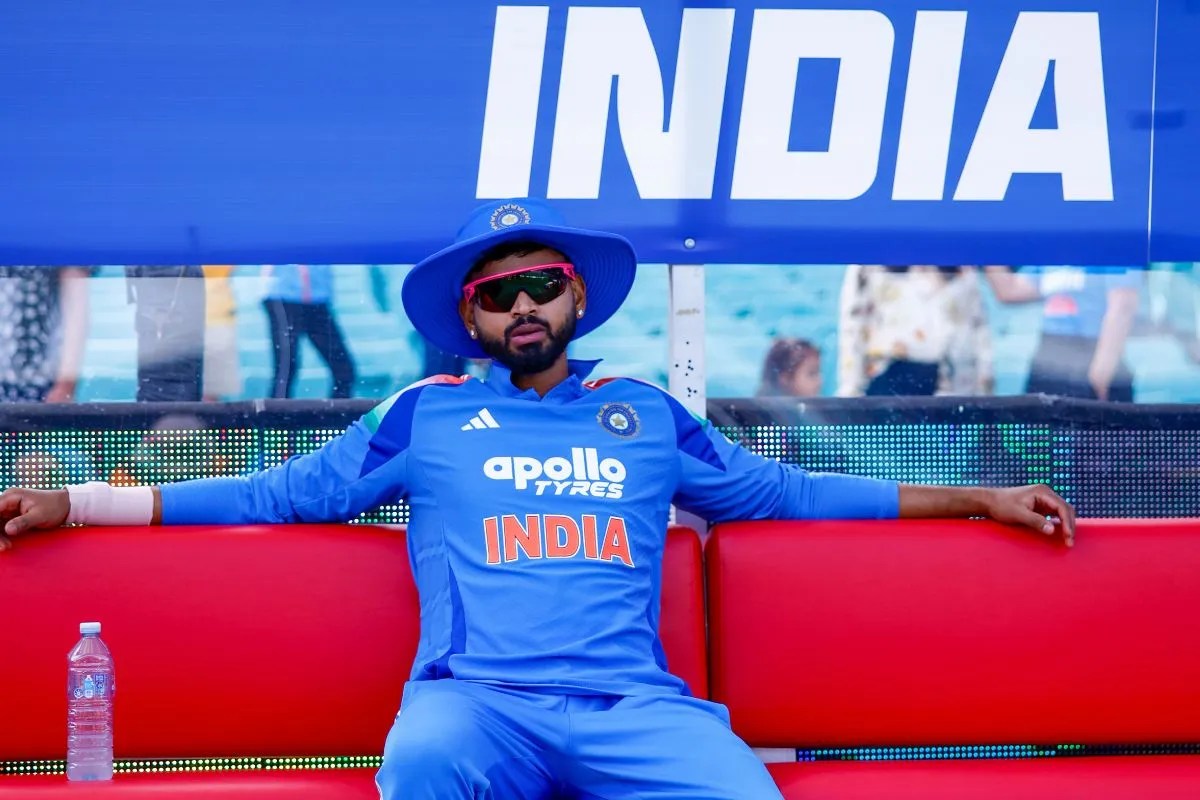
Shreyas Iyer has not played a T20I for India since December 2023. He has just been named as the country’s new T20I captain. Five of cricket’s most authoritative voices have weighed in, and the range of their reactions tells the story of a decision that defies simple categorisation.
The Appointment That Stopped Indian Cricket in Its Tracks
On June 6, 2026, the BCCI confirmed what reports had been suggesting for days: Shreyas Iyer would replace Suryakumar Yadav as India’s T20I captain for the upcoming tours of Ireland and England. It is a decision that managed the remarkable feat of surprising people even after it had been widely leaked.
The surprise is not difficult to understand. Suryakumar Yadav had just led India to T20 World Cup glory. His win rate as captain is approximately 77 percent across 52 matches. The man replacing him, Shreyas Iyer, last played a T20I in December 2023. He was not in the squad for the Asia Cup. He was not in the squad for the World Cup. He is returning to international cricket not as a senior figure being brought back into the fold, but as the new captain.
The IPL credentials that support the appointment are real. Iyer led KKR to the 2024 title, guided Delhi Capitals to their only final appearance in 2020, and took Punjab Kings to the runners-up position in IPL 2025. In 101 IPL matches as captain, he has won 55, a win percentage of 54.45. The track record is not imaginary. The leap from franchise captain to national T20I captain, however, without a single intervening T20I appearance, is unprecedented in its speed and directness.
Five expert voices have responded to the decision. Their reactions span from endorsement to genuine alarm, and the collective picture they paint is of a selection that has divided the cricketing establishment along clearly identifiable lines of philosophy.
Reaction 1: Sanjay Manjrekar Says Shubman Gill Had Better Credentials
The most structurally challenging critique of Iyer’s appointment comes from former India batter Sanjay Manjrekar, who argues that the decision was flawed not because of what Iyer lacks but because of what another candidate offered.
“When you pick a player or make him the captain or vice-captain you’ve got to also make sure that that player fits into the squad and has got a confirmed place in the squad and that is where I think Shubman Gill has missed out because I think Gill has better credentials than Shreyas Iyer to be India’s long-term T20 captain.”
Sanjay Manjrekar, Sony Sports
Manjrekar is making a specific and important point about squad architecture. A captain, in his formulation, must first be an assured member of the playing XI. Captaincy should be an additional layer placed on top of an already secure position in the team, not a designation applied to a player returning from international absence. By that logic, Gill, who captains Gujarat Titans and scored 732 IPL runs at a strike rate of 163 in IPL 2026, had a stronger case.
The counter-argument, of course, is that Gill has been deliberately steered away from T20I cricket to protect his fitness and focus for the WTC and ODI World Cup 2027. His credentials are not in question. His availability for the specific role is. But Manjrekar’s structural observation, that a captain should be a first-choice selection before a leadership designation, remains a principled and defensible position.
Reaction 2: Ravichandran Ashwin Questions the Basis of the Captaincy Jump
Ravichandran Ashwin has been consistent throughout the squad announcement period in raising questions about the logic of the selection process, and his reaction to Iyer’s captaincy appointment is the sharpest of his contributions to this debate.
“Shreyas Iyer should have been in the T20 squad last time. But when you do return, do you have to return straight as the hero? On what basis did you suddenly judge his captaincy credentials? Shreyas definitely warrants a discussion for a place in the Indian T20 team. But is there any hole in the Indian T20 team? Except for spin-bowling, there are no holes. So why make this change?”
Ravichandran Ashwin, YouTube
Ashwin’s core challenge, “on what basis did you suddenly judge his captaincy credentials,” is the question that the selectors have not publicly answered. IPL captaincy success is the obvious response, and it is a legitimate one. But the jump from IPL captain to international captain without any transitional period, without a return series as a player building toward leadership, is a compressed process that has bypassed the usual calibration steps.
Ashwin’s additional point about there being no structural holes in the T20I squad is worth sitting with. India just won a World Cup with this group. The batting unit is strong. The bowling has been identified as the only area of concern. Appointing a new captain does not solve the spin-bowling problem and introduces a new variable into a team environment that was, by results, functioning well. The burden of proof for change, Ashwin is arguing, lies with the selectors, and the public reasoning has not met that burden.
Reaction 3: Aakash Chopra Backs the Decision as a Deserving Reward
Not everyone is unconvinced. Aakash Chopra is among the most prominent supporters of Iyer’s appointment, and his reasoning is built on a sense of institutional fairness toward a player who was repeatedly overlooked during his absence.
“It’s along the expected lines. It’s not surprising. Everyone was surprised that he wasn’t able to become a part of India’s T20I squad, whether it was the Asia Cup or the World Cup. He was in the periphery, but wasn’t able to become a part of it, which is unfortunate, because only 15 are picked. To straightaway become the captain after that, there is no doubt about that as far as that decision is concerned. Everyone knew Suryakumar Yadav wouldn’t be the captain in 2028, and that you would be going to someone else, and you want to give him time. So Shreyas deserves what he is getting.”
Aakash Chopra, Star Sports
Chopra’s argument is fundamentally about long-term planning. He is not defending the appointment on the basis of Iyer’s immediate T20I record. He is defending it on the basis of a forward-looking calculation: Suryakumar Yadav was always going to exit the captaincy before the 2028 T20 events, a new leader needed time to develop in the role, and the Ireland and England series represent the appropriate moment to begin that development process. The argument for “giving him time” is the same argument applied elsewhere in India’s selection policy, and Chopra is applying it consistently here.
Reaction 4: Ricky Ponting Backs His Own Captain with Personal Authority
Of all the voices in this conversation, Ricky Ponting occupies a uniquely credible position. As head coach of Punjab Kings, he has worked closely with Iyer as a captain and has first-hand evidence of his leadership development over the past two IPL seasons.
“He’s certainly a better captain now, a better leader, and probably a more mature and more well-rounded person now. When you think of some of the other candidates, I mean, it’s full credit to him that he’s the captain now because there are a lot of other great players in India. We know there are many great players in the current Indian team.”
Ricky Ponting, The Times of India
Ponting’s endorsement carries a specific kind of weight that external commentators cannot match. He has seen Iyer in training, in tactical meetings, in post-match reviews, and in the dressing room during pressure situations. His assessment that Iyer is a better captain now than he was, more mature, more well-rounded, is based on direct observation rather than statistical inference.
The acknowledgment that there are many great players in India who could have been given the role makes the endorsement more meaningful, not less. Ponting is not saying Iyer was the only option. He is saying Iyer earned it from a competitive field, and that is a different and more powerful statement.
| Metric | Shreyas Iyer as IPL Captain |
|---|---|
| Total matches as IPL captain | 101 |
| Wins | 55 |
| Win percentage | 54.45% |
| IPL titles won as captain | KKR 2024 |
| Finalist as captain | DC 2020, PBKS 2025 |
| Last India T20I appearance | December 2023 |
| India T20I career runs | 1,104 in 51 matches (avg 30.66, SR 136.12) |
Reaction 5: Pravin Amre Grounds the Argument in a Decade of Evidence
Iyer’s personal coach Pravin Amre provides the final perspective, and it is one built on the longest timeline of all: a decade of watching this specific player develop as a leader from the earliest stages of his IPL captaincy career.
“He will earn the respect of his team members, and it is important for him to lead from the front. He has done 10 years of IPL as a captain. I was the first person to suggest him as the youngest captain for Delhi Capitals at that time, so I was very confident that he has the leadership qualities. He has come here (to this position) through the grind.”
Pravin Amre, ETV Bharat
The phrase “through the grind” is the most important part of Amre’s statement. Iyer’s path to international captaincy has not been the kind of smooth, predestined progression that the announcement might make it seem. He has navigated injury, IPL franchise changes, international exclusion, and the persistent question of whether his game translates to international cricket’s most demanding conditions. That he has emerged from all of that as India’s T20I captain, at 31, suggests a resilience and professional persistence that pure talent alone does not produce.
Amre’s disclosure that he was “the first person to suggest him as the youngest captain for Delhi Capitals” is a reminder that some people have seen this as the natural trajectory for a very long time, and that those who are surprised by the appointment may simply be those who were not paying close enough attention to the arc of his development.
The Synthesis: What All Five Reactions Tell Us Together
Taken together, the five expert reactions map the genuine complexity of this appointment more accurately than any single one does alone. Manjrekar and Ashwin identify legitimate structural concerns about the process, the absence of a transitional period and the question of what problem the change actually solves. Chopra provides the long-term planning rationale that makes the timing defensible. Ponting offers the evidence of direct coaching experience that neither the critics nor the neutral observers can access. And Amre provides the biographical context that reframes the appointment not as a sudden elevation but as the culmination of a decade-long journey.
The truth, as it often is in these situations, probably contains elements of all five positions simultaneously. Iyer’s appointment is bold. It is not fully backed by a recent T20I evidence base. It bypasses standard developmental steps. It is also, by several accounts, a long-overdue recognition of genuine leadership talent. And it creates exactly the kind of clean timeline for India’s T20I leadership planning that avoids the messy scenario of captaincy uncertainty as the 2028 events approach.
Conclusion: Ireland Provides the First Evidence. England Will Provide the Real Test.
Shreyas Iyer begins his India T20I captaincy tenure in Ireland. Two matches against a professional but manageable opponent, followed by five against England in conditions that will provide a far more demanding examination of his tactical decisions and player management.
The IPL record suggests he is capable. The T20I record is thin but not negative. The coaching endorsements from Ponting and Amre are grounded in real professional observation. The critics, led by Ashwin and backed by Manjrekar’s structural logic, are asking questions that deserve proper answers from a national team performance over the coming months.
The debate will not be resolved by punditry or by expert panels. It will be resolved by results and performances. India under Iyer will either justify this decision with authority, or the questions will grow louder. The Ireland series will tell us something. The England series will tell us considerably more.
Shreyas Iyer is India’s T20I captain. The debate about whether he should be is, for now, secondary to the more interesting question of what he will do with the role.
For breaking news and live news updates, like us on Facebook or follow us on Twitter and Instagram. Read more on Latest Sports on thefoxdaily.com.






COMMENTS 0